Boise, IdahoAsbestos Abatement
Plan asbestos abatement in Boise before damaged or suspect building materials are disturbed. Disaster Cleanup helps property owners identify the affected area, arrange appropriate testing and discuss a controlled removal or repair plan. An inspection can clarify the project; laboratory analysis, material access and disposal requirements must be considered separately.
Schedule a Free Inspection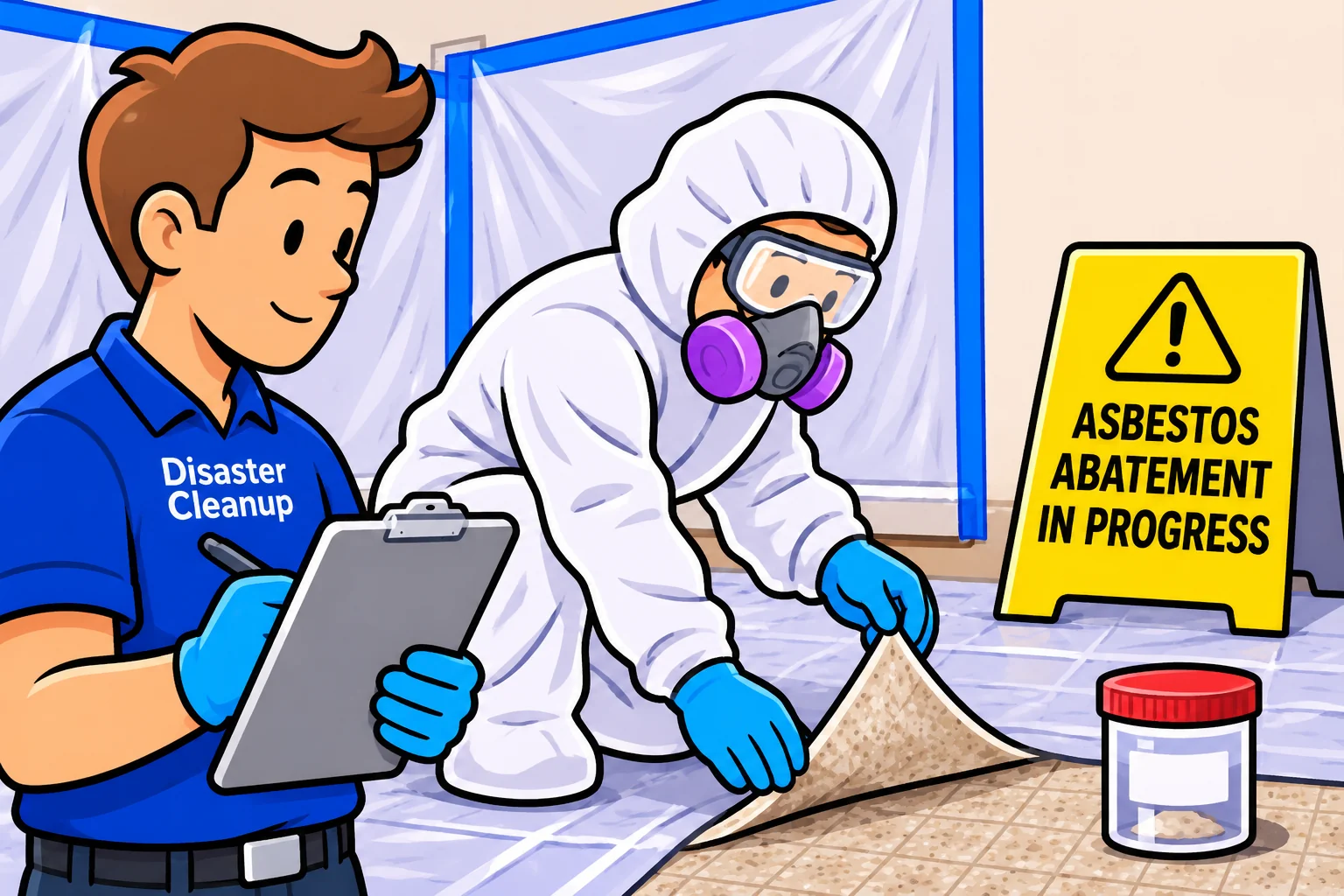
Find out how fast you can get service from your location
CONTROLLED MATERIAL REMOVALAsbestos Abatement in Boise
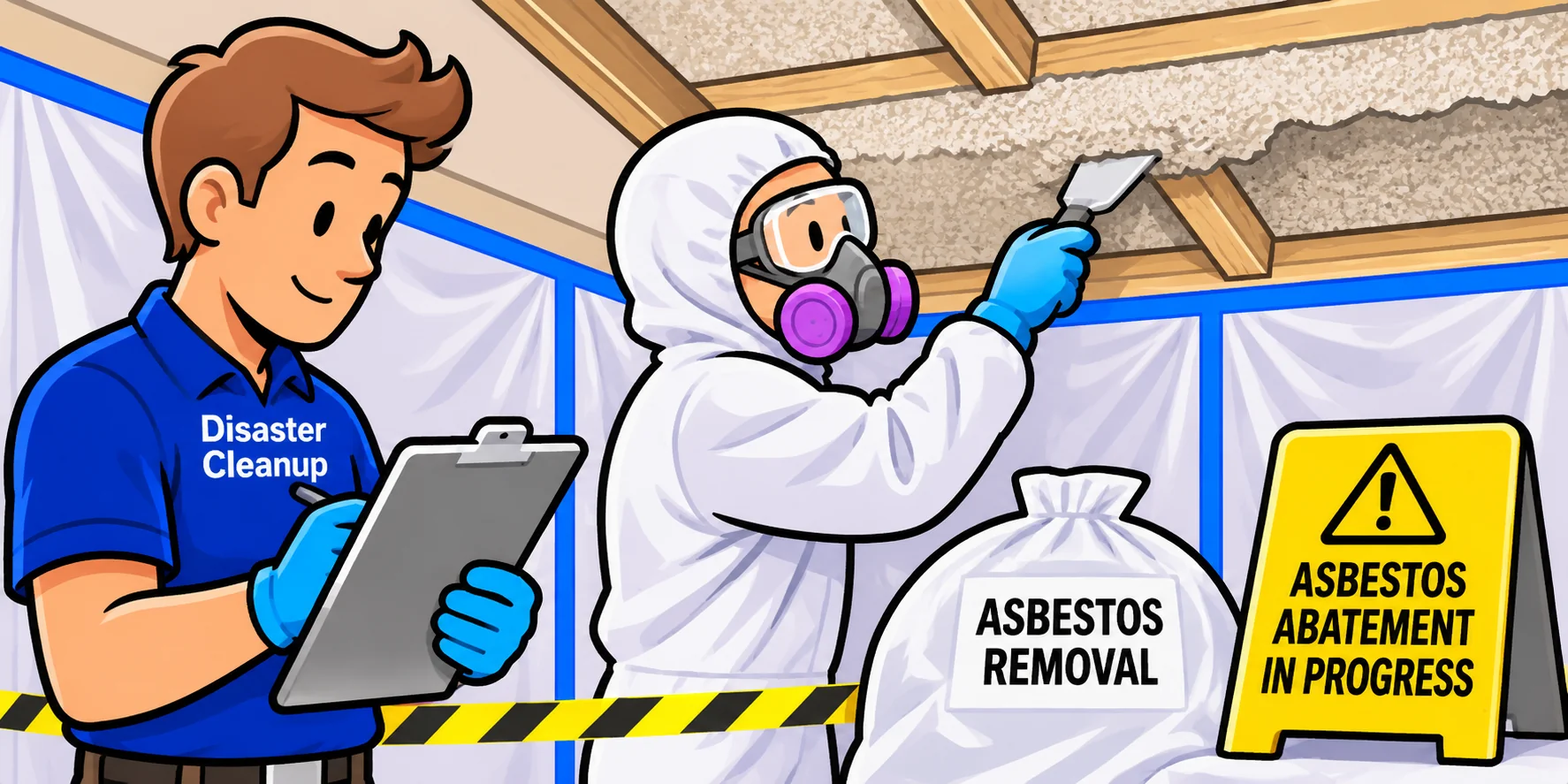
Asbestos is a material-identification problem before it is a demolition problem. Fibers cannot be reliably recognized by sight, and older flooring, mastics, insulation and textured finishes may require different sampling plans. The important distinction is between leaving an intact material undisturbed and undertaking work that could release fibers. We help establish that distinction before discussing removal methods.
Owners often ask whether a damaged ceiling or old floor can be removed during an otherwise straightforward repair. The answer depends on the material and the proposed disturbance, not merely the age of the home. Explain which surfaces will be cut, drilled or taken out, and bring any earlier material reports to the assessment. A clearly defined work area helps keep testing and removal decisions connected to the actual project.
When to Discuss Asbestos Abatement
An older product is a reason to ask an identification question, not proof that it contains asbestos. Pay particular attention when material condition or a planned repair will change how that product is handled. The following situations warrant discussion before work expands.
- Deteriorating pipe wrap around older plumbing
- Crumbly textured finishes near planned repairs
- Layered resilient flooring with unidentified adhesive
- Water-damaged materials in an older building
- Ceiling or wall finishes scheduled for demolition
- Unidentified insulation exposed during a remodel
What Happens After You Call
The first conversation identifies the material question and planned work. You do not need to collect a sample or start clearing debris before contacting us.
- Tell us which materials may be disturbed and whether demolition has already started.
- Explain where loose debris or water damage is present without entering a restricted area to gather details.
- We discuss what must be identified and which material layers may need separate consideration.
- Findings guide whether undisturbed management, removal or another appropriate approach needs evaluation.
- Review remaining surfaces, access restrictions and follow-on repairs before the project advances.
Common Material and Project Questions
Renovation exposes older layers
Removing a newer finish may reveal older flooring, adhesive or texture underneath. A negative result for the visible top layer does not automatically characterize every concealed material involved in the work. The work boundary can change as successive layers are uncovered.
Plumbing repairs disturb insulation
A pipe leak may require access through old wrap or adjacent finishes. Repairing the water source and evaluating suspect insulation are separate tasks that should be coordinated rather than treated as ordinary cleanup. Water repair should not involve unassessed cutting through older insulation.
Damaged textured ceilings
Water stains, sagging finishes and planned lighting changes can bring ceiling texture into the work area. Scraping or sanding before identification creates avoidable dust and can enlarge the area requiring attention. A small opening can disturb a different product from the visible finish.
Old floor coverings and mastics
Resilient tiles, backing and adhesives can differ in composition even within one room. The proposed removal method matters because breaking, grinding or mechanically abrading materials changes the potential for fiber release. Backing, tile and adhesive should not automatically be treated as one homogeneous material.
Fire or impact damage
A damaged building can contain both debris and unidentified older components. Entry permission, structural conditions and material identification must be considered together before anyone begins sorting or hauling demolition waste. Describe the damage history without entering an area that has not been released.
Demolition without material records
Missing renovation records leave uncertainty about what will be cut or removed. A pre-work survey can identify sampling questions and help prevent an unexpected material discovery from disrupting the removal sequence. A useful survey follows planned activities, not an arbitrary list of rooms.
What to Do First: Safety and Preparation
Do not pull a sample, lift old tiles or scrape a ceiling to find out what it contains. Keep occupants away from loose debris and avoid household vacuuming or dry sweeping. A visual inspection alone cannot establish that a material is asbestos-free. If a renovation has already exposed suspect material, stop that activity and discuss controlled assessment before restarting.
Do not use a fan to blow dust out of a damaged room or carry loose pieces through the house. Tell the team whether ventilation was running and whether debris has already been moved. That history can matter to the assessment boundary even when the original damaged surface is small.
- Do not drill through untested suspect finishes.
- Leave old pipe wrap and insulation undisturbed.
- Keep loose debris separate from ordinary rubbish.
- Explain any prior cutting, sweeping or debris movement.
Our Asbestos Abatement Process
1. Define the affected materials
We review the building areas, damage history and proposed disturbance. The purpose is to identify a practical assessment boundary rather than assume that every old surface has the same composition or condition. Renovation records and safe photographs can help identify which products need closer attention.
2. Arrange appropriate identification
Sampling and laboratory findings inform the scope when suspect materials require analysis. A written result should identify the material sampled; it should not be treated as blanket approval for unrelated rooms or concealed layers. Sampling descriptions should remain understandable to the people undertaking the subsequent removal or repair.
3. Plan separation and access
The work plan considers containment, routes through occupied areas and protection of surfaces that will remain. Occupant access and the handling of belongings need to be discussed before removal begins. Explain whether the room must remain occupied or whether belongings can be protected in place.
4. Remove within the agreed scope
Methods are selected for the identified material and site conditions. Controlled handling and suitable dust-management practices are different from ordinary demolition; changes uncovered during the work may require the scope to be reviewed. Do not expand demolition into a newly exposed product without reviewing whether the existing plan covers it.
5. Handle debris and clean the area
Removed material requires appropriate packaging, handling and disposal arrangements. Cleanup of the work area is part of the scope, not a reason to move unassessed debris through living spaces or mix it with household rubbish. Waste handling should be considered before material is moved out of the controlled work area.
6. Review completion and repairs
We explain the completed work and any remaining restrictions or verification requirements applicable to the project. Rebuilding should follow the agreed completion process instead of concealing areas that still need assessment. Clarify which verification or documentation applies before another trade installs new finishes over the area.
Why Choose Disaster Cleanup
A useful abatement plan makes the material, work boundary and handoff conditions explicit. Ask which components were identified, which will remain and how changes will be handled if another suspect layer is exposed. That clarity helps owners compare scopes without mistaking a small sampling task for a complete removal project.
The removal scope should also distinguish the hazardous-material work from rebuilding. Replacing a floor, repairing a ceiling and reconnecting equipment may each depend on the condition left after removal. Ask how those responsibilities are recorded and what happens if another product is discovered behind the first layer. A precise boundary protects the usefulness of the plan without pretending that every concealed part of an older building has already been characterized.
What Affects the Project Schedule?
The material type, condition, quantity, containment needs and applicable verification steps influence the schedule. Laboratory analysis and follow-on repairs have their own sequencing. An arrival estimate is not a promise that asbestos removal or the rebuilding work will finish within that period.
Insurance and Project Documentation
Insurance treatment depends on the policy and the event that led to the work. Routine remodeling, pre-existing materials and damage-related removal may be treated differently. We can discuss documentation of the affected area, but the insurer decides coverage and any required authorization.
Stop disturbance before planning removal
If work has exposed a suspect material, pause the activity and keep the area separated from routine household traffic. Contact Disaster Cleanup with the building age, material location and project details. If the material is intact and no work is planned, arrange an assessment rather than creating an emergency by disturbing it.
For stable materials and future renovations, the practical priority is planning, not rushing to remove an intact product. For loose or already disturbed material, explain the event and keep access limited while the next assessment step is discussed.
Information That Helps Define the Next Step
- Deteriorating pipe wrap around older plumbing
- Crumbly textured finishes near planned repairs
- Layered resilient flooring with unidentified adhesive
- Water-damaged materials in an older building
Asbestos AbatementAssessment, Work Planning and Restoration
An asbestos project can involve several different material questions within the same property. The illustrations below represent assessment and restoration topics, not proof that a particular product contains asbestos or photographs of your work area. Discuss the actual material, its condition and the proposed disturbance before selecting a removal approach. Testing, controlled handling and the rebuilding handoff need to fit together, while each task remains clearly described in the proposed scope.
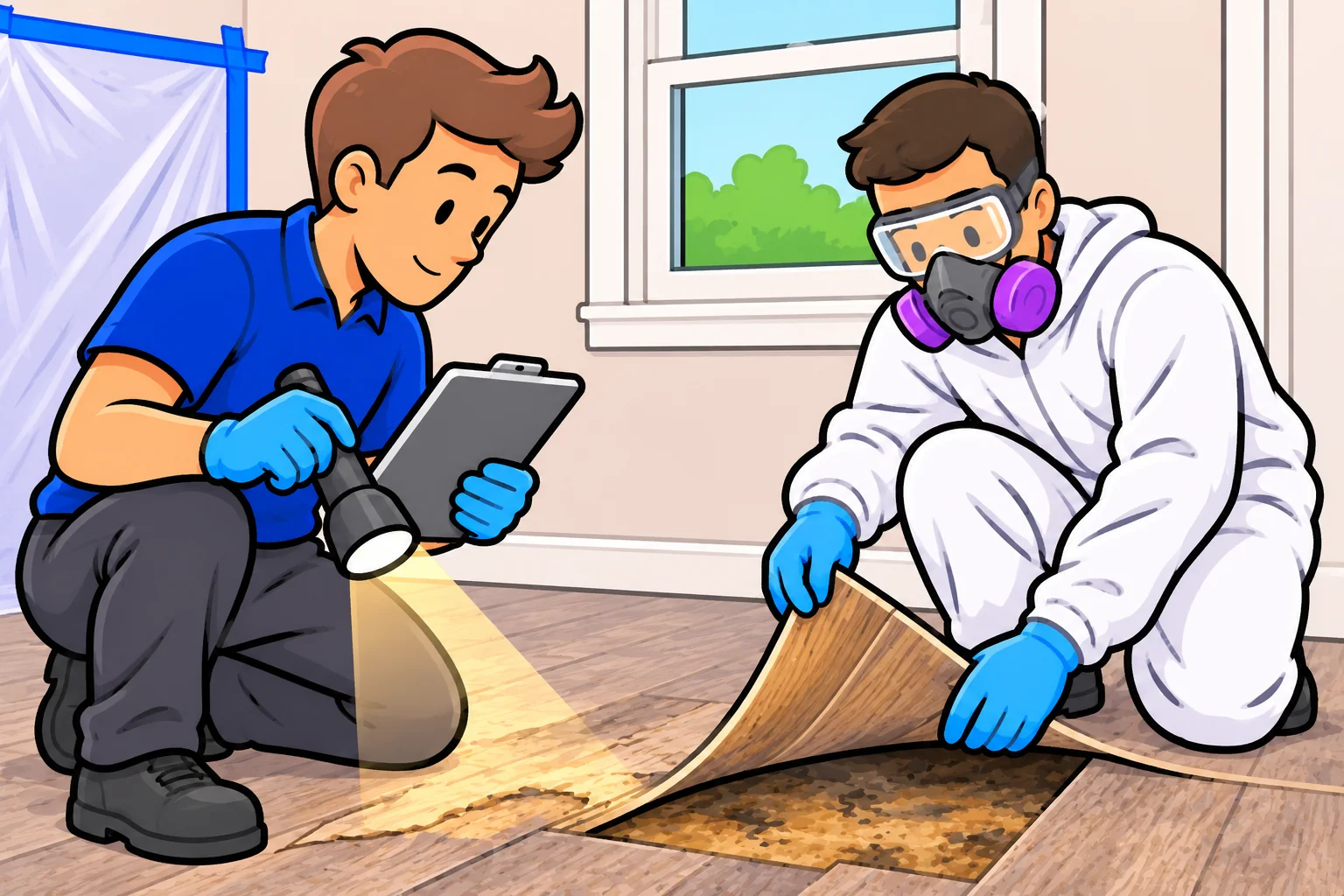
Suspect building-material assessment
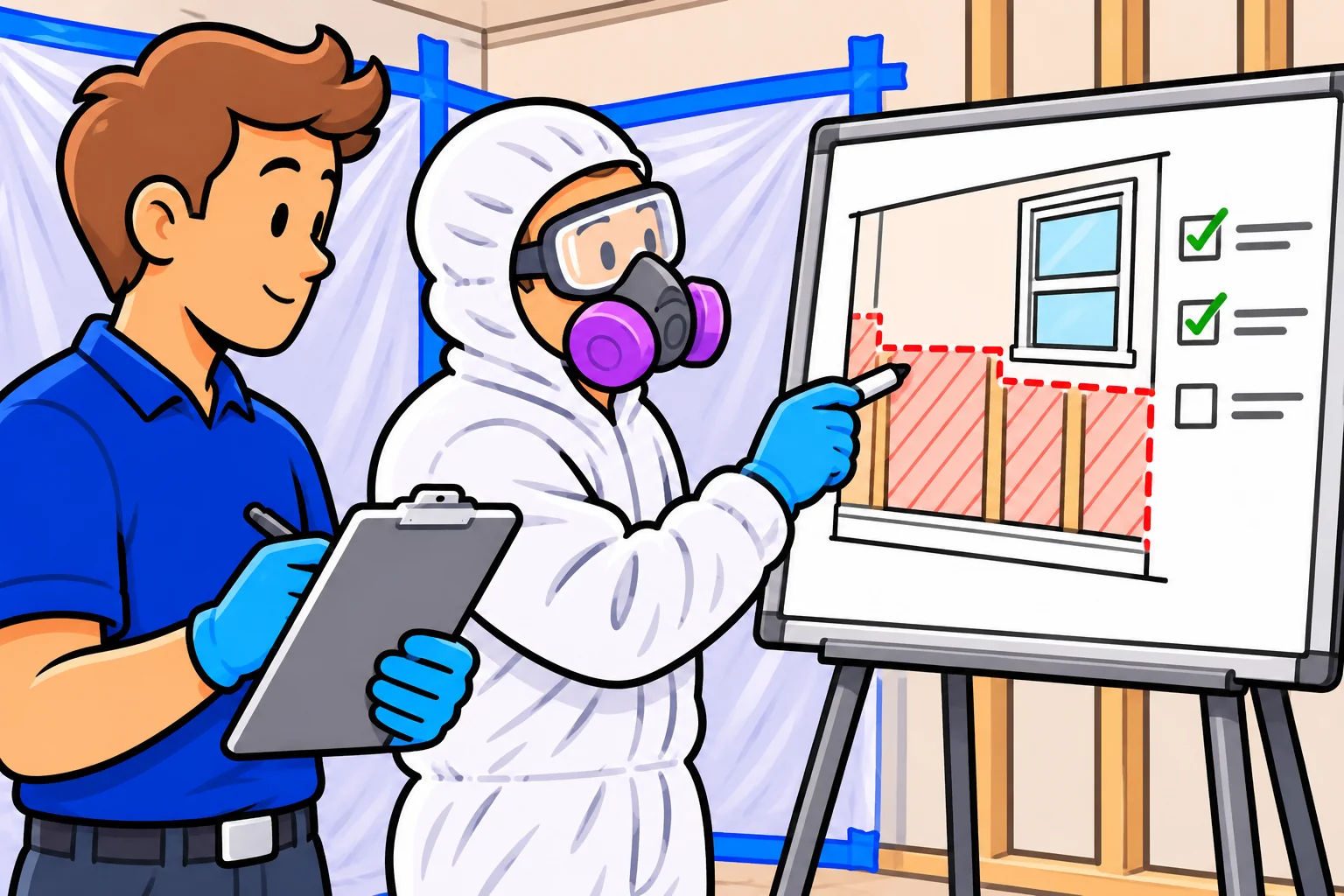
Controlled material-removal planning

Pipe-insulation identification questions
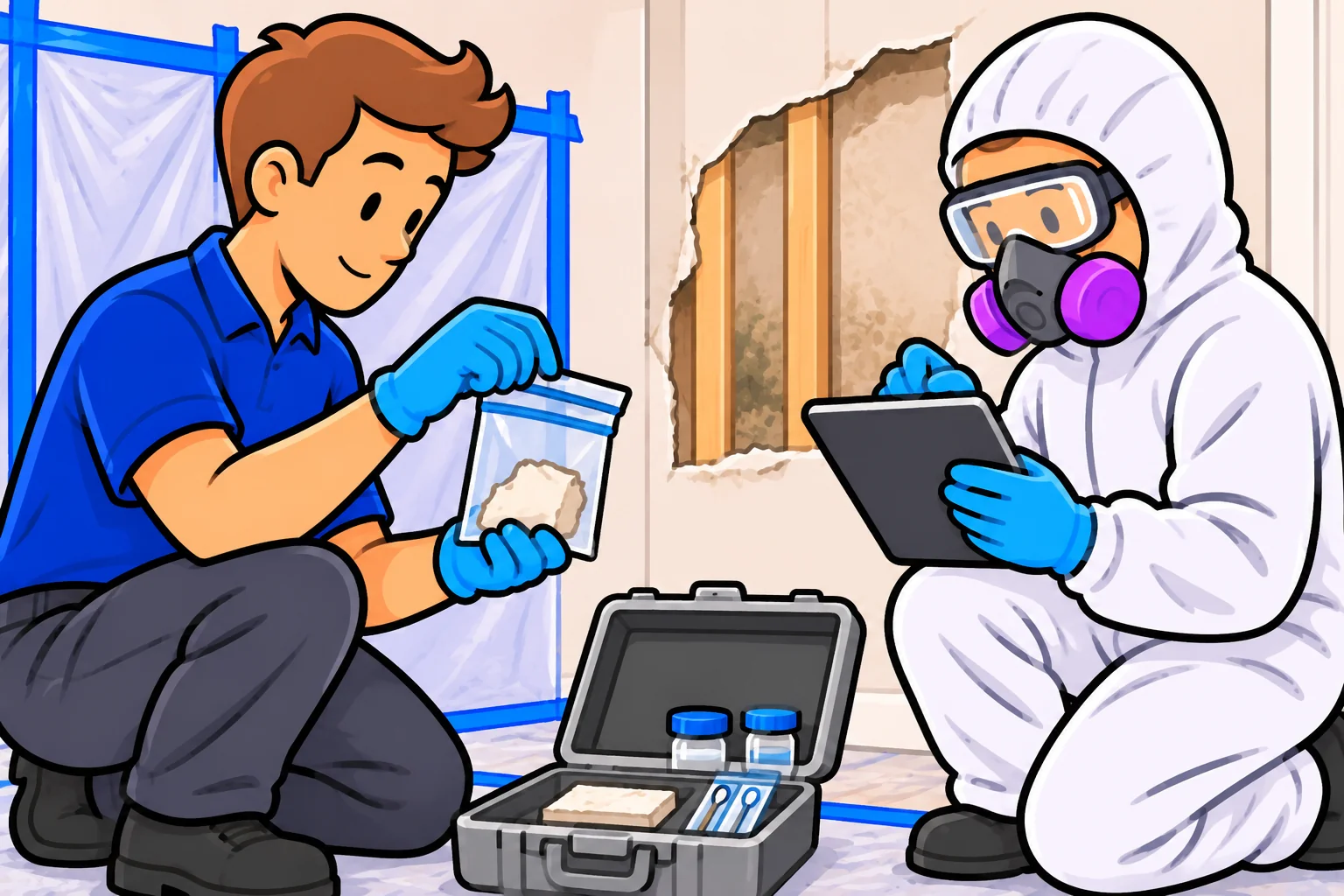
Testing before renovation decisions
Material identification before demolition
Define the workTesting questions should follow the actual renovation or repair boundary, including separate layers where relevant.
Containment matched to the project
Match the site conditionsAccess, nearby belongings and occupied spaces all affect how a removal area should be separated.
A clearer rebuilding handoff
Plan the next stageUnderstanding what was removed and what remains helps the next trade avoid reintroducing unplanned disturbance.
Serving Boise and the Treasure ValleyAsbestos Abatement in Boise and Nearby Communities
Disaster Cleanup serves Boise and the Treasure Valley, including the service areas described on this website. Older and remodeled properties can both contain unidentified layers, so a city name or neighborhood age is not a material diagnosis. Share the property location and planned work when arranging an assessment; site access and the actual products involved determine the project discussion, not a promise of identical conditions at every address.
The existing service-area listings include Ada County, Boise, Caldwell, Canyon County, Eagle, Emmett, Garden City, Hidden Springs, Horseshoe Bend, Kuna, Marsing, Meridian, Middleton, Mountain Home, Nampa, Parma, Payette and Star. Call to discuss your address and access needs.
Discuss Your PropertyRequest a Free Inspection
Before a remodel or damage repair disturbs an unknown material, discuss the work with Disaster Cleanup. Have the location, affected surfaces and any previous testing records ready if available. Request an inspection to clarify the next step, and ask separately about sampling, laboratory analysis and removal charges before authorizing those services.
Call (208) 999-2353Client ReviewsWhat People Say About Us
Disaster Cleanup is 5-Star Rated on Google


Frequently Asked Questions
Can I recognize asbestos by looking at it?
No. Age, appearance and product type can identify a reason to investigate, but they do not confirm asbestos content. Appropriate material sampling and laboratory analysis are needed when identification matters to the proposed work. Avoid breaking or scraping material just to examine it more closely. A report should name the sampled product and location rather than rely on a broad description of building age.
Does every asbestos-containing material need immediate removal?
Not necessarily. Condition, location and the likelihood of disturbance matter. An intact material that can remain undisturbed presents a different planning question from deteriorated material in a demolition area. Discuss the building use and proposed work before deciding on management or removal. The intended work matters: a sealed surface and a surface scheduled for sanding are different situations.
Should I collect a sample myself?
Do not cut, scrape or pull suspect material simply to obtain a sample. Sampling itself can create debris and disturb multiple layers. Ask how the material can be assessed and sampled appropriately, including whether separate products or areas need their own identification. Keep earlier reports available; new sampling should answer remaining questions rather than assume every material is identical.
What happens if demolition has already started?
Stop disturbing the suspect material and keep others away from debris. Do not sweep it into other rooms or use a household vacuum. Explain what was removed, how it was handled and where debris remains so the assessment can consider the actual disturbed area. Also explain whether debris was moved, vacuumed or carried through other occupied areas after the disturbance.
Can you plan abatement after a water leak?
Water damage can expose older finishes or pipe insulation that need assessment before repairs. The water source, structural condition and material identification should be considered together. Abatement and drying are not interchangeable tasks, and the scope should reflect the materials actually involved. Different layers may require separate decisions even when the original water source has already been repaired.
Will an inspection tell me every hidden material is safe?
No inspection or single sample characterizes every concealed layer in a building. Findings should be understood in relation to the areas accessed and materials sampled. If later work exposes a different product, stop and review whether the original assessment still applies. An addition or later renovation may contain products not represented by samples from the original building.
How is asbestos debris handled?
The project needs an appropriate plan for packaging, movement and disposal of identified material. Do not mix suspect debris into ordinary household rubbish or transport it through occupied rooms without controls. The applicable handling requirements depend on the material and the work being undertaken. Ask how removal waste and ordinary reconstruction debris will be kept distinguishable within the agreed work plan.
Is asbestos abatement automatically covered by insurance?
No. Coverage depends on the policy, the loss and the reason for removal. A planned renovation and abatement necessary after a covered event may be treated differently. Ask your insurer about exclusions, authorizations and documentation before assuming that the full scope will be paid. Keep the material report and itemized scope so the insurer can evaluate the actual event and work.