
Boise, Idaho Leak Prevention Systems
Disaster Cleanup sells and installs leak prevention systems in Boise and the Treasure Valley. Sensors, alerts and compatible automatic shutoff equipment can help identify certain plumbing leaks and limit their consequences. Discuss the water system, risk points and notification needs before selecting equipment; no device detects every water source or replaces routine maintenance, safe access and a plan for responding to an alert.
Schedule a Free Inspection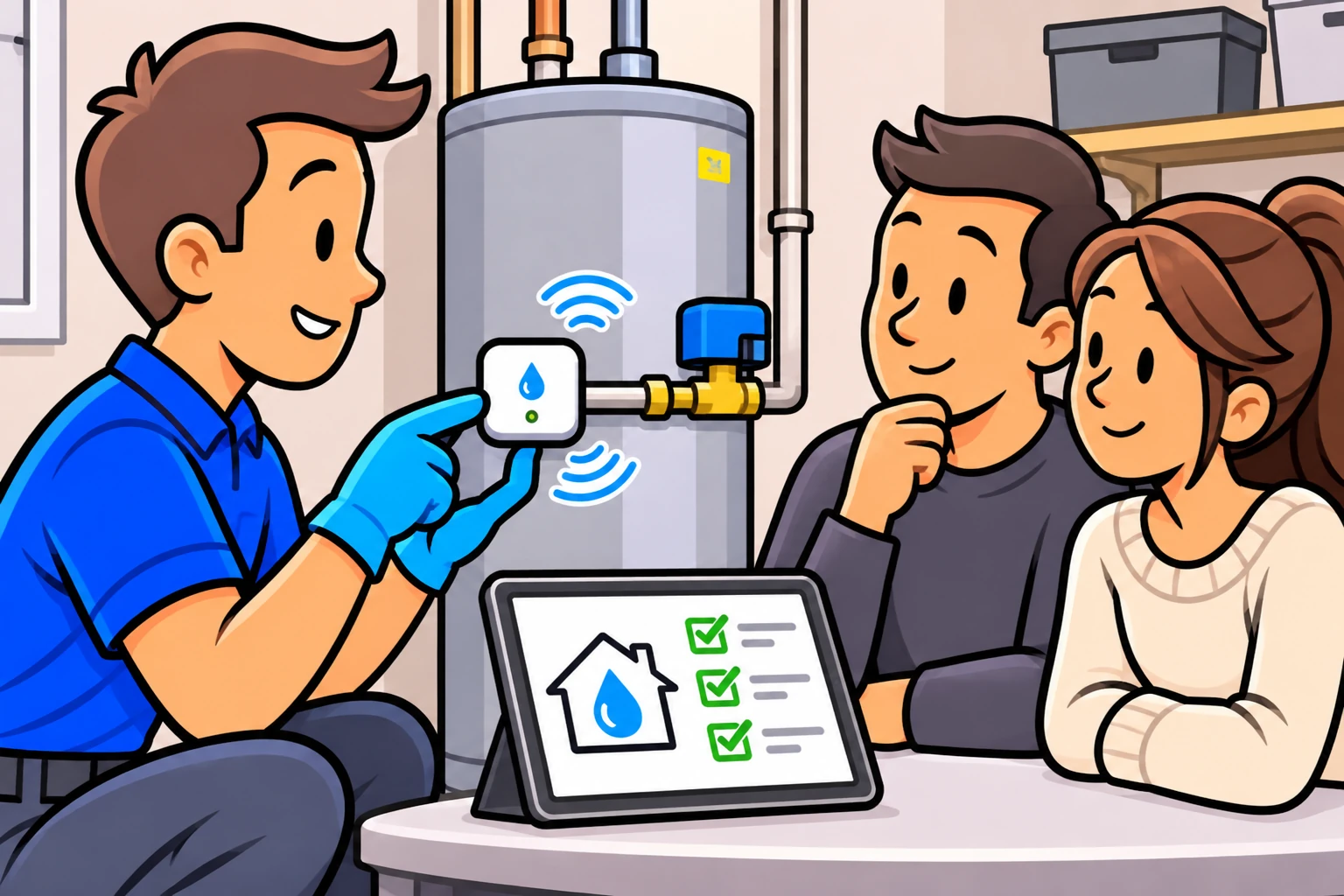
Find out how fast you can get service from your location

PLANNED WATER-DAMAGE PREVENTION Leak Prevention Systems in Boise
A prevention system needs to match the problem it is intended to detect. A point sensor responds when water reaches its location, while other devices may evaluate flow or control a compatible supply valve. Those functions are not interchangeable. We discuss appliances, accessible plumbing and the property's use so the selected arrangement has a clear purpose and its limitations are understood.
A building may need more than one kind of attention: a detector near a water heater, an understandable notification route and repairs to a known weak fitting are separate decisions. We review the property's layout and concerns so equipment is not treated as a substitute for fixing an existing defect. The owner should know who receives an alert, what action the device takes and what still requires a person to respond.
When to Discuss Leak Prevention Systems
Prevention planning is appropriate before a loss as well as after a previous leak has been repaired. The following examples identify useful discussion points, not proof that a specific product fits every building. Consider how often the area is checked and who could respond while the usual occupant is away.
- A water heater or appliance in a seldom-used space
- Previous supply-line leaks or hose failures
- A property left unoccupied for extended periods
- Slow leaks that may remain hidden behind appliances
- An owner wanting alerts when away from the building
- Accessible plumbing where shutoff options need review
What Happens After You Call
The first conversation is about the property, risk points and desired functions. We then discuss suitable equipment and responsibilities so preventive work proceeds as a planned installation rather than an emergency cleanup.
- Describe past leaks, appliances, occupancy and who should receive alerts.
- Discuss accessible sensor locations, supply control and any installation constraints.
- Clarify detection, notifications and whether compatible automatic shutoff is part of the proposed setup.
- The agreed equipment and setup should match the property and the manufacturer's requirements.
- Review how to check operation, maintain the equipment and act when an alert or shutoff occurs.
Common Situations We Assess
Appliance supply hoses and fittings
Washing machines, dishwashers and refrigerators can have supply connections in spaces an owner rarely inspects. A detector's usefulness depends on placement and how escaping water reaches it; the existence of one sensor does not monitor every appliance in a building. A drain leak and a supply-hose leak may require different preventive decisions.
Water heaters in lower or enclosed areas
A heater located near flooring, stored items or mechanical equipment can create several access concerns if water escapes. Discuss the actual layout and appropriate protection rather than assuming a detector repairs the tank or replaces required maintenance. A detector does not establish that the heater or its associated equipment is in sound condition.
Under-sink plumbing
Supply connections and drains can leak into cabinets before water becomes visible on the room floor. A local moisture sensor may help with a suitable placement, but access, cleaning and the route water would take should be considered before the device is positioned. Cleaning activity and cabinet use should be considered in practical sensor placement.
An intermittently occupied property
A leak can continue unnoticed when nobody routinely checks the building. Alerts are useful only when they reach someone able to respond. Discuss communication availability, account ownership and who has authorized access if the usual contact is away. Identify the person with authority to arrange entry if a notification arrives while the owner is away.
A history of unexpected water use
Depending on the product, flow-related monitoring can answer a different question from point moisture detection. Intended use, routine household demand and device limitations need review so ordinary use and a potential leak are not treated as identical without context. Product-specific behavior should be discussed rather than assuming every flow change triggers a valve.
Water outside a controlled supply line
Roof entry, groundwater, drain backups and other sources may not stop when a supply valve closes. A prevention discussion should separate what the equipment can detect or control from water pathways that need maintenance, building repairs or other protection. Supply shutoff and source repair are different actions even when both reduce future damage risk.
What to Do First: Safety and Preparation
If water is already escaping, a new sensor installation is not the immediate repair. Use a shutoff only if it can be reached safely, and stay clear of water near electricity. Existing leaks, damaged piping and equipment safety should be addressed appropriately before a prevention setup is relied on. Do not test a device by deliberately flooding a room or defeating an existing safety feature.
An automatic shutoff event can require investigation before water use resumes. Follow the selected product's instructions and address the actual source rather than repeatedly overriding the device because an appliance stopped working. If a notification suggests current water near electrical equipment, stay clear and obtain appropriate assistance instead of entering to reset a sensor.
- Repair known leaks instead of relying on alerts alone.
- Follow product instructions for safe functional checks.
- Keep authorized notification contacts current.
- Do not enter unsafe water to reset equipment.
Our Leak Prevention Systems Process
1. Define the prevention goal
We discuss the owner's concerns, previous leaks and use of the property. The objective should name the sources or locations being addressed instead of promise complete protection against every type of water damage. Include whether the concern is a particular appliance, an unattended property or several different risk locations.
2. Review the physical layout
Accessible piping, appliance locations and possible detector positions are considered together. Installation needs vary with the equipment and site, and a control valve should not be assumed compatible with every existing plumbing arrangement. A suitable installation location should remain accessible for operation and product-specific maintenance.
3. Discuss equipment and limitations
Clarify which functions are proposed, such as moisture detection, remote notification or automatic supply shutoff. The owner should understand what is not monitored and which conditions depend on power, communication or product-specific features. Clarify any limitation that matters when the owner is absent or a communication service is unavailable.
4. Arrange the agreed installation
Work follows the selected equipment and site requirements. Existing plumbing defects or unsuitable access may need separate correction rather than be hidden behind a new device or treated as included without discussion. Discuss which work is included and whether a separate repair or additional authorization is necessary.
5. Review operation and alerts
Explain the intended notification route and any agreed shutoff behavior. A safe functional check should follow the product instructions; deliberate water damage or bypassing protection is not a useful demonstration of a prevention system. The recipient should understand what the alert means and what response it does not automatically provide.
6. Plan maintenance and response
Keep the instructions and understand routine checks, batteries where applicable and who responds to an alert. Changes in accounts, networks, plumbing or occupancy may require the setup to be reviewed rather than assumed to work unchanged indefinitely. Keep a practical record of the setup and relevant instructions for whoever will maintain the property later.
Why Choose Disaster Cleanup
Restoration experience makes the consequences of overlooked water relevant to a prevention conversation. The useful outcome is not a blanket claim that the home can never flood; it is a setup linked to actual risk points and a practical response plan. Owners should understand which sensor locations and shutoff functions are included before comparing proposals by device count alone.
Clear ownership of the setup matters after installation. A landlord, manager and occupant may each have a different role in receiving notifications and authorizing entry. Similarly, a homeowner changing a router or phone account may affect connected functions depending on the product. Discuss those practical responsibilities at the outset so the system is not left dependent on an obsolete contact or an account whose access nobody can maintain.
What Affects the Project Schedule?
The selected equipment, plumbing compatibility, access and any prerequisite repairs affect installation planning. Network or notification setup may require the authorized owner's participation. Current availability should be confirmed directly; the page does not promise a fixed installation duration or that every property can use the same device arrangement.
Insurance and Project Documentation
Ask your insurer whether any device requirements, documentation or discounts apply to your policy. A prevention-system installation does not guarantee a premium reduction or approval of a future water claim. Keep the equipment information and agreed installation scope so any insurer discussion refers to the actual system rather than a generic prevention label.
Plan prevention before the next unnoticed leak
For a stable property, arrange a discussion of appliance connections, water-heater locations and alert needs. If a leak is active, address source control and water damage first rather than waiting for preventive equipment. Share who owns the relevant account or network and who can authorize installation, without sending private credentials in an ordinary project description.
Prevention is a planned service, not a reason to create alarm about an intact home. A useful proposal explains the identified risk points and realistic limits so you can choose equipment with a clear purpose rather than an impossible promise of eliminating all water damage.
Information That Helps Define the Next Step
- A water heater or appliance in a seldom-used space
- Previous supply-line leaks or hose failures
- A property left unoccupied for extended periods
- Slow leaks that may remain hidden behind appliances
Leak Prevention Systems Assessment, Work Planning and Restoration
The illustrations show water-risk and installation topics rather than endorse one brand or imply a device monitors every concealed pipe. Some locations call for point detection, while another property may have a suitable supply-control option. The selected equipment should follow the physical layout and the owner's response needs. Ask what is detected, what can be controlled and which product-specific power or communication conditions are necessary for the proposed functions.
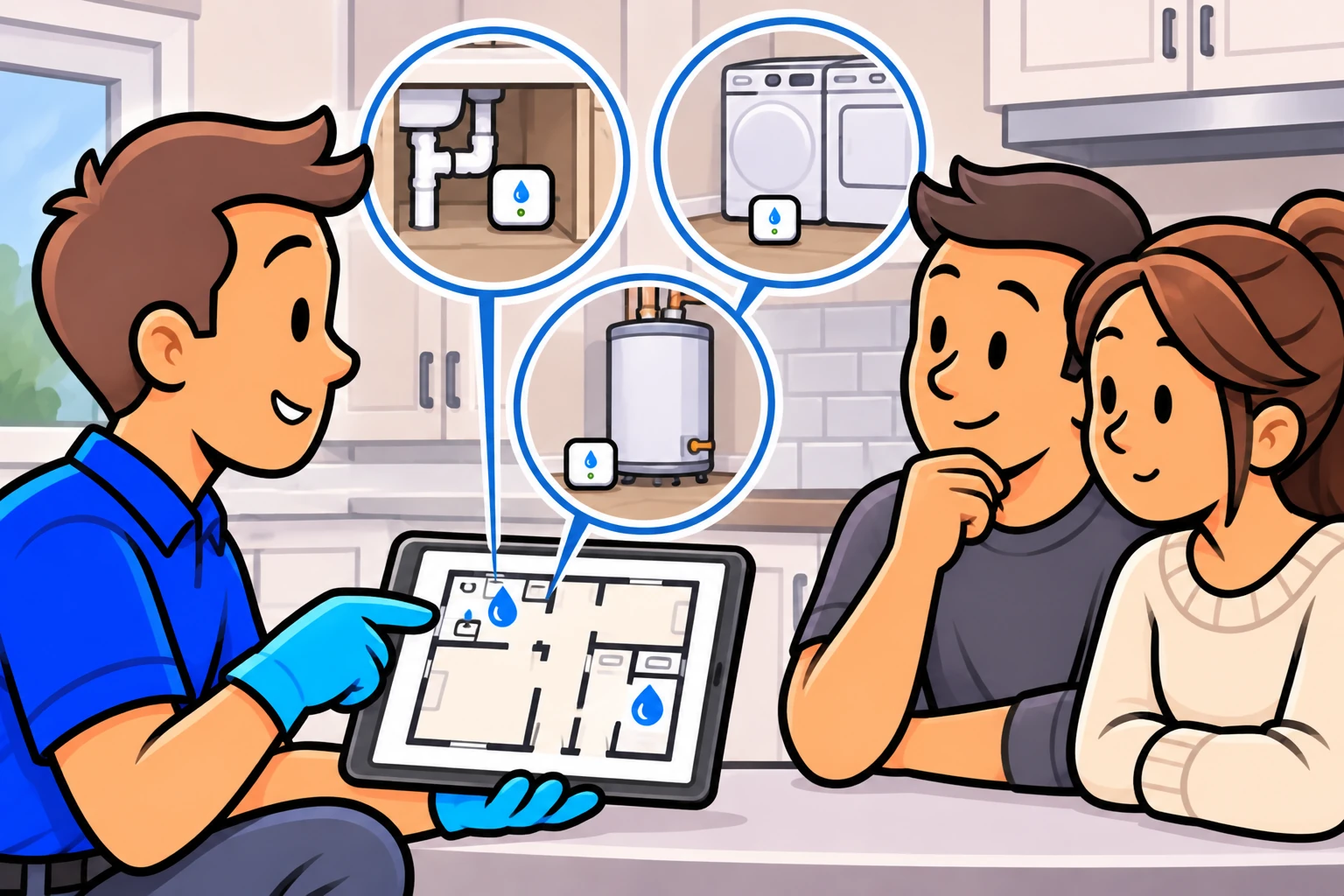
Planning leak-detection locations

Reviewing appliance water connections
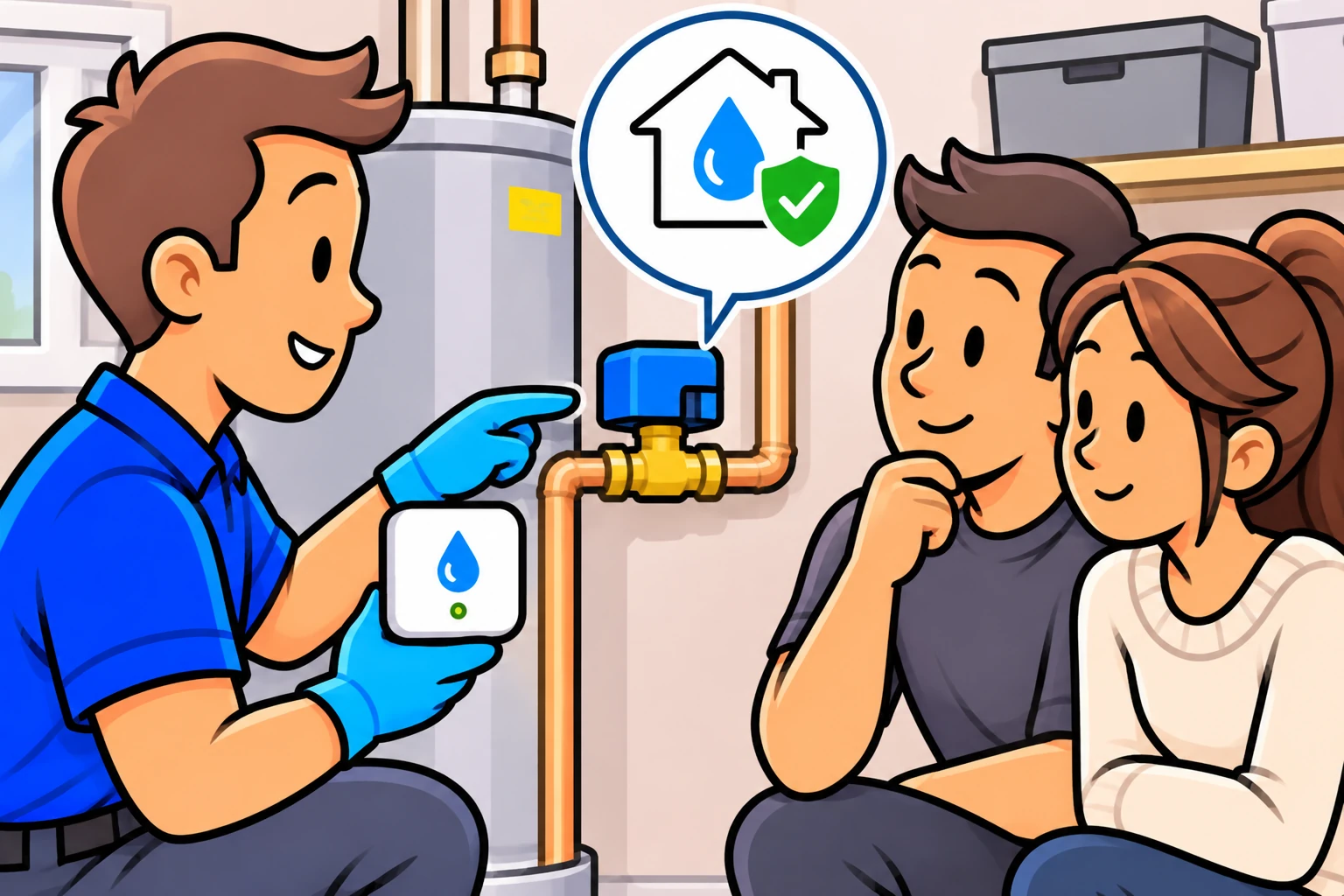
Considering compatible supply control
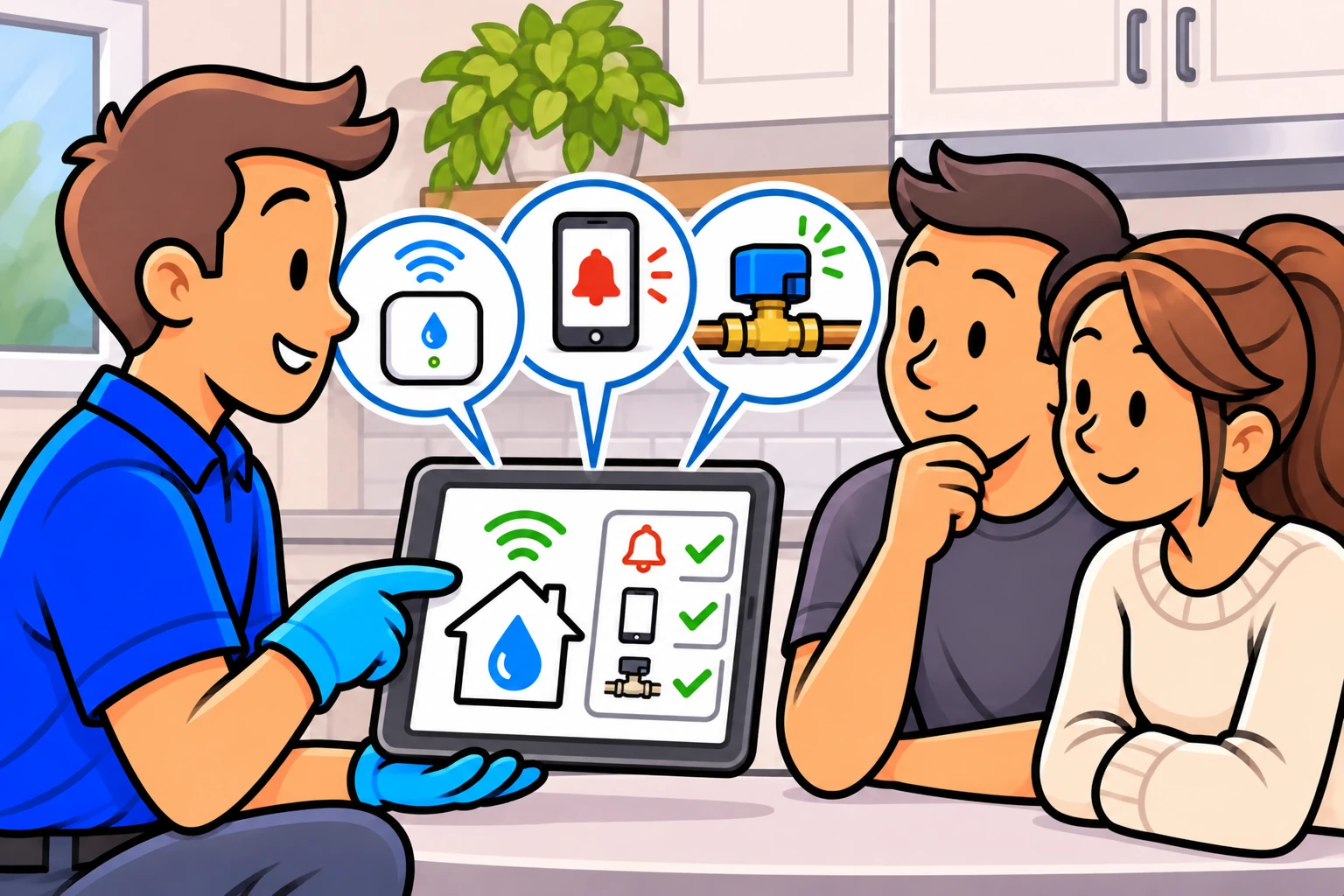
Explaining alerts and system operation
Detection with a defined purpose
Define the workPoint sensors and flow-related devices answer different questions and should be selected for the sources being addressed.
Alerts that reach the right person
Match the site conditionsA notification route should connect with someone who can act, not remain dependent on an account nobody maintains.
Shutoff with understood limits
Plan the next stageA compatible supply shutoff can address water on that supply but does not stop roof entry, groundwater or every drain problem.
Serving Boise and the Treasure Valley Leak Prevention Systems in Boise and Nearby Communities
Disaster Cleanup sells and installs leak prevention systems in Boise and the Treasure Valley communities described on this site. Homes and businesses can have different plumbing layouts, authorized contacts and occupancy patterns. Provide the address and the system goals when arranging a discussion. Installation suitability depends on the actual equipment and property, not on a city name or a promise of one universal setup.
The existing service-area listings include Ada County, Boise, Caldwell, Canyon County, Eagle, Emmett, Garden City, Hidden Springs, Horseshoe Bend, Kuna, Marsing, Meridian, Middleton, Mountain Home, Nampa, Parma, Payette and Star. Call to discuss your address and access needs.

Discuss Your Property Request a Free Inspection
Arrange a free initial inspection to discuss water-risk points and suitable leak-prevention options. Explain previous leaks, appliance locations and who should receive alerts. Ask which installation tasks and equipment are proposed and what they cost before authorizing them; a free assessment is not a promise of free devices or unlimited plumbing repairs.
Call (208) 999-2353Client Reviews What People Say About Us
Rated 4.8 stars from 159 Google reviews. Read our Google reviews


Frequently Asked Questions
Will a leak prevention system stop every kind of water damage?
No. Device capabilities and placement matter. A controlled supply valve does not stop roof leaks, outside flooding or every drain backup. Discuss the sources covered by the proposed equipment and keep maintenance and appropriate building repairs part of the prevention plan. A prevention plan should name both its included functions and important water sources outside its control.
Do all systems automatically shut off water?
No. Some arrangements provide moisture detection or alerts without automatic shutoff. Other products may control a compatible supply valve. The proposal should identify exactly which functions are included rather than use the term prevention as if every device operates the same way. Check whether the proposal includes detection alone, notifications or an actual compatible valve arrangement.
Where should sensors go?
Placement should relate to actual risk points and where escaping water is likely to reach the device. Water heaters, accessible appliance connections and sink cabinets are common discussion areas, but every site differs. A detector in one room should not be treated as monitoring all concealed piping. Placement should also allow the routine checks and maintenance described by the selected product.
What happens if the internet or power is unavailable?
That depends on the chosen product and its local or remote functions. Ask about communication, power and backup limitations before selecting a system. Do not assume that an app notification, local alarm and shutoff action all continue under the same conditions. Keep the manufacturer's requirements available instead of assuming all components have identical backup capability.
Can a system repair an existing leak?
No. Detection and shutoff functions are not plumbing repairs. Active water entry and any affected building materials need appropriate attention. Installing a detector beside a damaged fitting does not establish that the source has been corrected or the surrounding assembly is dry. The leak and any wet material need assessment even if a device successfully closes the supply.
Will this lower my insurance bill?
Only your insurer can confirm any policy-specific benefit or equipment requirement. No discount is promised here. Keep the product and installation information, and ask the insurer about the actual system before relying on savings or assuming future losses will be covered. Insurer advice should relate to the actual installed functions rather than a generic product category.
How do I look after the system?
Follow the manufacturer's instructions for checks, maintenance and any battery replacement. Keep notification contacts current and review the arrangement after account, network or plumbing changes. A system needs a response plan as well as a device that was installed once. A change in occupant, phone, account or network is a reason to review connected responsibilities.
Can you help if a leak has already caused damage?
Disaster Cleanup also provides water-damage restoration and emergency water removal. Describe the current source, visible water and access concerns from a safe location. Immediate hazards should be addressed first, while cleanup and a later prevention installation remain separate work decisions. Keep the water-damage scope distinguishable from a later prevention upgrade so neither is assumed to include the other.