Boise, Idaho Smoke Damage and Smoke Odor Removal
Disaster Cleanup provides smoke damage cleanup and smoke odor removal in Boise and the Treasure Valley. Persistent odor can be connected to residue on surfaces, belongings and porous building materials, not simply stale room air. After any fire is out and access is allowed, discuss the source and affected areas. Do not attempt strong chemical or ozone treatments yourself or assume a fragrance resolves the underlying damage.
Schedule a Free Inspection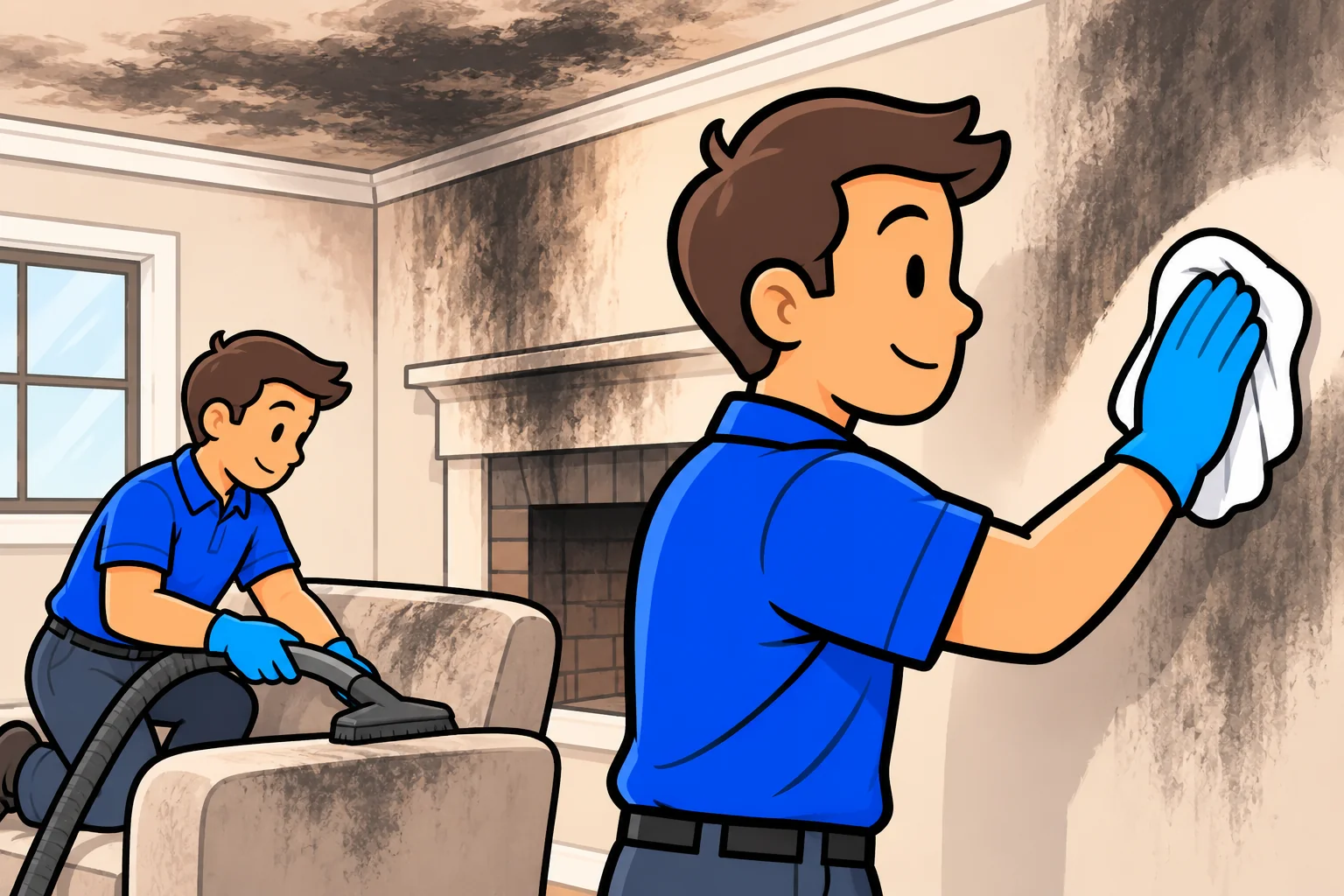
Find out how fast you can get service from your location
RESIDUE REMOVAL BEFORE ODOR MASKING Smoke Damage and Smoke Odor Removal in Boise
Smoke can move beyond the source room and deposit different residues on different surfaces. Loose soot, greasy films and odor held in absorbent materials may not respond to the same approach. We discuss the fire or smoke history, the materials involved and any water used during the event so cleaning, retention decisions and restoration are based on more than the strongest smell noticed on the first visit.
A prior deodorizing attempt is useful history even if it only helped temporarily. Tell us whether walls were washed or painted, contents were moved and ventilation equipment was used. The remaining odor may need to be considered with those changes and the original event. A new scope should explain what evidence supports each task rather than simply repeat a stronger version of the treatment that was already attempted.
When to Discuss Smoke Damage and Smoke Odor Removal
These observations are reasons to discuss residue and material conditions after the event is over and access is permitted. They are not proof that every room requires the same work. Report where the concern persists and any earlier treatment so the assessment starts with the actual history.
- Smoke odor that persists after the source is gone
- Soot on walls, ceilings or contents
- Residue in rooms away from the original event
- Odor returning after a surface-only cleaning
- Smoke-affected fabrics or porous finishes
- Firefighting water alongside smoke residue
What Happens After You Call
We discuss the event, access and remaining residue or odor before selecting work. The next steps connect material-specific cleaning and retention decisions with the broader restoration needs, rather than promise a masking treatment as the answer to every smoke concern.
- Explain the event, affected rooms and any restrictions from responders or the property contact.
- We discuss visible deposits, belongings and any related fire or water damage.
- The scope connects residue removal, material decisions and suitable treatment rather than a masking product alone.
- Different surfaces can need different approaches, and newly found affected layers may require review.
- Discuss what was addressed, any retention limits and the next restoration or specialist tasks before assuming the entire loss is complete.
Common Situations We Assess
Cooking and kitchen smoke
Cooking-related smoke can leave deposits on cabinets, painted surfaces and adjoining rooms. Greasy residue may need a different cleaning approach from loose dry soot. The source location does not automatically define the full affected boundary. Cooking-related deposits and nearby absorbent items can create different assessment questions in one room.
Smoke from a property fire
A fire can leave heat damage, soot and odor along with water and access concerns. Restoration should reflect those combined conditions. Do not assume a room without visible burning needs no evaluation simply because the flame damage occurred elsewhere. Water and debris left after firefighting can influence the connected restoration sequence.
Smoke moving through openings
Air movement can carry residue into connected spaces or onto surfaces away from the original event. Explain rooms where the odor was noticed later. A closed door or an apparently clean finish does not by itself characterize every concealed interface. Air pathways can matter even when the visible deposit is strongest near the original source.
Porous contents and finishes
Upholstery, carpet and other absorbent materials can retain odor or residue differently from smooth surfaces. Assessment should distinguish cleaning possibilities and replacement needs rather than promise that one treatment saves every item or that all odor is stored only in room air. Contents decisions should account for material condition rather than the value or appearance of the item alone.
Exterior smoke entry
Wildfire or other outdoor smoke can affect indoor spaces under different conditions from an interior structure fire. The entry history and surface condition matter. Current outdoor air conditions and building use need consideration rather than treating window opening as a universal solution. An exterior smoke history does not automatically imply the same conditions as a room damaged by flames.
Incomplete earlier cleanup
Painting over residue or using fragrance may change the smell temporarily without addressing the material holding it. Explain prior cleaning and treatments so the plan considers remaining sources instead of repeating a cosmetic step that has not resolved the concern. Tell the team which products or equipment were used instead of starting another masking treatment.
What to Do First: Safety and Preparation
For active fire, heavy smoke or an immediate threat, leave and contact emergency services. Do not reenter a restricted scene or restore damaged equipment yourself. Avoid rubbing soot into finishes or directing the HVAC system to circulate residue before appropriate assessment. A property cleanup discussion does not establish that the building's air or equipment is safe for ordinary use.
Ventilation is not one universal instruction for every smoke event. Outdoor smoke, damaged equipment and access restrictions can affect what is appropriate. Do not enter to open windows or run equipment in an unsafe space. Explain the current source and follow the relevant emergency or property instructions before restoration planning.
- Wait for permitted access after a fire.
- Avoid rubbing soot into finishes as preparation.
- Do not attempt household ozone or strong chemical treatment.
- Explain prior cleaning and ventilation equipment use.
Our Smoke Damage and Smoke Odor Removal Process
1. Review the source and event history
We discuss the type of event, access permission and earlier cleaning or treatment. The history helps frame residue and odor questions while keeping fire safety, electrical work and other specialist needs distinct from ordinary surface cleanup. State whether the concern followed an interior fire, cooking event or exterior smoke entry.
2. Assess materials and affected areas
Visible deposits, odor locations and accessible connected spaces guide the work discussion. The condition of each material matters, and areas not accessible for assessment should remain explicit limitations rather than be assumed unaffected. Report where symptoms appeared later without moving affected items into other rooms to compare them.
3. Discuss retention and cleaning methods
Different residues and surfaces may need different approaches. The proposal should explain which materials can reasonably be considered for cleaning and which may require removal or separate evaluation, without a blanket promise that everything will be restored. A proposed cleaning method should fit the specific material and deposit, not a blanket room label.
4. Clean and address identifiable residue
The work follows the agreed boundary and material conditions. Owners should not wipe soot or move affected contents beforehand; those actions can change surfaces or spread residue beyond the area first noticed. If new affected material is exposed, discuss whether the existing scope still represents the work needed.
5. Review odor-related follow-up
Addressing a persistent smell may require further attention to affected materials or connected spaces. Treatment should fit the site and safe-use requirements. Fragrance alone should not be represented as removal of the source or proof that every affected assembly is resolved. Explain the purpose and limitations of any follow-up instead of promising a universal result from one cycle.
6. Plan repairs and the completion discussion
Explain remaining materials, any related water or fire repairs and work outside the cleanup scope. A review should describe what was actually addressed, not guarantee that all future odors or unrelated conditions in the property have been eliminated. Distinguish completed smoke work from any source, utility or building task that remains outside the agreement.
Why Choose Disaster Cleanup
Smoke work benefits from considering the residue, materials and broader loss together. Disaster Cleanup also provides fire restoration, water-damage response and reconstruction, allowing those needs to be discussed when relevant. Ask how each proposed task connects to a finding instead of assuming that the strongest deodorizing treatment is always the most suitable or that a pleasant smell means the assembly is restored.
The same property can contain a smooth finish that is a cleaning candidate and an absorbent component requiring a different decision. Ask how those choices will be recorded, particularly for important belongings or newly discovered affected layers. The work boundary should remain understandable if another odor location appears after initial cleaning. That is a reason to review the actual source and materials, not evidence that an unlimited odor guarantee was part of every task.
What Affects the Project Schedule?
The source, residue type, amount of affected material, cleaning access and replacement needs influence the sequence. Related fire or water repairs can have separate stages. Confirm the actual plan after assessment rather than assume one treatment, one equipment cycle or a fixed number of days applies to every smoke-odor problem.
Insurance and Project Documentation
Coverage depends on the policy and the event that caused the smoke. Keep safe photographs and records of earlier treatment, and discuss any required authorization with the insurer. A persistent odor or cleanup estimate does not automatically establish coverage for every belonging, replacement finish or related building repair.
Leave residue undisturbed and explain the smoke history
Once the event is over and entry is permitted, contact Disaster Cleanup to discuss affected rooms, belongings and prior cleaning. Do not use ozone or strong chemical treatments as household preparation. For active smoke or another immediate hazard, obtain appropriate emergency assistance rather than wait for a restoration assessment.
If a stable odor remains after another repair, share the chronology and work records when available. The useful next step is identifying the materials and boundaries still in question, not an owner deliberately generating airflow or applying another product to test how the smell changes.
Information That Helps Define the Next Step
- Smoke odor that persists after the source is gone
- Soot on walls, ceilings or contents
- Residue in rooms away from the original event
- Odor returning after a surface-only cleaning
Smoke Damage and Smoke Odor Removal Assessment, Work Planning and Restoration
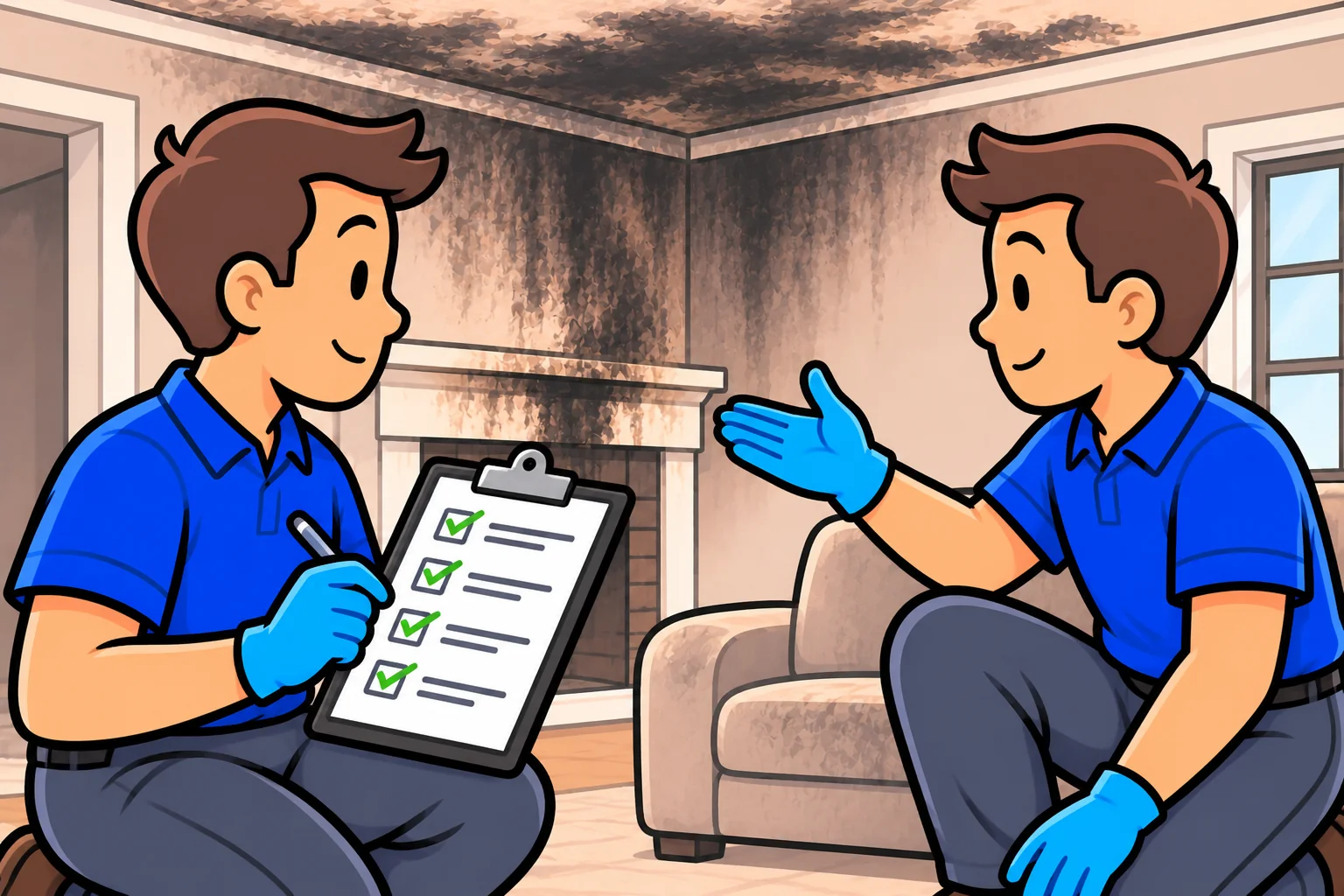
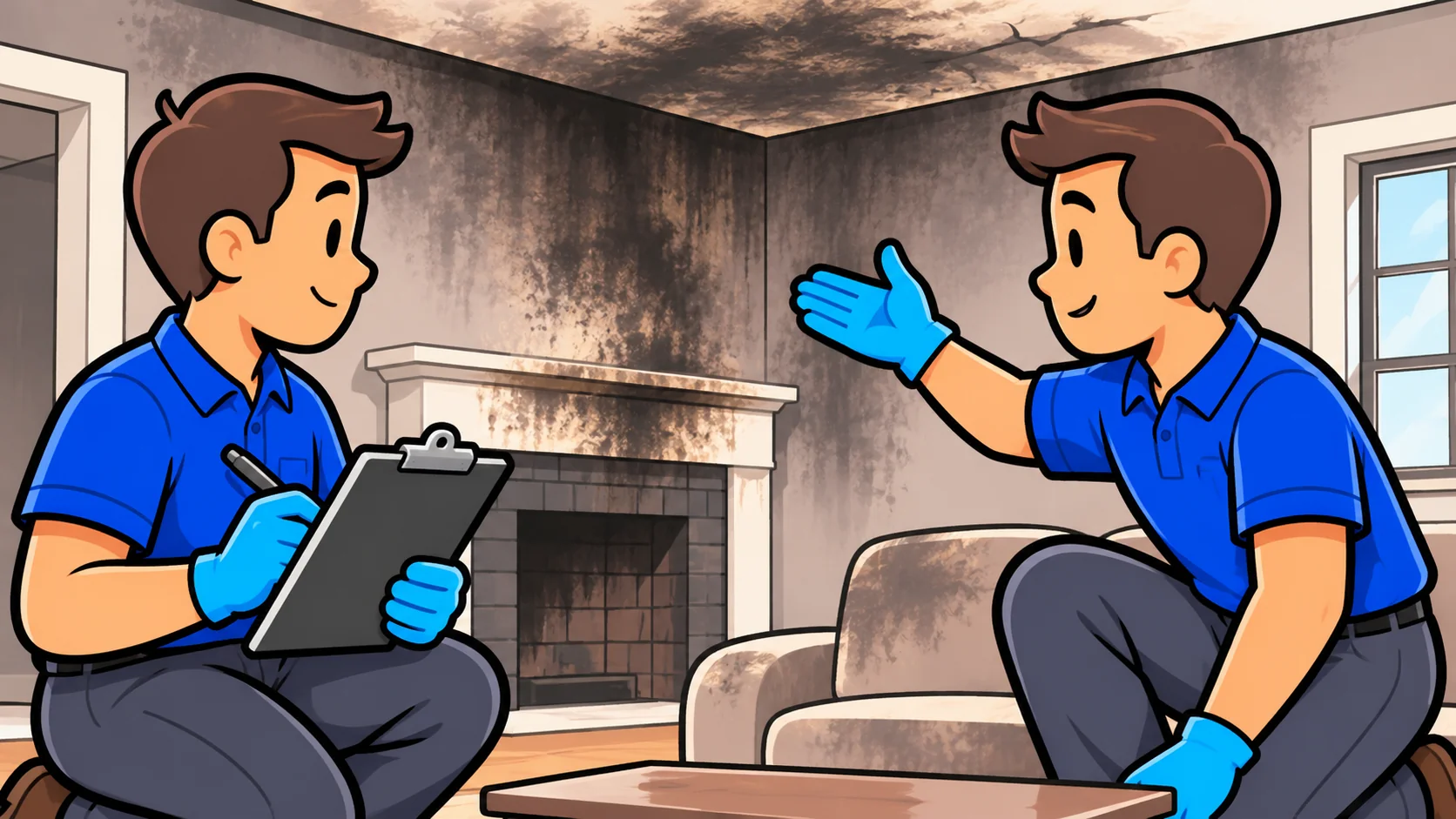
The illustrations show smoke residue, affected rooms and restoration topics, not a promise that one method will save every finish or remove every possible odor. The source, deposits and material construction guide cleaning and retention decisions. Discuss rooms with later symptoms and the history of earlier treatments. A useful proposal connects identifiable residue and material conditions to the work rather than rely only on a fragrance, an equipment name or the strongest smell in the building.
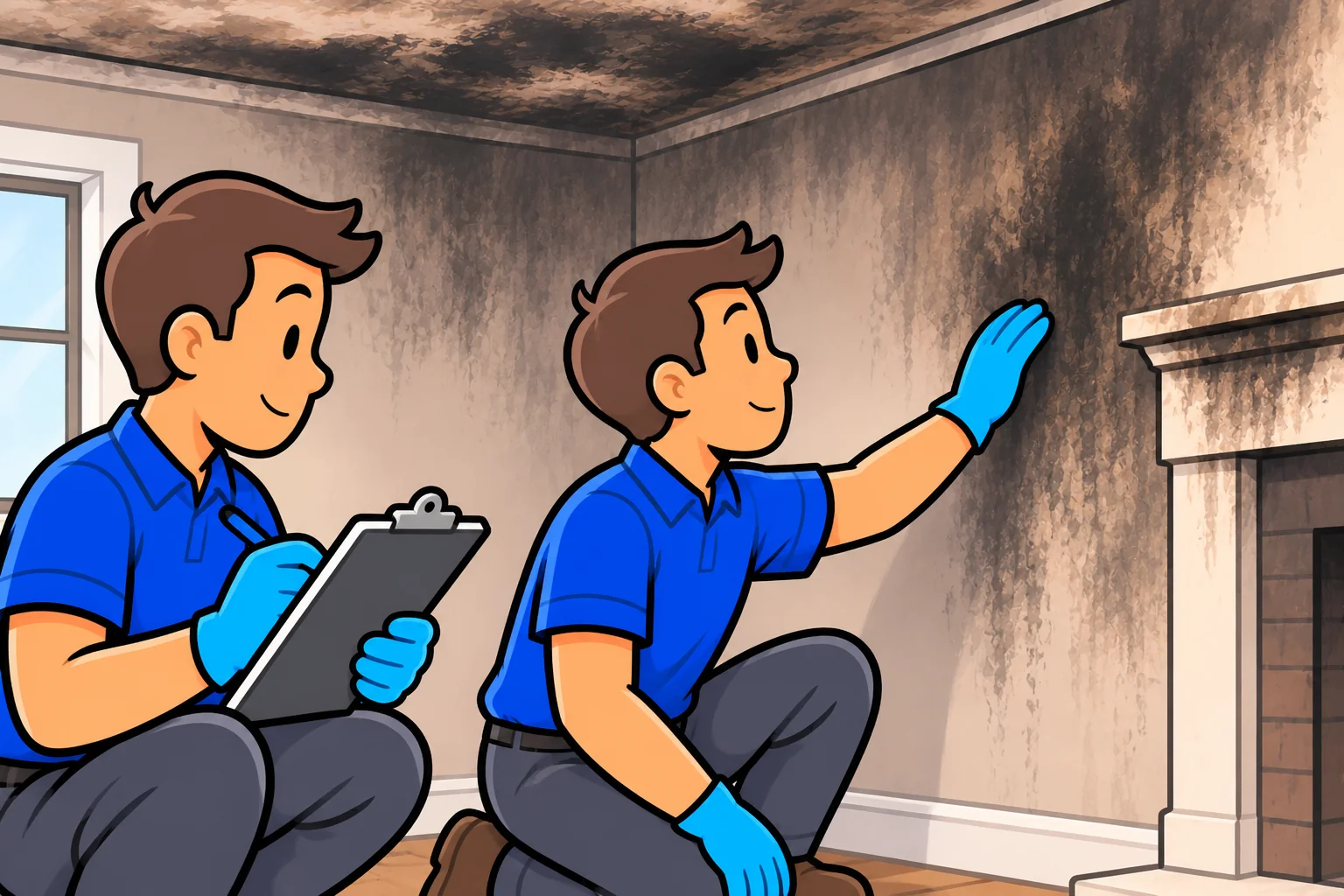
Reviewing smoke-affected surfaces
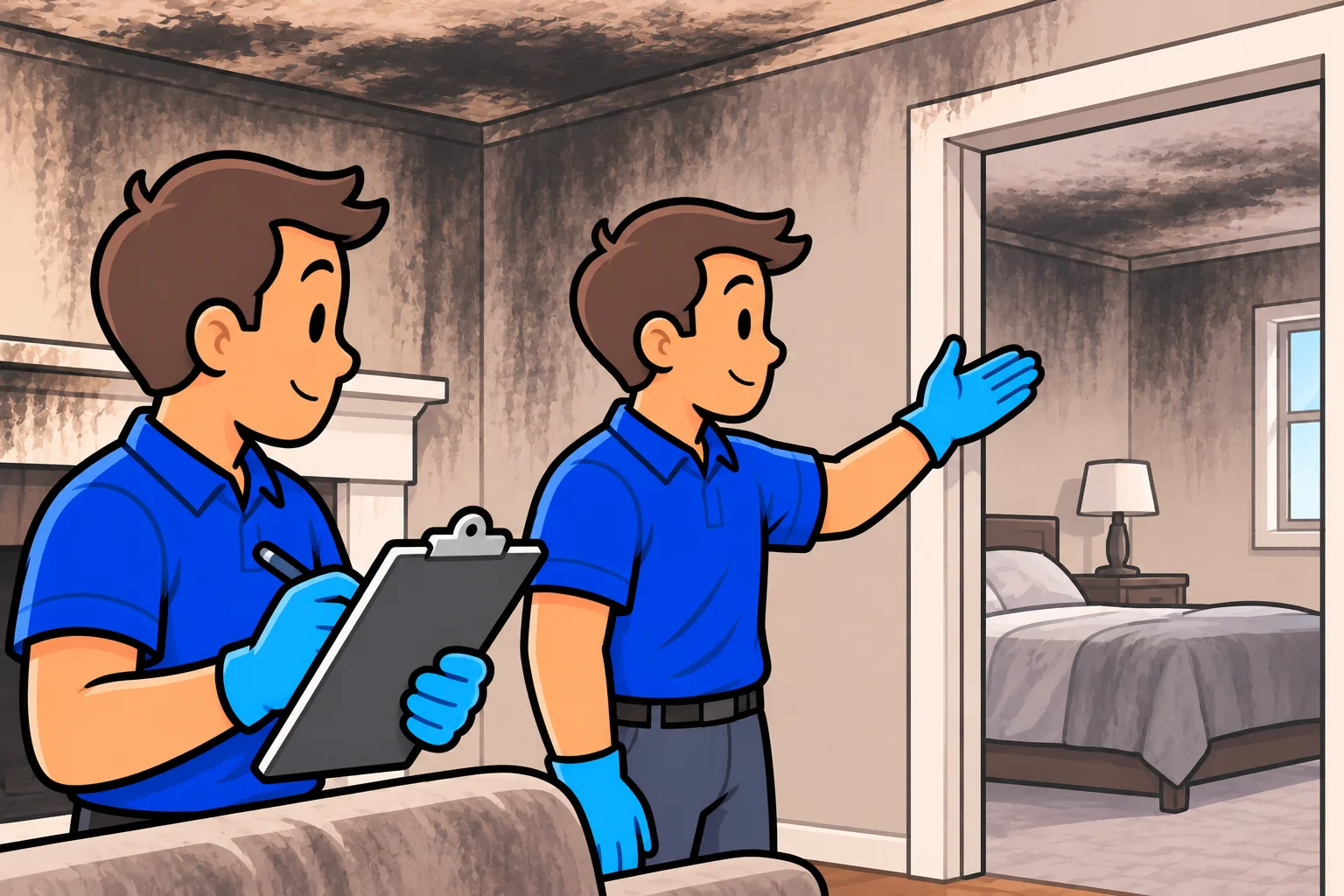
Assessing residue in connected rooms
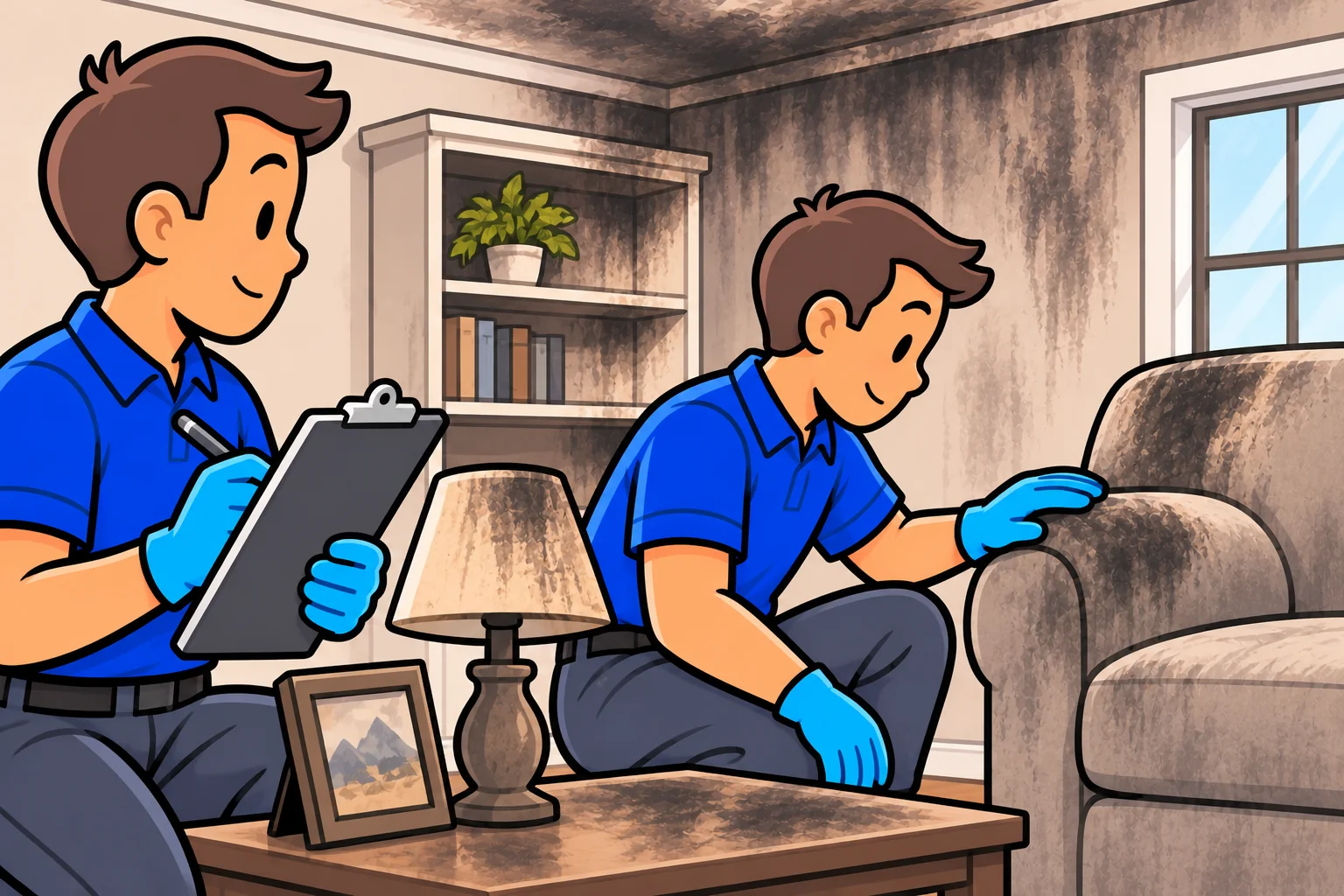
Considering affected contents and finishes

Planning cleaning and restoration follow-up
Residue before masking
Define the workA useful odor plan considers the surfaces and contents holding smoke deposits rather than only the scent of room air.
Methods matched to materials
Match the site conditionsSmooth surfaces and absorbent finishes can require different cleaning or replacement decisions within one loss.
Fire and water connections
Plan the next stageThe smoke scope should remain coordinated with related damage and restrictions without implying it replaces every other repair task.
Serving Boise and the Treasure Valley Smoke Damage and Smoke Odor Removal in Boise and Nearby Communities
Smoke damage and smoke odor removal are offered in Boise and the Treasure Valley communities listed on this website. Homes and commercial spaces can have different access, ventilation and contents conditions. Provide the address and event history when arranging assessment. A city listing does not establish that outdoor conditions are suitable for ventilation or that the same cleaning method fits every affected property.
The existing service-area listings include Ada County, Boise, Caldwell, Canyon County, Eagle, Emmett, Garden City, Hidden Springs, Horseshoe Bend, Kuna, Marsing, Meridian, Middleton, Mountain Home, Nampa, Parma, Payette and Star. Call to discuss your address and access needs.
Discuss Your Property Request a Free Inspection
After access is allowed, contact Disaster Cleanup about persistent smoke odor, soot or affected contents. Explain the source and any previous cleaning, painting or treatment. Ask how the proposed work addresses residue and material conditions, and clarify related fire, water or specialist repairs rather than assuming odor treatment resolves every part of the loss.
Call (208) 999-2353Client Reviews What People Say About Us
Rated 4.8 stars from 159 Google reviews. Read our Google reviews


Frequently Asked Questions
Why does smoke odor return after airing out a room?
Odor can be connected to residue or affected materials rather than only the air present at one moment. Ventilation may change the smell without removing its source. Discuss where it returns and what was already cleaned so assessment can focus on the materials and conditions involved. A changing smell should be considered alongside the original event and the materials that remain in the room.
Can air fresheners solve smoke damage?
Fragrance can mask an odor without removing residue or restoring affected materials. A suitable plan considers deposits, cleaning access and retention decisions. A room smelling different after treatment should not be presented as proof that every surface or concealed layer has been addressed. A pleasant scent is not documentation that affected components have been evaluated or cleaned.
Should I wipe soot off the walls before calling?
Avoid rubbing or scrubbing soot as preparation because residues and surfaces can respond differently. Tell the team about any cleaning already attempted. The assessment should consider the actual condition instead of rely on an owner performing a trial cleaning that may smear or alter the deposit. Different residue types may require different handling, so a trial scrub is not a preparation requirement.
Can every smoke-affected belonging be cleaned?
That depends on material, condition and cleaning feasibility. Absorbent items and smooth surfaces can lead to different decisions. Identify important belongings before handling or disposal, and ask how the scope distinguishes possible cleaning from replacement rather than expect a universal salvage promise. The authorized contact should understand important-item decisions before belongings are removed or treated.
Is household ozone treatment a good first step?
Do not attempt ozone or strong chemical treatment yourself to prepare for assessment. Treatment methods have site and safe-use requirements and do not replace source-related cleaning. Explain any earlier treatment so the next plan considers what was actually done and the materials that remain affected. Treatment should not be used to bypass source-related cleaning or ignore unresolved site safety questions.
Do rooms away from the fire need attention?
Smoke can move through openings and connected spaces, but the work boundary should follow actual findings rather than assume every room is identical. Report later odor or residue observations and access limits. Lack of visible burning does not by itself characterize all smoke-related conditions. A limited accessible view should remain a limitation rather than a whole-building conclusion.
Can smoke cleanup be coordinated with fire repairs?
Yes, relevant fire, smoke, water and reconstruction needs can be discussed together. Each proposed task should still be clear in the scope, including any specialist work or restrictions. Smoke cleaning alone does not establish that utilities, structure or other damaged systems are ready for normal use. The proposal should state which tasks are cleanup and which are repairs or assessment by another professional.
Will insurance cover odor removal?
The insurer decides coverage under the policy and reported event. Keep the source history, safe photographs and proposed scope available. A cleanup discussion cannot guarantee payment for every treatment, belonging or repair, and earlier fragrance or painting does not itself establish the restoration need. Keep earlier treatment records so the insurer's discussion reflects the actual event and proposed work.