Boise, Idaho Blood Cleanup
Blood cleanup in Boise requires attention to exposure risks and the materials beneath the visible stain. Disaster Cleanup helps assess affected rooms, surfaces and belongings after medical needs and official restrictions have been addressed. Keep the area separated from everyday use and contact us to discuss an appropriate cleanup scope without handling contaminated material yourself.
Schedule a Free Inspection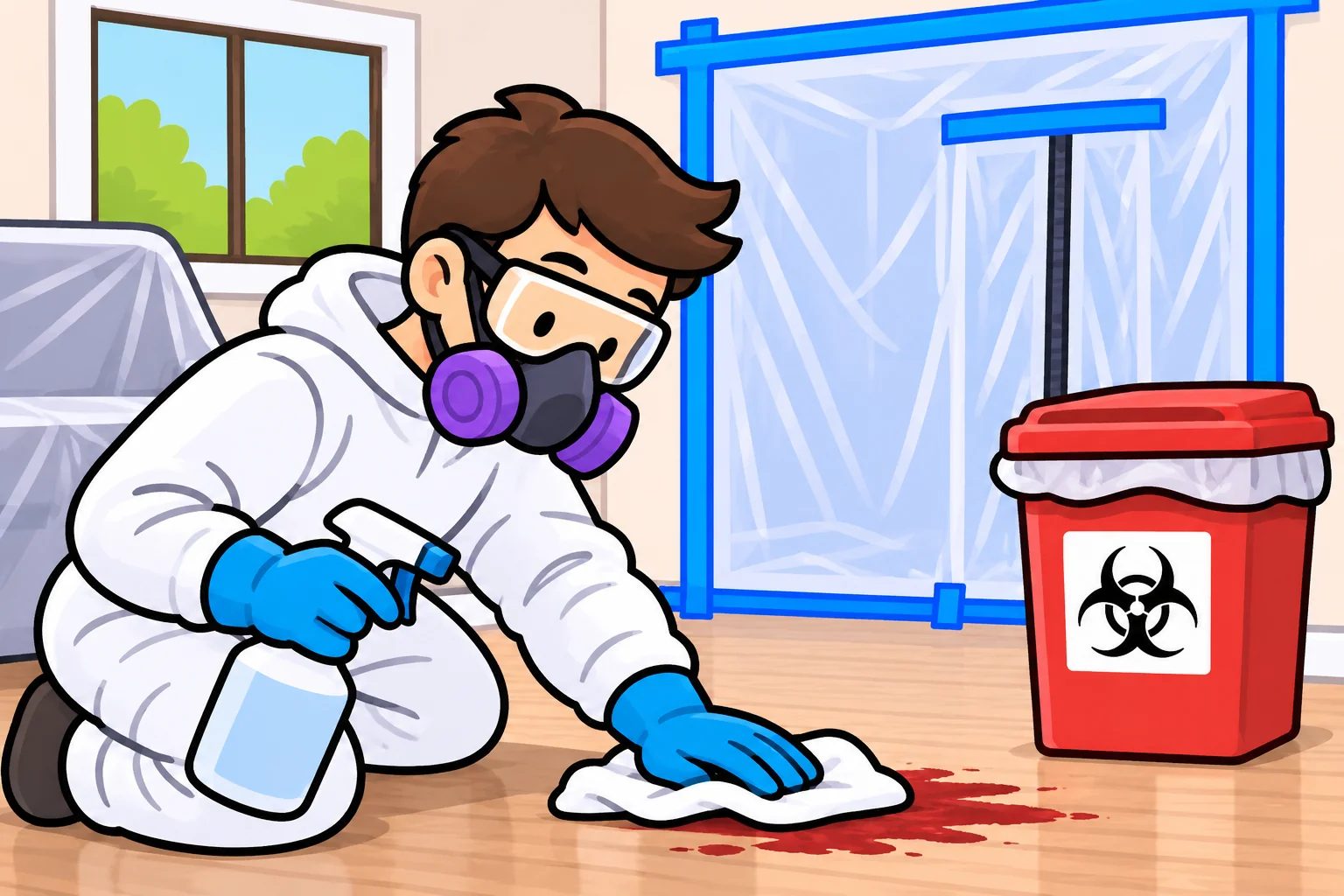
Find out how fast you can get service from your location
CAREFUL, RESPECTFUL CLEANUP Blood Cleanup in Boise
Blood can move into flooring seams, carpet padding and furniture construction. A surface that looks clean may therefore tell only part of the story. The useful questions are where the liquid traveled, whether porous materials absorbed it and how people or objects moved through the space. Those details guide a focused cleanup rather than indiscriminate disposal.
Assessment should distinguish the original affected area from any transfer that happened afterward. A moved rug or an item carried down a hallway may change the questions even if the largest stain remains in one room. Explain what is known without handling anything further. The objective is a defined cleanup and repair plan, not asking the person responsible for the property to prove the extent by opening materials themselves.
When to Discuss Blood Cleanup
Blood cleanup is not determined solely by the size or color of a visible mark. Surface construction, absorption and movement through the room all matter. Discuss these signs from a safe position, and identify whether emergency responders or another authority still control access.
- Blood absorbed into carpet or padding
- Residue in hard-floor joints or edges
- Affected fabric furniture or mattresses
- Contamination beneath moved belongings
- Footprints or transfer into nearby spaces
- Sharp debris associated with the incident
What Happens After You Call
The first call helps establish access, the affected materials and who may authorize the work. Cleanup planning can be considerate without asking you to undertake potentially exposing preparation.
- Describe the affected rooms and surface types without sharing unnecessary personal details.
- We discuss access permissions and whether authorities have released the location.
- Carpet, floor joints and furnishings are considered separately from smooth exposed surfaces.
- The authorized decision-maker can review what may be cleaned and what needs removal.
- We explain remaining repair needs and any limits to the completed cleanup scope.
Common Situations We Assess
Blood on carpet and underlay
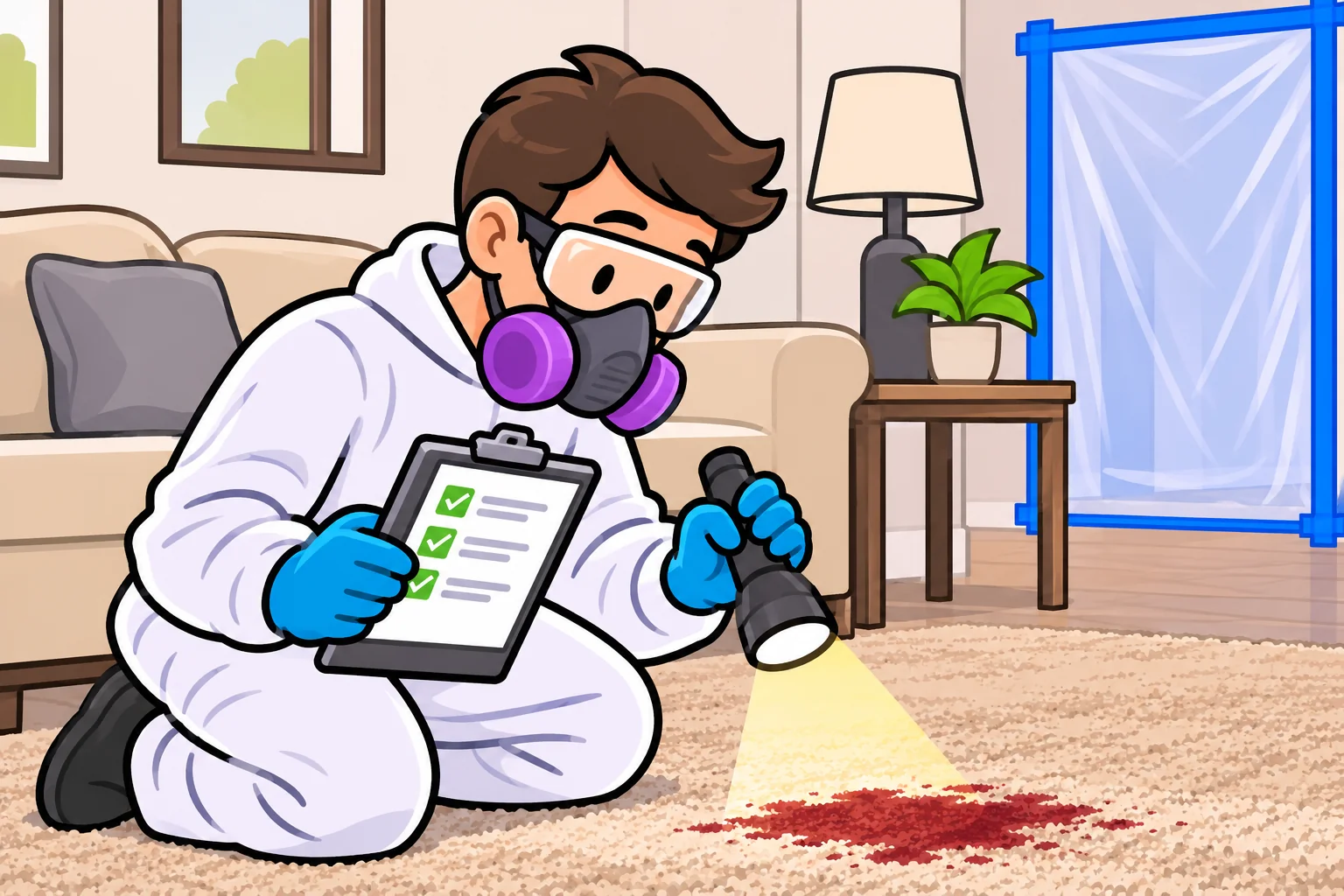
Liquid may pass through carpet fibers into the backing or pad. Cleaning the visible pile does not establish the condition of those underlying layers, so material decisions should follow the depth and extent of contamination. The affected pad and the finished carpet can require separate retention decisions.
Residue in flooring joints
Small seams and edges can collect material that is hard to reach with a simple surface wipe. The flooring construction and the route of the liquid help determine whether additional access or removal needs consideration. A seam can hold residue even when the adjoining surface wipes clean.
Affected upholstered contents
Fabric and internal cushioning can absorb material differently from a sealed hard surface. Decisions about furniture should be based on the actual affected parts and practical cleaning limits, with owner authorization before disposal. Owner authorization is important before a personal item is discarded.
Transfer from shoes or objects
Walking through a stained area or moving affected belongings may create a second contamination path. Tell the team about these movements instead of trying to remove the evidence with ordinary household tools. Do not attempt to retrace a contamination path by walking through it.
An incident discovered later
Drying does not eliminate the need for careful handling. Older residues may be less obvious while still affecting joints or porous material, and the work boundary should reflect the incident history as well as what is visible. Time since discovery and previous cleaning attempts are useful assessment information.
Associated sharp debris
Broken glass, needles or damaged objects may be present near the contamination. These are separate handling hazards; do not pick them up to make room for cleanup or place them into unmarked household waste. Sharp objects should be identified without an owner collecting or packaging them.
What to Do First: Safety and Preparation
Arrange emergency medical assistance first if anyone may still need care. Do not handle stained objects, broken glass or needles, and keep children and pets out of the area. Avoid dry sweeping, household vacuuming and mixing cleaning products. Explain what happened from a safe location; you do not need close-up photographs to make the first call.
If you already attempted cleaning, explain which products and equipment were used and where. Do not continue with another chemical or take apart a vacuum to inspect it. The assessment can consider the actual history, while the immediate priority remains keeping other people away from affected material and sharp objects.
- Leave affected fabric and sharp objects in place.
- Do not prepare the area by scrubbing stains.
- Keep children and pets outside the work boundary.
- Identify who may authorize decisions about belongings.
Our Blood Cleanup Process
1. Clarify the incident and access
We discuss the location, affected materials and any immediate restrictions. Medical care and scene release come first; a cleanup arrangement does not replace either of those responsibilities or authorize entry into a restricted area. Tell us whether the affected area has been used, entered or cleaned since the incident.
2. Establish a controlled boundary
The plan identifies affected spaces, safe routes and surfaces that should remain outside the work area. This reduces unnecessary movement through clean rooms while equipment, belongings and removed material are handled. Movement routes should consider hallways and shared spaces, not only the room with visible staining.
3. Inspect the material layers
We consider whether contamination is limited to a cleanable surface or has entered carpet backing, joints or contents. Findings guide removal decisions rather than treating every stain and construction type as an identical task. Do not pull flooring back yourself to determine whether a concealed layer is affected.
4. Remove affected material appropriately
Unsuitable porous items and visible contamination are handled within the agreed scope. Decisions about personal belongings should be discussed with the authorized owner or representative, rather than assumed without communication. Discuss important personal items before they are handled as part of the cleanup or removal work.
5. Clean suitable remaining surfaces
Methods and products must be appropriate for the contamination and material. A careful process addresses the affected surface after removal of residue; simply spraying a fragrance does not constitute blood cleanup. Cleaning should follow the actual surface condition and appropriate product requirements rather than a cosmetic stain target.
6. Explain the result and next work
We review the completed area, any access limitations and repairs made necessary by material removal. The record should describe actual work rather than make unsupported claims about medical safety or unaffected rooms elsewhere in the property. Clarify what repairs remain and what the completion discussion does not establish about other parts of the property.
Why Choose Disaster Cleanup
Blood cleanup involves both contamination control and sensitive decisions about property. A clear discussion of the affected layers and belongings helps avoid surprises about what remains after the work. Respectful communication also means not requiring a family or property manager to carry out potentially exposing preparation tasks.
The practical handoff matters as much as the visible cleaning. If a section of carpet, pad or finish needs removal, the owner should know what repair remains and whether it is included in the proposal. Discussing that distinction early helps avoid treating cleanup and a completely finished room as identical scopes. Sensitive belongings also deserve an explicit decision rather than being mixed with ordinary building debris by assumption.
What Affects the Project Schedule?
The affected area, penetration into materials, condition at discovery and access arrangements influence the schedule. Removal and subsequent flooring or finish repairs are separate work stages. Confirm the scope before relying on any estimate of how quickly the room can return to use.
Insurance and Project Documentation
The incident and policy determine whether a claim may apply. Ask the insurer what information it needs about the event, materials and cleanup work. Disposal of contents, building-material removal and repair may be evaluated separately, and coverage cannot be promised in advance.
Get medical help first; keep others away from contamination
If the incident is ongoing or someone may be injured, contact emergency services. Once immediate needs are addressed, leave affected surfaces undisturbed and discuss cleanup from outside the area. Tell us about sharps, pets or movement through nearby rooms so the work plan can account for those conditions.
For a property manager or family representative, useful preparation is arranging authority to enter and make decisions, not cleaning the room. Keep the conversation focused on the affected location, surfaces and known hazards so the work can be discussed without unnecessary personal details.
Information That Helps Define the Next Step
- Blood absorbed into carpet or padding
- Residue in hard-floor joints or edges
- Affected fabric furniture or mattresses
- Contamination beneath moved belongings
Blood Cleanup Assessment, Work Planning and Restoration
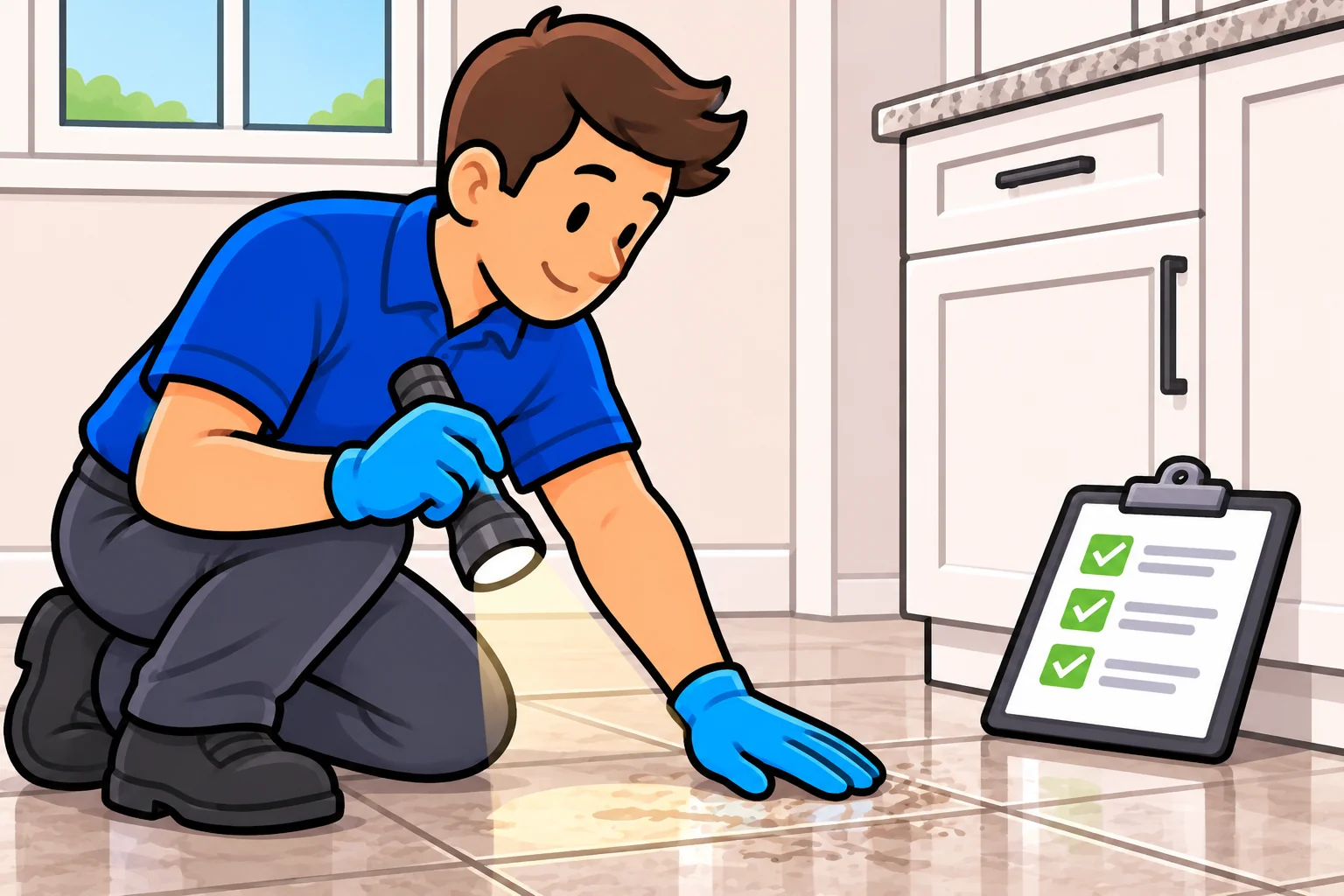
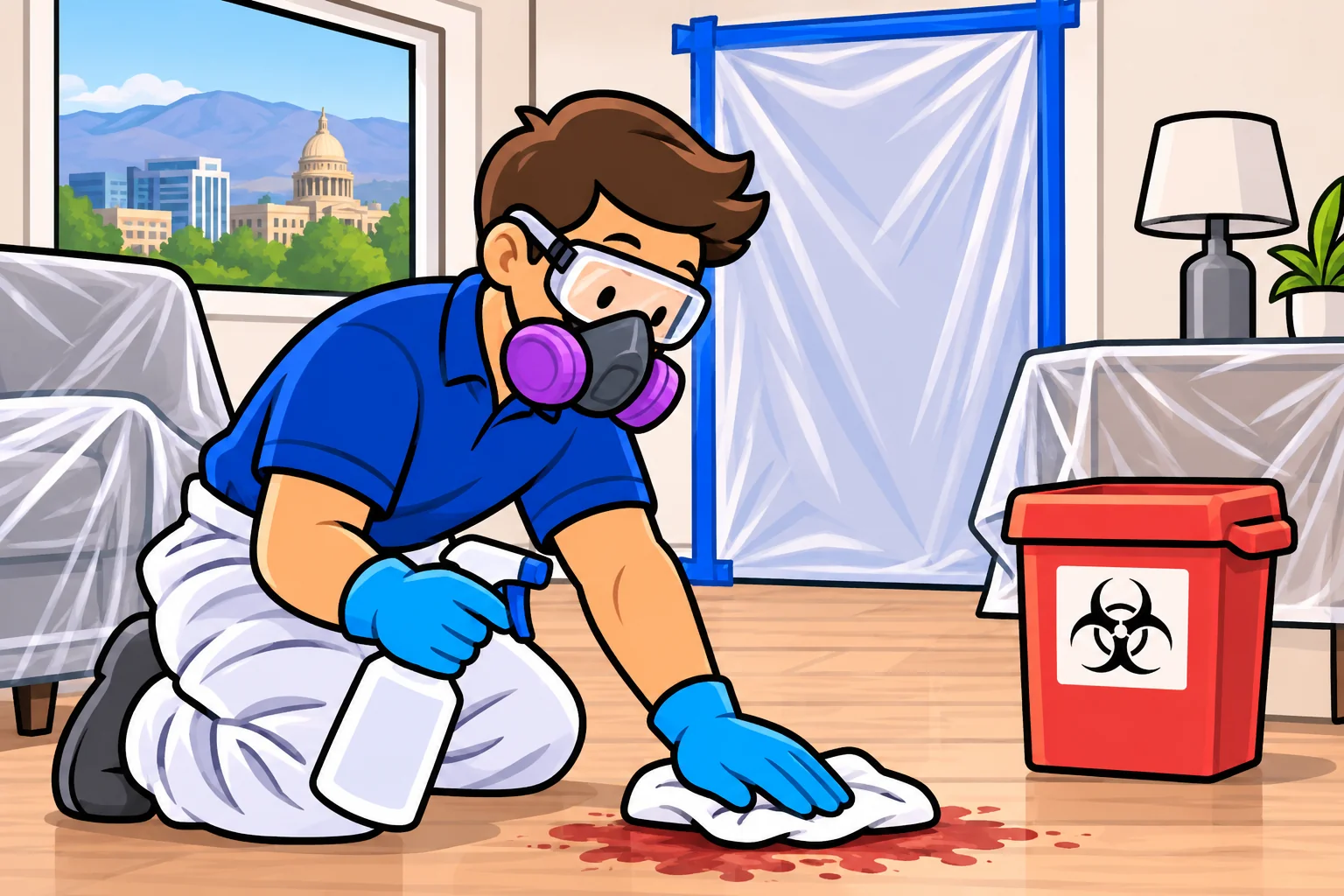
Different surfaces lead to different blood-cleanup decisions. Carpet and fabric may absorb liquid; floor seams may conceal residue; cleanable hard surfaces still need an appropriate process after visible material is removed. The illustrations below represent those assessment and handling topics, not documentation of an actual incident at your property. Explain the affected materials and any known movement through the room so the work remains focused on the situation being addressed.
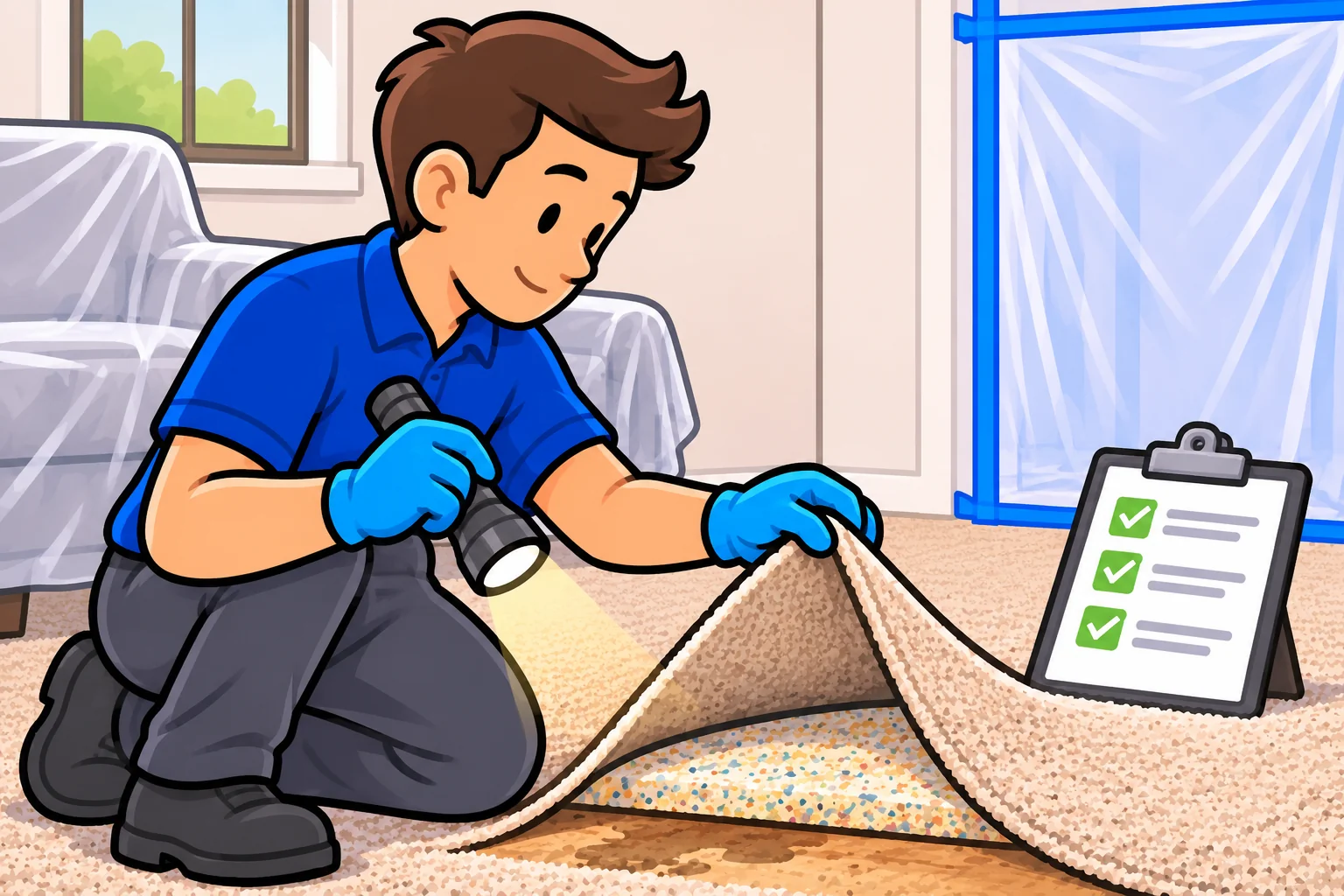
Assessing affected carpet layers
Evaluating cleanable hard surfaces
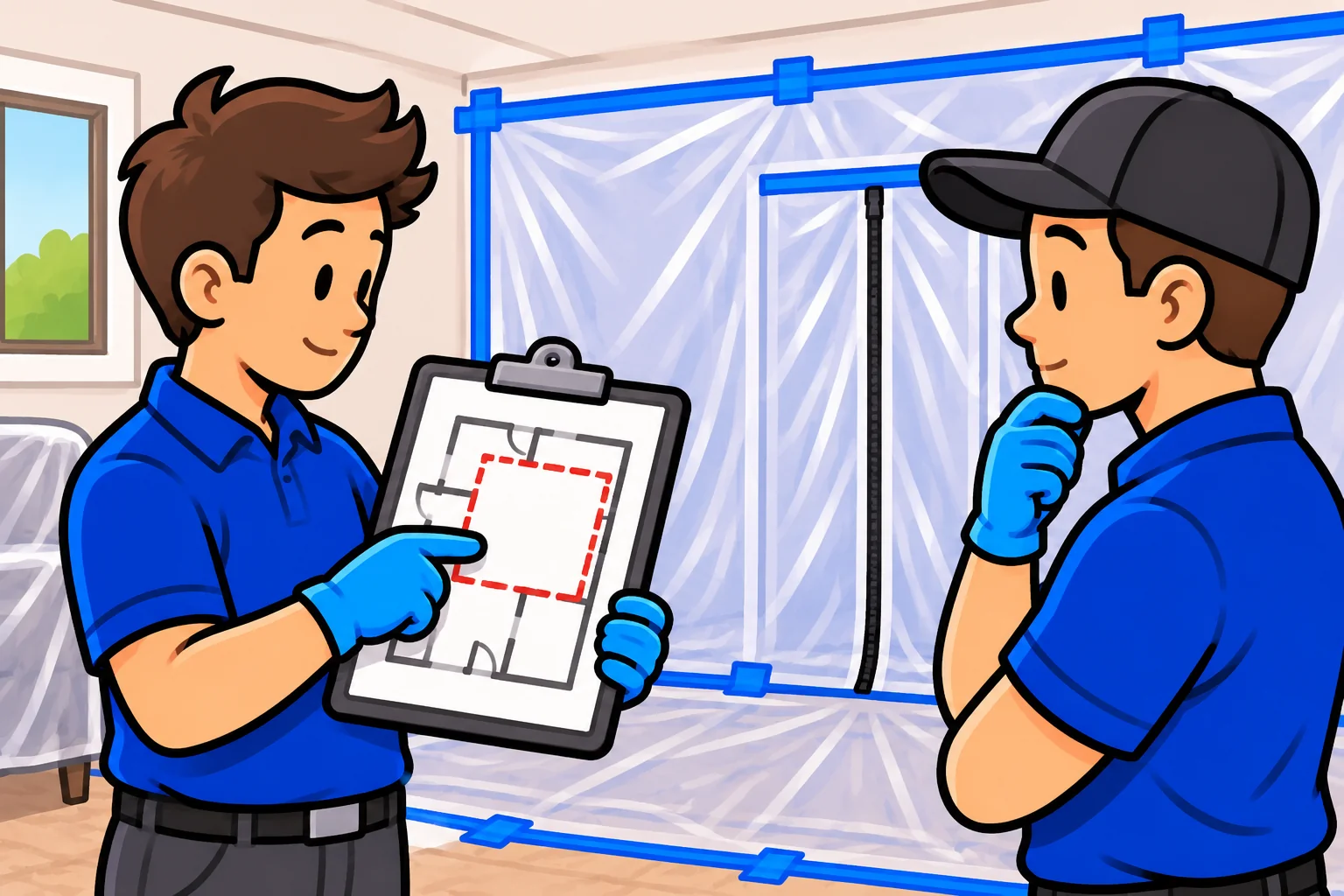
Planning the controlled work boundary

Separating cleanup and waste handling
Carpet and underlying layers
Define the workThe condition of backing and padding matters when blood has soaked below the surface.
Belongings handled with permission
Match the site conditionsDiscuss cleaning limits and removal choices with the person authorized to make property decisions.
A defined repair handoff
Plan the next stageRemoving contamination can reveal a separate need for flooring or finish replacement.
Serving Boise and the Treasure Valley Blood Cleanup in Boise and Nearby Communities
Blood-cleanup service is offered by Disaster Cleanup in Boise and the Treasure Valley areas described on this website. A home, rental and managed commercial space can have different people responsible for authorizing access and property decisions. Provide the location and the appropriate contact when discussing the work. No service-area listing overrides official scene restrictions or substitutes for medical assistance when someone may still need care.
The existing service-area listings include Ada County, Boise, Caldwell, Canyon County, Eagle, Emmett, Garden City, Hidden Springs, Horseshoe Bend, Kuna, Marsing, Meridian, Middleton, Mountain Home, Nampa, Parma, Payette and Star. Call to discuss your address and access needs.
Discuss Your Property Request a Free Inspection
After medical needs and access restrictions are resolved, contact Disaster Cleanup to discuss the affected surfaces and next assessment step. You do not need to collect contaminated items, handle sharp debris or clear furniture before calling. Share the location and authorized contact so the cleanup and any repair questions can be reviewed appropriately.
Call (208) 999-2353Client Reviews What People Say About Us
Rated 4.8 stars from 159 Google reviews. Read our Google reviews


Frequently Asked Questions
Does dried blood still need special handling?
Dry appearance does not make a blood-affected area an ordinary housekeeping task. Residue may remain in seams, absorbent material or belongings. Avoid handling or disturbing it and discuss the location, surface types and incident history when arranging an assessment. The original incident history remains relevant even when the surface appearance has changed over time.
Can you clean carpet without removing it?
That depends on whether contamination has reached backing, padding or the floor underneath. A visible surface stain alone does not establish those conditions. We discuss the affected construction and removal or cleaning options rather than promising that every carpet can be retained. The edge of a stained carpet may not identify how far liquid traveled below it.
Should I move stained furniture out of the room?
Leave affected items in place unless an appropriate professional directs otherwise. Moving them through a hallway or another room can spread contamination. Identify the items during the discussion and confirm who can authorize cleaning or disposal before material decisions are made. Explain any items already moved so the assessment can consider the route they took.
What if there are needles or broken glass?
Do not collect sharp objects as preparation for cleanup. Keep others away and tell the team what is present and where. Sharps create a handling risk beyond the visible stain and should be included in the assessment and work plan. A photograph from a safe position may help, but close inspection is not a preparation requirement.
Can ordinary bleach solve the problem?
A cleaning product does not by itself address contamination absorbed into porous materials or hidden joints. Products also have application and surface limitations. Avoid mixing chemicals or attempting a cleanup that may expose you; first clarify the affected materials and the appropriate scope. A smooth sealed surface and an absorbent material may require different work decisions.
Can work start while police still control the location?
No cleanup should interfere with an investigation or other official access restriction. Tell us whether the site has been released and who can authorize entry. Discussing cleanup does not provide permission to enter or alter a restricted scene. Who controls entry is a separate question from who owns or manages the damaged property.
What happens after contaminated flooring is removed?
The remaining surface and any exposed layers need assessment within the cleanup scope. Replacement flooring, trim or other repairs may then be a separate stage. Ask which restoration work is included so you understand the condition in which the room will be handed back. Ask whether the proposal includes replacement finishes or only the contamination-cleanup stage.
Will insurance pay for blood cleanup?
That is determined by the incident, policy and insurer review. Documentation can describe the affected area and work performed, but it does not guarantee reimbursement. Ask about authorization, deductibles and treatment of personal belongings before assuming that the entire project is covered. Keep decisions about contents and building repairs itemized so the claim discussion reflects actual work.