
Mold Testing in Meridian, ID
Mold testing in Meridian can help a property owner make a defined decision after an odor, stain or previous leak. Disaster Cleanup discusses accessible observations and sampling that fits the moisture history rather than prescribe the same test for every home. A newer finish does not reveal every layer behind it. Clarify collection, laboratory work and charges, and keep the findings separate from personal medical conclusions or automatic remediation authorization.
Schedule a Free Inspection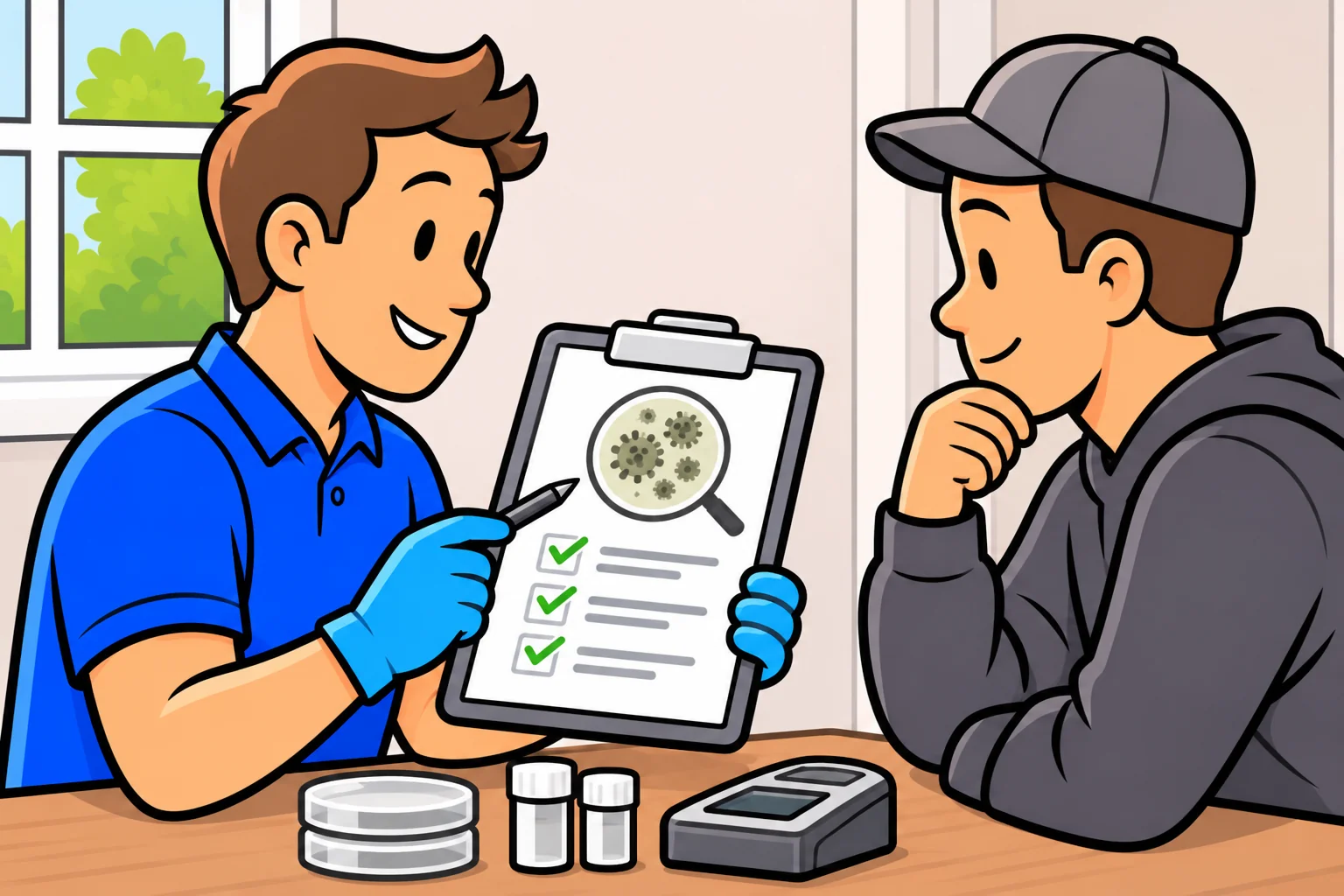
Find out how fast you can get service from your location
MOISTURE QUESTIONS AND INFORMED SAMPLING Mold Testing for Meridian Properties
In a Meridian home, a bathroom exhaust question, a slow fitting leak and moisture at an exterior wall can lead to different investigations. A small interior mark does not identify its source, and a newer building is not automatically exempt from concealed material concerns. Describe actual timing, completed repairs and any remaining symptom before selecting collection locations or deciding whether another opening would be useful.
Testing should answer a question that observations alone leave unresolved. Air and surface collection represent different things, and a result needs the collection history and property context. We discuss what the proposed evidence can support and which spaces remain outside the assessment. This makes a later decision about source correction, additional access or a separate remediation scope more understandable than treating a sample count as a universal pass or fail for the home.
Questions to Discuss at Your Meridian Property
A Meridian owner may report recurring bathroom odor, an attic concern or staining after a concealed leak. Record the sequence and earlier treatments without opening material. Such observations can focus assessment, but they do not establish every hidden condition or make a laboratory result a diagnosis of an occupant.
- A musty odor without an explained source
- Unresolved questions after a water event
- Staining that needs evaluation before repair
- A buyer or seller with a defined testing question
- Recurring dampness in an attic or crawl space
- A landlord needing context for a property concern
What Happens After You Call
We discuss the concern and evidence needed before selecting samples. The next steps separate an initial inspection, any agreed laboratory work and the property decisions that the findings can reasonably support.
- Describe odors, staining, earlier leaks and the decision you need help making.
- Previous repairs or sampling reports can help define what remains uncertain.
- Clarify how air or surface samples would relate to the concern and what they cannot establish.
- Review the materials, locations, laboratory work and separate charges before authorization.
- Discuss results in context, including moisture correction, further investigation or a separate remediation scope where appropriate.
Property and Sampling Questions in Meridian
Bathroom exhaust and attic concerns
Ventilation routing and roof entry can produce different questions even where a visible mark is similar. Share existing work records or safe observations rather than enter an attic to investigate. The sampling plan should explain how its locations relate to the suspected condition and its access limits.
Slow plumbing-fitting history
A repaired connection does not by itself describe the remaining wall assembly. State when the source was corrected, what drying occurred and whether symptoms continued. Sampling should support the current material question rather than assume the repair either resolved everything or failed everywhere.
Exterior wetting and wall openings
A symptom that changes near irrigation or weather can guide investigation without confirming the pathway. Explain the actual timing and repairs. A room-air result cannot by itself distinguish every route behind a wall, so the source and material questions should remain connected but separate.
Crawl-space barrier and access
A reported damaged barrier or damp area can justify a closer discussion, not an owner entering an uncertain void. Ask which accessible conditions can be assessed and what sampling would add. A result near an opening should not be generalized to all framing and insulation below the house.
Previous work without clear records
If an earlier contractor painted, removed or treated material, explain what is known and where documentation ends. A later sample represents later conditions. Its purpose should not be to recreate the original leak or make an unsupported statement about every layer already concealed by repairs.
A buyer or manager's defined request
A Meridian property decision may need particular documentation or answers about a reported area. Share the request and permission for access before choosing collection. The report should keep its intended question and scope explicit rather than become a guarantee of future conditions for every occupant.
What to Do First: Safety and Preparation
Do not scrape growth, cut into walls or disturb insulation to obtain a sample yourself. Explain the moisture history and leave suspect areas undisturbed while access is arranged. If there is immediate electrical or structural danger, address that first. For symptoms or health concerns, consult a qualified medical professional rather than asking a property sample to diagnose an illness.
If another contractor has already cleaned or removed material, describe what was done and when. That history matters to what a later sample can represent. Do not deliberately leave a leak active to improve sampling, and do not change normal building conditions just to obtain a preferred result without discussing the investigation plan.
- Leave suspected growth and insulation undisturbed.
- Share earlier water and remediation records.
- Discuss testing charges before sampling proceeds.
- Use medical professionals for individual health concerns.
The Mold Testing Sequence for Your Meridian Property
1. Define the question and history
Begin with the Meridian symptom and confirmed repair history, including whether the concern involves a wall, attic or crawl space. Define the intended decision before choosing evidence, and keep safe-access limits explicit instead of relying on owner-led demolition.
2. Review accessible conditions
The inspection considers visible material conditions and moisture information relevant to the concern. Access limitations should be explicit; an accessible-area visit does not rule out every concealed source or characterize every room in the building. Record the distinction between an inaccessible area and an area examined without a relevant visible finding.
3. Explain a sampling plan
Air and surface samples can answer different questions. The proposed locations, comparison information where relevant and analysis should fit the investigation rather than imply one sample can describe an entire property under all future conditions. Discuss any comparison or collection conditions used and why they are relevant to the proposed question.
4. Collect within the agreed scope
Sampling should be described in relation to the location and conditions represented. Owners should not prepare by scrubbing, disturbing suspected growth or deliberately changing ventilation to obtain a preferred result. The collection history should remain traceable to the material or location described in the result.
5. Review results with context
Laboratory findings need to be considered alongside site observations and the reported history. Identification or counts should not be translated into an individual medical diagnosis, a universal safe threshold or certainty about every unexamined surface. A reported finding should not be stretched to support an unrelated diagnosis or whole-building guarantee.
6. Discuss the appropriate next step
Explain what the Meridian findings support and which source or access questions remain. Further sampling, moisture correction and remediation are separate possible steps; the report should not become an unlimited property clearance or authorize every later repair.
A Clear Plan for Your Property
A clear Meridian testing plan explains why evidence is being collected and how a finding could change the recommended next step. Ask what each location represents and what accessible observations add. The size, age or neighborhood of a house should not substitute for relating the investigation to its actual symptoms and water history.
Disaster Cleanup offers related moisture and remediation services, but these remain separate decisions. A laboratory finding is not automatic permission to remove a finish or a diagnosis of an individual. The recommendation should distinguish supported material conclusions from uncertainty, including inaccessible areas, and explain what additional evidence would be useful before the owner authorizes a later stage.
What Affects the Project Schedule?
Access, the investigation question, sampling arrangements and laboratory processing influence the sequence. Discuss current arrangements directly rather than assuming immediate results or a fixed turnaround from an automated drive-time estimate. Additional access or follow-up questions can require another scope even after an initial report is available.
Insurance and Project Documentation
Coverage depends on the policy, cause and insurer review. Testing related to a reported water event and investigation of a long-standing concern can be treated differently. Keep the agreed scope and findings, and ask the insurer about documentation or authorization. A sample result does not itself establish claim approval.
Safe Next Steps for Mold Testing in Meridian
Leave suspect Meridian finishes and insulation undisturbed while discussing the investigation. Do not restart an appliance, leave a leak active or direct moisture into an area to demonstrate the symptom. Share prior reports and explain cleaning, ventilation changes or repairs already made. Address immediate electrical or structural danger through appropriate assistance first; laboratory information should not replace medical advice for an individual's symptoms.
Information That Helps Define the Next Step
- A musty odor without an explained source
- Unresolved questions after a water event
- Staining that needs evaluation before repair
- A buyer or seller with a defined testing question
Mold Testing Assessment, Work Planning and Restoration
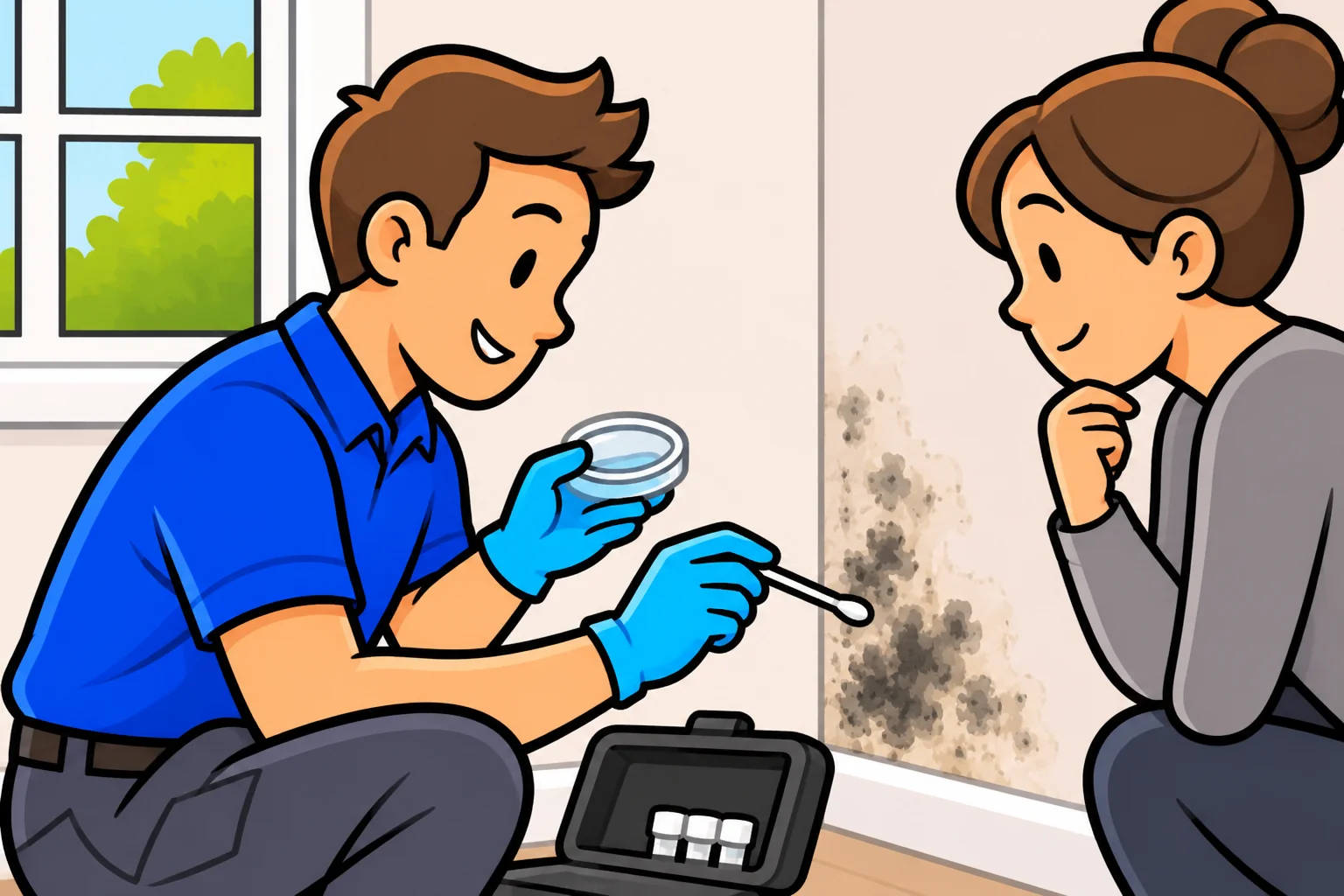
The illustrations show moisture assessment and sampling topics rather than proof that every Meridian home needs the same package. A useful plan identifies the purpose of collection, the locations represented and the limits of access. Findings can inform source work or a separate remediation proposal, but collecting a sample does not fix ventilation, dry a wall or establish the condition of every concealed component in the building.
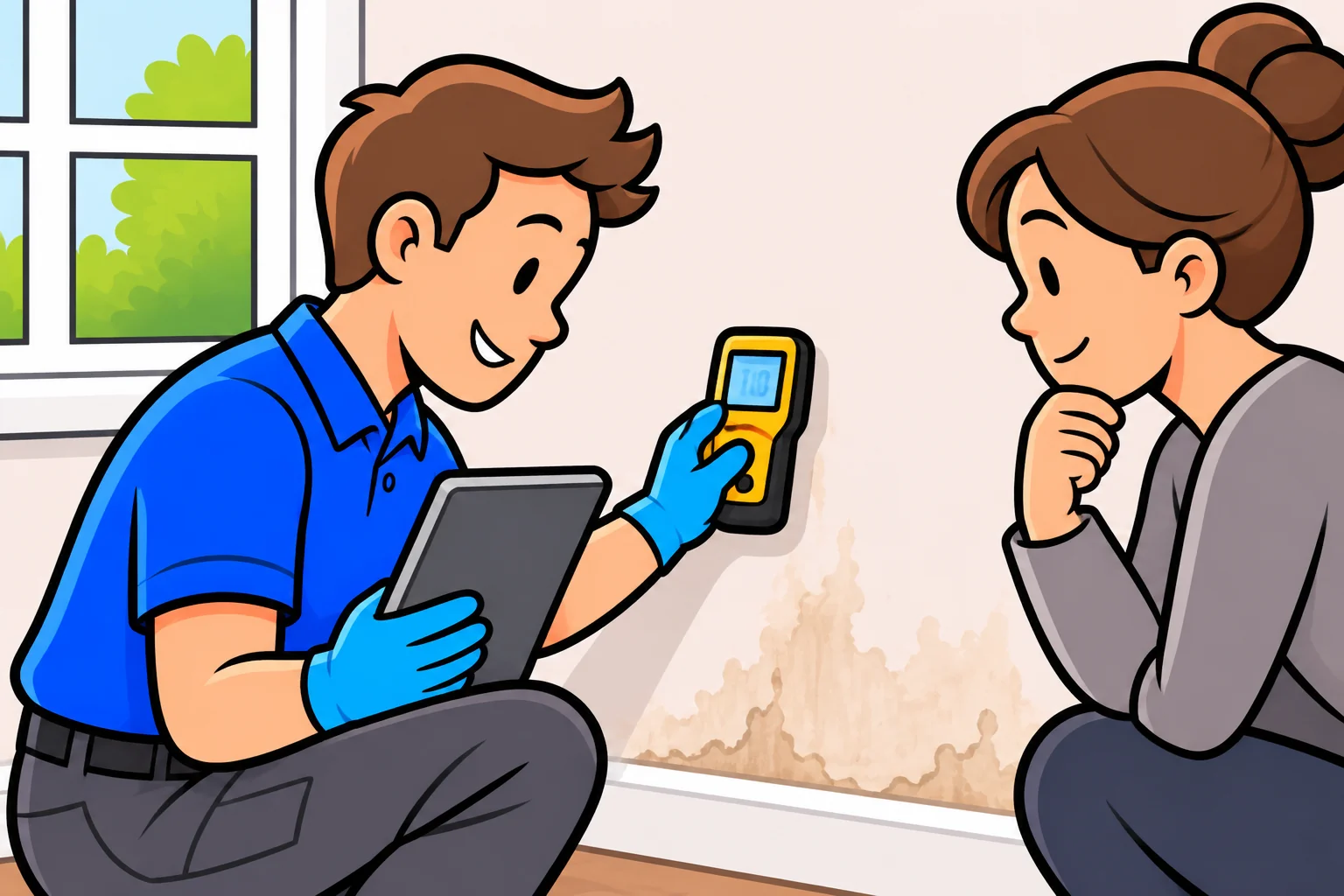
Reviewing visible and moisture conditions

Discussing air-sampling questions
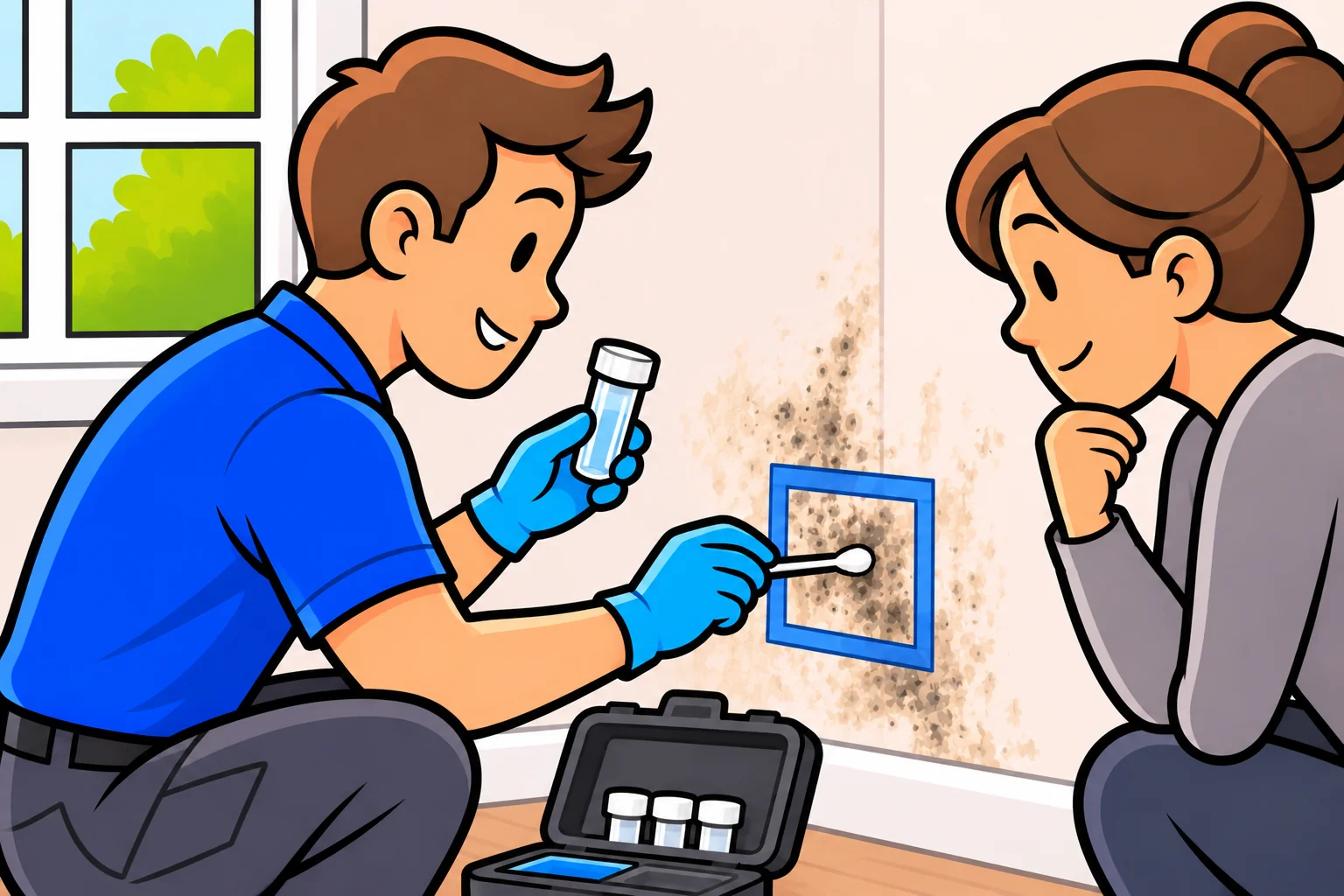
Assessing a surface-sampling location
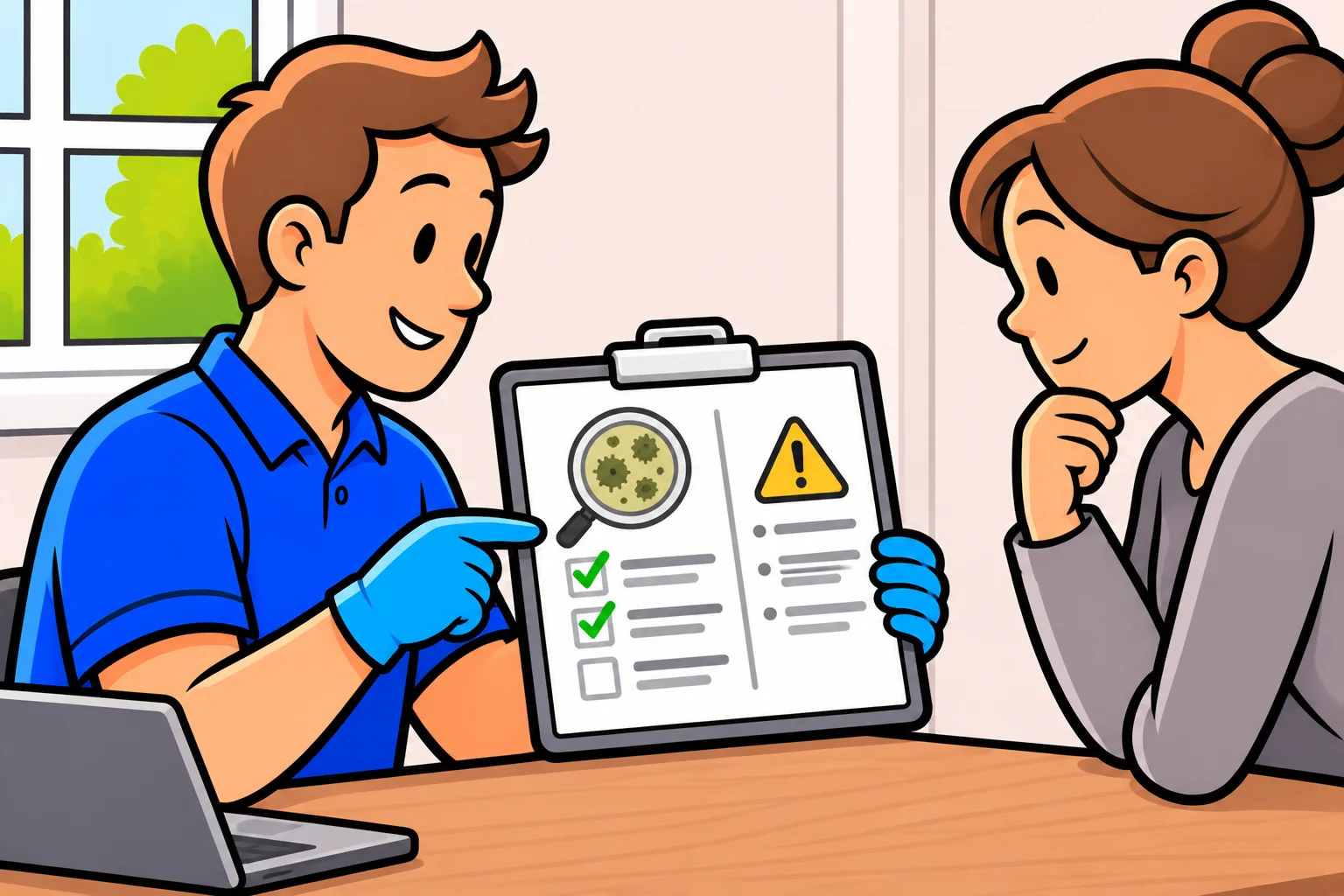
Explaining findings and their limits
Inspection and testing are distinct
Define the workAccessible observations, moisture information and samples provide different evidence and should not be treated as interchangeable.
Results need site context
Match the site conditionsA sample represents a location and collection conditions, not every concealed surface or future state of the building.
Moisture correction still matters
Plan the next stageTesting cannot repair the source; any remediation discussion should remain connected to the actual water or humidity problem.
Serving Meridian and Nearby Communities Mold Testing in Meridian
Meridian is an existing Disaster Cleanup testing service area, with Boise and Eagle also specifically listed for nearby sampling inquiries. The site discusses plumbing, attic and crawl-space concerns as local investigation topics, not verified defects at every address. Provide the actual property location, access authorization and requested documentation. The coverage statement does not imply a Meridian branch office, guaranteed laboratory timing or a fixed inspection duration.

Discuss Your Meridian Property Request a Free Inspection
Ask about a free initial inspection for a Meridian moisture concern and state the decision you need help making. Clarify whether sampling is useful, which locations are proposed and what collection or laboratory charges need approval. Keep existing repair records available without trial cleaning, scraping a surface or opening finishes to prepare.
Call (208) 999-2353Client Reviews What People Say About Us
Rated 4.8 stars from 159 Google reviews. Read our Google reviews


Frequently Asked Questions
Can a newer Meridian house still have a useful testing question?
Yes. Age alone does not establish the condition after a leak or explain an odor. Describe what changed, which repairs were completed and what decision remains. The investigation should address the actual assembly without assuming either every newer home needs testing or a recent construction date rules out concealed concerns.
Can a sample prove a bathroom fan is the moisture source?
A collection result alone does not establish every source pathway. Explain ventilation work, timing and accessible observations so source assessment and material findings can be considered together. The plan should say what evidence supports a conclusion rather than infer the cause from an organism name or a ceiling mark.
Should I repair a leak before waiting for mold samples?
Do not deliberately leave active damage in place to preserve a testing opportunity. Arrange appropriate source and safety help, keep records and describe what changed. A later investigation can consider that history; its findings should not be stretched to characterize every surface before the leak was controlled.
Does a room-air result cover my crawl space too?
Not automatically. A sample reflects its collection location and conditions, while a separate concealed space may have different observations and limits. Ask what the evidence represents and whether additional accessible assessment would answer the remaining question instead of treating one result as a map of the whole property.
What if a wall was painted before the Meridian inspection?
Explain when, where and why it was treated and whether symptoms returned. Do not scrape the finish or apply another product as preparation. Collection should be interpreted with that history, and a new result cannot automatically reconstruct every condition that existed before treatment or concealment.
Are sampling and the free inspection billed the same way?
Clarify the proposed scope before authorizing collection. A free initial inspection should not be assumed to include samples, laboratory analysis or unlimited follow-up work. Ask how each location relates to the question, which charges are separate and what the findings can reasonably establish.
Can a testing report tell me whether symptoms are caused by the building?
No. A property investigation does not diagnose a person or determine individual exposure. Consult an appropriate medical professional about health concerns. Use the report for the material, moisture and collection questions it addresses, with inaccessible areas and limits explained rather than personalized health assurances.
Will a result automatically mean the whole wall needs removal?
No. Removal decisions should relate to supported findings, access and material condition rather than a detection alone. Ask why the proposed boundary is appropriate and what source work remains. Testing and remediation require separate understood scopes, and a report is not permission for an unlimited demolition package.