
Boise, Idaho Flooded Basement Cleanup
Flooded basement cleanup in Boise requires more than pumping out the lowest room. Disaster Cleanup helps assess the water source, safe access, affected materials and drying needs. Stay out of floodwater near electrical equipment or a compromised structure. Describe what you can see safely so the next step reflects the actual basement conditions.
Schedule a Free Inspection
Find out how fast you can get service from your location

BELOW-GRADE WATER RESTORATION Flooded Basement Cleanup in Boise
Below-grade water can come from a supply failure, drainage problem, sewer backup or outside entry. Those sources create different contamination and repair questions. Basement finishes can also conceal wet insulation, wall bases and flooring layers, so visible water depth alone is not enough to define the restoration scope.
A finished basement often combines storage, living space and mechanical equipment in one low area. Water may reach each of those differently, and a room boundary does not necessarily stop moisture traveling beneath a floor. Explain the layout and any earlier drainage or plumbing repairs so the assessment can consider the current event in context rather than presume that pumping the visible pool resolves every basement concern.
When to Discuss Flooded Basement Cleanup
Observe symptoms from safe, accessible areas. Water depth is only one part of the problem: source history, electrical equipment and the materials behind finished surfaces also matter. Recurring wetting should be reported even if the latest pool is smaller than a previous incident.
- Water pooling at basement low points
- Wet carpet or swelling floor finishes
- Damp lower walls and baseboards
- A failed sump or recurring drainage concern
- Water near basement mechanical equipment
- Odors after a known basement water event
What Happens After You Call
We discuss the basement layout, source history and safe entry first. The work plan then connects water removal to cleaning, drying and the repairs or drainage questions that remain.
- Describe rainfall, drain backup, plumbing failure or other observations without entering the water.
- Stairs, water depth and equipment locations affect safe entry planning.
- The scope considers contamination and the way finished surfaces conceal affected layers.
- Drainage or plumbing corrections may need coordination with restoration.
- We explain what remains after cleanup and when finishes can appropriately be restored.
Common Situations We Assess
Plumbing failure below grade
A supply or drain problem can wet flooring and finished walls before it is noticed upstairs. The pipe repair and assessment of the surrounding assembly need to be coordinated instead of treating extraction as a source repair. Describe whether the water source was repaired before the basement began to be assessed.
Surface water entry
Rain or runoff can enter through low openings or building defects. Outside water may carry contaminants, and the route into the building should be considered separately from the cleanup of the rooms it reached. The visible pool may be away from the opening where water originally entered.
Sump or drainage problems
A basement may collect water when a drainage system cannot manage the conditions. The failure mechanism needs review; cleaning the basement does not by itself establish that the drainage equipment or pathway has been corrected. Do not enter the flooded area to test or dismantle the equipment yourself.
Sewer backup
A backed-up drain can introduce contaminated water into a basement. Household vacuuming or pumping may spread contamination, so the source history must guide the cleanup and decisions about porous finishes. The drain source is important even when water has spread into several otherwise clean rooms.
Moisture trapped behind finishes
Framed walls, insulation and floating floors can hold moisture after the visible pool is gone. Access and drying decisions depend on the assembly rather than assume that the outer surface represents the whole condition. Floor and wall interfaces can connect affected areas that look separate at the surface.
Repeated unexplained wetting
Recurring dampness may indicate a continuing pathway instead of one isolated loss. Explain previous incidents and repairs so assessment can distinguish the current damage from the unresolved moisture source. Safe photographs and a record of earlier repair attempts can make that history more useful.
What to Do First: Safety and Preparation
Do not wade into a basement to unplug equipment, inspect a sump or reach a breaker. Floodwater can hide sharp objects and electrical hazards. If walls appear displaced or the structure is questionable, stay out and seek appropriate urgent assessment. Avoid improvised pumping where exterior water pressure or structural concerns have not been evaluated.
Do not assume basement storage can be retrieved safely because the stairs are dry. A wet lower level can involve energized equipment, hidden debris or conditions that have not been evaluated. Explain what is stored there without entering, and tell the team whether access is shared with occupants or another property.
- Do not enter water to inspect a sump or breaker.
- Keep children and pets out of the lower level.
- Report wall movement or other structural concerns.
- Leave wet porous belongings in place for assessment.
Our Flooded Basement Cleanup Process
1. Review hazards before entry
We discuss water depth, access, utilities and any concern about the structure. Immediate dangers may require a utility or emergency professional before restoration work can be planned safely. Explain the route to the lower level and whether another entrance can be used without crossing wet rooms.
2. Establish the source history
The likely source and any continuing entry help determine the contamination questions. A drain backup, supply failure and outside flood should not be treated as identical water conditions. Earlier flooding and recent drainage work can help distinguish a recurring condition from a new failure.
3. Remove water with an appropriate plan
Bulk water removal follows the site conditions and access assessment. Where exterior pressure or structural stability is in question, those concerns must be evaluated rather than assuming rapid pumping is always appropriate. Water removal and source correction can require coordination rather than treating either as the only task.
4. Assess finishes and concealed layers
Carpet, insulation, wall bases and flooring assemblies may require different retention decisions. We explain where additional access is needed and why a dry-looking surface is not a complete moisture assessment. The same room may contain both cleanable hard surfaces and porous finishes requiring a different decision.
5. Clean and monitor drying
Cleaning and drying methods follow contamination and material conditions. Progress checks support decisions about equipment and remaining moisture instead of assuming that an arbitrary number of days is sufficient. Equipment placement and drying access should fit the affected assembly, not simply fill the available floor area.
6. Coordinate repairs and prevention follow-up
We review the work completed and any remaining drainage, plumbing or building repairs. Restoring finishes should connect with those source-correction and drying decisions rather than cover an unresolved basement problem. Clarify the remaining repair tasks and who is responsible for drainage or plumbing work outside the cleanup scope.
Why Choose Disaster Cleanup
Basement restoration should make the source and material decisions easy to understand. A scope that only lists pumping may omit contaminated finishes, concealed moisture or the repair needed to prevent recurrence. We help separate those questions so owners can plan the cleanup and follow-on trades coherently.
A well-defined basement scope explains which parts are water removal, which are cleaning or drying and which belong to permanent source repairs. That distinction is important when a drainage contractor, plumber or another trade must participate. Ask what assumptions the restoration plan makes about those repairs and what condition is needed before walls or flooring are closed back up. Concealed areas deserve an explicit limitation where access is not available.
What Affects the Project Schedule?
Water source, contamination, finished-wall construction, drying access and source repairs influence the schedule. Basement conditions do not support one fixed completion promise. Ask what will be assessed before equipment is removed or new finishes are installed.
Insurance and Project Documentation
Outside flooding, sewer backup and a sudden interior leak can have different policy treatment. Some coverages require specific endorsements or separate policies. Ask the insurer about the actual source and cleanup scope rather than assuming every flooded basement is covered.
Stay out until basement hazards are understood
A flooded basement is not a safe route to a breaker, sump or storage item. Keep people and pets away and describe conditions from outside the affected area. For immediate electrical, structural or medical danger, contact the appropriate emergency service first. Restoration begins with safe access, not a requirement that the owner enter the water.
For a recurring but currently dry concern, arrange an assessment and share the incident history instead of creating another test flood. For current water, keep the lower level separated from routine traffic and make clear whether the source continues to enter.
Information That Helps Define the Next Step
- Water pooling at basement low points
- Wet carpet or swelling floor finishes
- Damp lower walls and baseboards
- A failed sump or recurring drainage concern
Flooded Basement Cleanup Assessment, Work Planning and Restoration
The illustrations cover common basement water and restoration questions rather than a universal treatment prescription. Finished rooms can contain carpet, wall insulation, cabinetry and stored belongings, each with different retention considerations. The history of outside entry or a drain backup can also change the cleanup approach. Describe the actual water route and building materials so temporary water removal is followed by an appropriate evaluation of the layers that remain wet or contaminated.
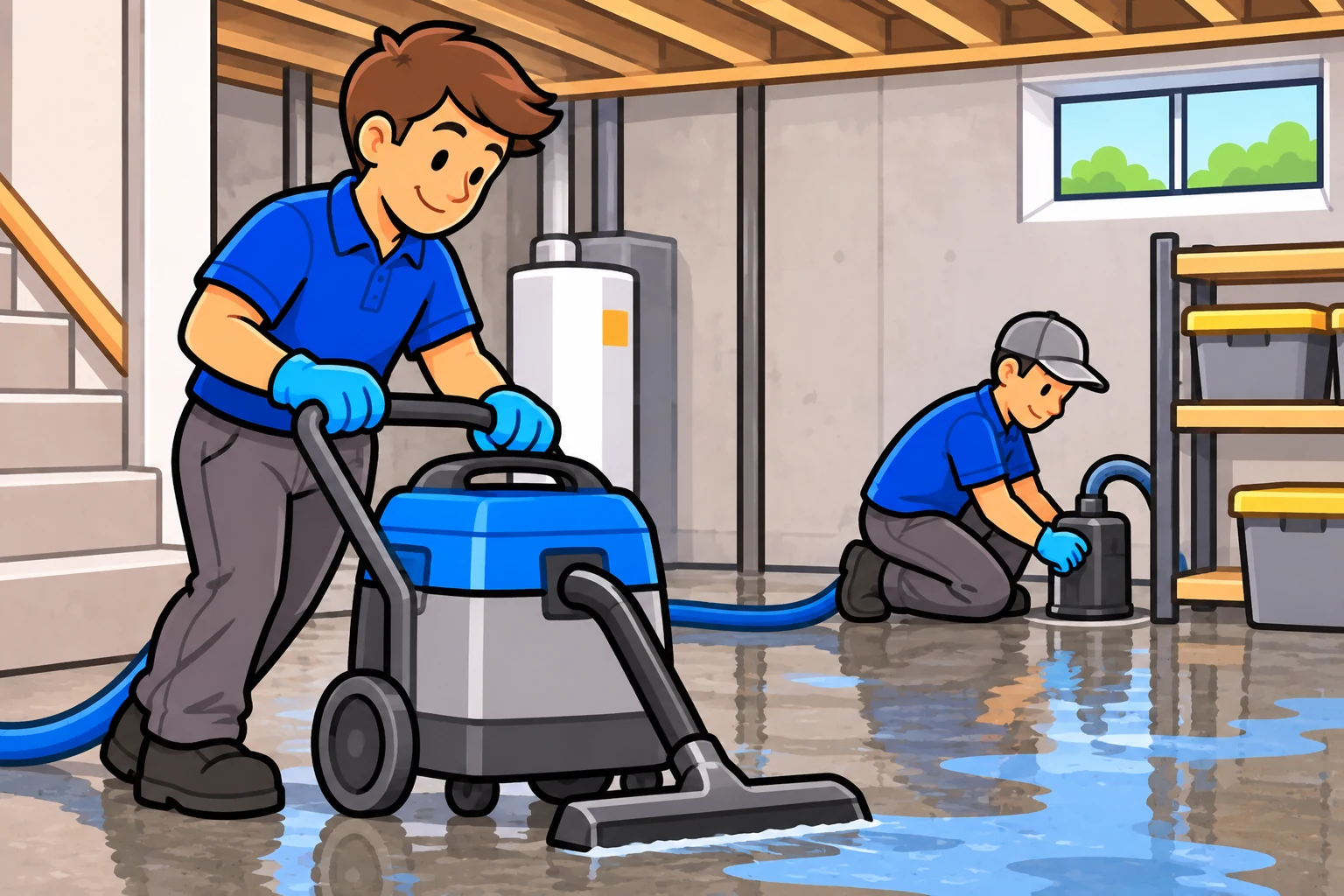
Water removal in a basement setting

Evaluating wet lower-level finishes

Assessing concealed moisture

Coordinating drying and repair planning
Water source matters
Define the workDrain backups and exterior water can require different cleanup decisions from a supply leak.
Finished layers need assessment
Match the site conditionsBasement walls and floors can conceal moisture after standing water is removed.
Drainage and repair coordination
Plan the next stageCleanup should connect with source correction and the eventual restoration of finishes.
Serving Boise and the Treasure Valley Flooded Basement Cleanup in Boise and Nearby Communities
Disaster Cleanup discusses flooded-basement cleanup in Boise and the Treasure Valley service areas listed on this site. Basements in the same city can have different drainage, access and finished-wall conditions. Provide the location and the known water source when arranging assessment. No neighborhood description replaces investigation of the actual property or guarantees that a particular pumping, drying or drainage approach is suitable for your basement.
The existing service-area listings include Ada County, Boise, Caldwell, Canyon County, Eagle, Emmett, Garden City, Hidden Springs, Horseshoe Bend, Kuna, Marsing, Meridian, Middleton, Mountain Home, Nampa, Parma, Payette and Star. Call to discuss your address and access needs.

Discuss Your Property Request a Free Inspection
Contact Disaster Cleanup about basement water from a leak, drain backup or outside entry. Describe the conditions without entering an unsafe lower level, and explain whether utilities or structural concerns require urgent professional attention. Ask how removal, cleanup, drying and any separate source repair will fit together before agreeing to the work.
Call (208) 999-2353Client Reviews What People Say About Us
Rated 4.8 stars from 159 Google reviews. Read our Google reviews


Frequently Asked Questions
Should I pump out my basement immediately?
Do not improvise pumping before electrical and structural concerns are understood. Exterior water pressure and the building condition can affect the appropriate approach. Stay out and describe conditions so safe access and removal planning can be assessed. The safe sequence depends on the actual site rather than a rule that the deepest water must always be removed first.
Is all basement water contaminated?
The source and time history matter. Sewage and outside water pose different concerns from a recent supply leak, but appearance alone is not a reliable classification. Keep people and pets out until the situation is assessed. The team needs the history even if the pool looks clear or has no noticeable odor.
Can drywall be dried without removal?
Sometimes retention may be possible, but contamination, insulation, assembly design and drying access affect the decision. A surface inspection cannot establish every hidden condition. The scope should explain why a material is being retained or removed. A finished wall may conceal insulation or more than one affected material layer.
Will cleanup fix my sump or drainage system?
Cleaning and drying address the affected building materials. The cause of sump failure or drainage entry may require separate repair. Ask how that correction will be coordinated instead of assuming water removal has resolved the source. Document any drainage work already completed so the restoration plan does not assume a repair that remains outstanding.
What about belongings stored on the floor?
Do not carry wet or contaminated items through clean rooms to prepare the space. Tell the team which belongings are involved and who can authorize decisions. Material type, contamination and condition affect cleaning or removal options. Important documents and personal items should be discussed before handling or disposal decisions are made.
Why are moisture checks needed after pumping?
Water can remain in subfloor, insulation and wall cavities after the visible pool is gone. Moisture assessment supports drying decisions and the repair handoff. It is not enough to rely only on how the floor looks or feels. A moisture plan should explain the limits of accessible assessment as well as the areas evaluated.
How soon can the basement be rebuilt?
Rebuilding depends on source correction, cleanup and the condition of the affected assembly. Those decisions should be resolved before new finishes conceal the area. There is no single rebuilding date appropriate for every basement flood. Discuss material availability and the remaining repair scope after the cleanup condition is understood.
Is a flooded basement always insured?
No. The policy may distinguish outside flood, sewer backup, seepage and sudden plumbing failure. Ask the insurer about the actual event, exclusions and any endorsements. An inspection or cleanup estimate does not establish coverage. Keep the cause description accurate; a general label such as water damage may not answer the insurer's coverage questions.