Fire and Smoke Damage Restoration in Boise, ID
Fire damage restoration in Boise needs a plan for residues, affected materials and any firefighting water after the scene is cleared for access. Disaster Cleanup discusses inspection, temporary protection, smoke damage cleanup and repair needs for homes, rentals and businesses. Follow emergency instructions first. Do not use fading odor or the absence of flames as permission to reenter, run damaged equipment or begin household soot cleaning.
Schedule a Free Inspection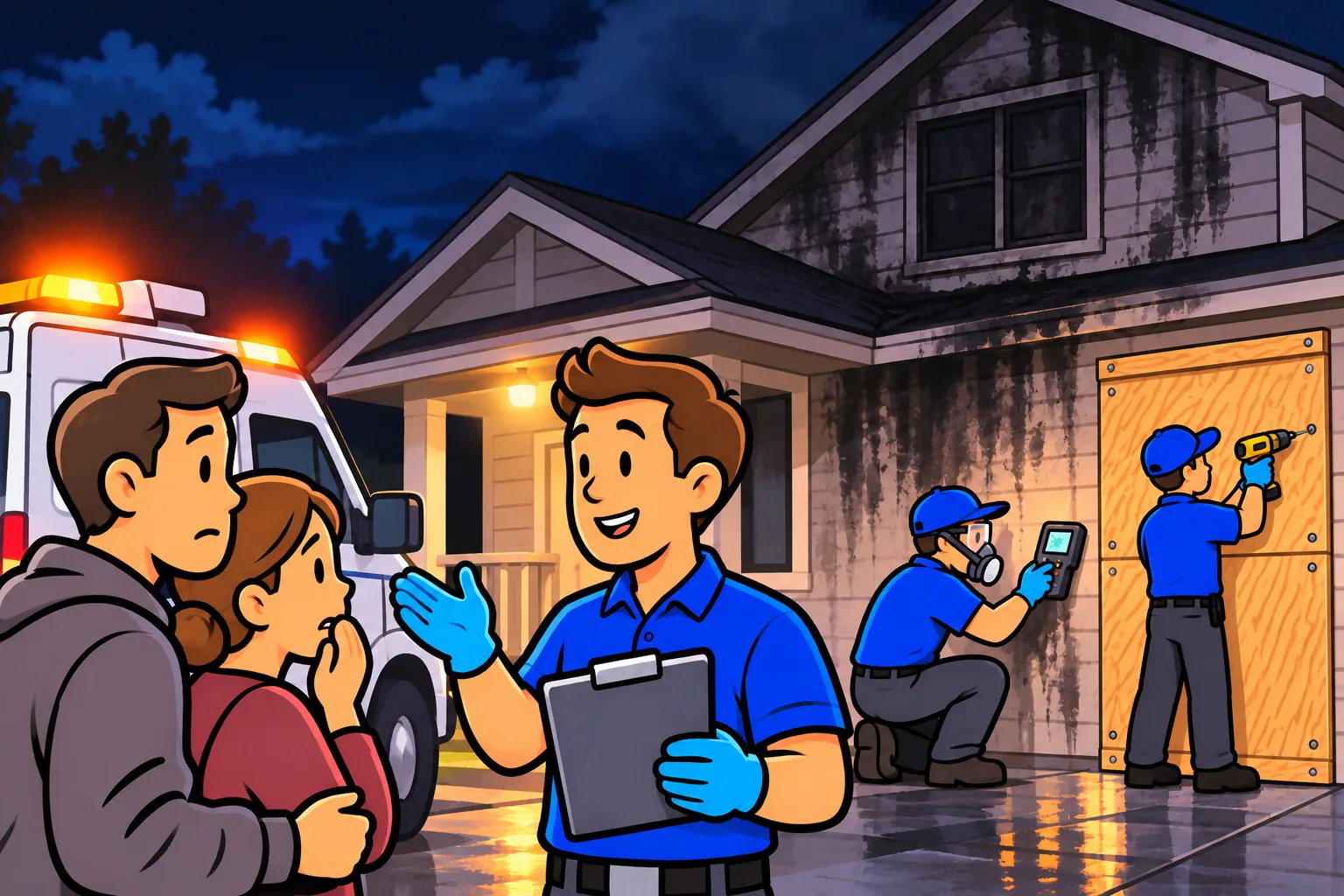
Find out how fast you can get service from your location
24 HOUR EMERGENCY Fire Damage Restoration and Smoke Damage Cleanup for Boise Properties
A Boise kitchen loss in an older North End or Bench home can affect a different mix of finishes and concealed layers from smoke entering another type of property. Those settings frame questions, not a diagnosis based on the neighborhood. Explain the actual event, where residues appeared and which rooms were accessible. The assessment should connect observations to cleaning and material decisions rather than assume every wall, floor and belonging responds to one method.
Smoke concerns may follow an internal fire or an outside event without flame damage inside. Share what is known about timing, open areas and equipment use, while following current emergency or public guidance. We discuss the restoration question, access limits and any need for moisture or source-system work. A clear sequence distinguishes cleaning from odor-related decisions and later repairs, with the proposed boundary explained before removal or treatment is authorized.
Questions to Discuss at Your Boise Property
After permission for Boise access, describe soot on surfaces, odor locations, damaged openings and any water left by response. Do not enter an attic or move furniture to locate more residue. Safe observations and the incident history can begin the discussion without making a whole-building assumption from one room's appearance.
- Black, gray or greasy soot on walls, ceilings, cabinets or belongings.
- A persistent smoke smell that remains after the building has aired out.
- Discoloration, blistered finishes or heat damage around affected rooms.
- Wet flooring, damp drywall or other moisture left after firefighting.
- Charred materials, damaged openings or areas that cannot be safely used.
- Smoke residue around vents or in rooms away from the original fire.
What Happens After You Call
When you call (208) 999-2353 about fire or smoke damage, here is what happens next.
- A live team member listens to what happened, confirms the location and asks about immediate access or safety concerns.
- We coordinate a visit and safe access with you after the property has been cleared for entry.
- We explain a practical plan for the fire, smoke and water damage present.
- Identify affected areas
- Review cleanup priorities
- Discuss repairs and documentation
We explain the proposed work in plain language and help document the damage for your insurance claim.
- The crew starts the agreed work to secure affected areas, address moisture and remove fire or smoke residues.
- Cleaning and repairs move forward according to the damage and agreed scope, with updates about the next steps.
Fire and Material Questions in Boise
Kitchen residues on different finishes
Painted walls, cabinetry and nearby contents can need different cleaning decisions after a cooking-related incident. Explain the affected area and any methods already tried. The type of residue and surface compatibility matter more than using the same household product throughout a Boise room.
Older finishes beside later renovations
An older house may contain original layers behind updated surfaces. Describe previous work if known and avoid opening finishes yourself. Newly exposed or unidentified material may require another assessment before ordinary demolition is extended beyond the agreed fire-restoration boundary.
Attic and ceiling access questions
Smoke, damaged roofing and water can create different questions above the occupied room. Tell us what responders or other professionals reported without entering an uncertain void. An accessible ceiling observation should not be presented as a complete assessment of every concealed component.
Outdoor smoke entering a property
Explain the event timing, areas involved and relevant equipment use while following current emergency guidance. An interior restoration assessment does not control an ongoing outside source or replace public-health advice. The proposed work should follow actual residues and material findings rather than an address-wide assumption.
Water remaining after suppression
Wet flooring or wall layers may need attention even where soot is the most visible concern. Share known extraction and drying history. Surface cleaning and moisture assessment are connected but distinct; a room looking cleaner does not establish that every retained layer is ready for repairs.
Contents and movement between rooms
Moving affected textiles or furnishings can complicate the handling route and assessment. Identify important items verbally rather than carrying them through clean areas. The owner should understand practical cleaning or replacement decisions and who may authorize them before contents are removed.
What to Do First: Safety Steps
If there is an active fire, heavy smoke or an immediate threat, leave the building and call 911. Restoration comes after emergency response and clearance for access. Do not reenter simply because the flames are gone.
- Wait for the fire department or appropriate authority to confirm that entry is allowed.
- Keep children, pets and other occupants out of affected areas.
- Do not turn on damaged electrical equipment or run the HVAC system until it has been checked as appropriate.
- Avoid wiping soot, disturbing damaged materials or attempting strong chemical or ozone treatments yourself.
- Photograph damage only from areas you can safely access, and contact your insurer about the claim process.
- Call Disaster Cleanup to discuss inspection, temporary protection and cleanup planning.
The Fire and Smoke Damage Restoration Sequence for Your Boise Property
1. Inspection and Damage Documentation
Review the actual Boise incident, access instructions and known affected materials before inspection. Document accessible residue, contents and water questions with their limitations instead of inferring a whole-building condition from the neighborhood or one visible mark.
2. Securing and Protecting the Property
When needed, temporary board-up or other agreed protection can help secure damaged openings and limit further exposure. We explain which immediate measures fit the condition of the property. This stage is about stabilizing the situation, not treating a temporary repair as the finished restoration.
3. Addressing Firefighting Water
Water used to extinguish a fire can affect flooring, walls and concealed spaces. Where that damage is present, extraction and drying may be needed alongside fire cleanup. Checking affected materials helps guide the drying work rather than relying only on whether a surface looks dry.
4. Soot and Smoke Residue Cleanup
We assess the residue and the surfaces involved before selecting the cleaning approach. Walls, ceilings, fixtures and contents may not respond to the same method. Materials that cannot reasonably be cleaned or have been damaged beyond repair may need removal and replacement as part of the agreed scope.
5. Odor and Contents Evaluation
Smoke odor treatment starts with identifying affected materials and removing the residue or source where possible. We discuss cleaning and replacement decisions for impacted belongings and finishes. Masking an odor is not a substitute for addressing the underlying smoke damage.
6. Repairs and Restoration Planning
Explain the Boise cleanup, drying and construction handoff, including material decisions and remaining access limits. Clarify source-system and contents questions still needing authorization so equipment removal or a temporary repair does not imply the entire loss is complete.
A Clear Plan for Your Property
A Boise restoration proposal should explain the evidence behind the work boundary and material decisions. Ask what was examined, which surfaces may respond differently and what remains inaccessible. This is particularly useful where older construction and later remodels meet, or where the incident involves residues and odor without obvious flame damage in every room.
Disaster Cleanup discusses related board-up, water response and construction needs, with the urgent and later stages kept clear. Source-system checks and occupancy questions may involve other appropriate professionals. We help describe the proposed restoration work and documentation, while the owner and insurer retain their respective decisions about belongings, authorization and coverage instead of receiving an undefined whole-loss promise.
How Long Does Fire Damage Restoration Take?
The timeline varies with the amount of damage, the materials affected and whether rebuilding is required. A limited smoke cleanup is different from a property with structural damage and substantial firefighting water. Access, drying needs, material availability and insurance decisions can also influence the schedule. We discuss the expected stages after inspecting the property instead of promising the same completion date for every fire.
Insurance: Documentation and Next Steps
Fire and smoke losses may be covered when the cause and damage fall within your policy, but coverage, limits and deductibles vary. Contact your insurer early and keep records of the loss. We can provide damage documentation and discuss the proposed restoration work with your adjuster. Your insurer determines coverage; an inspection or estimate is not a guarantee that every item will be paid.
Safe Next Steps for Fire and Smoke Damage Restoration in Boise
Leave and call 911 for an active fire, heavy smoke or immediate danger. For a released Boise scene, follow access restrictions and keep occupants and pets away from affected spaces. Do not turn on damaged electrical equipment or restart HVAC to see whether the smell improves. Explain urgent protection needs and known conditions from safety; take photographs only where entry is permitted and contact the insurer about its documentation requirements.
Common Fire and Smoke Cleanup Situations
- Kitchen fires with smoke and soot in nearby rooms.
- Fire-damaged living spaces, fixtures and household contents.
- Smoke odor that persists after the source fire is out.
- Wet flooring or walls after firefighting.
- Damaged openings that need temporary board-up before repairs.
Fire and Smoke Damage Restoration Cleanup and Restoration Services
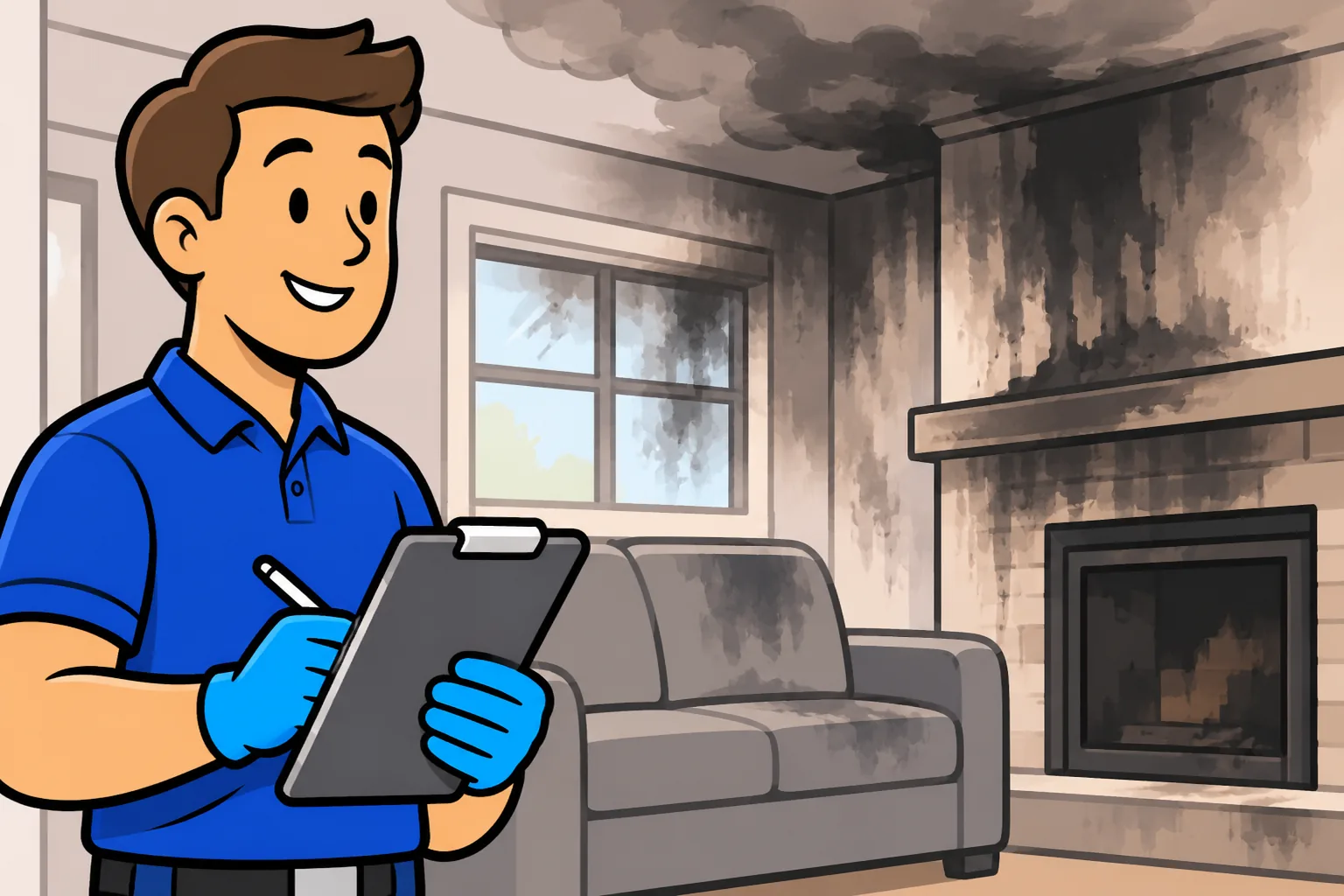
The illustrations show fire, smoke and material-restoration topics rather than an actual Boise loss or a guarantee that every item can be cleaned. A useful plan relates residue, surface compatibility, contents and any firefighting water to the proposed work. Odor treatment follows the affected-material question; a fragrance, coat of paint or visually cleaner finish should not replace an account of what was addressed and what remains before rebuilding.
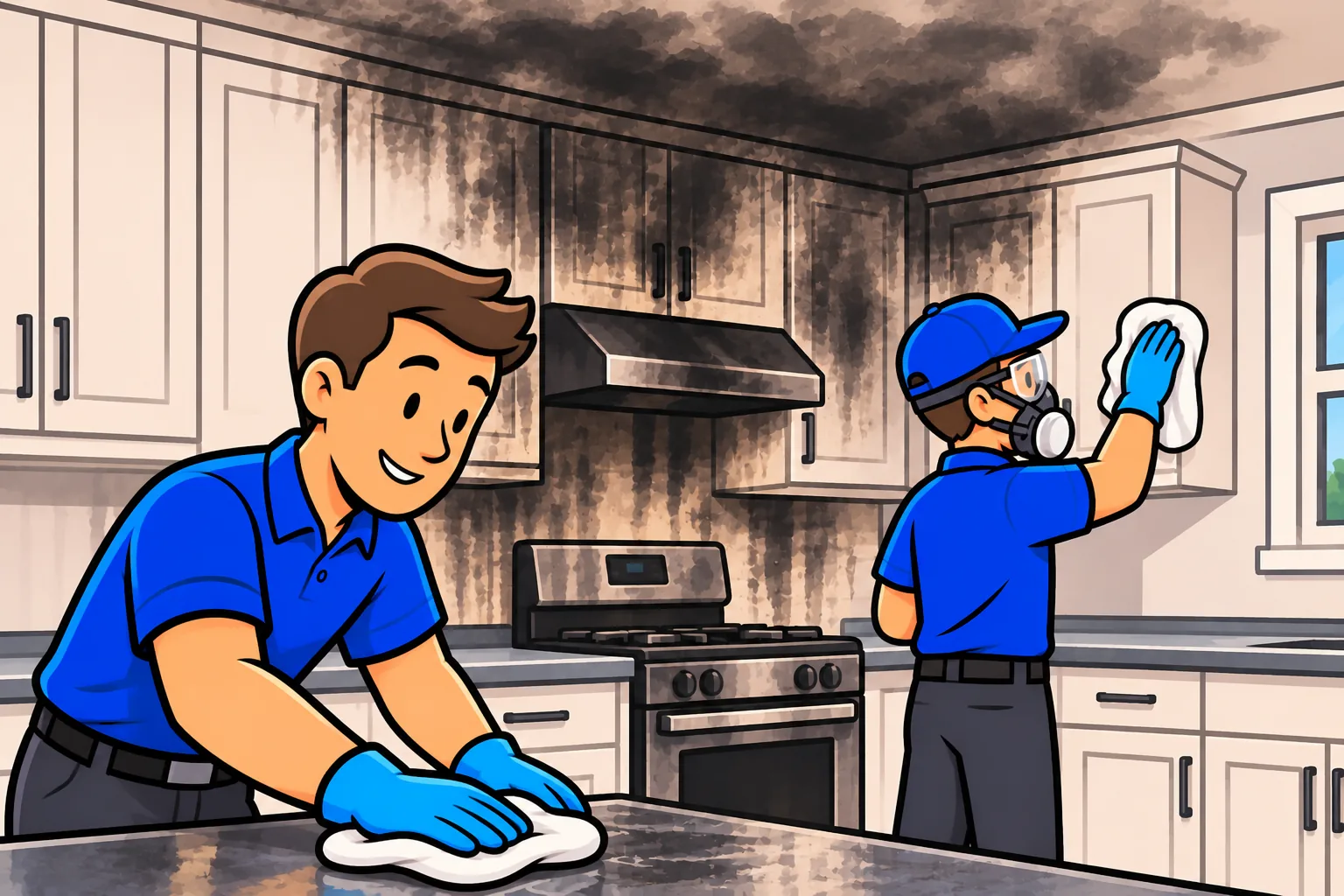
Kitchen fires and smoke residue
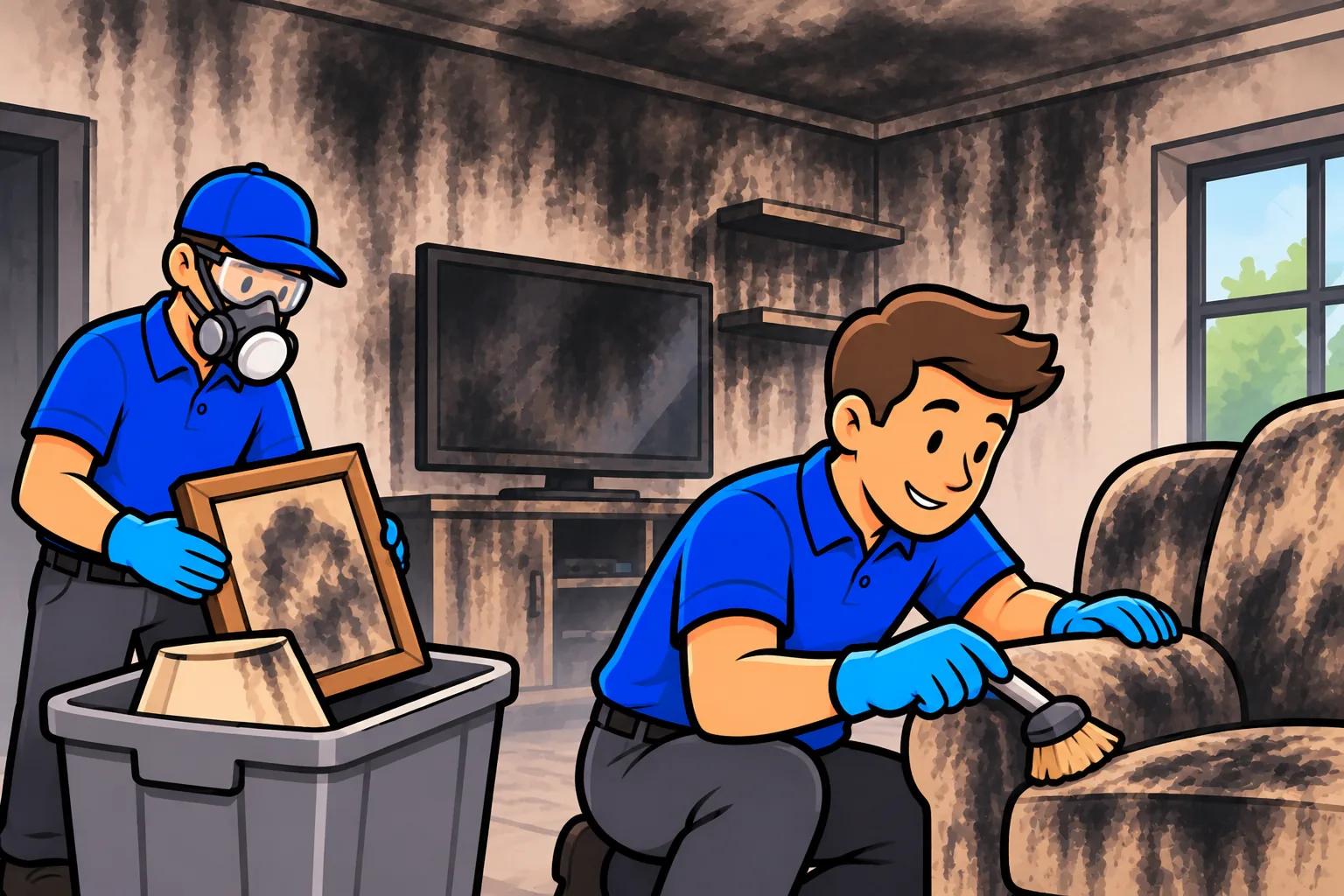
Fire-damaged rooms and belongings
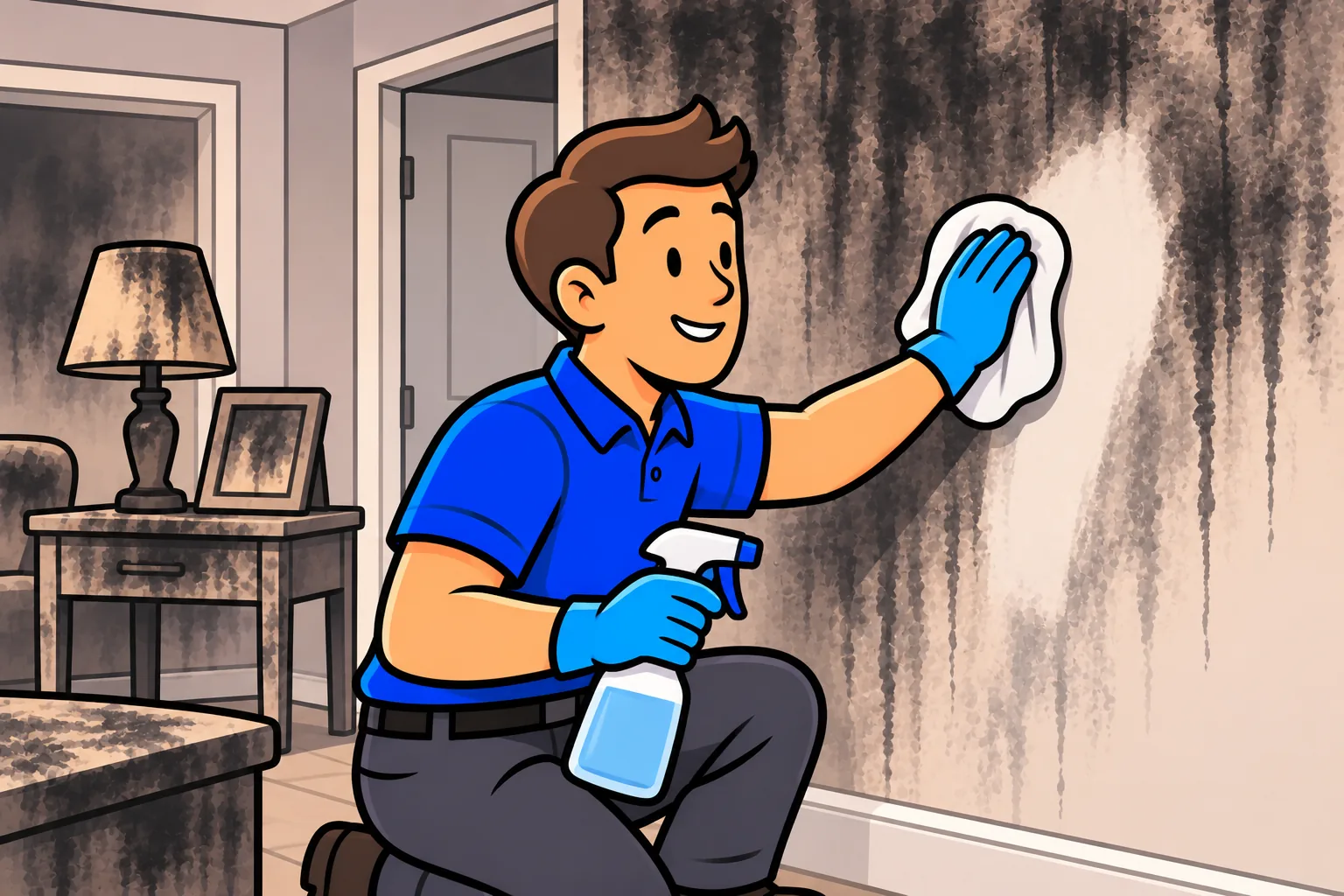
Soot buildup on walls and surfaces
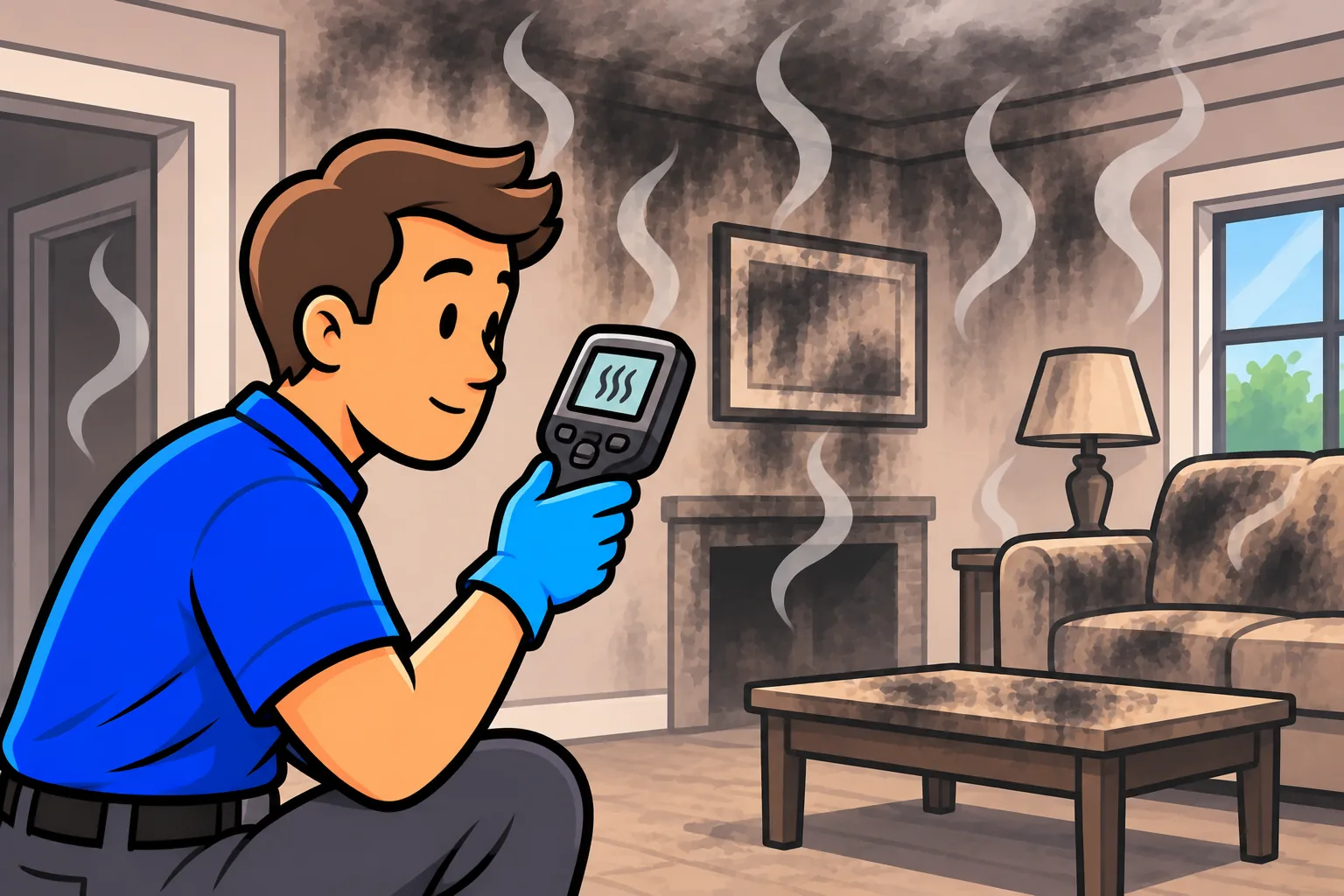
Smoke odors throughout the property
RESPONSE AND RECOVERY
Starting With the Immediate PrioritiesAfter access is permitted, the first work may include protecting damaged openings, addressing water and identifying the areas that need cleanup. We discuss the immediate priorities with you so the next step is based on the condition of the property.
DAMAGE ASSESSMENT
Looking Beyond the Burned AreaSmoke and soot may affect rooms or belongings away from the fire. We inspect accessible areas, document what we find and explain the proposed cleaning or replacement needs. The visible flame damage is only one part of that assessment.
RESTORATION AND REPAIRS
Planning the Work That Follows CleanupOnce cleanup and any necessary drying are complete, damaged finishes and materials can be addressed through the repair scope. We discuss restoration needs and the expected stages so you understand how the property moves from cleanup toward usable space.
Serving Boise and Nearby Communities Fire and Smoke Damage Restoration in Boise
Disaster Cleanup's existing coverage includes Boise homes, rentals and businesses, with Garden City, Meridian, Eagle, Star and Kuna listed nearby. North End, Bench and foothill-area examples are useful history questions, not proof of a particular cause at an address. Provide the actual location, released areas and authorized contact so the visit and proposed work can reflect the incident, safe access and the people responsible for building and contents decisions.
Where we work in Boise: We restore fire- and smoke-damaged homes and businesses across Boise, including the North End, East End, the Bench, West Boise, Southeast Boise and Harris Ranch. Disaster Cleanup is veteran-owned and based in neighboring Garden City. Phones are answered live 24/7 and a crew is usually on site in 1–2 hours once the fire department releases the property. Call (208) 999-2353.
Discuss Your Boise Property Have Fire or Smoke Damage? Request a Free Inspection
Discuss a free initial inspection after a Boise fire or smoke concern and explain whether responders have allowed entry. Share the event, affected rooms and known water or protection needs without disturbing materials. Ask how cleaning, drying, contents and later repairs will be scoped before assuming the first visit includes every stage of the project.
Call (208) 999-2353Client Reviews What People Say About Us
Rated 4.8 stars from 159 Google reviews. Read our Google reviews


Frequently Asked Questions
How soon can you start after a fire in Boise?
Phones are answered live 24/7, and a crew is usually on site within 1–2 hours once the property is released, to board up openings and protect what’s left.
Can smoke odor be removed without tearing everything out?
Often, yes. We clean soot from surfaces and treat odor at the source. Materials that can’t be cleaned are removed and replaced during repairs.
Will you work with my insurance company?
Yes. We document the damage and can work directly with your adjuster. Your policy decides what is covered.
What should I do after the fire department leaves my Boise property?
Follow its instructions about entry and unresolved hazards; do not assume departure means routine occupancy is allowed. Discuss inspection and urgent protection from a safe location. Avoid soot cleaning, damaged equipment and moving belongings until the conditions and proposed next steps have been assessed by the appropriate people.
What does a free fire-damage inspection help establish?
It begins the discussion of accessible damage, known event history and proposed restoration priorities. Ask which areas can be assessed and what remains uncertain. The initial visit should help explain protection, cleaning, water and repair decisions; it does not silently authorize every removal, treatment or reconstruction task.
What factors influence Boise fire-restoration pricing?
Affected materials, residue, contents, access, temporary protection, firefighting water and repair needs shape the scope. Specialist or source-system work may require separate decisions. Ask what the proposal includes after assessment instead of treating the burned item's size or a room count as the entire project price.
Can you assess smoke residue when there was no fire inside?
Describe the event, symptoms and access conditions so the restoration question can be discussed. An assessment should follow actual residues and materials, not assume identical damage in every property exposed to an outside event. Continue following emergency and public guidance for an ongoing source; interior cleanup does not control the outside conditions.
Should I wipe soot from an older wall before the visit?
Avoid scrubbing or applying household products before the residue and finish are evaluated. Older or layered surfaces may have separate material questions if disturbance is proposed. Explain any previous cleaning and keep photographs limited to safe accessible areas rather than expose a wall or create debris as preparation.
Does smoke cleanup also address water from firefighting?
Where water affected building layers, the plan may include extraction, drying and moisture-related decisions alongside residue work. Ask which materials were checked and what is proposed. A clean-looking wall or removed pool does not describe every concealed layer or establish readiness to install replacement finishes.
When can repairs start after a Boise fire?
The sequence depends on access, completed cleanup, any drying and the condition required by the repair trade. Material availability and separate authorizations can also affect work. Discuss the actual handoff rather than assume an inspection, improved odor or first equipment visit establishes that every area is ready to rebuild.
How does the insurance process fit restoration planning?
Contact the insurer about the policy and required documentation, and keep safely available event records and the proposed scope. Coverage, limits and deductibles are insurer decisions. Disaster Cleanup can describe observed damage and proposed work without guaranteeing payment for every building component, belonging or owner-selected repair.