Boise, IdahoCrawl Space and Attic Restoration
Crawl space and attic restoration in Boise begins by understanding why the area became wet or damaged. Disaster Cleanup helps assess affected materials, plan cleanup and drying, and coordinate the next repair steps. Do not enter a tight crawl space or walk an unfinished attic to investigate a concern; describe the symptoms and arrange safe assessment access.
Schedule a Free Inspection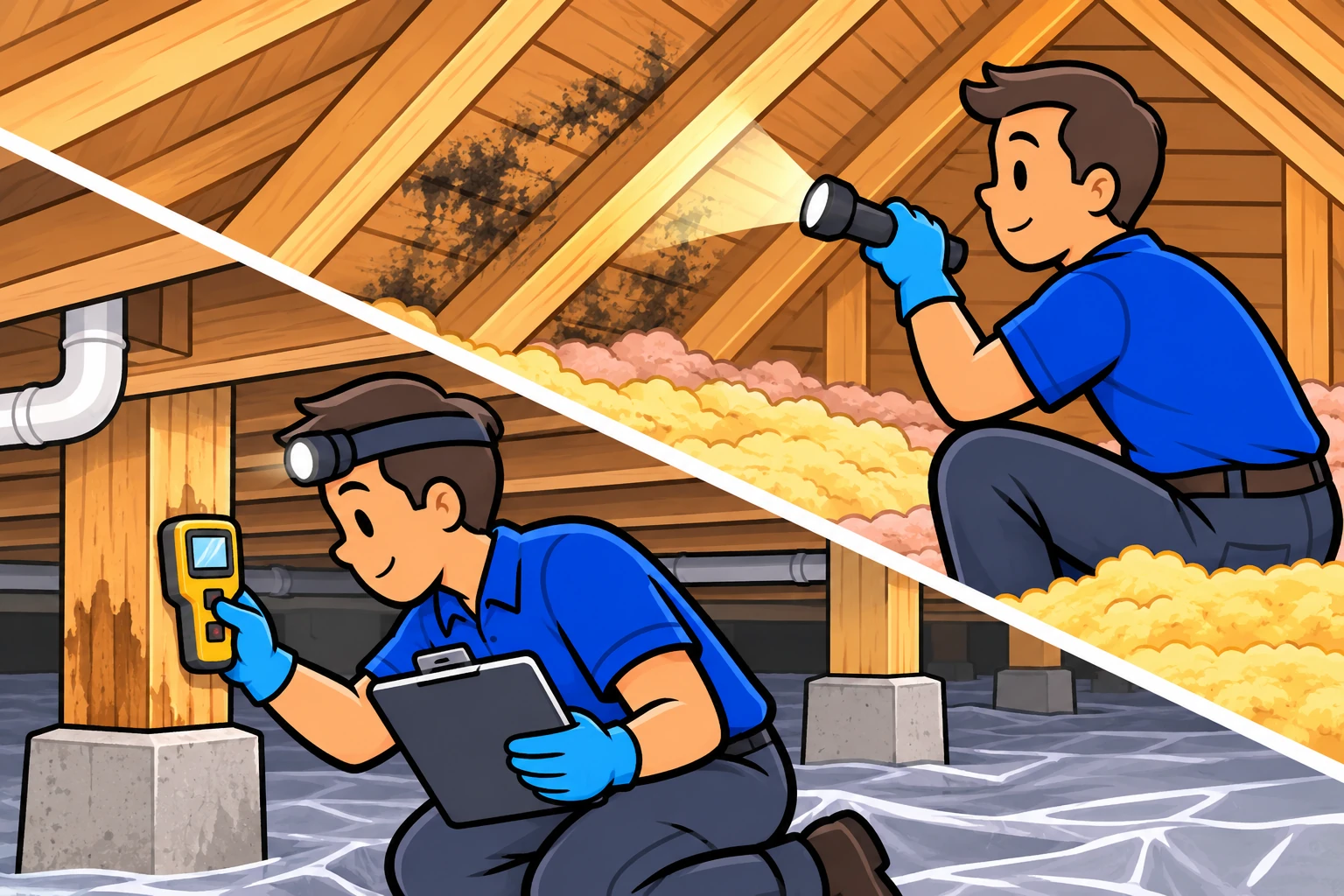
Find out how fast you can get service from your location
MOISTURE AND MATERIAL RESTORATIONCrawl Space and Attic Restoration in Boise
An attic and a crawl space have different moisture patterns, access limits and building functions. Roof leaks and condensation can affect roof sheathing or insulation, while plumbing leaks and ground moisture can affect lower framing. Covering those symptoms without addressing the moisture pathway can leave the underlying condition unresolved.
Symptoms in a living room may originate in a space the owner rarely sees. A ceiling stain can be connected to roof entry, while a musty floor-level odor may lead to a crawl-space investigation. Those observations guide questions; they do not identify the source by themselves. We help distinguish accessible damage, likely moisture pathways and the additional information needed before insulation, framing or finish repairs are selected.
When to Discuss Crawl Space and Attic Restoration
Look for changes that can be observed safely from occupied areas or an accessible opening. You do not need to enter the void to justify a call. Persistent or recurring symptoms are worth explaining along with any previous plumbing, roof or drainage work.
- Musty odors near floor or ceiling openings
- Wet or displaced insulation
- Water staining on accessible framing
- Persistent dampness beneath the home
- Staining around roof penetrations
- A known leak affecting concealed building spaces
What Happens After You Call
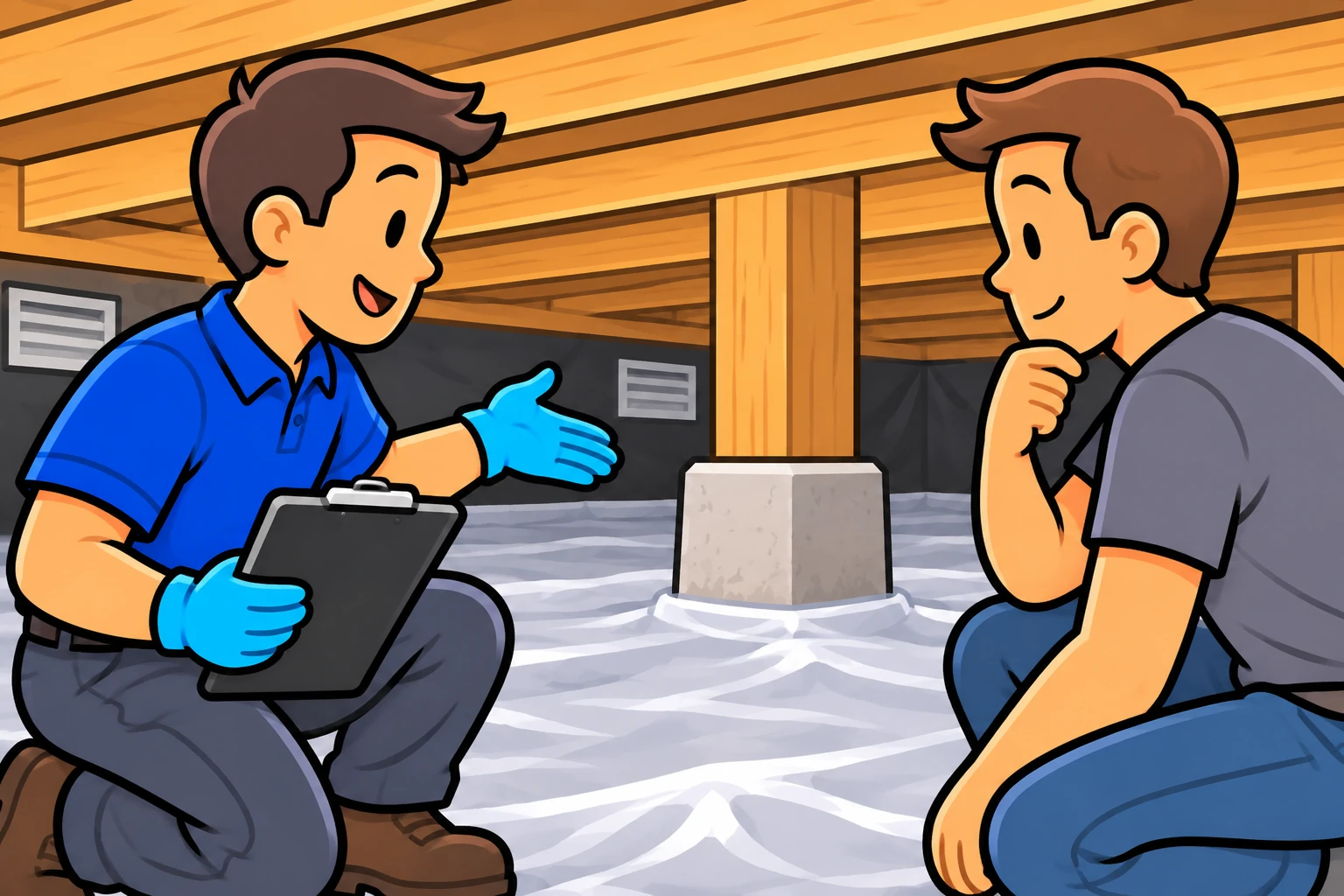
We first discuss the symptoms, the space involved and how it can be accessed safely. The goal is a restoration plan connected to the moisture source, not a blanket recommendation to replace everything.
- Tell us whether the concern is above the ceiling or beneath the floor and what first drew attention.
- We consider hatch locations, clearances and known water or electrical hazards.
- Roofing, plumbing, condensation and ground moisture may require different follow-up work.
- The scope distinguishes drying, cleaning and unsuitable insulation or finish removal.
- Understand which source corrections and building repairs remain after cleanup.
Common Situations We Assess
Plumbing leaks beneath floors
A supply or drain leak can wet framing and insulation before it becomes visible indoors. The pipe repair and assessment of surrounding materials need coordination so the area is not closed while moisture remains. Explain whether a supply or drain repair has already been carried out.
Roof leaks into attic assemblies
Water can follow roof framing away from the original entry point. A stain directly below a leak does not necessarily identify the entire affected area, and cleanup cannot substitute for a roof repair. The wet location inside may not be directly below the exterior entry point.
Condensation on cold surfaces
Warm humid air reaching a colder surface can deposit moisture without a plumbing leak. Insulation and ventilation questions need building-specific assessment rather than assuming that more airflow alone is always the answer. Air leakage and moisture generation can matter alongside the visible ventilation openings.
Ground moisture in crawl spaces
Moist soil and water entry can keep lower building spaces damp. A vapor-control or drainage discussion should follow the actual pathway; placing a new covering over an active water problem does not resolve it. The actual drainage and soil-water conditions need review before selecting a covering approach.
Disturbed or saturated insulation
Wet insulation may no longer perform as intended and can conceal adjacent damage. Retention or replacement decisions depend on contamination, material condition and whether the assembly can be appropriately dried and accessed. Insulation can conceal adjacent wet framing or the route by which water entered.
Long-unnoticed damage
Infrequently entered spaces may develop a larger affected area before odors or stains appear inside the home. The assessment should consider the history of moisture rather than rely only on the newest visible symptom. Previous stains and past repairs are useful context, not proof that every current symptom is old.
What to Do First: Safety and Preparation
Do not crawl into standing water or touch wiring in a wet area. Attic walking surfaces may not support a person, and disturbed insulation can contain additional hazards. Avoid moving suspect materials or setting household fans to blow air from a damaged void into occupied rooms. Describe access limitations before arranging the inspection.
Do not cover or remove suspected contamination simply to make the space easier to enter. Animal waste, damaged insulation and unidentified older materials can require different handling from ordinary debris. Tell the team about known conditions and whether anyone has already moved material or placed equipment in the space.
- Do not stand on unsupported attic ceiling surfaces.
- Stay out of wet spaces near wiring or equipment.
- Leave suspect insulation and animal waste undisturbed.
- Describe previous repairs and recurring moisture symptoms.
Our Crawl Space and Attic Restoration Process
1. Review the concern and access
We discuss odors, stains, leaks and any prior work. The assessment starts with how the space can be approached safely and which parts are accessible without creating additional damage or exposure. Explain whether the symptoms recur with weather, plumbing use or another observable change in the property.
2. Investigate the moisture pathway
Observations and appropriate moisture checks help distinguish an active source from residual damage. Roofing, plumbing and building-envelope repairs may involve separate work that needs coordination with the restoration scope. A possible source should be distinguished from a confirmed repair before the restoration scope relies on it.
3. Evaluate affected assemblies
Framing, insulation, subfloor and finishes have different drying and cleaning considerations. We explain which conditions can be assessed directly and which concealed areas may require additional access before a decision is made. Insulation, framing and finished surfaces may each have different access and retention considerations within one affected area.
4. Remove unsuitable affected materials
Material that cannot be appropriately retained is considered for controlled removal. Suspect hazardous materials or contamination require their own assessment; ordinary insulation replacement is not a substitute for identifying those issues. Do not assume ordinary debris handling is suitable for animal waste or an unidentified older building product.
5. Clean and dry the work area
The restoration approach follows the material and moisture conditions. Equipment and access are planned for the actual void rather than assuming that a fan at the hatch can dry every concealed part of the assembly. Where parts of the void are inaccessible, explain those limits instead of implying every concealed surface was inspected.
6. Review source correction and repair
We explain findings, remaining access limits and the handoff to insulation or finish repairs. Drying and cleaning should connect with source correction so the original moisture pathway is not simply covered over. Review what should be monitored or repaired next so new insulation does not simply hide a recurring problem.
Why Choose Disaster Cleanup
Restoration in concealed spaces benefits from clear photographs, findings and scope boundaries. Owners should understand what was accessible, what was removed and which roof, drainage or plumbing correction is still required. That record makes the next repair decision more useful than a vague statement that the void has been cleaned.
It is useful to separate the moisture-source question from the condition of each affected assembly. A roof repair may stop new entry while wet insulation still needs attention; replacing insulation alone may leave a drainage problem unresolved. Ask how findings will be recorded and what the restoration handoff assumes about those source repairs. Accessible photographs and a defined scope help the owner understand a concealed-space project without having to crawl or climb into it.
What Affects the Project Schedule?
Access restrictions, moisture depth, insulation removal and source repairs affect the schedule. Drying is assessed from conditions and material response, not a fixed number of days. New insulation or finishes may need to wait until prerequisite work is complete.
Insurance and Project Documentation
A sudden leak, long-term moisture and maintenance-related condensation may be treated differently by an insurer. Keep records of the observed damage and any source repair. Coverage for cleanup, insulation and building repairs depends on the actual policy and loss.
Arrange an assessment without entering an unsafe void
If there is active water near electrical equipment, an unstable surface or another immediate hazard, stay out and seek the appropriate urgent help. For staining, odors or a planned repair, discuss inspection access first. Do not remove insulation to prepare the space or assume every discoloration is mold.
For a stable concern, arrange access and provide the history rather than treating every hidden-space symptom as an immediate disaster. When water, unsafe wiring or an unstable surface is involved, keep clear and obtain the appropriate urgent assistance before investigating further.
Information That Helps Define the Next Step
- Musty odors near floor or ceiling openings
- Wet or displaced insulation
- Water staining on accessible framing
- Persistent dampness beneath the home
Crawl Space and Attic RestorationAssessment, Work Planning and Restoration
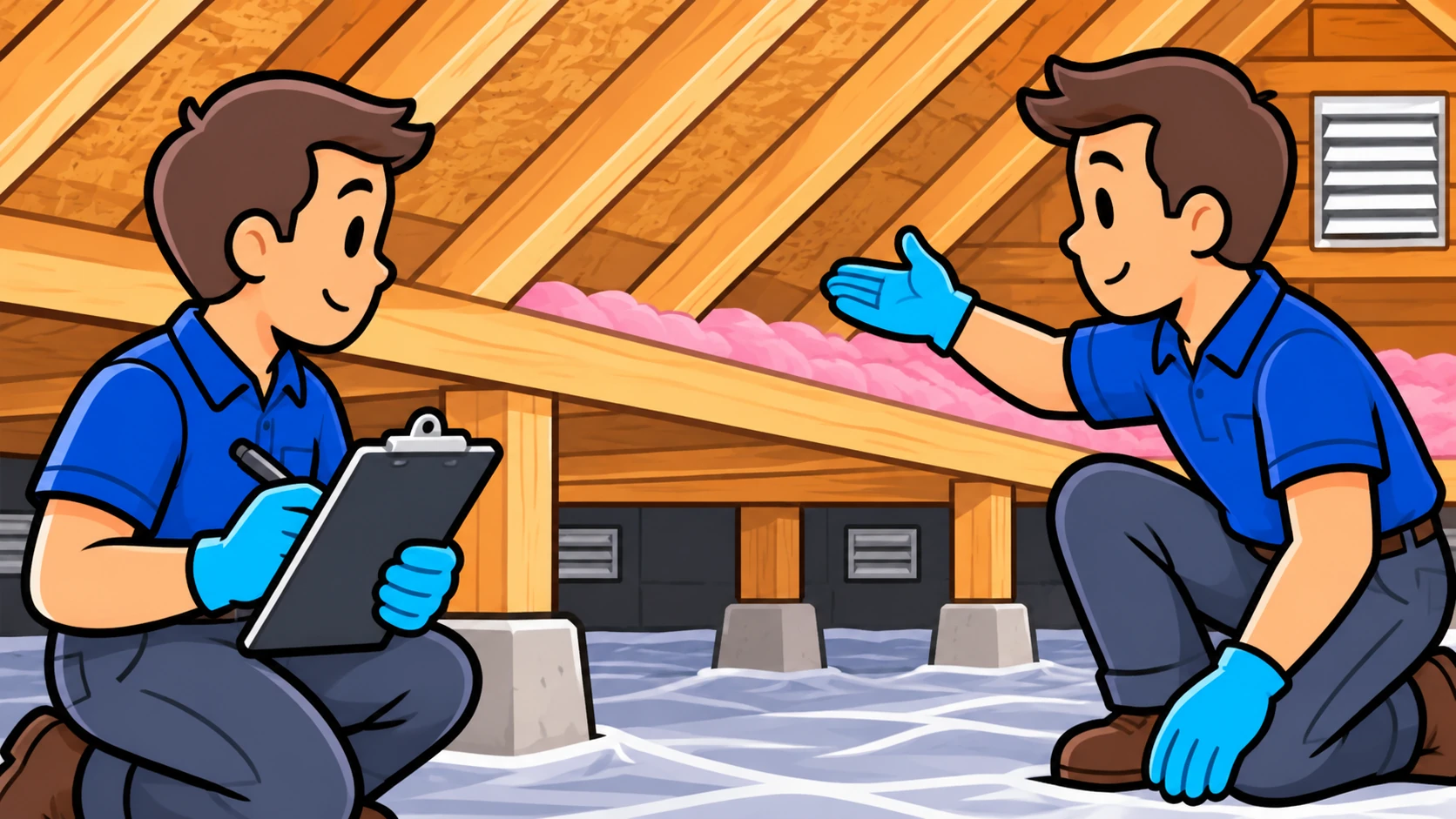
The illustrations represent attic insulation, lower-floor moisture and related cleanup topics. They are not evidence that every void needs the same removal or treatment. The scope should address the actual space, the materials involved and how access can be obtained appropriately. Roof, plumbing and drainage corrections may require different follow-up work, while cleaning and drying decisions need to reflect the condition of the affected framing, insulation and adjacent finishes.

Attic material and moisture assessment
Crawl-space vapor-control questions
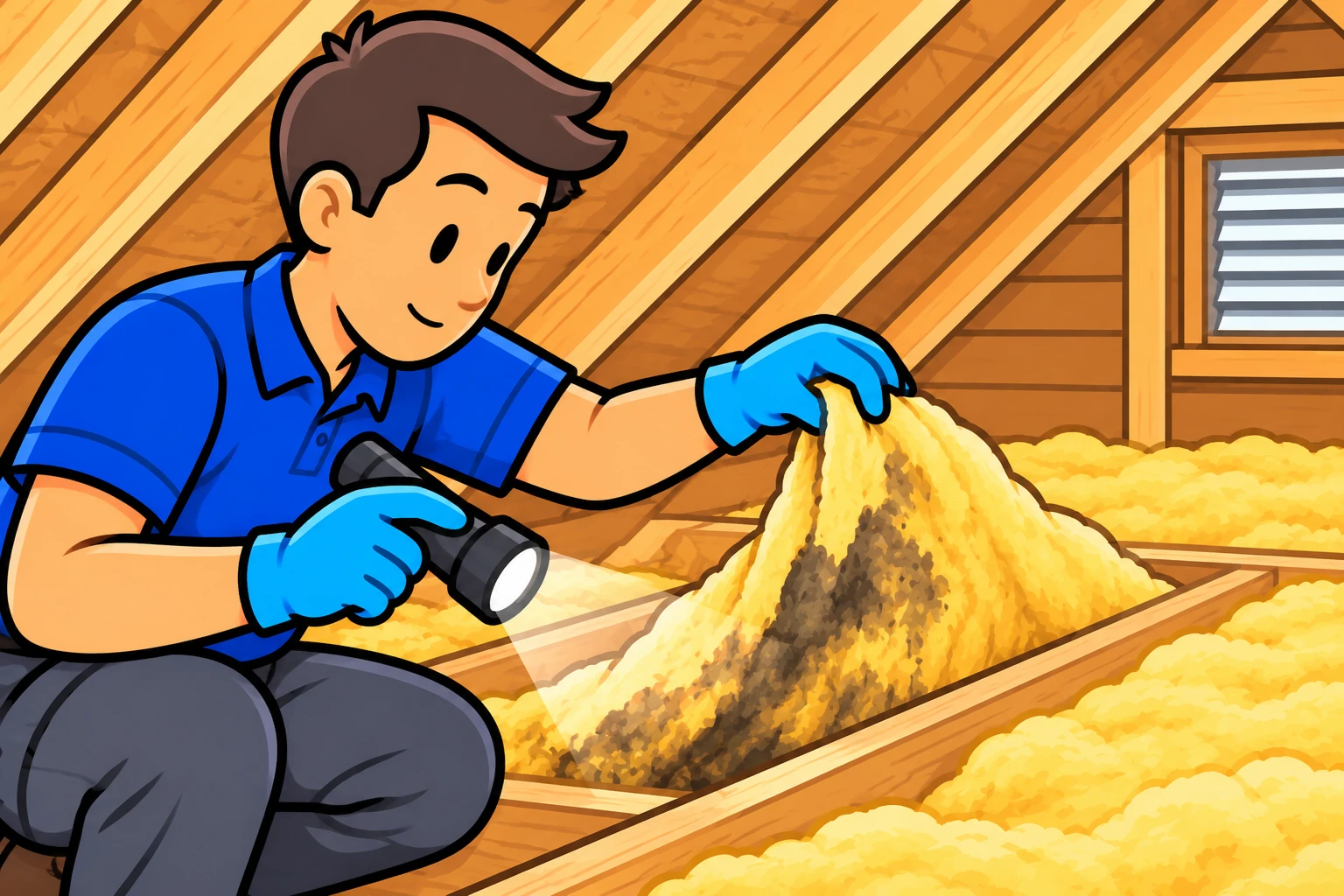
Evaluating affected insulation
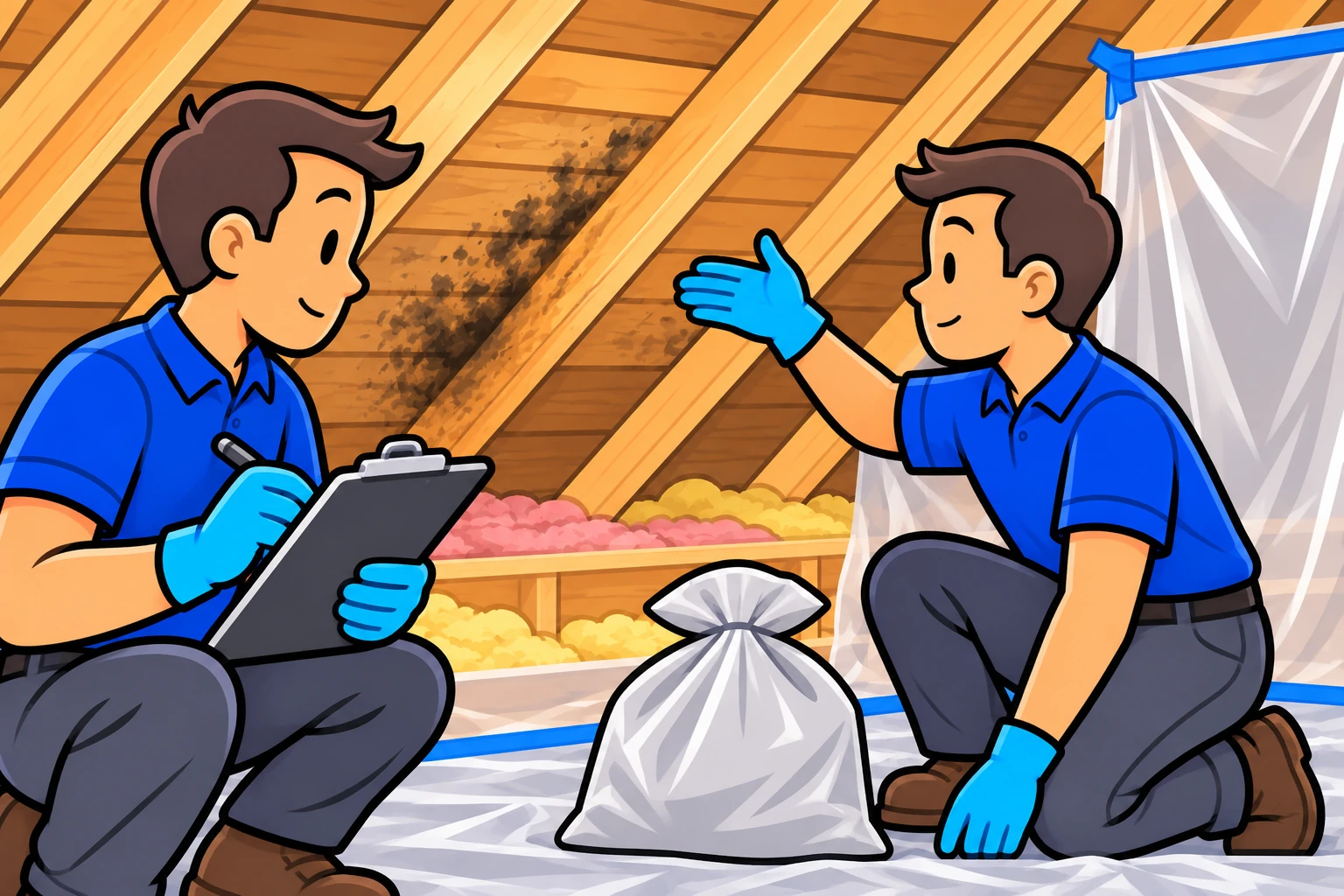
Planning controlled cleanup around damaged materials
Crawl-space material assessment
Define the workSubfloor, framing and insulation need attention to the actual moisture pathway.
Attic restoration planning
Match the site conditionsRoof entry points, condensation and affected insulation require different repair decisions.
Source correction alongside cleanup
Plan the next stageA clean-looking void still needs the cause of wetting addressed before concealment.
Serving Boise and the Treasure ValleyCrawl Space and Attic Restoration in Boise and Nearby Communities
Crawl-space and attic restoration is offered in Boise and the Treasure Valley areas described on Disaster Cleanup's website. Building design, access and moisture pathways vary across both older homes and newer construction. Share the location and symptoms rather than assuming a particular neighborhood has one universal cause. An address helps arrange an assessment; it does not establish the condition of a concealed space without looking at the actual property.
The existing service-area listings include Ada County, Boise, Caldwell, Canyon County, Eagle, Emmett, Garden City, Hidden Springs, Horseshoe Bend, Kuna, Marsing, Meridian, Middleton, Mountain Home, Nampa, Parma, Payette and Star. Call to discuss your address and access needs.
Discuss Your PropertyRequest a Free Inspection
Discuss unexplained dampness, odors, damaged insulation or a known leak with Disaster Cleanup before entering an unsafe void or covering the symptoms. Have the property location and any roof, plumbing or drainage history ready. Ask what can be assessed through available access and which further work would need a separate agreement.
Call (208) 999-2353Client ReviewsWhat People Say About Us
Disaster Cleanup is 5-Star Rated on Google


Frequently Asked Questions
Do I need to enter the crawl space before calling?
No. Describe the symptoms and known access point from a safe location. Standing water, wiring, restricted movement and damaged materials can make entry unsafe. The access plan should be discussed before anyone investigates the void. Useful observations include symptoms in occupied rooms and a known access location, not an owner entering the void.
Can wet insulation simply be left to dry?
Retention depends on the insulation type, contamination, condition and access to adjacent materials. Wet insulation can hide damage and may need removal. Assessment should consider the whole affected assembly rather than assume every product can be reused. The condition of adjacent wood or other layers may affect the decision even if insulation appears dry at its surface.
Does an attic stain mean the roof is leaking?
A roof leak is one possibility, but condensation and other moisture pathways can also cause staining. The history and building conditions matter. Identifying the cause is a separate question from cleaning or repairing the stain. The timing of the stain relative to weather, plumbing use or seasonal conditions can help frame the investigation.
Will a vapor barrier fix a wet crawl space?
A ground covering may be part of a moisture-control plan, but it does not repair an active plumbing leak or solve every drainage problem. The proposed approach should follow the actual water pathway and site conditions. Explain any standing water or recurring wetting before deciding that a new ground covering is the only task.
Is discoloration on framing always mold?
Appearance alone is not enough to identify every stain or determine its cause. Moisture history and assessment guide the next step, and sampling may be considered when it answers a specific question. Avoid disturbing the material yourself. A material finding should remain separate from any claim about a particular person's health or exposure.
Can you work on both attic and crawl-space damage?
The existing service addresses both areas, but their access and building conditions differ. Describe which locations are involved so the assessment and scope can address them separately instead of treating every concealed space as the same task. An attic and a crawl space may require separate access arrangements and different repair coordination on one property.
When can insulation or finishes be replaced?
Replacement should follow the relevant moisture, cleanup and source-correction decisions. Closing an assembly too early can conceal remaining damage. Ask what conditions and prerequisite work must be satisfied before that repair stage begins. Ask who is responsible for prerequisite roof, plumbing or drainage repairs before new materials are installed.
Is this always an insurance claim?
No. Policies may distinguish sudden events from ongoing moisture, wear or maintenance. The insurer decides coverage. An inspection can help document conditions, but it does not determine whether crawl-space or attic restoration will be reimbursed. Keep records of the source history and repairs so the insurer can evaluate the actual event rather than a general label.