Boise, Idaho Emergency Water Removal
Standing water can spread into flooring, wall bases and belongings before the full damage is visible. Disaster Cleanup provides emergency water removal in Boise and the Treasure Valley, with assessment, extraction and drying planning. Stay out of water near electricity or an unknown contamination source; call to discuss current conditions and availability rather than relying on a guaranteed arrival window.
Schedule a Free Inspection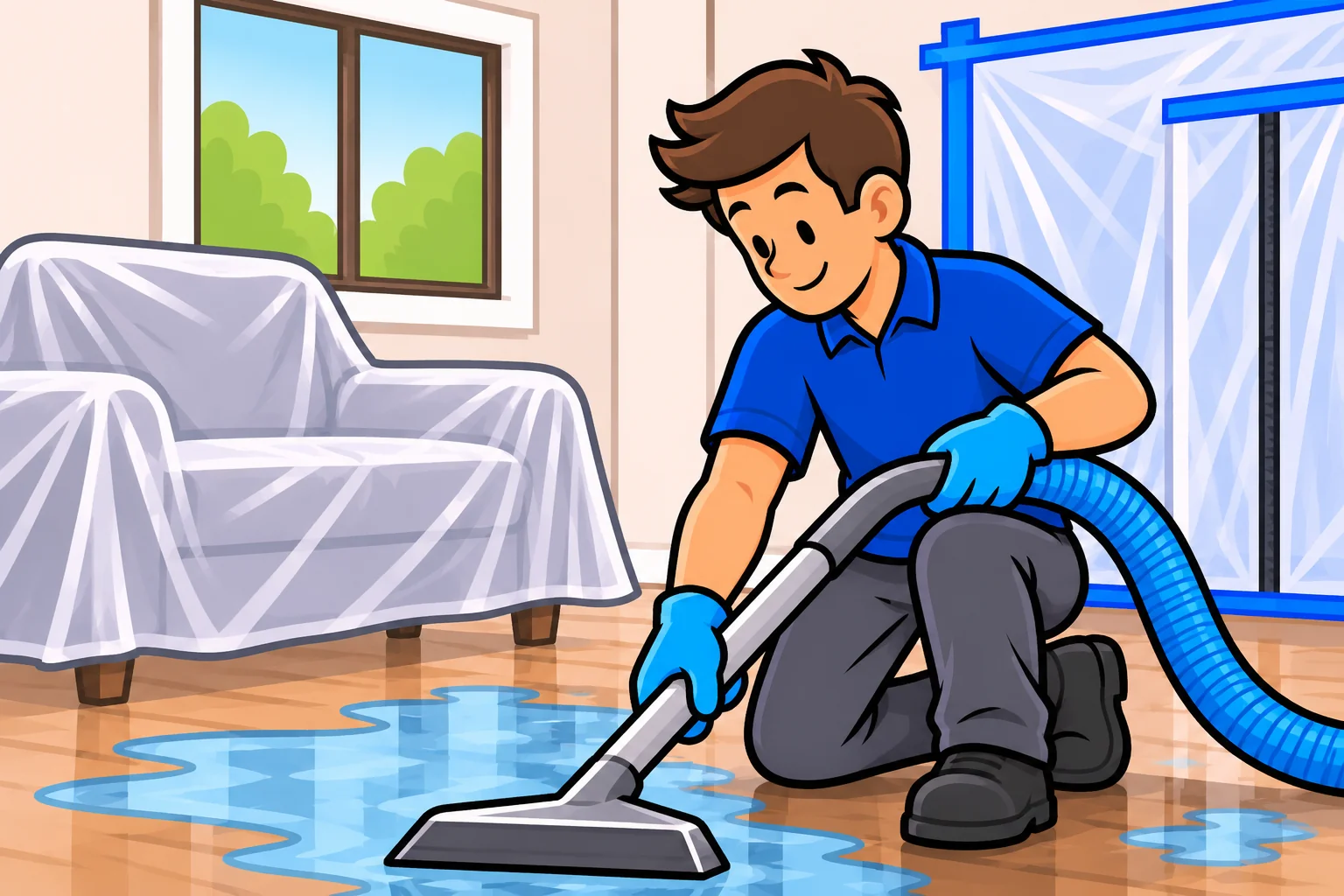
Find out how fast you can get service from your location
URGENT WATER-DAMAGE RESPONSE Emergency Water Removal in Boise
Extraction removes accessible liquid water, but a dry-looking floor does not establish that a building assembly is dry. Carpet backing, subfloor and wall cavities can retain moisture after standing water is gone. The work therefore needs a clear transition from removing water to evaluating material condition, controlling the source and monitoring the drying response.
The source history helps determine how the water should be handled. A recently discovered supply-line failure is a different assessment from a drain backup or water that entered from outside. Tell us when the water was first noticed, where it is collecting and whether another professional has stopped the leak. Those details guide the initial conversation without requiring you to walk through water or uncover a wall yourself.
When to Discuss Emergency Water Removal
Water does not need to be deep to affect a building. A shallow pool can spread beneath a finish or reach an adjoining wall assembly. Report the visible extent and anything known about the source, while keeping clear of areas where entry would expose you to unsafe conditions.
- Standing water spreading across a room
- A failed supply line or appliance hose
- Saturated carpet and wet baseboards
- Water entering walls or adjoining rooms
- Pooling around equipment or utilities
- New water damage after firefighting or a storm
What Happens After You Call
The call establishes the water history, location and immediate access concerns. We then discuss extraction and the material assessment that follows, rather than promising that water pickup alone completes restoration.
- Tell us where water is present, whether it is still entering and what can be observed safely.
- We discuss who can address the leak and how the work area can be reached.
- The amount of water, surface types and possible contamination guide the removal plan.
- We explain why extraction is followed by checks of affected material layers.
- The next stage depends on measured conditions and any materials requiring removal or replacement.
Common Situations We Assess
Burst or leaking supply pipes
Pressurized water can move rapidly through floor joints and wall penetrations. Stopping the source is a separate priority from extraction, and the affected area may extend beyond the room where the pipe failed. The repair history helps distinguish a stopped leak from continuing water entry.
Appliance hose failures
A washing machine, dishwasher or refrigerator connection can release water into cabinets and nearby flooring. The appliance location does not necessarily define the work boundary because water can travel beneath finishes. Do not pull an appliance through water to investigate a connection.
Overflowing fixtures
An overflow may affect lower walls and adjoining spaces as well as the visible floor. The source and contamination history influence handling decisions; not every indoor overflow should be treated as clean water. Describe fixture use or an earlier drain problem without testing the overflow again.
Storm-related water entry
Rain or surface water may enter through openings or low points and carry different contaminants from a supply leak. Weather exposure and the building condition affect both safe access and the restoration plan. Exterior entry and an interior supply failure can have different cleanup and insurance questions.
Water from firefighting
A fire scene can combine wet building materials with soot, debris and structural concerns. Official access permission and fire-related assessment come before ordinary water-removal assumptions, even where standing water is obvious. Water work must remain coordinated with any restrictions on the fire scene.
Leaks concealed by finishes
Water behind cabinets or under flooring may first appear as swelling or staining. Extraction at the visible pool alone may leave affected layers untreated, so additional access and moisture evaluation can be necessary. A dry-looking adjoining floor does not rule out water movement underneath it.
What to Do First: Safety and Preparation
Do not step into water to reach a breaker, appliance or shutoff valve. A supply valve should be used only when it can be reached safely without entering the affected area. Keep people and pets out of unknown water, avoid household extraction equipment and contact emergency services or the appropriate utility for immediate electrical or structural danger.
Electrical danger can exist even when the water appears clear and ordinary lights remain on. An owner should not be asked to prove that equipment is safe before requesting help. Keep the area isolated and explain the locations of outlets, appliances or mechanical equipment without entering the water to inspect them.
- Do not reach into water to unplug equipment.
- Keep contaminated belongings out of dry rooms.
- Explain whether the source remains active.
- Take photographs only from a safe accessible position.
Our Emergency Water Removal Process
1. Assess safety and active water
We discuss hazards and the current source conditions before planning entry. Utility, plumbing or emergency assistance may be needed to stop the source safely; extraction cannot substitute for those tasks. Describe whether water is still arriving, even when the original source is not yet known.
2. Map the affected area
Visible water and appropriate moisture checks help identify the involved materials. Adjacent rooms and concealed interfaces may need consideration because water movement does not always follow the boundaries apparent from the surface. Floor transitions, cabinet bases and adjoining rooms can provide useful clues about where water traveled.
3. Remove accessible standing water
Extraction equipment is selected for the site and material conditions. Removing bulk water is an important first stage, but it does not establish that carpet backing, subfloor or wall cavities are ready for repairs. The affected material and access determine the extraction approach rather than depth alone.
4. Evaluate retention and access
Contamination and material condition guide which finishes can remain and which may need controlled removal. The decision should be explained before assuming every wet material can be dried in place. Explain proposed material removal before an owner assumes that all finishes will remain intact.
5. Set and monitor drying
Drying methods follow the materials and affected assembly. Equipment placement and progress checks help assess the response; a fixed equipment rental period alone is not evidence that the required conditions have been reached. Changes in drying response should guide the discussion instead of relying only on elapsed equipment time.
6. Plan the repair handoff
We explain recorded findings, remaining source-correction work and repairs associated with removed material. Reconstruction should follow the relevant drying and cleanup decisions rather than conceal a still-affected assembly. The owner should understand the difference between equipment removal and completion of all repair work.
Why Choose Disaster Cleanup
Fast action is useful when it connects with a complete moisture plan. Ask what is being extracted, which underlying materials are being checked and how the next drying decision will be made. That separates a water pickup from restoration of the affected assembly and helps owners understand why follow-up visits may be necessary.
The extraction scope should state what happens after the visible water is removed. Ask how affected assemblies will be evaluated, which materials may require access and how equipment adjustments will be discussed. The decision is not simply whether a fan can be placed in the room. Water source, contamination and material construction can each change the appropriate next task, including whether removal rather than in-place drying needs consideration.
What Affects the Project Schedule?
The quantity of water, contamination, material depth and drying response determine the sequence. Current access and availability affect scheduling. No universal arrival or drying-time promise applies to every water emergency, and a lookup estimate is not a guarantee of completion.
Insurance and Project Documentation
Sudden supply failures, storm flooding and long-running leaks may be treated differently under a policy. Notify the insurer as appropriate and retain safe photographs and source-repair records. Extraction, material removal and repairs can be separate coverage questions.
Keep out of unsafe water and call for the next step
If water is near energized equipment or the building is unstable, stay clear and contact the appropriate emergency or utility service. If a shutoff is safely accessible outside the affected area, explain that when calling. Do not move contaminated belongings through dry rooms or delay reporting an active source while gathering photographs.
If the source is already controlled and access is safe, useful information includes the discovery time, visible water route and affected materials. Leave the work area available for assessment rather than pulling up finishes or attempting to relocate heavy wet belongings on your own.
Information That Helps Define the Next Step
- Standing water spreading across a room
- A failed supply line or appliance hose
- Saturated carpet and wet baseboards
- Water entering walls or adjoining rooms
Emergency Water Removal Assessment, Work Planning and Restoration
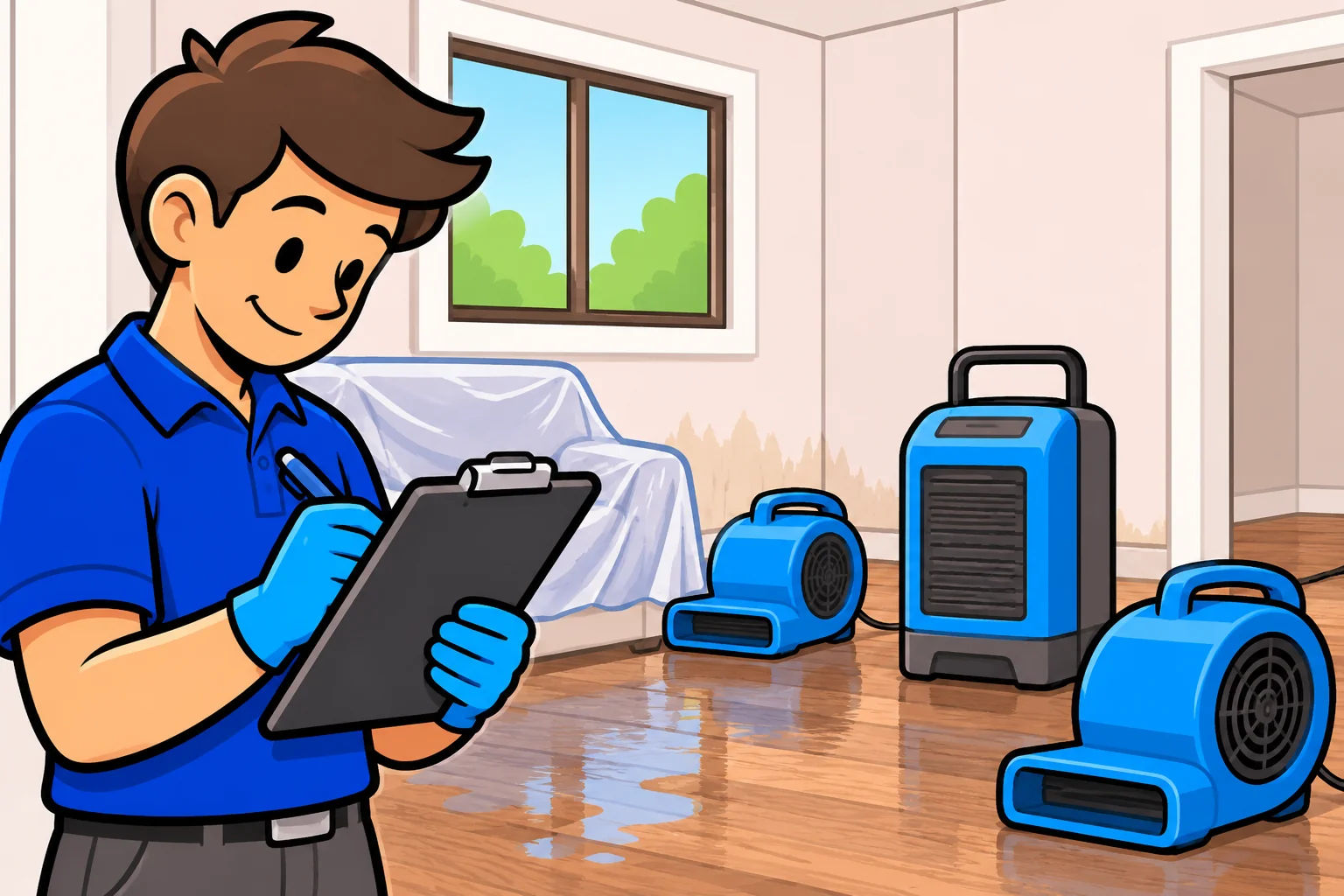
These illustrations show water-removal and drying topics that may be relevant to a loss. They do not establish the condition of a particular floor or demonstrate that every surface can be retained. A supply leak, appliance failure and floodwater entry can involve different handling and access decisions. Discuss the affected rooms, floor construction and any contamination concerns so extraction connects to the appropriate cleanup and restoration scope rather than becoming an isolated water pickup.
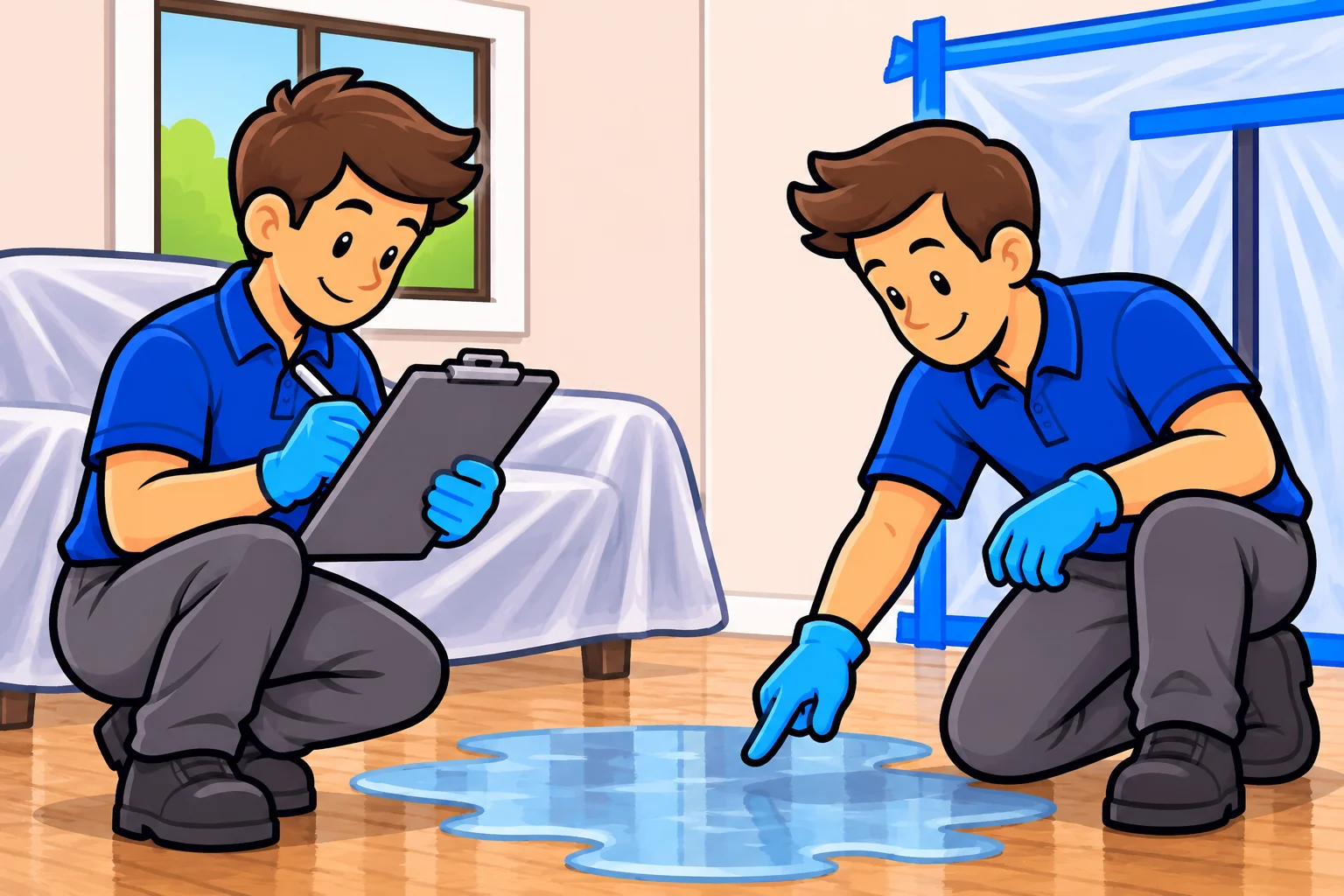
Standing-water extraction planning
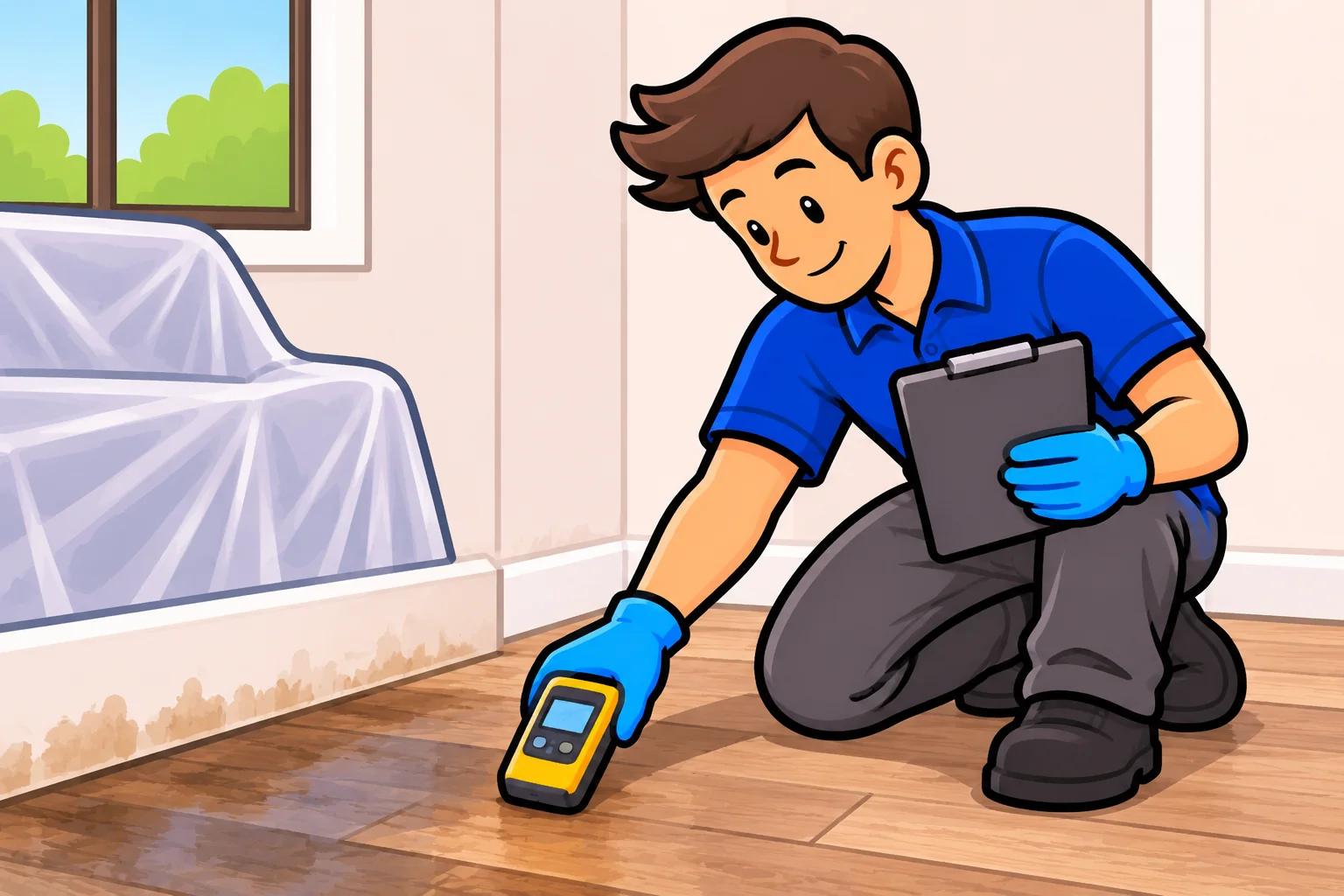
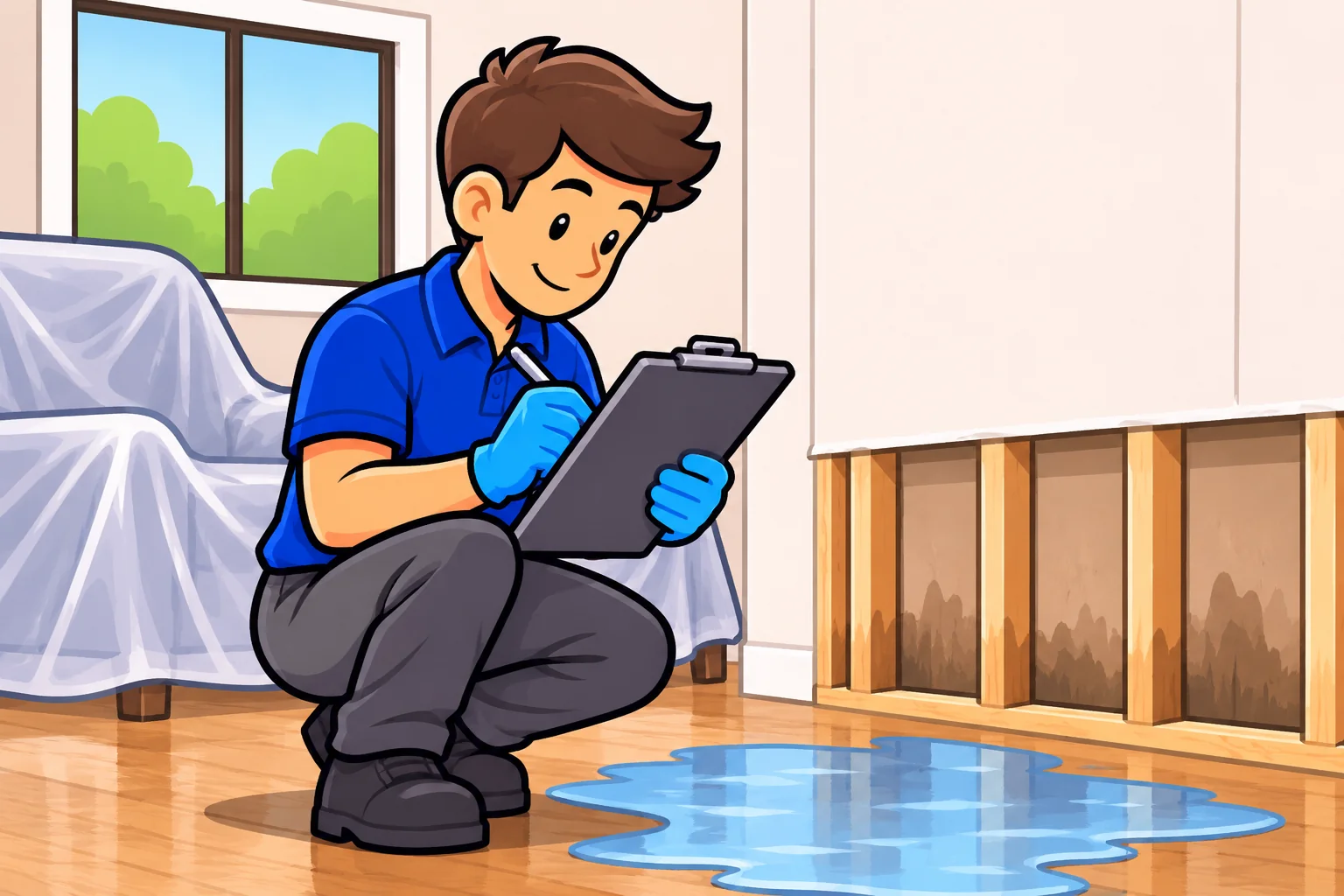
Assessing water-damaged flooring
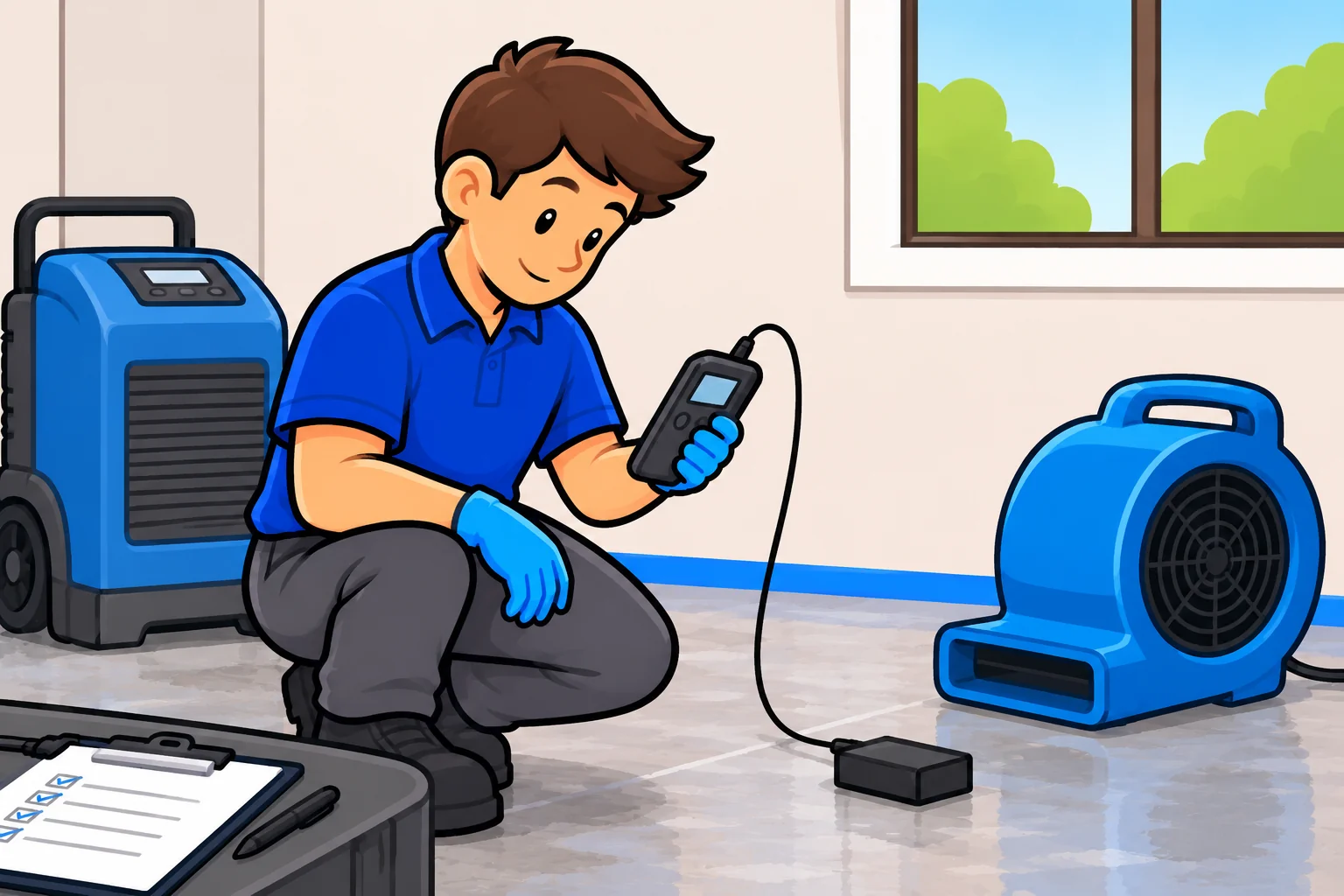
Drying equipment and material checks

Coordinating the restoration handoff
Bulk water extraction
Define the workAccessible standing water is removed as one stage of the restoration plan.
Moisture beyond the visible pool
Match the site conditionsSubfloor, wall bases and concealed interfaces can need further assessment after extraction.
Drying connected to repairs
Plan the next stageMaterial condition and moisture response help determine the appropriate restoration handoff.
Serving Boise and the Treasure Valley Emergency Water Removal in Boise and Nearby Communities
Disaster Cleanup offers emergency water removal in Boise and the Treasure Valley communities listed on this website. Provide the address and describe safe access when calling. Property layout, the water source and the current situation influence the response discussion. A location-based drive-time estimate is useful context, not a guaranteed arrival window or a promise that extraction, drying and repairs will all be finished during one visit.
The existing service-area listings include Ada County, Boise, Caldwell, Canyon County, Eagle, Emmett, Garden City, Hidden Springs, Horseshoe Bend, Kuna, Marsing, Meridian, Middleton, Mountain Home, Nampa, Parma, Payette and Star. Call to discuss your address and access needs.
Discuss Your Property Request a Free Inspection
Call Disaster Cleanup to discuss standing water, an active leak or wet building materials. Explain immediate hazards from a safe location and tell us whether the source has been stopped. For an immediate threat from electricity, an unstable building or another emergency, obtain the appropriate urgent assistance first; do not enter the water to prepare the room.
Call (208) 999-2353Client Reviews What People Say About Us
Rated 4.8 stars from 159 Google reviews. Read our Google reviews


Frequently Asked Questions
Is emergency water removal the same as drying?
No. Extraction removes accessible liquid water, while drying addresses moisture held within affected materials. Both may be required. A floor that looks dry after pickup does not establish the condition of subfloor, wall cavities or carpet backing. The extraction stage should include a discussion of which material layers still need attention afterward.
Should I turn off electricity myself?
Do not enter water to reach a breaker, plug or appliance. Stay clear and contact the appropriate utility or emergency service when electrical danger is present. Explain the situation from a safe location rather than taking a risk to prepare for extraction. A visible dry route to an electrical panel does not authorize handling equipment that may itself be damaged.
Can you promise a particular arrival time?
Availability, location, weather, safe access and current demand affect scheduling. Contact the team for current information. A location lookup or initial estimate should not be understood as a guaranteed arrival or the time needed to complete restoration. Confirm the current response arrangement directly rather than treating an automated estimate as an appointment.
Can all wet flooring stay in place?
Retention depends on contamination, construction, condition and drying access. Some materials may need removal to address affected layers. The decision should follow assessment rather than a blanket promise that every wet floor can be saved. A floor covering and the subfloor beneath it can require separate decisions within one water event.
How long will drying take?
Material type, moisture depth, environmental conditions and access affect drying response. Progress needs to be evaluated rather than assumed from a fixed number of days. Ask what conditions will guide equipment changes and the next repair stage. The plan may change as measurements show how different layers respond, so ask how progress will be explained.
What if the water came from a drain?
A drain backup can involve contamination requiring different handling from a supply leak. Keep people and pets out and avoid household extraction equipment. Tell the team the likely source so the assessment can address the appropriate cleanup scope. Do not try to determine contamination by smell, color or direct contact with the water.
Do you also address hidden moisture?
The restoration plan considers affected material layers and areas accessible for assessment. Additional access may be needed where water has traveled under finishes or into cavities. No surface-only observation can rule out every concealed moisture condition. Explain where the water was first seen and where swelling or staining appeared later.
Does insurance pay for emergency extraction?
That depends on the event, policy and insurer review. A burst supply line and surface flooding can have different coverage treatment. Keep the work scope and damage records, and ask the insurer about authorization, exclusions and deductibles. Retain source-repair information as well as the restoration scope so the event can be understood accurately.