
Boise, IdahoTrauma Cleanup
Disaster Cleanup provides trauma cleanup in Boise and the Treasure Valley, helping families and authorized property contacts discuss contaminated materials after a difficult event. You do not need to clean the space or have every answer before calling. Immediate medical needs and official access restrictions come first; once entry is permitted, the next step is a careful assessment and an understandable cleanup and repair plan.
Schedule a Free Inspection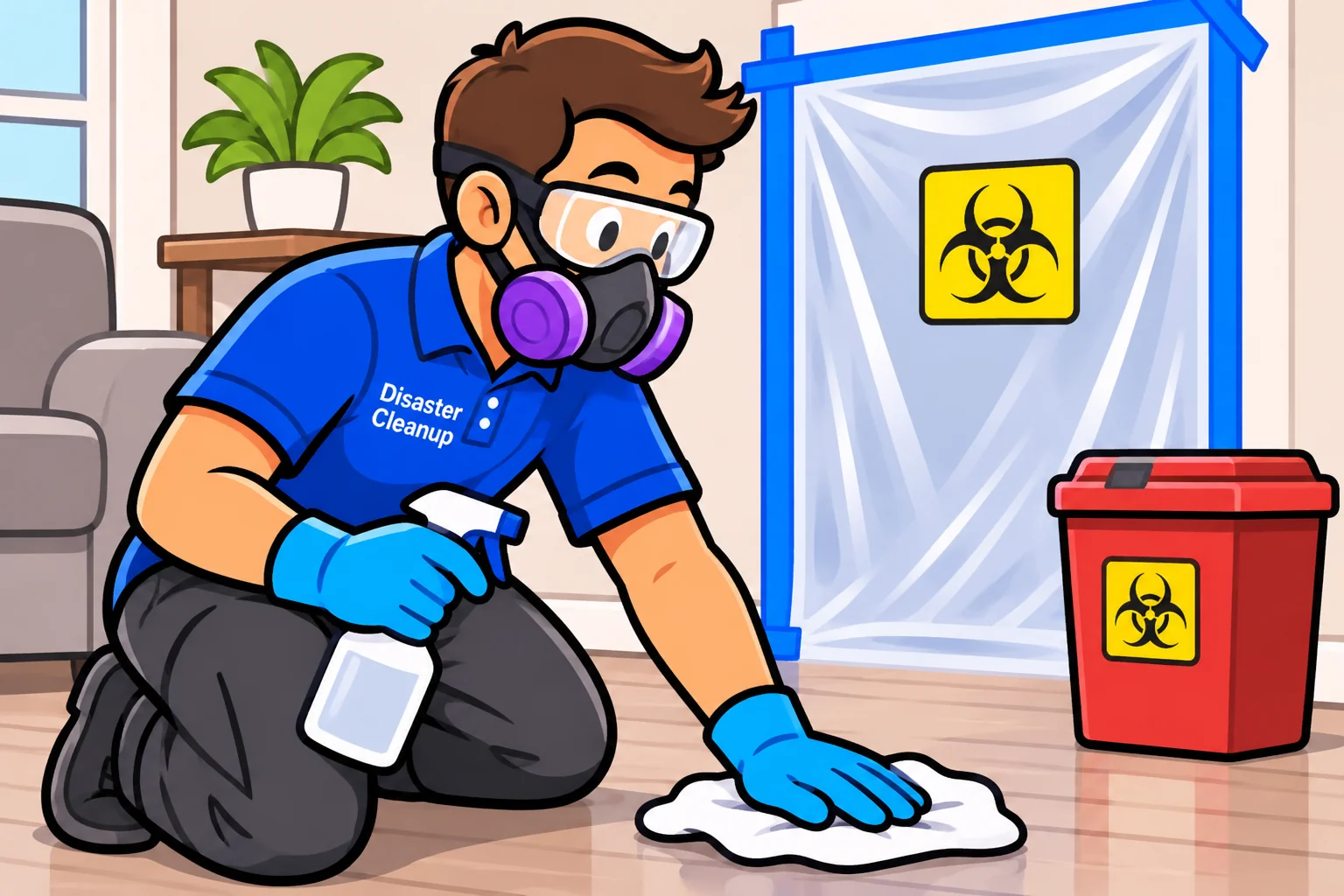
Find out how fast you can get service from your location
RESPECTFUL SUPPORT AFTER A DIFFICULT EVENTTrauma Cleanup in Boise
Trauma cleanup can involve more than a visible mark on a floor. Bodily fluids can reach absorbent layers and seams, while moved belongings or earlier cleaning may change the area needing attention. We discuss the known history, authorized access and affected materials without requiring a family member to inspect concealed layers or handle contaminated items in preparation for a visit.
A family contact may be managing access, belongings and insurance questions at the same time, while a property manager may have a different authorization role. We discuss those practical responsibilities without asking for unnecessary personal detail. Share the information available and any official restrictions. The plan should explain the next property decisions clearly, including what can be considered for cleaning and what repairs may remain after removal.
When to Discuss Trauma Cleanup
These examples identify property questions that may need professional discussion after immediate needs and access restrictions are resolved. They are not reasons for a family member to investigate the room personally. Describe what is known and let the assessment address material and handling questions within a clear authorized scope.
- Bodily-fluid contamination after a traumatic event
- A scene released for property cleanup
- Affected carpet, padding or floor seams
- Belongings requiring careful handling decisions
- An unattended-death cleanup concern
- A family or manager needing a clear restoration scope
What Happens After You Call
The first conversation establishes location, access and the person authorized to make decisions. We then explain the assessment and work stages without requiring you to clean, investigate or have every property question answered before calling.
- Share the location, known access restrictions and appropriate contact at a pace that works for the conversation.
- We discuss who may authorize access and material decisions after any official restrictions are resolved.
- The work boundary considers material construction and any known movement or earlier cleaning.
- Review proposed removal, cleaning, debris handling and important personal-item decisions before work expands.
- Understand the condition left after cleanup, remaining repairs and any questions outside the completed scope.
Common Situations We Assess
Blood and bodily-fluid contamination
Visible residue can involve absorbent layers or interfaces not represented by the outer stain. The material history and accessible area guide assessment. Owners should not pull up carpet or open floor seams to prove that additional layers may be involved. A floor covering, its backing and the underlying assembly can need separate consideration.
Unattended-death conditions
The known event and time of discovery can influence material and odor questions. An appropriate assessment is needed rather than a universal treatment assumption. Families do not need to enter the space or provide close photographs to begin the discussion. Official instructions and access restrictions should remain clear before cleanup is scheduled.
Contaminated carpet and soft materials
Carpet, pad, upholstery and similar materials can absorb fluids differently from a sealed hard surface. Retention or removal decisions should be explained individually. An emotionally important item should be discussed before handling or disposal is inferred from a general room scope. Do not collect a sample or cut the material to find out how far it absorbed fluid.
Movement through neighboring spaces
Items moved or traffic after an event can create assessment questions outside the first visible area. Share that history without attempting to retrace the path yourself. A cleanup boundary should reflect known conditions rather than simply the room name on an initial call. Known movement matters even when the nearby space appears visibly unchanged.
Prior household cleaning attempts
A surface may look different after wiping or chemical use while underlying material questions remain. Explain what was attempted and where equipment or debris went. Do not continue with another product or dismantle a vacuum to establish the history. The history of product use can be shared without another person repeating the cleanup attempt.
A rental or estate needing coordination
The person arranging help may not be the owner or the person entitled to make every belongings decision. Access permission and authorization should be clarified early so a cleanup conversation can proceed respectfully without assuming authority over all property or personal effects. Identify the appropriate representative without assuming ownership or access grants authority over every personal item.
What to Do First: Safety and Preparation
If someone may need medical help or the event is ongoing, contact emergency services first. Do not enter a restricted scene, handle sharp objects or start household cleaning. Keep children, pets and unnecessary traffic outside the affected area. Arrange the discussion from a safe place and explain who controls entry and who can authorize decisions about belongings and building materials.
If someone already attempted cleaning or moved items, explain that history without returning to gather more detail. Ordinary equipment and routes used can matter to assessment, but you do not need to dismantle equipment or handle debris to reconstruct what happened. Keep the affected area separated while the next step is discussed.
- Address immediate medical needs before property work.
- Respect official restrictions on scene access.
- Leave contaminated belongings and sharp objects in place.
- Clarify who can authorize entry and personal-item decisions.
Our Trauma Cleanup Process
1. Establish the contact and known restrictions
We discuss the location, the stage of official response and who can authorize entry. Immediate needs and scene control remain separate; a cleanup booking does not override instructions from responders or another responsible authority. You do not need a detailed personal narrative to establish the property location and appropriate next contact.
2. Assess accessible affected materials
The plan considers surfaces, absorbent layers and known movement through the space. Access limits should remain clear, and the owner should not be asked to disturb material or collect evidence to make the assessment possible. Explain any items or traffic already moved so the assessment can consider the route without asking you to retrace it.
3. Agree on scope and personal-item decisions
Discuss cleaning, removal, important belongings and the limits of the proposed work. The authorized contact should understand those choices before they are treated as an automatic consequence of the cleanup request. Confirm who can make important contents decisions rather than assume all contacts have the same authority.
4. Carry out controlled cleanup and handling
Methods follow material condition and the agreed boundary, with appropriate separation and debris movement. Newly found conditions may need review. A cosmetic stain change is not a substitute for addressing the affected material within scope. The work boundary should be reviewed if a newly exposed layer changes the original material assumptions.
5. Review remaining material and odor questions
Some surfaces may require a different decision or further access after initial work. Explain those findings in practical property terms rather than promise one universal method or a result about every concealed layer and future condition. A later finding may require another decision instead of being hidden behind a blanket completion promise.
6. Coordinate the restoration handoff
Discuss removed finishes, repairs and outstanding responsibilities after cleanup. Reconstruction can be considered where needed, but the owner should know whether it is included and avoid confusing a bounded cleanup with a completely rebuilt room. Discuss which repairs remain and whether they are included before arranging ordinary use of the affected space.
Why Choose Disaster Cleanup
An understandable, respectful process gives the authorized contact useful decisions without asking them to undertake the cleanup first. Disaster Cleanup offers related biohazard services and reconstruction, allowing removal and repair questions to be discussed together. Clear boundaries, personal-item decisions and the work handoff matter more than a blanket promise about every surface or an unnecessary account of the event.
The contact should also understand the distinction between cleanup, contents decisions and repairs. A removed section of carpet may leave a rebuilding task even when the contamination work is complete, while an important personal item needs an explicit conversation rather than an assumed disposal decision. Ask what remains after each stage and which authorization applies. A defined handoff allows the property work to move forward without implying a universal outcome or requiring a family to oversee every technical detail.
What Affects the Project Schedule?
The material condition, affected area, access, contents decisions and any required repairs determine the sequence. Official restrictions and authorization can also affect when work may begin. Discuss the actual stages directly; an initial drive-time estimate is not a fixed completion promise or a guarantee of when the whole property will be available.
Insurance and Project Documentation
Coverage depends on the policy and circumstances. Ask the insurer what documentation and authorization it requires, and keep the proposed cleanup and repair scope understandable. An inspection does not decide coverage or imply that every belongings decision, removal and reconstruction task will be paid as one automatic benefit.
You do not need to clean the space before contacting us
Once immediate needs and official access restrictions are addressed, contact Disaster Cleanup from outside the affected area. Share the property location and appropriate authorized contact. Leave contaminated items and sharp objects in place, and explain important belongings or any cleaning already attempted without feeling you must enter or investigate further to prepare.
If you are arranging help for another person, it is enough to begin by clarifying the responsible contact and access status. The property assessment can address technical questions later. There is no preparation requirement that a family member sort contaminated belongings or remove damaged finishes before contacting us.
Information That Helps Define the Next Step
- Bodily-fluid contamination after a traumatic event
- A scene released for property cleanup
- Affected carpet, padding or floor seams
- Belongings requiring careful handling decisions
Trauma CleanupAssessment, Work Planning and Restoration
The illustrations represent assessment, controlled handling and restoration topics rather than document an actual incident or identify a client's property. Different surfaces and absorbent layers can have different cleaning or removal decisions. Explain important belongings and known movement through the area before handling begins. The proposed work should remain specific to the property, with the authorized contact able to understand the boundary and any repairs that follow the cleanup stage.

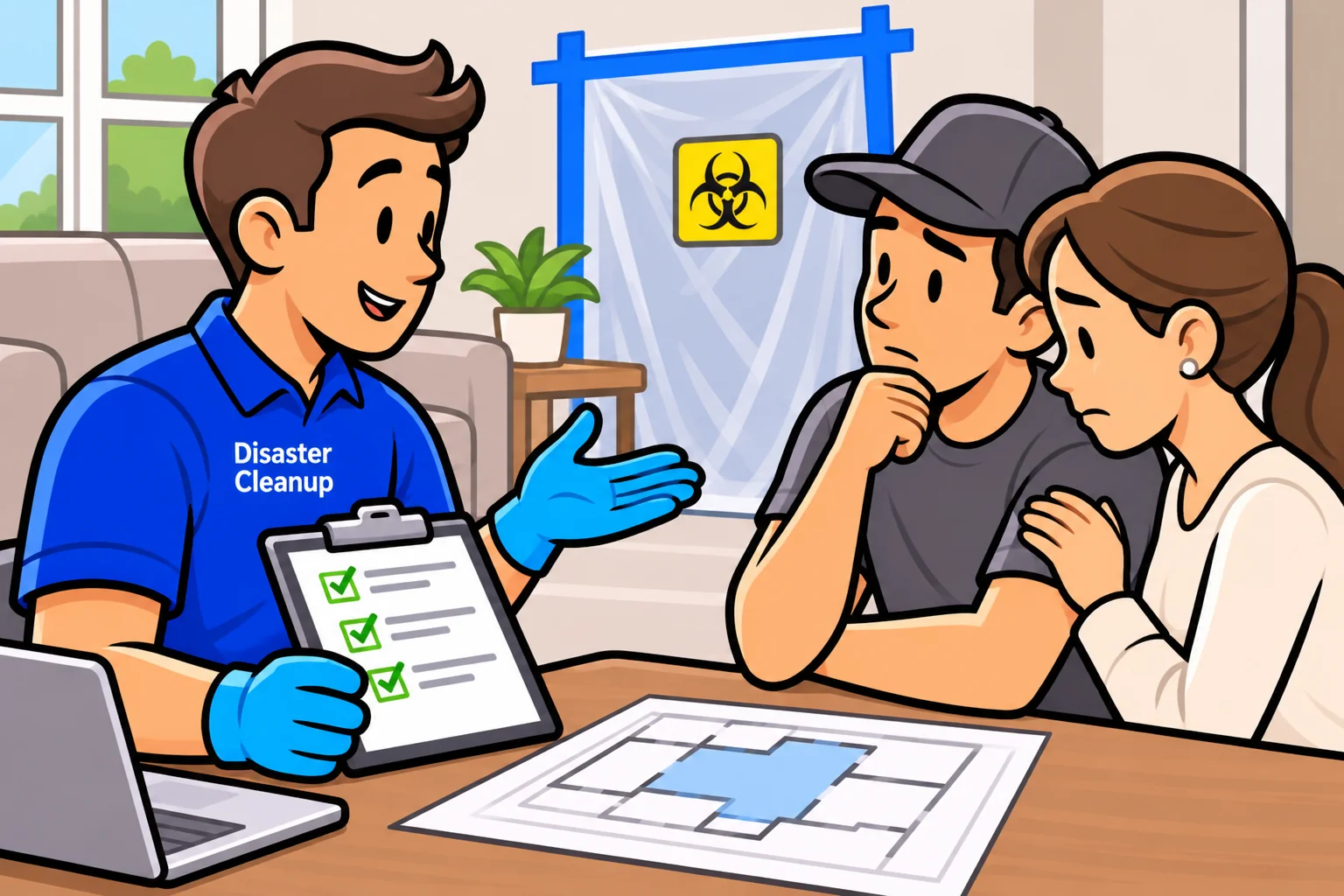
Discussing a respectful cleanup plan
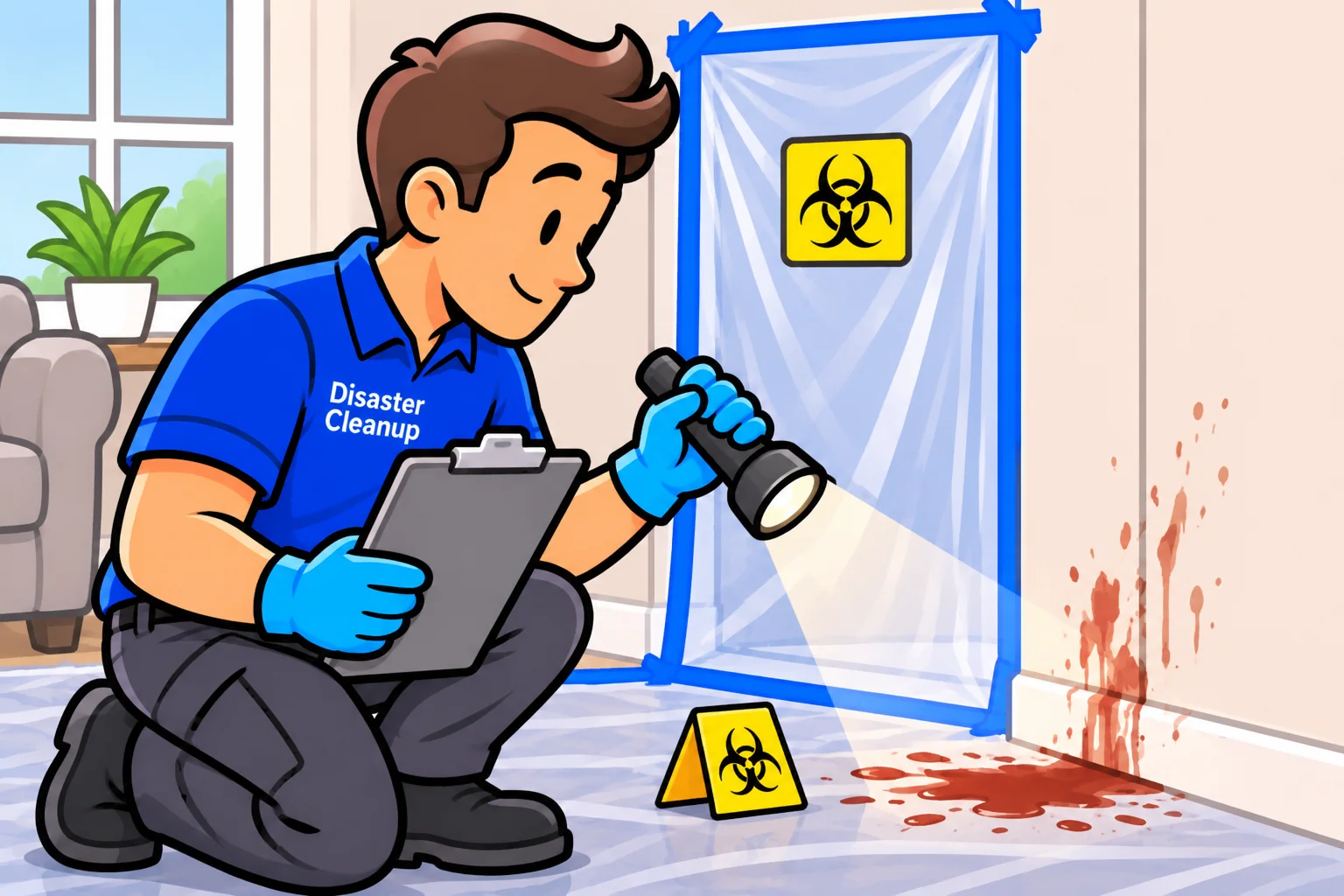
Assessing affected surfaces and layers
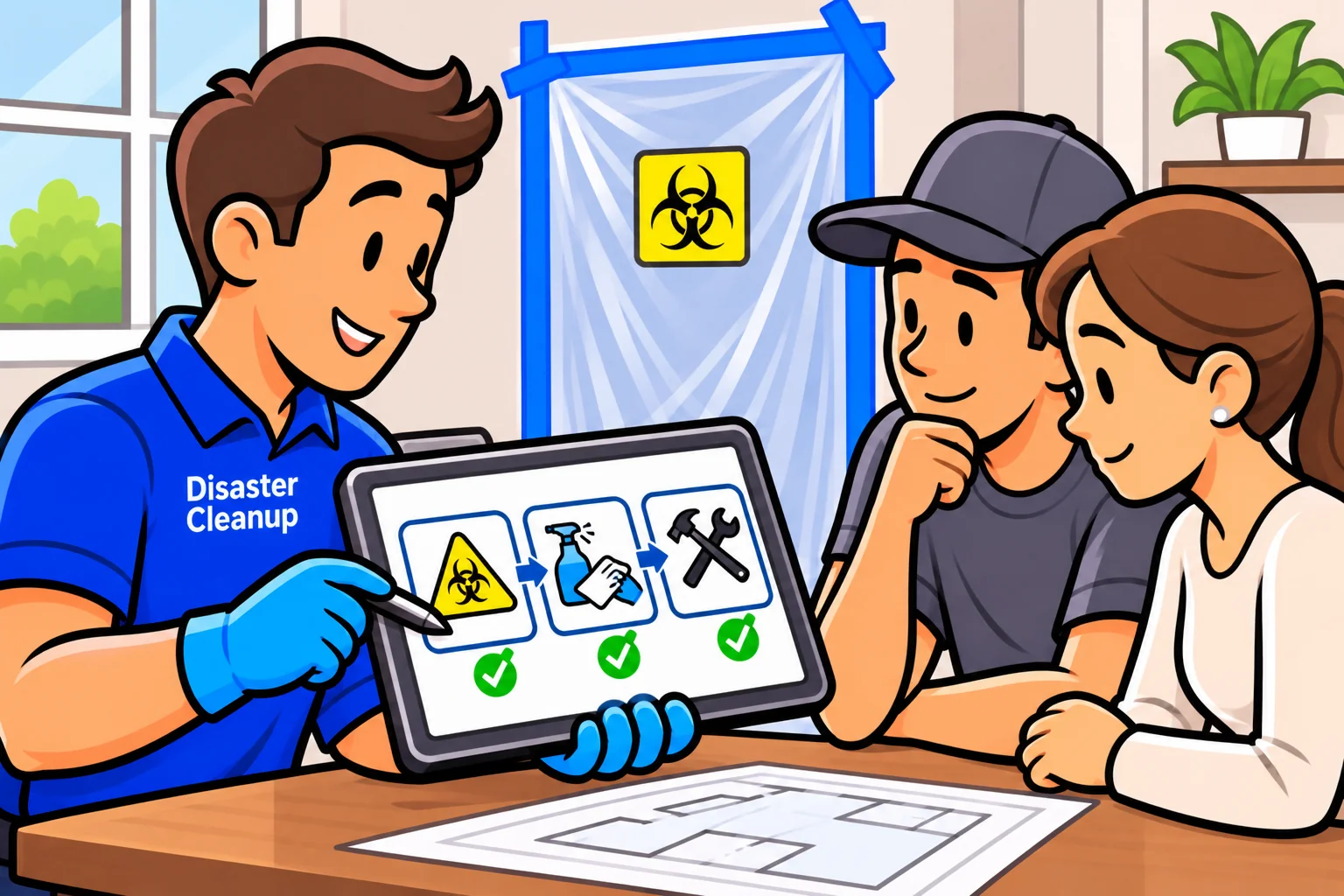
Planning careful handling decisions
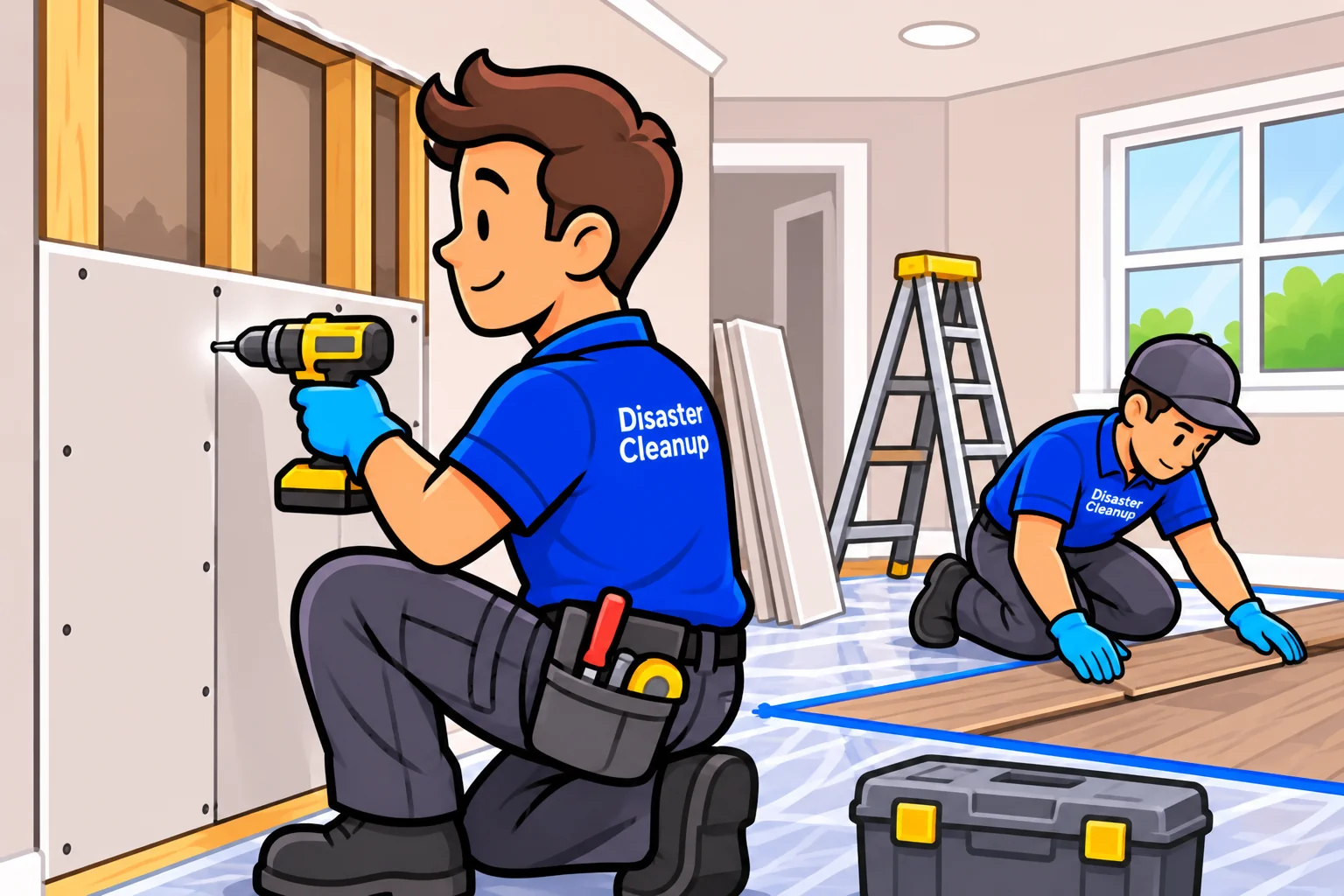
Coordinating cleanup and repair needs
A clear and considerate first conversation
Define the workThe useful starting information is location, access and authorized contact, not a family member completing cleanup or a close inspection.
Material decisions explained before handling
Match the site conditionsImportant personal effects and absorbent building layers deserve explicit consideration within the scope.
Cleanup connected to practical repairs
Plan the next stageThe handoff should distinguish completed cleaning and removal from replacement finishes or other work still required.
Serving Boise and the Treasure ValleyTrauma Cleanup in Boise and Nearby Communities
Trauma cleanup is offered in Boise and the Treasure Valley service areas described on this website. Families, property managers and estate contacts may have different responsibilities for entry and belongings. Provide the location and appropriate authorized contact without entering the affected area. A listed community does not create a fixed arrival or completion promise; access, material conditions and the agreed work determine the practical arrangement.
The existing service-area listings include Ada County, Boise, Caldwell, Canyon County, Eagle, Emmett, Garden City, Hidden Springs, Horseshoe Bend, Kuna, Marsing, Meridian, Middleton, Mountain Home, Nampa, Parma, Payette and Star. Call to discuss your address and access needs.

Discuss Your PropertyRequest a Free Inspection
Contact Disaster Cleanup when immediate needs are addressed and property cleanup can be discussed. You may begin with the location, access information and authorized contact you have. Leave affected items undisturbed, identify any important belongings for discussion and ask how the cleanup scope connects with remaining repairs and insurance documentation.
Call (208) 999-2353Client ReviewsWhat People Say About Us
Disaster Cleanup is 5-Star Rated on Google


Frequently Asked Questions
Do I need to clean anything before calling?
No. Do not handle contaminated material, sharp objects or absorbent finishes as preparation. Contact the team from a safe location with the property and access information you have. You do not need close photographs or a complete account of every affected layer to start a useful conversation. The team can discuss the next step without a family member pulling flooring back or collecting contaminated material.
When can cleanup begin after an official response?
Access restrictions and authority to enter must be resolved appropriately. A property owner or family member should not assume a scene is available because responders have left one area. Explain any instructions received and confirm who can authorize the cleanup before work is arranged. Property ownership and official access control are separate questions, so clarify both before entry.
Will you have to remove all the flooring?
The decision depends on contamination, material construction and accessible layers. A surface and its backing or subfloor can require separate consideration. The proposed boundary should be explained rather than promise universal retention or automatic removal of every finish in the room. The visible edge of a stain may not describe all affected layers beneath a finish.
What happens to important personal items?
Discuss items that need special consideration before handling or disposal decisions are made. Material condition and contamination affect options, and not every item can be promised restoration. The authorized contact should understand which decisions are included rather than assume belongings are automatically treated as ordinary debris. Decisions should reflect condition and feasible handling as well as the authorized contact's priorities.
Can a property manager arrange the work?
A manager, landlord, estate representative or family contact can begin the discussion, but entry and decision-making authority need to be clear. Explain who owns or controls the property and who can authorize choices about belongings and repairs. Do not infer permission for every task from access alone. A clear contact arrangement helps avoid confusing permission to enter with permission to discard personal property.
Is cleanup the same as a complete room rebuild?
No. Cleaning and material removal can leave repair work outstanding. Disaster Cleanup also offers reconstruction, but the scope should identify whether replacement flooring, drywall or finishes are included. Ask what condition will remain after the cleanup stage and who coordinates the next work. The repair proposal should name the finishes or tasks included rather than rely only on the word restoration.
Can you promise exactly how long it will take?
Not before the actual condition and work boundary are understood. Access, material layers, contents decisions and repairs can change the sequence. Discuss expected stages after assessment instead of treating an automated estimate or initial conversation as a guaranteed completion time. Ask how the stages and remaining decisions will be explained instead of expecting one timing rule for every event.
Will insurance cover trauma cleanup?
The insurer determines coverage from the policy and circumstances. Keep the proposed work and any appropriate documentation available and ask about authorization. A cleanup estimate does not establish that every affected item or later repair will be paid, and coverage questions should remain separate from immediate access and safety needs. Keep cleanup and reconstruction descriptions clear so the insurer can review the actual proposed work.