Boise, IdahoHazardous Materials Cleanup
Hazardous materials cleanup in Boise starts with understanding what is present and whether the site is safe to approach. Disaster Cleanup discusses contaminated building materials, biohazard-related conditions and residue after property losses within an appropriate assessed scope. Keep away from unknown substances, dust or fumes, and seek emergency assistance for an active dangerous release rather than treating every situation as an ordinary cleanup appointment.
Schedule a Free Inspection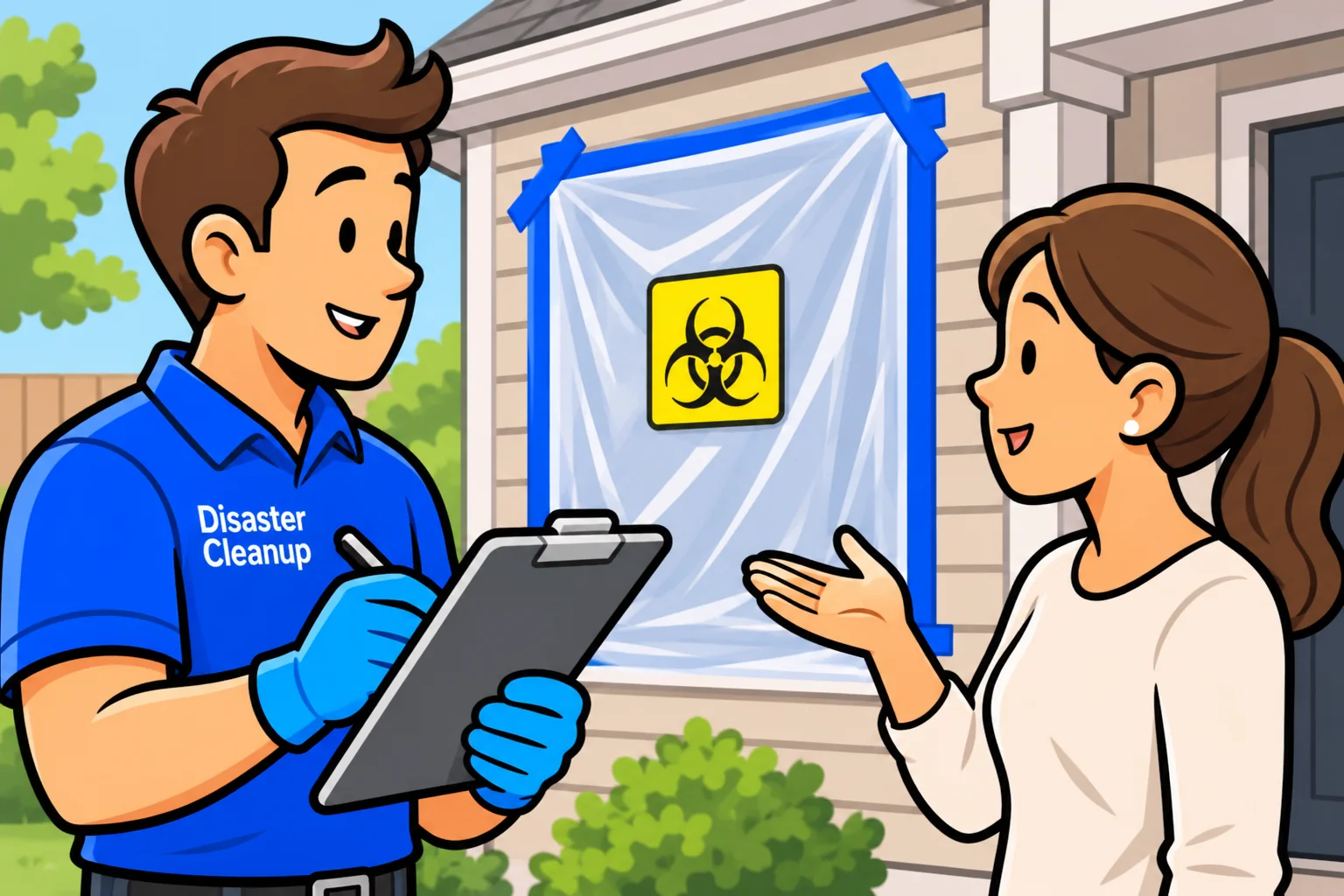
Find out how fast you can get service from your location
IDENTIFICATION BEFORE CONTROLLED HANDLINGHazardous Materials Cleanup in Boise
The term hazardous material can describe very different problems. An unidentified older building product, bodily-fluid contamination and residue after a fire do not call for one interchangeable method. We discuss the location, event history and suspected material so identification, access and handling decisions come before cleaning. Some situations need emergency responders or a specialist outside the proposed restoration work before entry can be considered.
Owners do not need to solve the identification question before making contact. Explain whether the condition followed a known incident, appeared during repairs or was discovered after a space became vacant. Also mention anything already moved or cleaned. That history helps frame a proportionate assessment without asking you to approach an unknown container, open a wall or carry potentially contaminated material elsewhere for a closer look.
When to Discuss Hazardous Materials Cleanup
These situations call for an assessment conversation, not a conclusion that every item belongs to the same hazard category. Explain known material records, recent events and any restrictions on entry. Unknown fumes or an active dangerous release require appropriate emergency help rather than closer investigation by the owner.
- Unknown debris exposed during damage repairs
- Bodily-fluid or animal-waste contamination
- Unidentified older finishes planned for disturbance
- Residue remaining after a property fire
- A vacant rental with a specific contamination concern
- Materials moved before their source was understood
What Happens After You Call
The first call establishes what is known and whether the situation needs urgent or specialist attention first. A restoration scope follows the identified condition and safe-access requirements, not a generic assumption about all hazardous materials.
- Explain the location, source history and what has been observed without entering to investigate.
- We discuss whether emergency or specialist involvement is needed before a restoration visit.
- Testing or additional information may be necessary to determine what material is involved.
- The work plan addresses the identified condition, separation, handling and relevant disposal or repair questions.
- Discuss what was addressed, any remaining limits and the building repairs or further evaluation that may follow.
Common Situations We Assess
Contamination after a property event
A loss can leave debris with several different material histories. The event and affected surfaces should guide assessment rather than treating every residue as the same substance. Official access restrictions and ongoing hazards remain separate from the cleanup proposal. Explain whether responders, another contractor or an owner has already altered the affected space.
Blood or other bodily fluids
Porous materials, seams and movement through an area can affect where contamination needs consideration. A visible stain is not the only relevant boundary. Keep the space separated and discuss the known history without collecting contaminated items yourself. A moved item or route through another room may be relevant even if the original stain appears small.
Animal waste in building spaces
Waste in an attic, crawl space or vacant property can involve inaccessible surfaces and disturbed insulation. Handling should reflect the actual material and space. Ordinary sweeping or household vacuuming can move debris instead of resolving the affected-area question. Access limitations should not be overcome by asking the owner to crawl through or move waste.
Suspect older building products
Asbestos or lead questions may arise when finishes are damaged or scheduled for removal. Appearance is not enough to identify those materials. Testing and controlled handling need to be considered before a general cleaning or demolition task expands into an unassessed product. An earlier result for one product may not characterize the different layer exposed during repairs.
Residue after fire or smoke
Heat, water and burned contents can leave different deposits in one property. Scene permission, material condition and the residue history guide the restoration discussion. Do not assume that a surface can be made suitable simply by wiping away a visible film. The combined fire and water history can matter to both access and material decisions.
An unknown condition in a vacant property
The person arranging entry may not know what happened or which substances remain. That uncertainty should be stated clearly rather than resolved by opening containers or moving debris. Identification and access decisions come before an ordinary cleaning estimate. State what is known about entry and prior occupancy without opening unknown containers to fill information gaps.
What to Do First: Safety and Preparation
Do not touch, mix, smell closely or collect an unknown substance to identify it. Keep others away and avoid using household fans or cleaning products that could spread material or create another reaction. For active fumes, a suspected dangerous chemical release, fire or an immediate medical concern, move to safety and contact the appropriate emergency service before arranging property cleanup.
Changing ventilation is not automatically safe for every unknown condition. Do not walk through the affected area to open a window, and do not direct air across dust or debris as a cleanup measure. Explain what equipment was already running or used so the assessment can consider possible material movement without further owner exposure.
- Do not touch or closely smell unknown substances.
- Keep routine traffic outside the affected area.
- Do not mix cleaning products or unknown materials.
- Explain prior handling without collecting new samples.
Our Hazardous Materials Cleanup Process
1. Gather the event and material history
We discuss what is known, where it is located and whether anyone has already handled or moved it. Information from a safe position is sufficient for the initial call; owners should not expose themselves to provide a more detailed description. Be clear about what is uncertain instead of guessing a product name from color or smell.
2. Establish the access requirements
An active release, emergency restriction or uncertain site condition may require another professional first. The cleanup plan must not be interpreted as permission to enter a scene that is still unsafe or under someone else's control. Do not treat an available doorway as evidence that entry has been released or the air is appropriate to enter.
3. Discuss identification and scope
Where needed, material testing or further assessment can help determine an appropriate approach. The proposal should name the condition addressed and any limits instead of treating a broad hazardous-material label as a universal treatment method. Sampling should answer a useful identification question and have an understood separate scope where needed.
4. Plan separation and handling
The work area, neighboring occupancy, belongings and movement routes influence how the project is arranged. Material-specific requirements guide the plan; a generic promise that one containment setup suits every substance would not explain the actual work. Movement routes should consider shared spaces and occupants outside the immediately visible affected area.
5. Clean or remove within the agreed boundary
Surface condition and the identified material affect retention, cleaning and removal decisions. Changes or newly exposed products should be reviewed before the scope expands. Debris handling and disposal need to fit what is actually being removed. Handling assumptions should be reviewed if a different substance or previously concealed material is discovered.
6. Review the result and restoration needs
The owner should understand what was completed, any required follow-up and what remains outside the scope. Rebuilding may be available for removed finishes, but completion of one cleanup does not characterize every concealed part of the property or diagnose personal exposure. The handoff should distinguish a completed bounded cleanup from other investigations or repairs still outstanding.
Why Choose Disaster Cleanup
A useful hazardous-material discussion acknowledges uncertainty instead of making an unsupported identification from a photograph. Disaster Cleanup offers related testing, biohazard and restoration services, allowing those questions to be discussed together where appropriate. Ask which material or condition the proposal addresses and which emergency, specialist or repair tasks are separate before authorizing a broad package of work.
The scope should also make a useful distinction between a material that was identified and a condition that remains uncertain. Newly discovered debris may require another decision rather than be automatically included under a broad cleanup label. Ask how changes will be discussed and what remains after cleanup, including any removed finishes and separate repairs. That prevents a limited service from being mistaken for an exhaustive investigation of every storage area or concealed building component.
What Affects the Project Schedule?
Identification, accessible area, material condition, handling requirements and any separate testing or repair influence the sequence. A cleanup involving known affected surfaces differs from a site with an unidentified substance or restricted entry. Current arrangements should be confirmed directly rather than relying on one universal dispatch or completion promise.
Insurance and Project Documentation
Coverage depends on the policy, material and event that led to cleanup. A pre-existing condition, planned renovation and sudden insured loss can raise different questions. Keep the assessment and proposed scope available, and ask the insurer about authorization. A free inspection or a cleanup estimate does not establish coverage or approval for every removal activity.
Keep away from the unknown material before investigating
For an active release, fumes or immediate danger, leave the area and contact the appropriate emergency service. For a stable property concern, explain the history and location from a safe position. Do not open containers, disturb debris or carry a sample to another room just to make the first discussion easier.
When booking on behalf of an owner or manager, clarify who may authorize entry and material decisions. Useful preparation is keeping records and contacts available, not attempting a trial cleaning or rearranging suspect items to make the site look ready.
Information That Helps Define the Next Step
- Unknown debris exposed during damage repairs
- Bodily-fluid or animal-waste contamination
- Unidentified older finishes planned for disturbance
- Residue remaining after a property fire
Hazardous Materials CleanupAssessment, Work Planning and Restoration
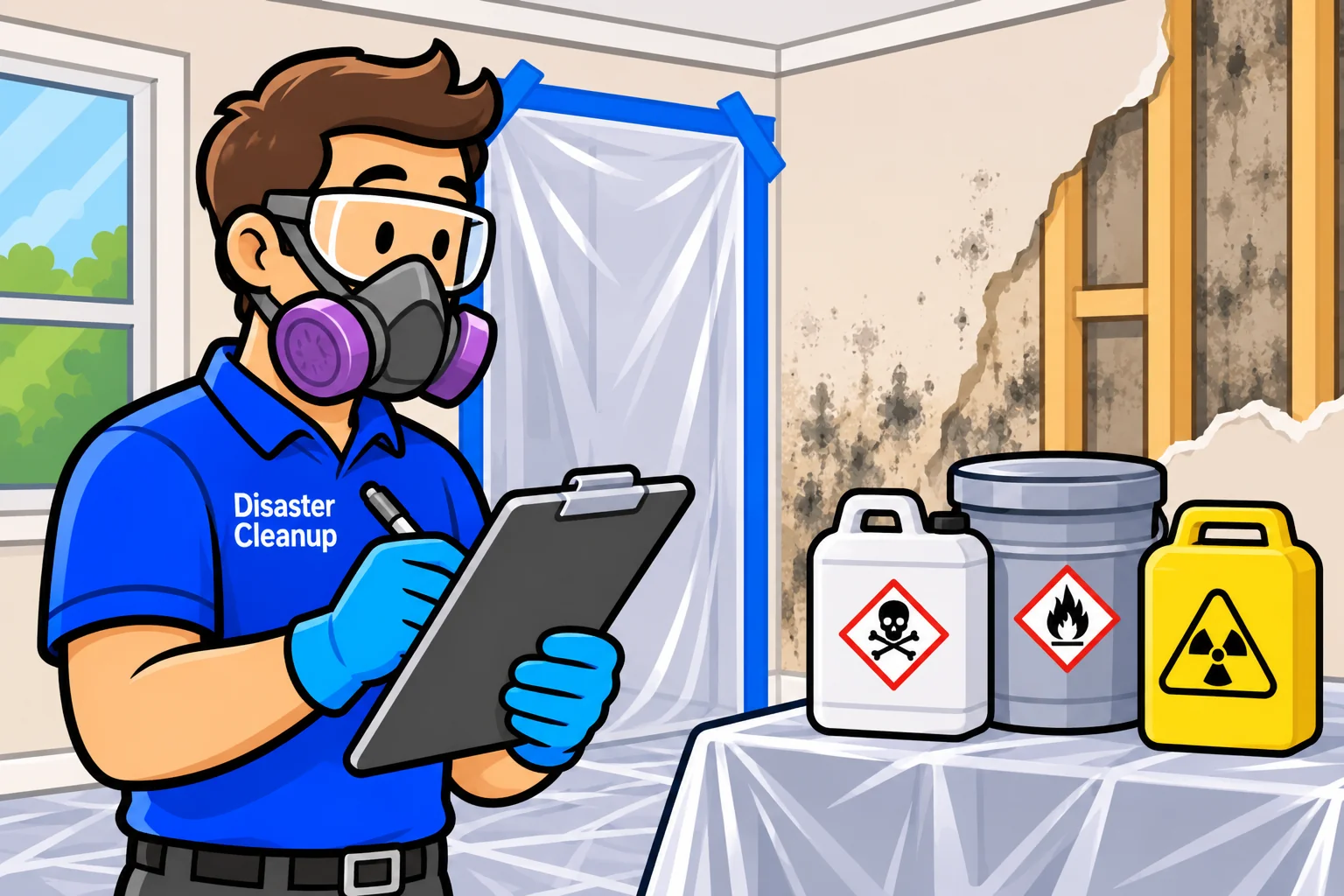
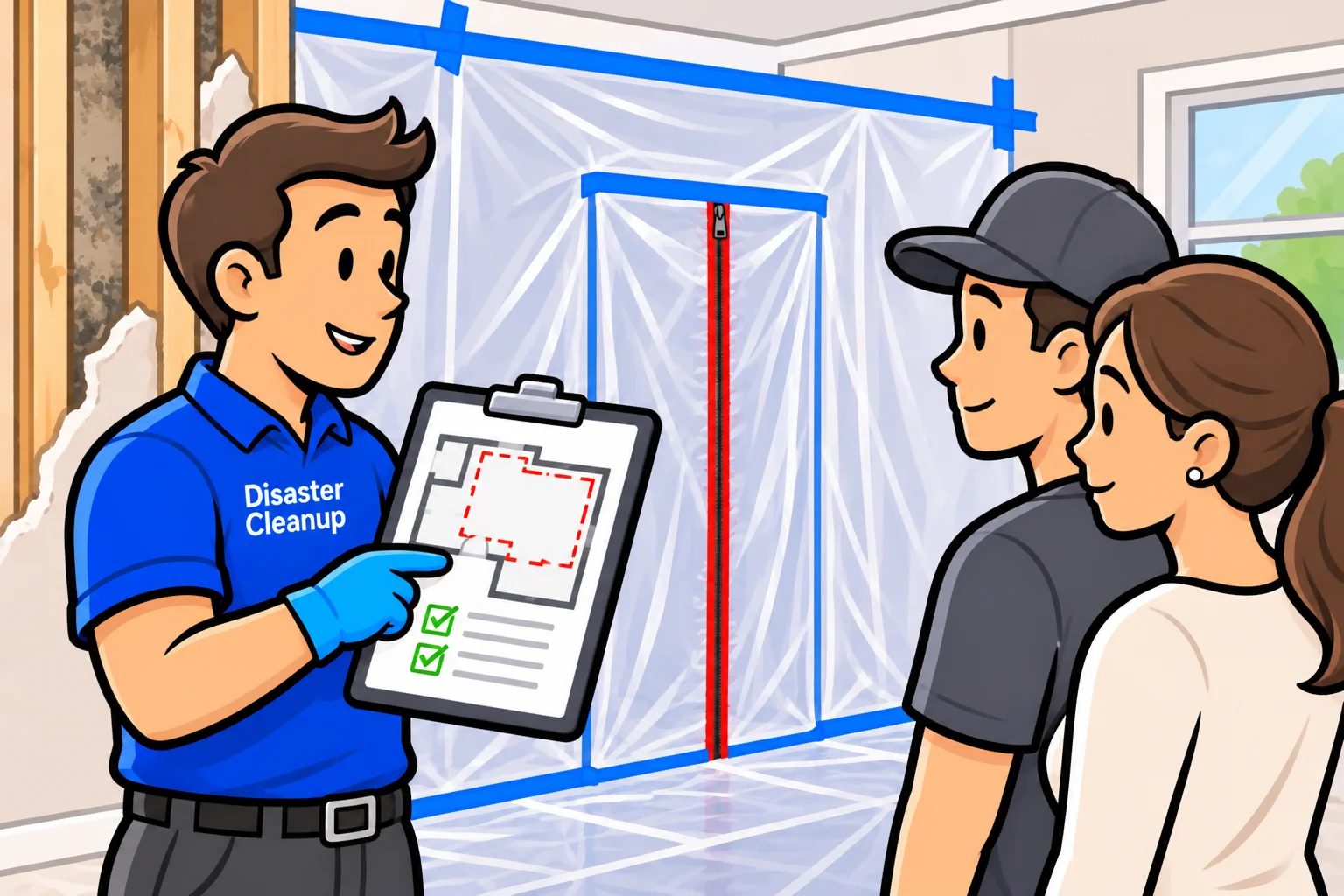
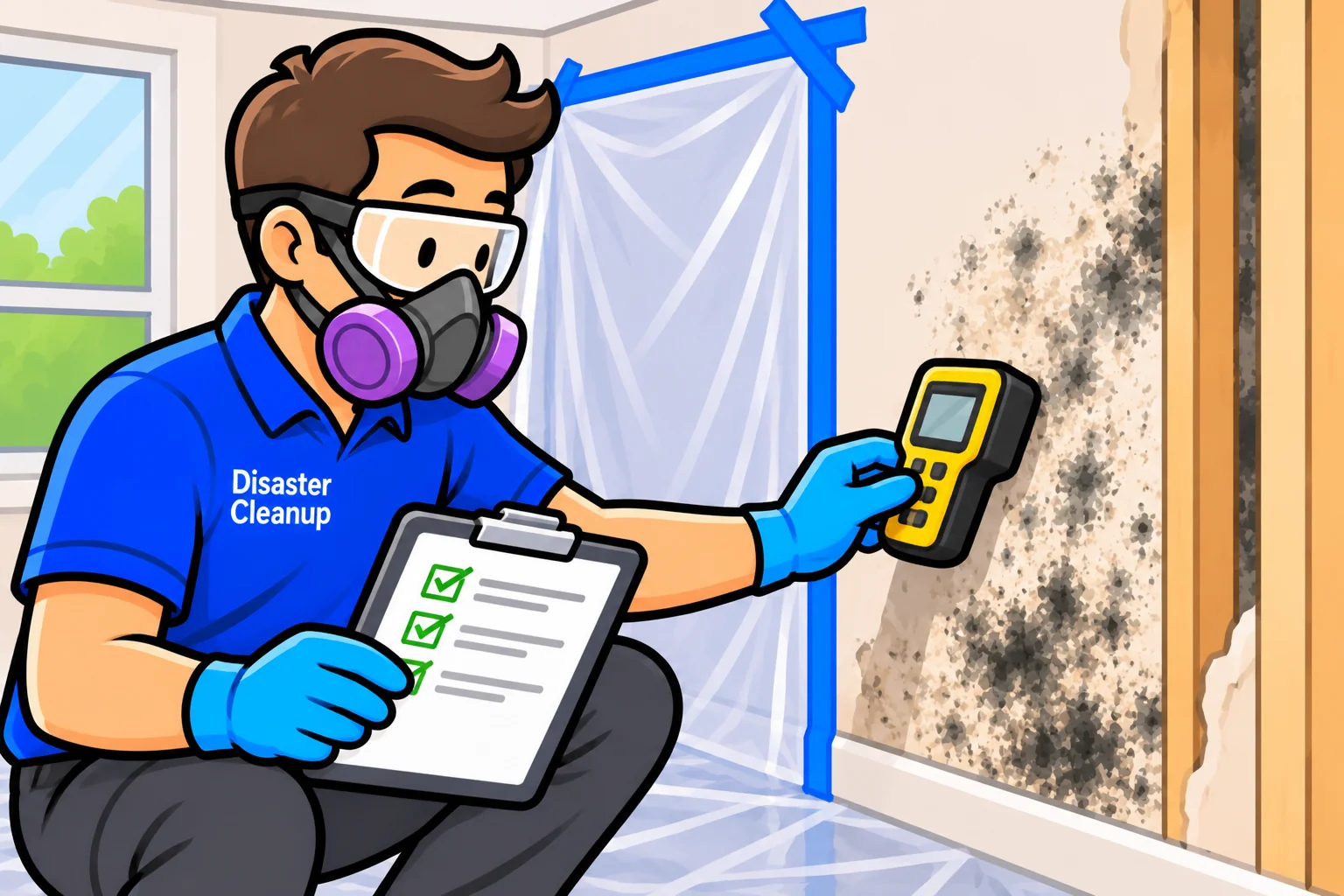
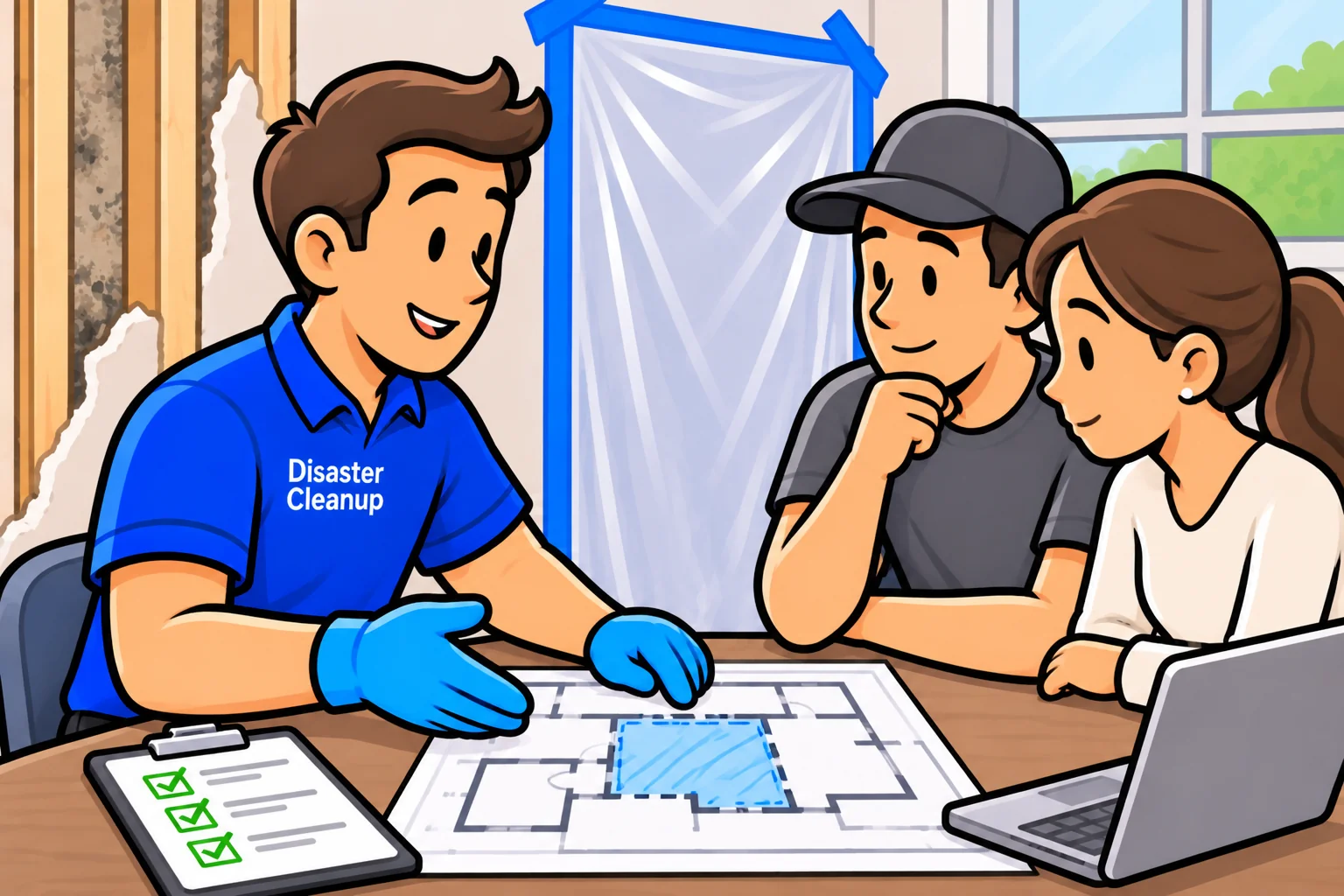
The illustrations represent building-material, contamination and controlled-cleanup questions. They do not identify an unknown substance by appearance or imply that every possible industrial chemical or emergency is within a restoration scope. Tell us the event history and material records available. An appropriate plan should explain the condition addressed, any assessment needed first and the cleaning, removal or repair tasks that can reasonably be considered once safe access is established.
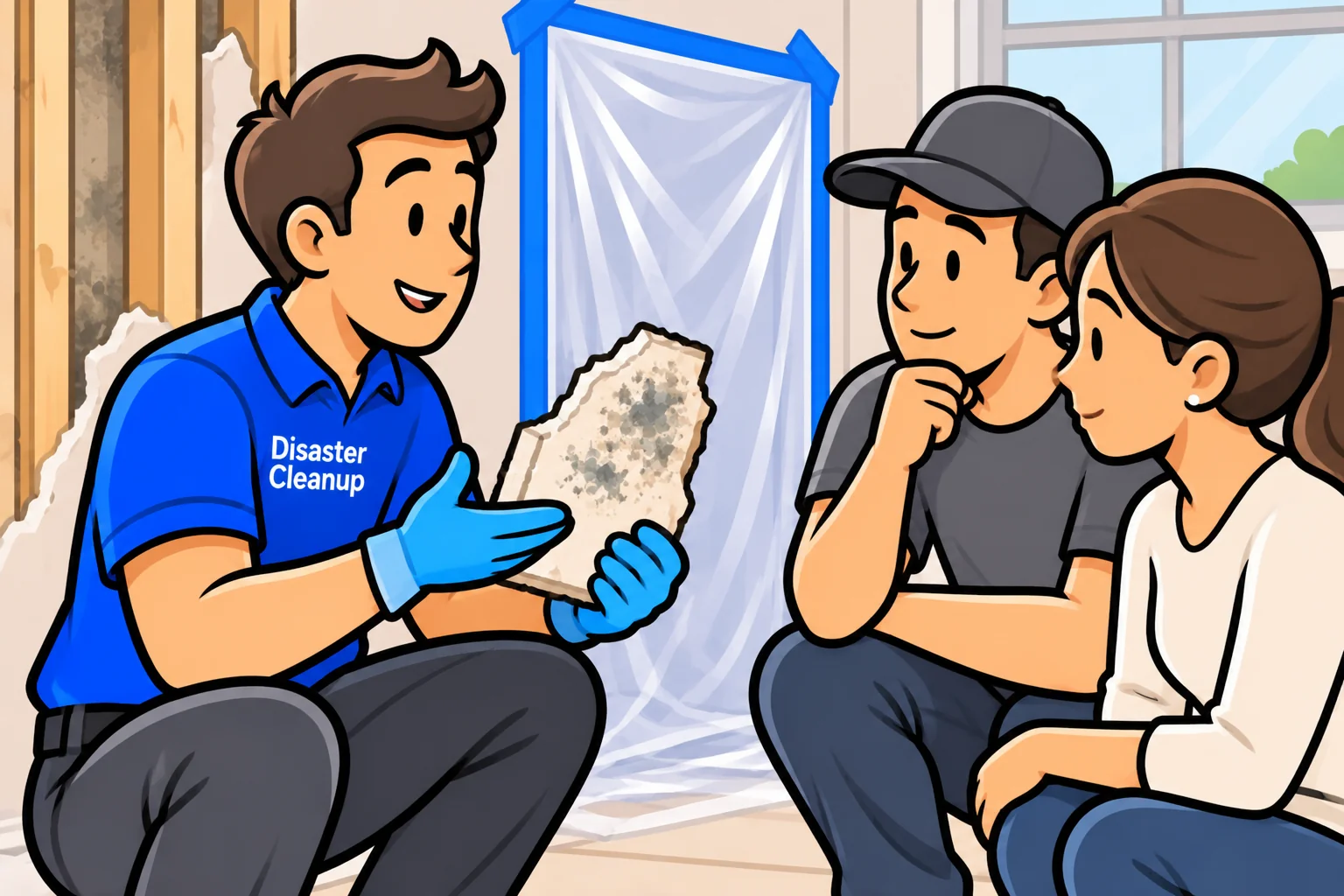
Discussing suspect building materials
Planning a controlled cleanup boundary
Evaluating contaminated surfaces
Coordinating handling and restoration decisions
Identify the actual condition
Define the workDifferent substances and affected materials require different assessment questions before handling begins.
Control movement through the area
Match the site conditionsAccess routes, belongings and nearby occupancy influence how cleanup and debris handling are planned.
Separate cleanup from wider promises
Plan the next stageA defined work scope does not certify every hidden surface, diagnose exposure or replace emergency response to an active release.
Serving Boise and the Treasure ValleyHazardous Materials Cleanup in Boise and Nearby Communities
Hazardous-material cleanup concerns can be discussed for Boise and the Treasure Valley areas described on this website. Homes, rentals and commercial properties may have different access permissions and source histories. Share the address and authorized contact from a safe location. A service-area listing does not establish that an unknown substance is safe to approach or that the same method applies at every property.
The existing service-area listings include Ada County, Boise, Caldwell, Canyon County, Eagle, Emmett, Garden City, Hidden Springs, Horseshoe Bend, Kuna, Marsing, Meridian, Middleton, Mountain Home, Nampa, Parma, Payette and Star. Call to discuss your address and access needs.
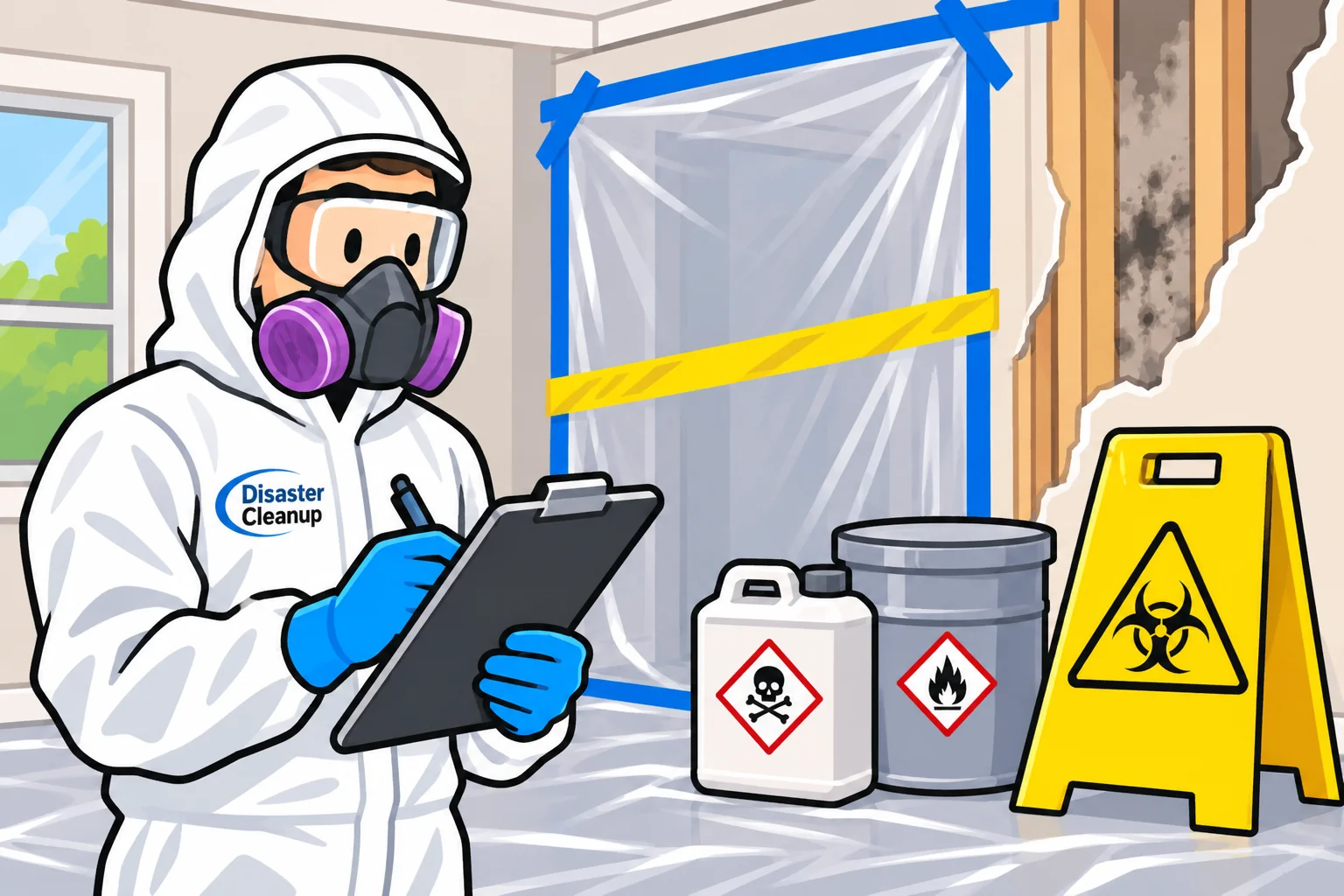
Discuss Your PropertyRequest a Free Inspection
Contact Disaster Cleanup about a stable contamination or suspect-material concern after immediate dangers and access restrictions are appropriately addressed. Describe what is known without handling or transporting the material. Request an initial inspection discussion and clarify any separate testing, controlled removal or repair scope before authorizing additional work.
Call (208) 999-2353Client ReviewsWhat People Say About Us
Disaster Cleanup is 5-Star Rated on Google


Frequently Asked Questions
Can you identify an unknown substance from a photograph?
A photograph may help frame questions but does not conclusively identify every material or its hazards. Do not approach, open or handle it to obtain a better image. The event history and appropriate assessment or testing may be needed before a suitable work scope can be discussed. Material records and the event history can be more useful than an owner taking a close-up photograph in an unsafe area.
Do you respond to every chemical emergency?
This page is not a substitute for emergency response to an active dangerous release, fumes, fire or a medical situation. Move to safety and contact the appropriate emergency service. Restoration cleanup can be discussed after access and the relevant hazard questions are appropriately addressed. An appointment request should not delay obtaining appropriate urgent help for an ongoing threat.
Should I collect a sample before calling?
Do not collect or transport an unknown substance or suspect debris as preparation. Sampling itself can create exposure or spread material. Describe what is known from a safe location and ask how identification should be arranged within an appropriate assessment scope. Tell the team if somebody already collected or moved material so that history can be considered.
Does all contaminated material need removal?
That depends on the substance, material construction, condition and feasible cleaning access. Some components may have different retention decisions within one area. The proposal should explain the boundary instead of promising either that everything can be saved or that every nearby finish must be discarded. Cleaning feasibility depends on the actual substance and surface, not simply the size of a visible mark.
What if asbestos or lead is suspected?
Material identification and the proposed disturbance need review before ordinary cleaning or demolition proceeds. Earlier test results should represent the actual product and location. Do not scrape, break or sand suspect finishes to investigate, and discuss testing as a separate defined activity where needed. The proposed disturbance matters as well as the material's current appearance or location.
Can you help a landlord or property manager?
The existing service includes rental and commercial property concerns as well as homes. Identify the authorized contact, access restrictions and known history when arranging discussion. A vacant property should not be assumed safe merely because occupants are no longer present. Confirm who controls access and who can make decisions about contents or removed building materials.
Will cleanup prove nobody was exposed?
No. A property cleanup does not determine an individual's exposure or diagnose a health condition. Consult an appropriate medical professional for personal concerns. The work should be described by its actual boundary and findings, not as a universal assurance about people or every concealed area. A supported completion statement should describe the work actually performed, not conclusions about individual people.
Is hazardous materials cleanup insured?
Coverage varies with the policy and cause. Ask your insurer about the particular material, event, authorization and documentation. Keep the proposed scope clear so testing, cleanup and later repairs are not assumed to be one automatically approved or fully paid task. Ask which parts of the proposal are identification, cleanup, disposal and restoration so the insurer sees the actual work.