
Water Damage Restoration in Caldwell, ID
Disaster Cleanup provides 24/7 water damage restoration in Caldwell, Idaho: emergency water removal, structural drying and repairs after burst pipes, water heater failures, appliance leaks and flooded basements. Phones are answered live 24/7 and our crew is usually on site in 1-2 hours, about 21 miles from our Garden City office at 5332 N Sawyer Ave, STE 120. We serve older homes near the College of Idaho, newer subdivisions toward I-84 and farms around Sunnyslope.
Schedule a Free Inspection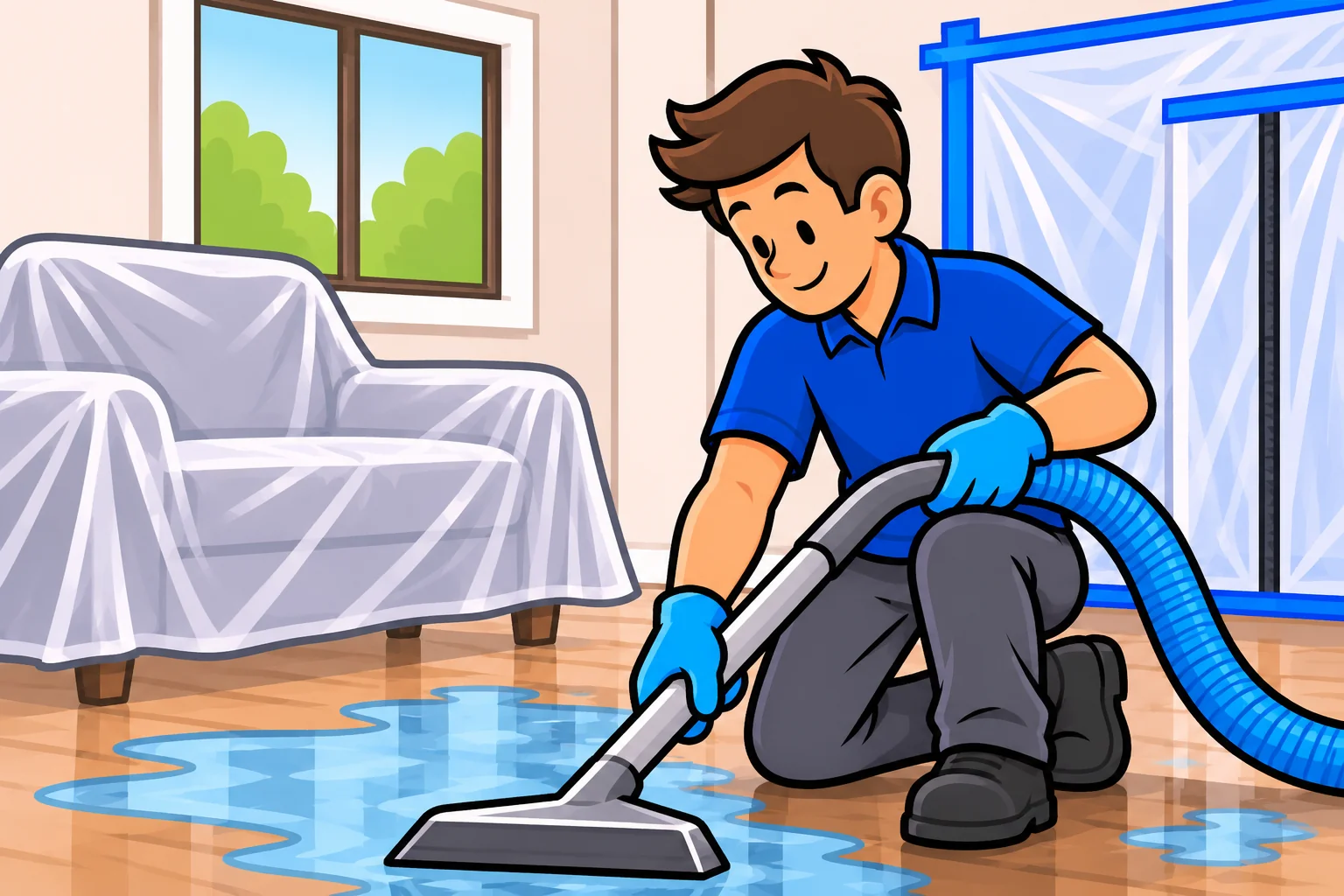
Find out how fast you can get service from your location
WATER-DAMAGE ASSESSMENT AND RESTORATION Water Damage Cleanup in Caldwell
Water damage cleanup in Caldwell starts with stopping the source and removing the standing water. Our crew extracts the water, removes wet carpet pad and other materials that cannot be dried, and uses moisture meters to find water that has moved under floors, behind baseboards and into walls. Caldwell has older homes with cellars and stone or block foundations, newer subdivisions toward I-84 and farm properties with shops and outbuildings. Each one holds water differently, so we start by tracing where the water went, not just where it pooled.
We set up air movers and dehumidifiers where the readings call for it, check moisture at every visit and tell you when the structure is dry and ready for repairs. When drying is done, we handle the repairs too, including drywall, paint, flooring and cabinets, and all of our work is backed by a 1-year warranty.
Signs to Discuss at Your Caldwell Property
In a Caldwell house or managed property, the first useful information may be a recurrence after weather, a swollen cabinet or a wet lower room. Keep that chronology available without entering unsafe water. These observations guide questions about affected layers and source follow-up rather than establish the cause themselves.
- Standing water spreading across a room
- A failed supply line or appliance hose
- Saturated carpet and wet baseboards
- Water entering walls or adjoining rooms
- Pooling around equipment or utilities
- New water damage after firefighting or a storm
What Happens After You Call
We first discuss the property location, known conditions and authorized access. The five stages below connect assessment with an understandable work scope and the decisions that follow.
- Tell us where water is present, whether it is still entering and what can be observed safely.
- We discuss who can address the leak and how the work area can be reached.
- The amount of water, surface types and possible contamination guide the removal plan.
- We explain why extraction is followed by checks of affected material layers.
- The next stage depends on measured conditions and any materials requiring removal or replacement.
Water and Material Questions in Caldwell
Cellars and older lower walls
An older Caldwell building may have masonry, interior paneling and storage in the same lower space. The exposed wall and the finish covering it can present different access questions. Share previous dampness and repairs without removing paneling or boxes through contaminated water.
Supply and appliance failures
A failed connection can wet a utility area and neighboring finishes before discovery. Source repair does not establish that the cabinet base or flooring beneath an appliance is unaffected. Describe the known failure and the rooms showing later symptoms so those interfaces can be considered.
Weather and exterior water
After weather-related water entry in Caldwell, describe the event and the affected side of the building. At a particular property, the route and contamination history still need assessment. State what happened and where water appeared rather than assume every lower-room pool came from the same seasonal source.
Rural-edge access and equipment
A farmhouse, shop or utility building can have different entry and mechanical arrangements from a typical interior room. Tell us about known pump, well or plumbing work where relevant. A building-cleanup proposal should not be mistaken for a repair to every source system serving the property.
Hidden wet insulation or finishes
A surface may look improved after extraction while insulation and adjoining assemblies remain affected. Whether material can stay depends on condition and access, not just visible discoloration. The scope should explain why further opening or removal is proposed before reconstruction begins.
Recurring water after an earlier repair
Repeated wetting deserves its own chronology. Explain previous source work, where water returned and any cleaning already attempted. Restoration should connect with that unresolved question instead of repeat a cosmetic drying arrangement while assuming the original cause was corrected.
What to Do First: Safety and Preparation
Do not step into water to reach a breaker, appliance or shutoff valve. A supply valve should be used only when it can be reached safely without entering the affected area. Keep people and pets out of unknown water, avoid household extraction equipment and contact emergency services or the appropriate utility for immediate electrical or structural danger.
Electrical danger can exist even when the water appears clear and ordinary lights remain on. An owner should not be asked to prove that equipment is safe before requesting help. Keep the area isolated and explain the locations of outlets, appliances or mechanical equipment without entering the water to inspect them.
- Do not reach into water to unplug equipment.
- Keep contaminated belongings out of dry rooms.
- Explain whether the source remains active.
- Take photographs only from a safe accessible position.
The Restoration Sequence for Your Caldwell Property
1. Assess safety and active water
Clarify whether the Caldwell property has an active supply problem, outside entry or a source still under investigation. Access, lower-level safety and any professional already addressing the source need to be considered before building cleanup is arranged.
2. Map the affected area
Visible water and appropriate moisture checks help identify the involved materials. Adjacent rooms and concealed interfaces may need consideration because water movement does not always follow the boundaries apparent from the surface. Floor transitions, cabinet bases and adjoining rooms can provide useful clues about where water traveled.
3. Remove accessible standing water
Extraction equipment is selected for the site and material conditions. Removing bulk water is an important first stage, but it does not establish that carpet backing, subfloor or wall cavities are ready for repairs. The affected material and access determine the extraction approach rather than depth alone.
4. Evaluate retention and access
Contamination and material condition guide which finishes can remain and which may need controlled removal. The decision should be explained before assuming every wet material can be dried in place. Explain proposed material removal before an owner assumes that all finishes will remain intact.
5. Set and monitor drying
Drying methods follow the materials and affected assembly. Equipment placement and progress checks help assess the response; a fixed equipment rental period alone is not evidence that the required conditions have been reached. Changes in drying response should guide the discussion instead of relying only on elapsed equipment time.
6. Plan the repair handoff
Review the condition left after cleanup and drying, including removed finishes and outstanding source corrections. In a managed or multi-building property, make clear which rooms and structures were included so the next repair decision is not based on a broader assumed scope.
Does Insurance Cover Water Damage in Idaho?
Most Idaho homeowners policies cover sudden and accidental water damage, such as a burst pipe, a failed water heater or a washing machine hose that breaks. Damage from a slow leak over time, poor maintenance or outside flooding is often treated differently, and flood coverage is usually a separate policy. Your policy and your adjuster decide what is covered.
We start with a free inspection, document the damage with photos and moisture readings, and work directly with your insurance company. You can pay after your claim closes.
What Affects the Project Schedule?
Drying time depends on how much water there was, which materials got wet and how long they stayed wet. We take moisture readings at every visit and tell you when the structure is dry and ready for repairs.
What to Keep for Your Claim
Take photos before anything is moved, keep receipts for any emergency repairs and save the plumber's invoice for the source repair. We share our photos and moisture logs with your adjuster.
Emergency Water Removal in Caldwell
If water is still coming in, shut off the main water valve if you can reach it safely and stay out of standing water near outlets, cords or appliances. Then call (208) 999-2353. A person answers live 24/7, and our crew is usually on site in Caldwell within 1-2 hours to stop the spread and extract the water. If there is a gas smell, sparking or a sagging ceiling, leave the area and call 911 or the utility first.
Information That Helps Define the Next Step
- Standing water spreading across a room
- A failed supply line or appliance hose
- Saturated carpet and wet baseboards
- Water entering walls or adjoining rooms
Water Damage Restoration Assessment, Work Planning and Restoration
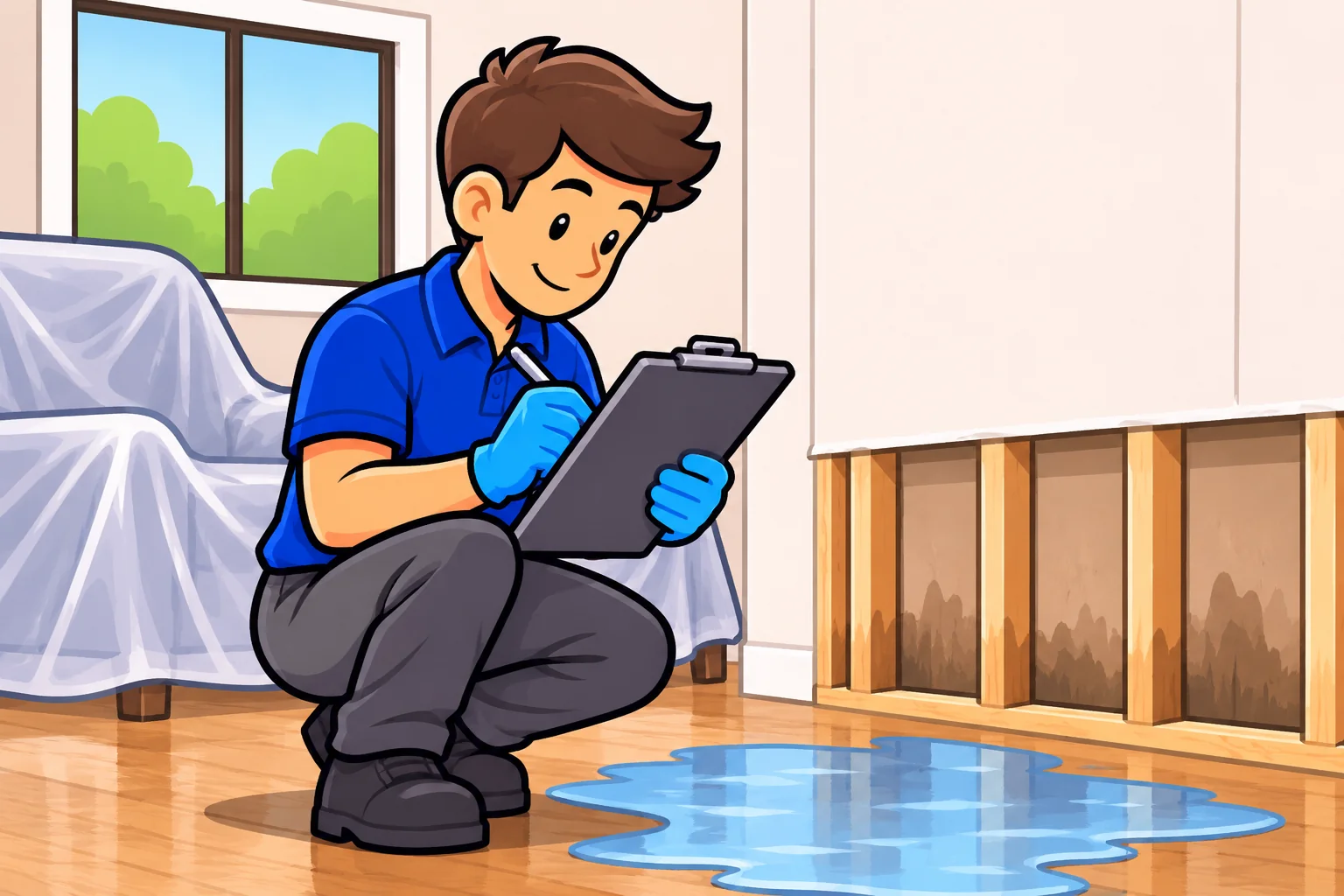
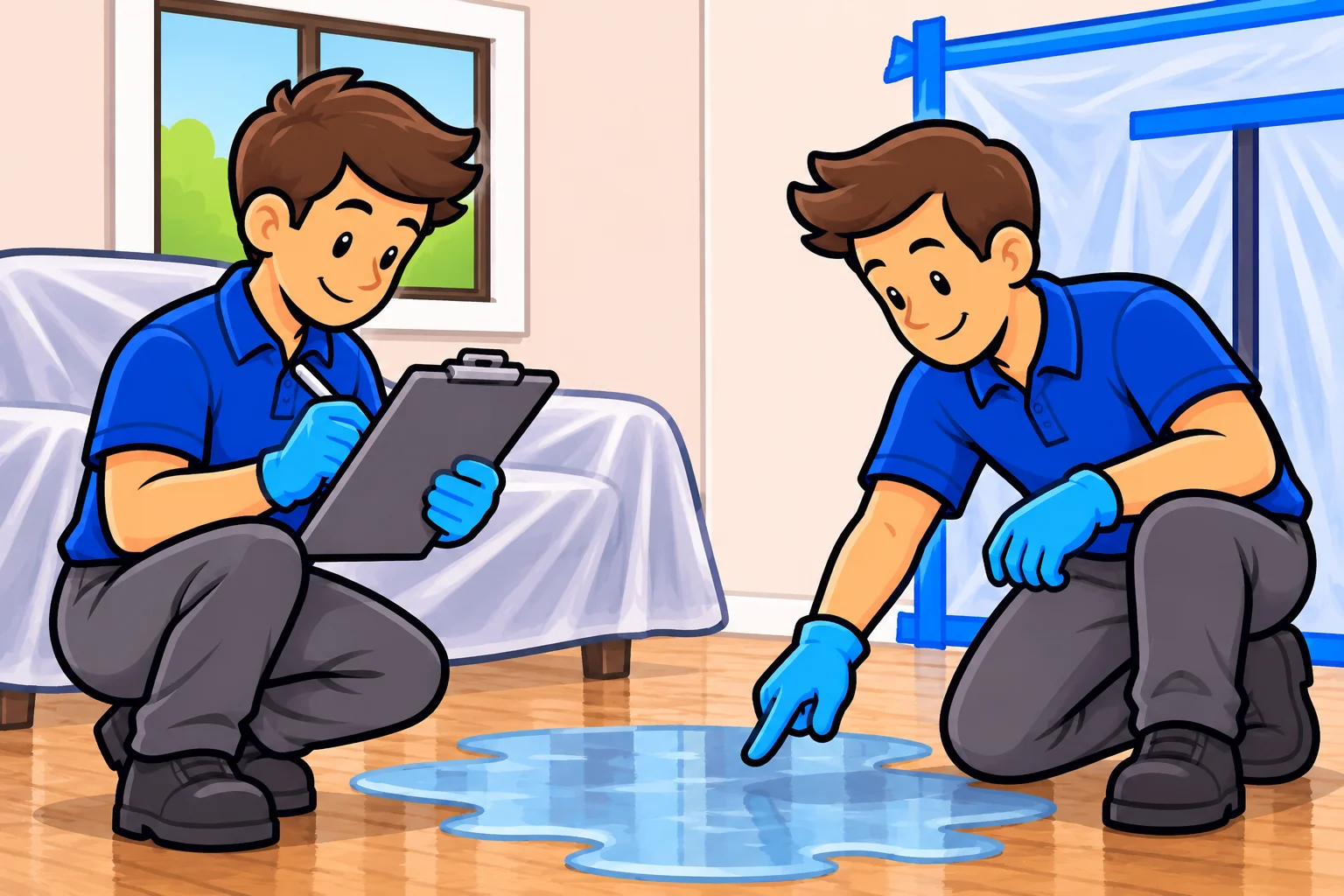
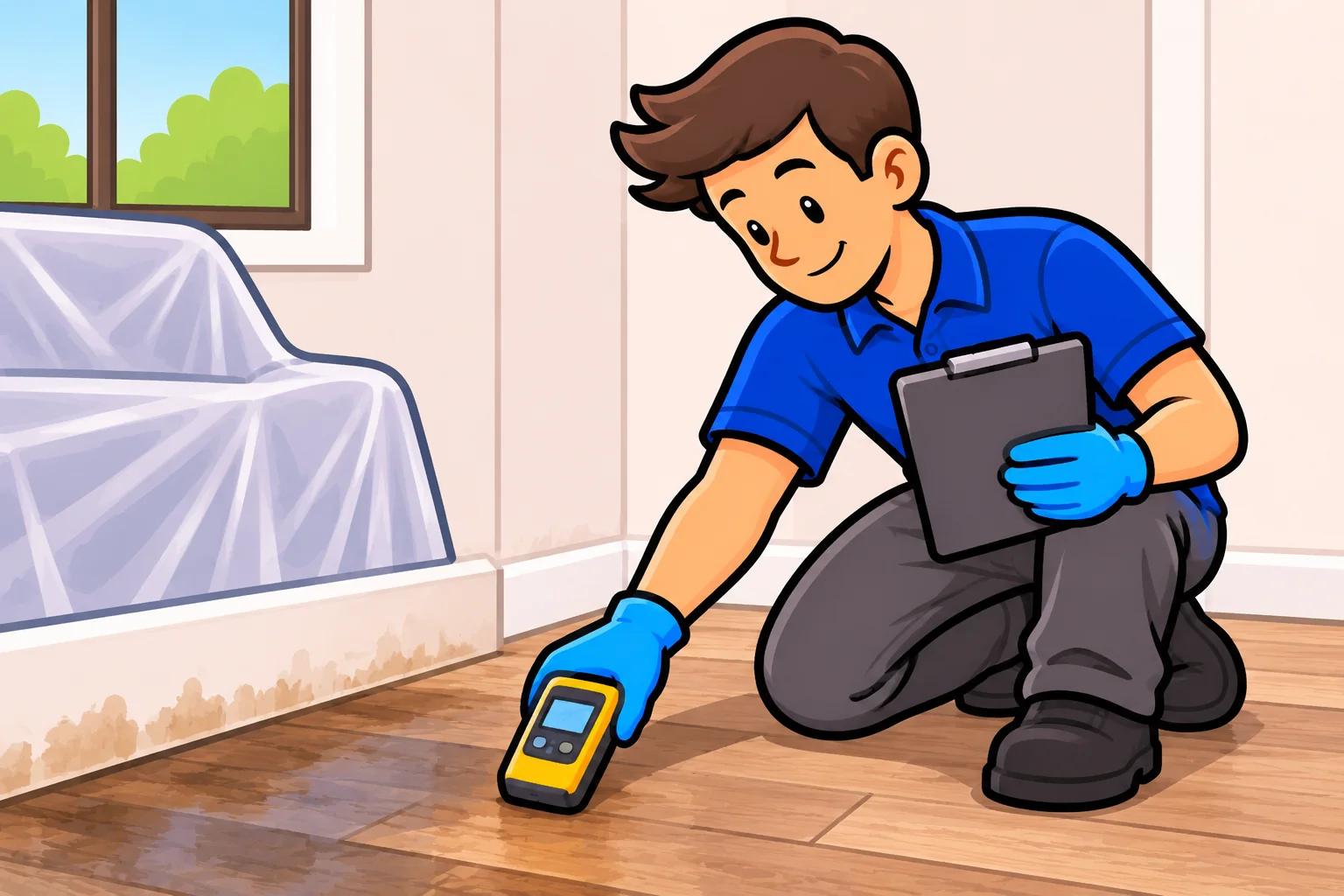
The photographs illustrate water-damage assessment and restoration topics, not a uniform prescription for Caldwell properties. Masonry lower levels, framed walls and absorbent floor finishes can need different decisions. Explain the water history and materials so removal, cleaning and drying connect with the actual assembly. Repair work should follow the agreed source and moisture handoff rather than cover a recurring concern after only the visible pool is gone.
Standing-water extraction planning
Assessing water-damaged flooring
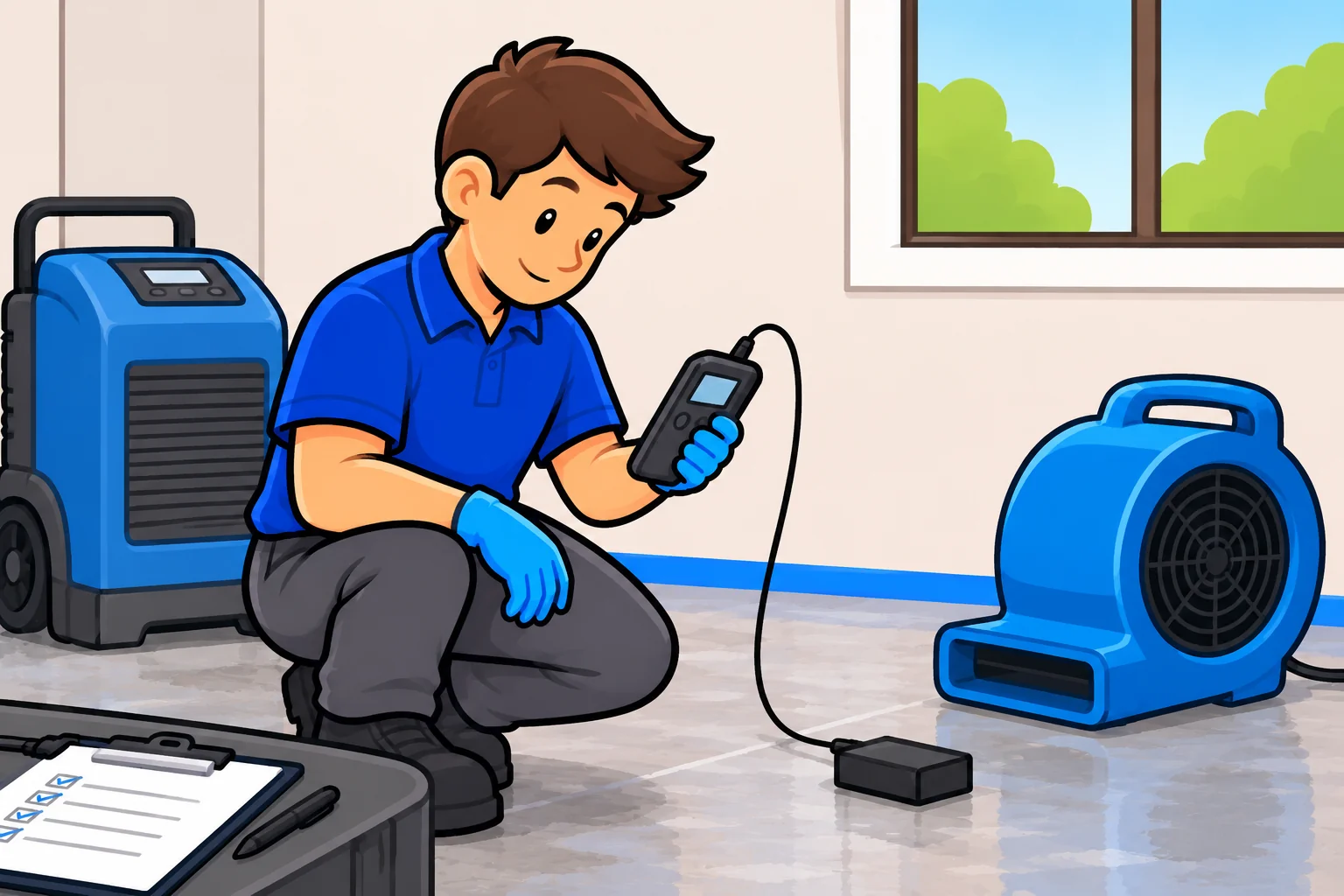
Drying equipment and material checks
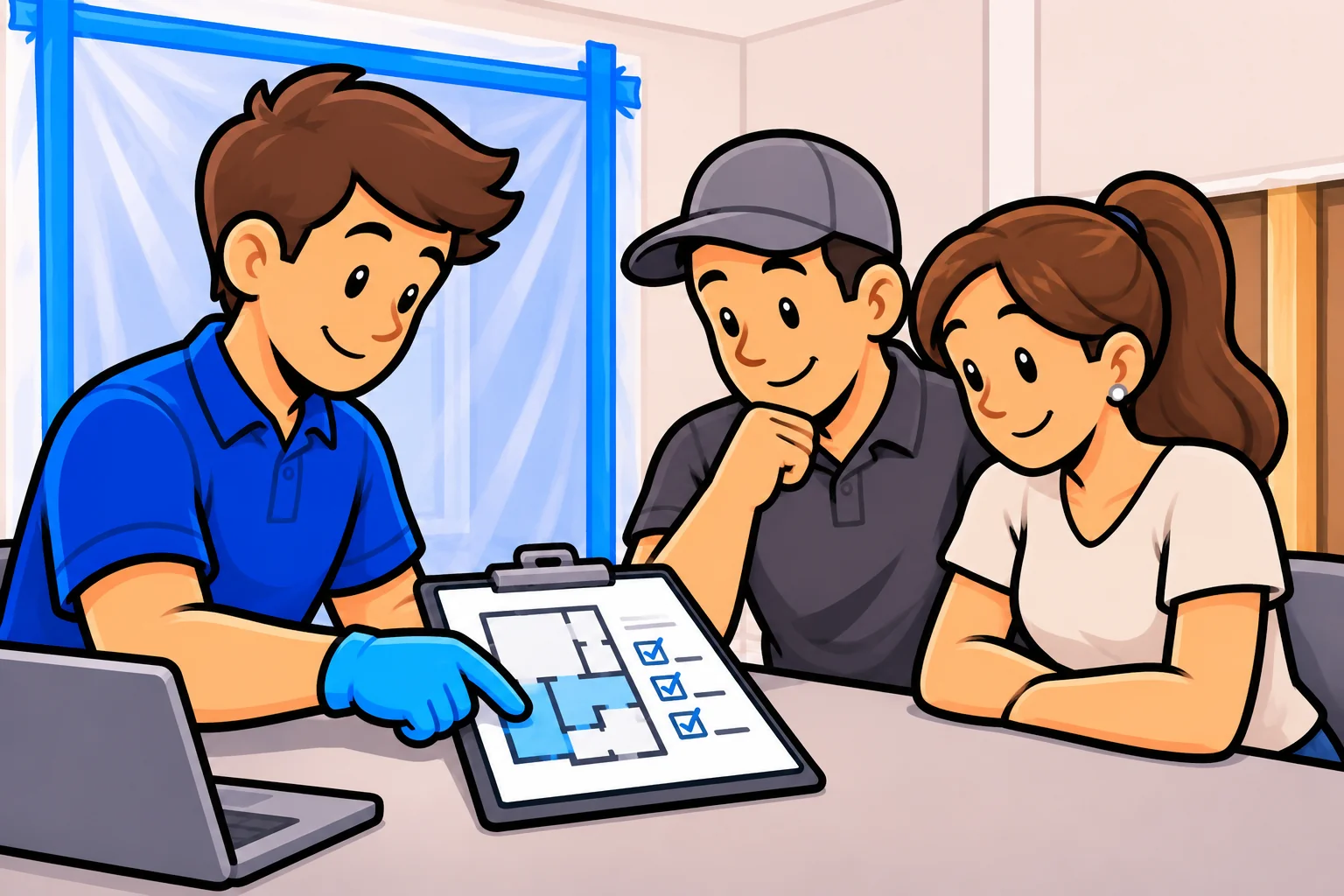
Coordinating the restoration handoff
Bulk water extraction
Define the workAccessible standing water is removed as one stage of the restoration plan.
Moisture beyond the visible pool
Match the site conditionsSubfloor, wall bases and concealed interfaces can need further assessment after extraction.
Drying connected to repairs
Plan the next stageMaterial condition and moisture response help determine the appropriate restoration handoff.
Serving Caldwell and Nearby Communities Water Damage Restoration in Caldwell
We serve all of Caldwell, from downtown and Indian Creek Plaza to the College of Idaho neighborhoods, the newer subdivisions along I-84 and the farms and shops out toward Sunnyslope, plus nearby Nampa, Middleton, Parma and Star. Call (208) 999-2353 any time and a live dispatcher will get a crew headed your way.

Discuss Your Caldwell Property Request a Free Inspection
Discuss Caldwell water damage with Disaster Cleanup and request a free initial inspection. Explain the event, previous source repairs and any access limitations from a safe position. Ask which water-removal, material, drying and reconstruction tasks are proposed and which plumbing or exterior corrections remain separate before authorizing the next work.
Call (208) 999-2353Client Reviews What People Say About Us
Rated 4.8 stars from 159 Google reviews. Read our Google reviews


Frequently Asked Questions
What should I do when a Caldwell cellar fills with water?
Stay out if access, electricity, contamination or structural conditions are uncertain. Arrange appropriate source and safety help rather than enter to operate a pump. Tell the restoration team where water appeared, whether it is still arriving and what source work is known so the assessment considers the walls, finishes and underlying materials.
How fast can you get to Caldwell?
Our phones are answered live 24/7, and our crew is usually on site in Caldwell within 1-2 hours. Caldwell is about 21 miles from our Garden City office at 5332 N Sawyer Ave, STE 120.
Will drying a shop also repair its pump or well system?
Not automatically. A building restoration scope and a source-system repair have different tasks and may involve different professionals. Tell the team who is addressing the cause, and ask what assumptions the drying plan makes about that work before relying on a complete-source-repair claim.
Can paneling hide water behind a Caldwell basement wall?
A finished surface can limit what is visible in the assembly. Additional access may be needed depending on the history and condition, but the owner should not remove paneling as preparation. Ask why a proposed opening is useful and how the retained and removed materials will be handled.
What should a landlord have ready for an inspection?
Confirm authorized entry, the affected rooms and the contact able to make contents or repair decisions. Safe photographs, event dates and source-repair records can help. Do not ask occupants to move wet debris or enter restricted areas merely to make the visit easier.
How is the drying schedule determined?
Material construction, water source, access and measured response influence the sequence. Current arrangements should be discussed directly, and a drive-time estimate is not a completion promise. A finished surface and the layer behind it may respond differently, so elapsed equipment time alone is not the handoff criterion.
Does insurance cover water damage in Caldwell?
Many homeowners policies cover sudden water damage, like a burst pipe or a failed water heater, and your policy and adjuster decide what is covered. We start with a free inspection, document the damage for your adjuster, work directly with your insurance company and let you pay after your claim closes.
Can repairs start after the first extraction visit?
Only when the relevant cleanup, moisture and source questions support that next stage. Water pickup can leave affected finishes, insulation or other layers needing attention. Discuss the actual handoff and any repairs outside the scope instead of assuming an empty or dry-looking room is construction-ready.