
Water Damage Restoration in Meridian, ID
Disaster Cleanup provides 24/7 water damage restoration in Meridian, Idaho: emergency water removal, structural drying and repairs after burst pipes, water heater failures, appliance leaks and flooded basements. Phones are answered live 24/7 and our crew is usually on site in 1-2 hours, about 6.5 miles from our Garden City office at 5332 N Sawyer Ave, STE 120. We cover all of Meridian, from downtown to the newer subdivisions off Eagle Rd and Ten Mile Rd.
Schedule a Free Inspection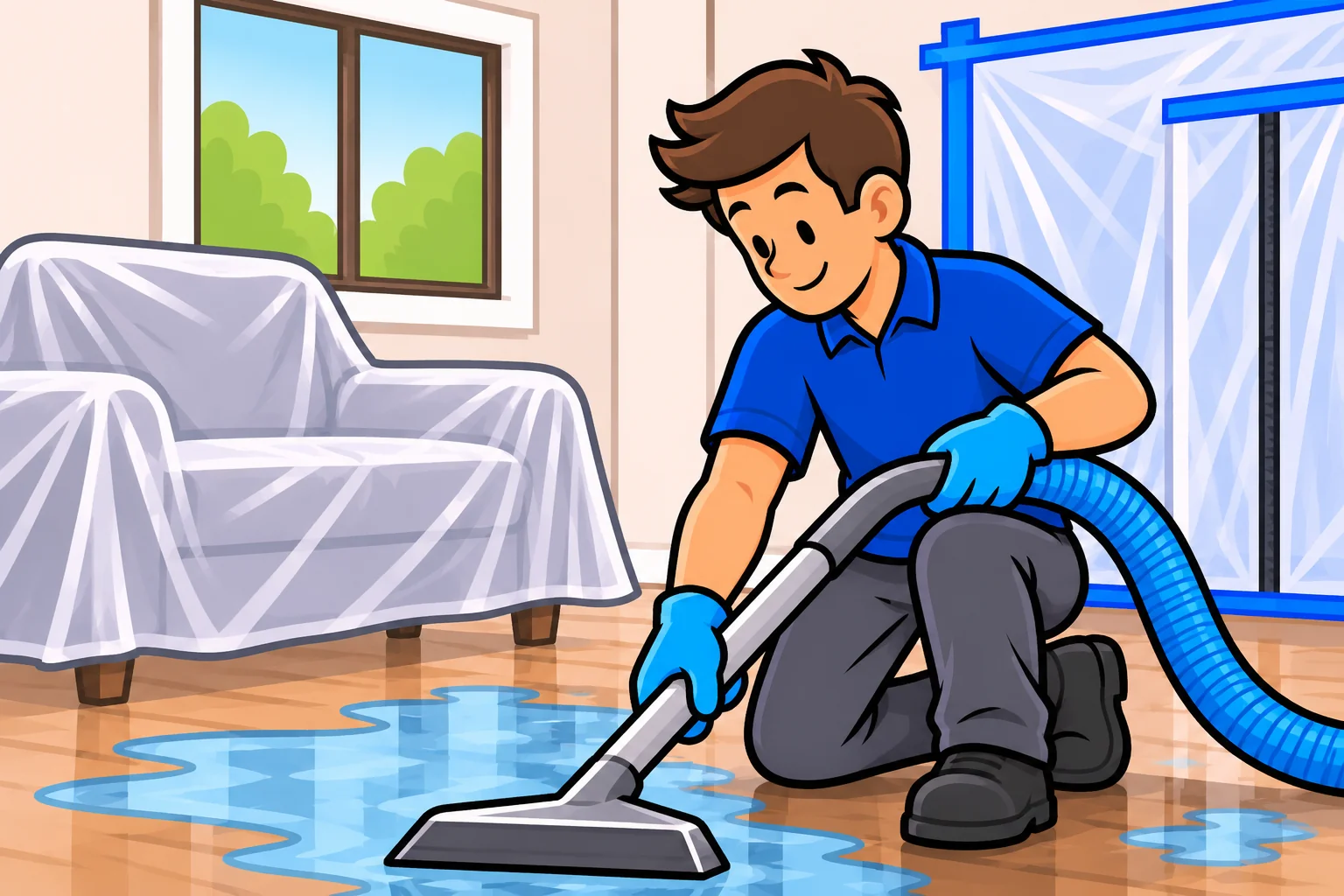
Find out how fast you can get service from your location
WATER-DAMAGE ASSESSMENT AND RESTORATION Water Damage Cleanup in Meridian
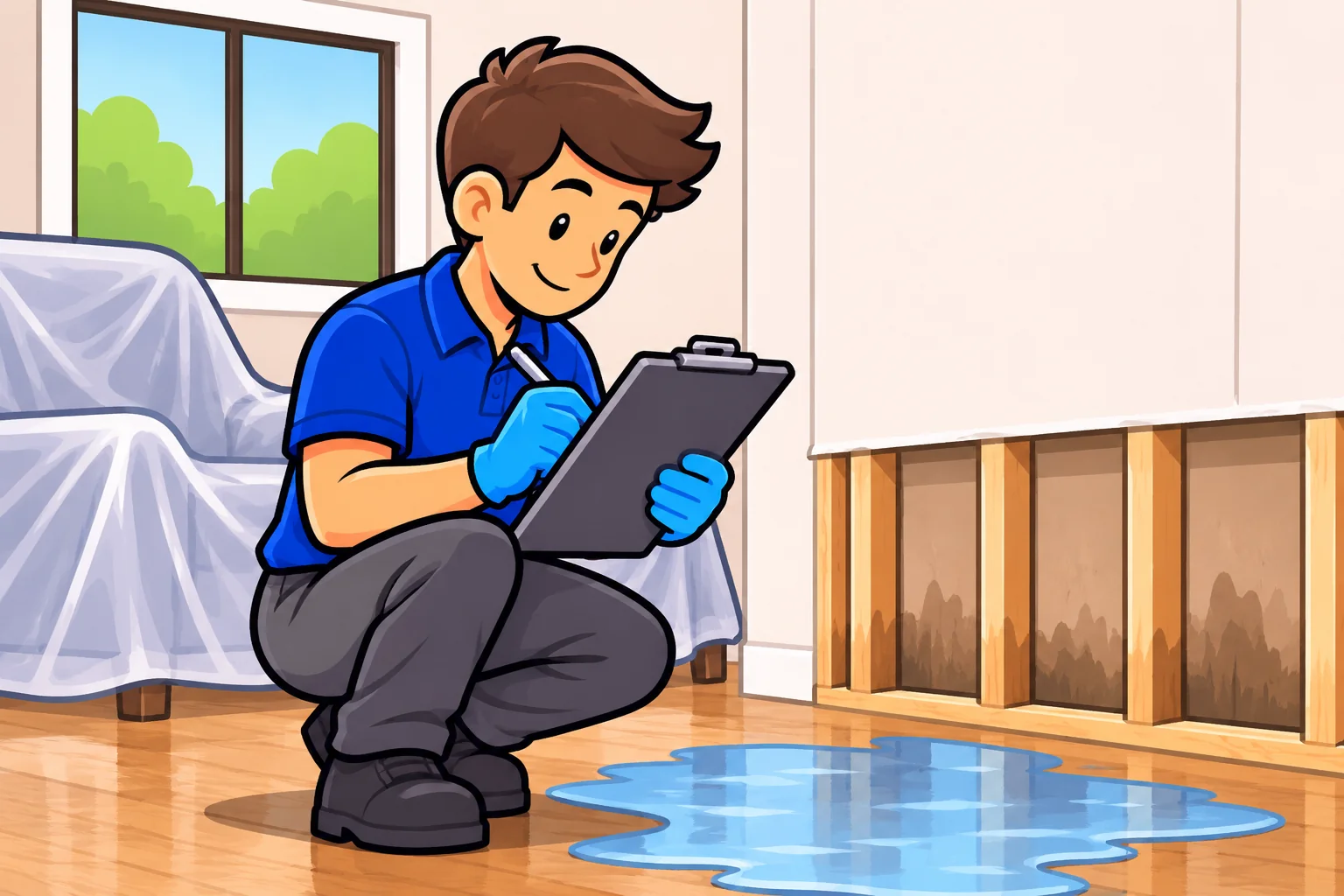
Water damage cleanup in Meridian starts with stopping the source and removing the standing water. Our crew extracts the water, removes wet carpet pad and other materials that cannot be dried, and uses moisture meters to find water that has moved under floors, behind baseboards and into walls. Many Meridian homes are newer two-story builds where an upstairs washer, supply line or bathroom leak soaks the ceiling and walls of the rooms below. A newer home can still hide water under flooring and inside insulated walls, so we follow the water to every room it reached.
We set up air movers and dehumidifiers where the readings call for it, check moisture at every visit and tell you when the structure is dry and ready for repairs. When drying is done, we handle the repairs too, including drywall, paint, flooring and cabinets, and all of our work is backed by a 1-year warranty.
Signs to Discuss at Your Meridian Property
For a Meridian property, a small visible mark can be the start of the conversation rather than a measure of the loss. Note what appeared first and any relation to appliance use or weather. Do not pull out finishes or enter an unsafe cavity to confirm the path before calling.
- Standing water spreading across a room
- A failed supply line or appliance hose
- Saturated carpet and wet baseboards
- Water entering walls or adjoining rooms
- Pooling around equipment or utilities
- New water damage after firefighting or a storm
What Happens After You Call
We first discuss the property location, known conditions and authorized access. The five stages below connect assessment with an understandable work scope and the decisions that follow.
- Tell us where water is present, whether it is still entering and what can be observed safely.
- We discuss who can address the leak and how the work area can be reached.
- The amount of water, surface types and possible contamination guide the removal plan.
- We explain why extraction is followed by checks of affected material layers.
- The next stage depends on measured conditions and any materials requiring removal or replacement.
Water and Material Questions in Meridian
Upstairs laundry connections
A failed hose, fitting or appliance seal can affect the laundry floor and spaces below. Describe the event and the later ceiling symptoms without restarting the appliance to demonstrate the leak. The source fix and the assessment of connected material layers should remain separate tasks.
Kitchen appliance and cabinet leaks
Dishwasher or refrigerator water can reach cabinet bases and adjoining floor interfaces. Limited visibility can affect access decisions. Ask how the proposed work considers the material beneath the appliance rather than assume cleaning the exposed floor addresses every affected component.
Water heater or utility-area failures
A tank or connection event can involve absorbent finishes near mechanical equipment. Do not enter water to inspect powered equipment or move the appliance. Explain the source professional's work and the surrounding building materials that still need restoration consideration.
Exterior entry at a lower opening
The original Meridian page mentions yards, irrigation and lower-level concerns. At a particular property, describe the actual entry timing and any exterior repairs rather than assume a seasonal explanation. The water source and contamination history influence cleanup separately from the location of a window well.
Insulated cavities and ceilings
A wall or ceiling surface may dry differently from insulation or an interface behind it. Newer construction does not eliminate the need to consider those layers. Additional access should have an explained purpose rather than be assumed unnecessary or automatic for every stain.
A long-running unnoticed drip
Past discoloration, odor and earlier repair attempts can change the investigation question. Keep dates and records available. Cosmetic painting or one apparent improvement does not establish that the original source and affected materials were fully addressed.
What to Do First: Safety and Preparation
Do not step into water to reach a breaker, appliance or shutoff valve. A supply valve should be used only when it can be reached safely without entering the affected area. Keep people and pets out of unknown water, avoid household extraction equipment and contact emergency services or the appropriate utility for immediate electrical or structural danger.
Electrical danger can exist even when the water appears clear and ordinary lights remain on. An owner should not be asked to prove that equipment is safe before requesting help. Keep the area isolated and explain the locations of outlets, appliances or mechanical equipment without entering the water to inspect them.
- Do not reach into water to unplug equipment.
- Keep contaminated belongings out of dry rooms.
- Explain whether the source remains active.
- Take photographs only from a safe accessible position.
The Restoration Sequence for Your Meridian Property
1. Assess safety and active water
Describe the Meridian source history, affected levels and any work already done by a plumber or appliance professional. Safe access and ongoing water need review before attention turns to equipment or cosmetic finish repairs.
2. Map the affected area
Visible water and appropriate moisture checks help identify the involved materials. Adjacent rooms and concealed interfaces may need consideration because water movement does not always follow the boundaries apparent from the surface. Floor transitions, cabinet bases and adjoining rooms can provide useful clues about where water traveled.
3. Remove accessible standing water
Extraction equipment is selected for the site and material conditions. Removing bulk water is an important first stage, but it does not establish that carpet backing, subfloor or wall cavities are ready for repairs. The affected material and access determine the extraction approach rather than depth alone.
4. Evaluate retention and access
Contamination and material condition guide which finishes can remain and which may need controlled removal. The decision should be explained before assuming every wet material can be dried in place. Explain proposed material removal before an owner assumes that all finishes will remain intact.
5. Set and monitor drying
Drying methods follow the materials and affected assembly. Equipment placement and progress checks help assess the response; a fixed equipment rental period alone is not evidence that the required conditions have been reached. Changes in drying response should guide the discussion instead of relying only on elapsed equipment time.
6. Plan the repair handoff
Review what condition remains at ceilings, floor transitions and cabinet interfaces after the agreed work. The repair handoff should make unresolved source tasks and retained-layer limitations clear so new finishes do not hide an unanswered moisture question.
Does Insurance Cover Water Damage in Idaho?
Most Idaho homeowners policies cover sudden and accidental water damage, such as a burst pipe, a failed water heater or a washing machine hose that breaks. Damage from a slow leak over time, poor maintenance or outside flooding is often treated differently, and flood coverage is usually a separate policy. Your policy and your adjuster decide what is covered.
We start with a free inspection, document the damage with photos and moisture readings, and work directly with your insurance company. You can pay after your claim closes.
What Affects the Project Schedule?
The quantity of water, contamination, material depth and drying response determine the sequence. Current access and availability affect scheduling. No universal arrival or drying-time promise applies to every water emergency, and a lookup estimate is not a guarantee of completion.
What to Keep for Your Claim
Take photos before anything is moved, keep receipts for any emergency repairs and save the plumber's invoice for the source repair. We share our photos and moisture logs with your adjuster.
Emergency Water Removal in Meridian
If water is still coming in, shut off the main water valve if you can reach it safely and stay out of standing water near outlets, cords or appliances. Then call (208) 999-2353. A person answers live 24/7, and our crew is usually on site in Meridian within 1-2 hours to stop the spread and extract the water. If there is a gas smell, sparking or a sagging ceiling, leave the area and call 911 or the utility first.
Information That Helps Define the Next Step
- Standing water spreading across a room
- A failed supply line or appliance hose
- Saturated carpet and wet baseboards
- Water entering walls or adjoining rooms
Water Damage Restoration Assessment, Work Planning and Restoration
These illustrations show extraction, material assessment and repair-planning topics rather than one equipment setup suitable for every Meridian home. The water history and assembly affect what can remain and where access may be necessary. Explain ceiling symptoms, appliance connections and adjoining finishes so drying decisions connect to the layers actually involved. Rebuilding should follow the agreed condition rather than simply hide the last visible mark.
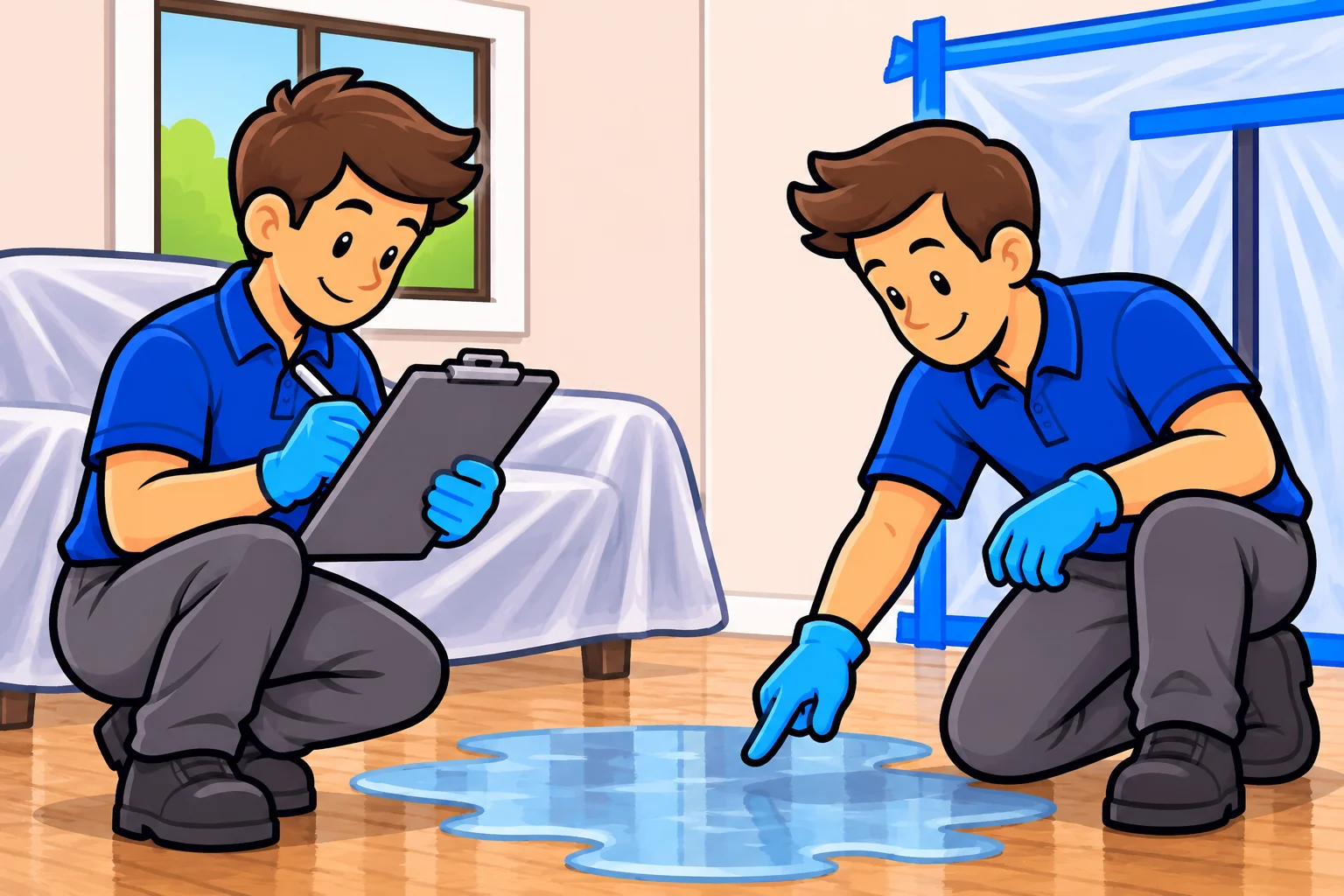
Standing-water extraction planning
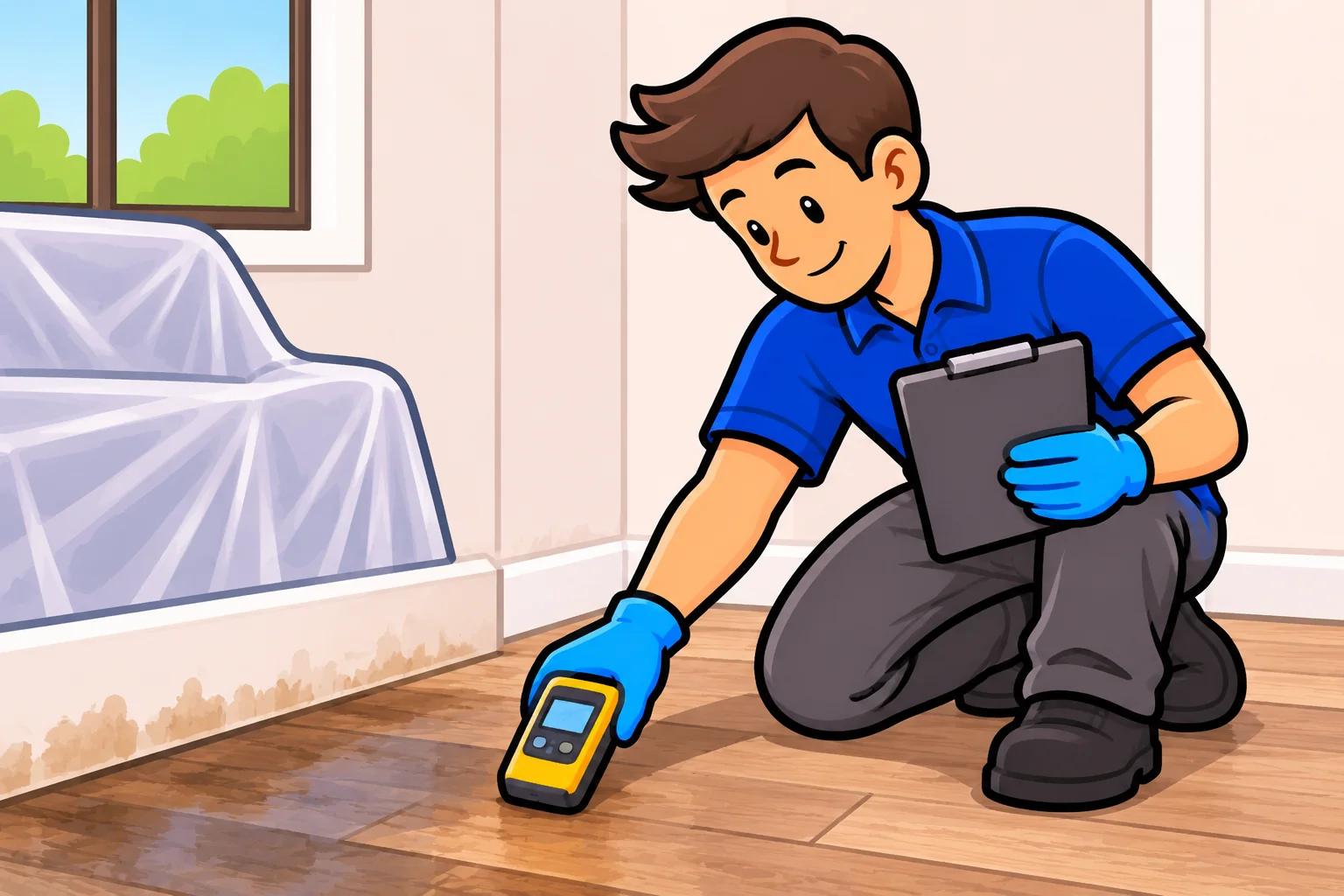
Assessing water-damaged flooring
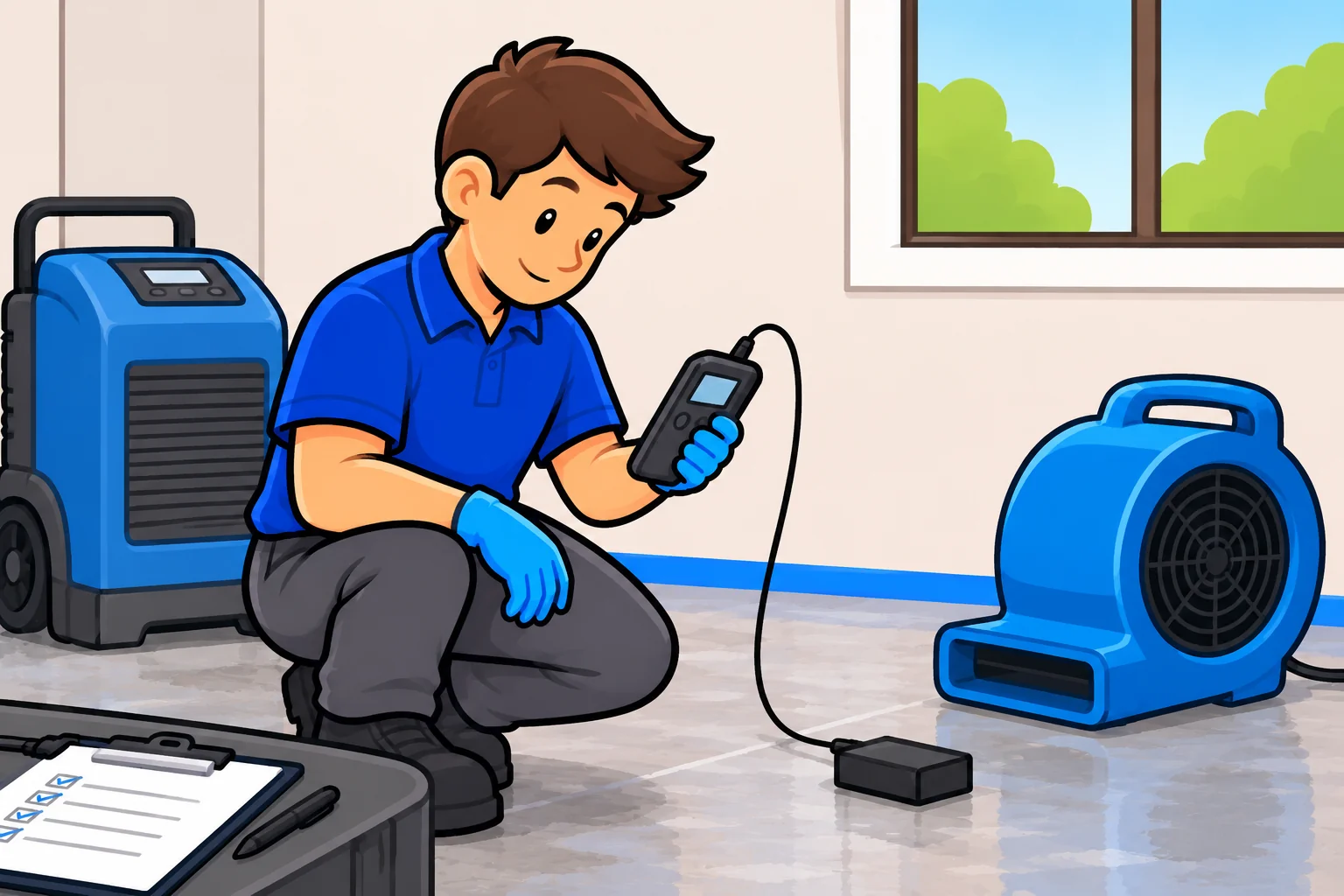
Drying equipment and material checks

Coordinating the restoration handoff
Bulk water extraction
Define the workAccessible standing water is removed as one stage of the restoration plan.
Moisture beyond the visible pool
Match the site conditionsSubfloor, wall bases and concealed interfaces can need further assessment after extraction.
Drying connected to repairs
Plan the next stageMaterial condition and moisture response help determine the appropriate restoration handoff.
Serving Meridian and Nearby Communities Water Damage Restoration in Meridian
Meridian is within the existing Disaster Cleanup service coverage, with nearby Boise, Eagle, Star, Kuna and Nampa also described on the site. Provide the address and access or property-management contact when arranging discussion. A city name does not establish a separate crew base, a fixed arrival window or the source at your property; the actual event and current arrangements determine the next step.

Discuss Your Meridian Property Request a Free Inspection
Request a free initial inspection for Meridian water damage and share the event, source repair and order of room-to-room symptoms. Keep safe photographs or earlier reports available. Ask how extraction, retained-material checks, drying and repair work are proposed and what remains outside the agreement before treating an initial visit as complete restoration.
Call (208) 999-2353Client Reviews What People Say About Us
Rated 4.8 stars from 159 Google reviews. Read our Google reviews


Frequently Asked Questions
Can a newer Meridian home still have hidden water damage?
Yes, a newer finish or well-insulated assembly does not establish that concealed layers stayed dry. Explain the actual event and symptoms rather than rely on building age. The water damage cleanup plan should consider affected materials and access without assuming every cavity is wet or every new component can remain.
What should I report after an upstairs washer leak?
State whether water is still entering, who addressed the source and where symptoms appeared on both levels. Do not run the washer again to prove the fault. Flooring, a cavity and the ceiling below may need separate decisions even when one appliance caused the event.
Do you have to remove every stained ceiling?
Not automatically. Condition, contamination, construction and drying access influence the boundary. Ask what supports the proposed opening or retention decision and what the surface view cannot establish. An isolated mark does not describe every hidden layer, but neither does it justify an unexplained universal tear-out.
Does a repaired appliance mean the room is restored?
No. Source correction and building restoration address different tasks. Water may remain in cabinet bases, flooring or surrounding assemblies after the leak stops. Keep repair records and ask how the affected materials will be evaluated before new finishes are installed.
Could a window-well problem require a separate repair?
Yes, exterior or drainage correction can be distinct from cleaning and drying the interior. Explain the timing and previous work without assuming irrigation or another seasonal feature is the confirmed source. The restoration scope should state what it assumes about any source repair still outstanding.
How do I prepare a managed Meridian property?
Confirm authorized entry and identify the person able to approve belongings and repair decisions. Have event dates, safe photographs and source contacts available. Do not ask occupants to open walls, retrieve contaminated items or enter unsafe water to make the inspection more complete.
How fast can you get to Meridian?
Our phones are answered live 24/7, and our crew is usually on site in Meridian within 1-2 hours. Meridian is about 6.5 miles from our Garden City office at 5332 N Sawyer Ave, STE 120.
Does insurance cover water damage in Meridian?
Many homeowners policies cover sudden water damage, like a burst pipe or a failed water heater, and your policy and adjuster decide what is covered. We start with a free inspection, document the damage for your adjuster, work directly with your insurance company and let you pay after your claim closes.