Biohazard Cleanup in Nampa, ID
For biohazard cleanup in Nampa, separate the immediate safety concern from decisions about building materials and belongings. Disaster Cleanup discusses biological contamination in residences, rentals and businesses, including access and possible tracking beyond the first visible area. Do not sweep, vacuum or sort suspect waste to prepare. Obtain appropriate emergency assistance or official scene release before treating a cleanup conversation as permission to enter.
Schedule a Free Inspection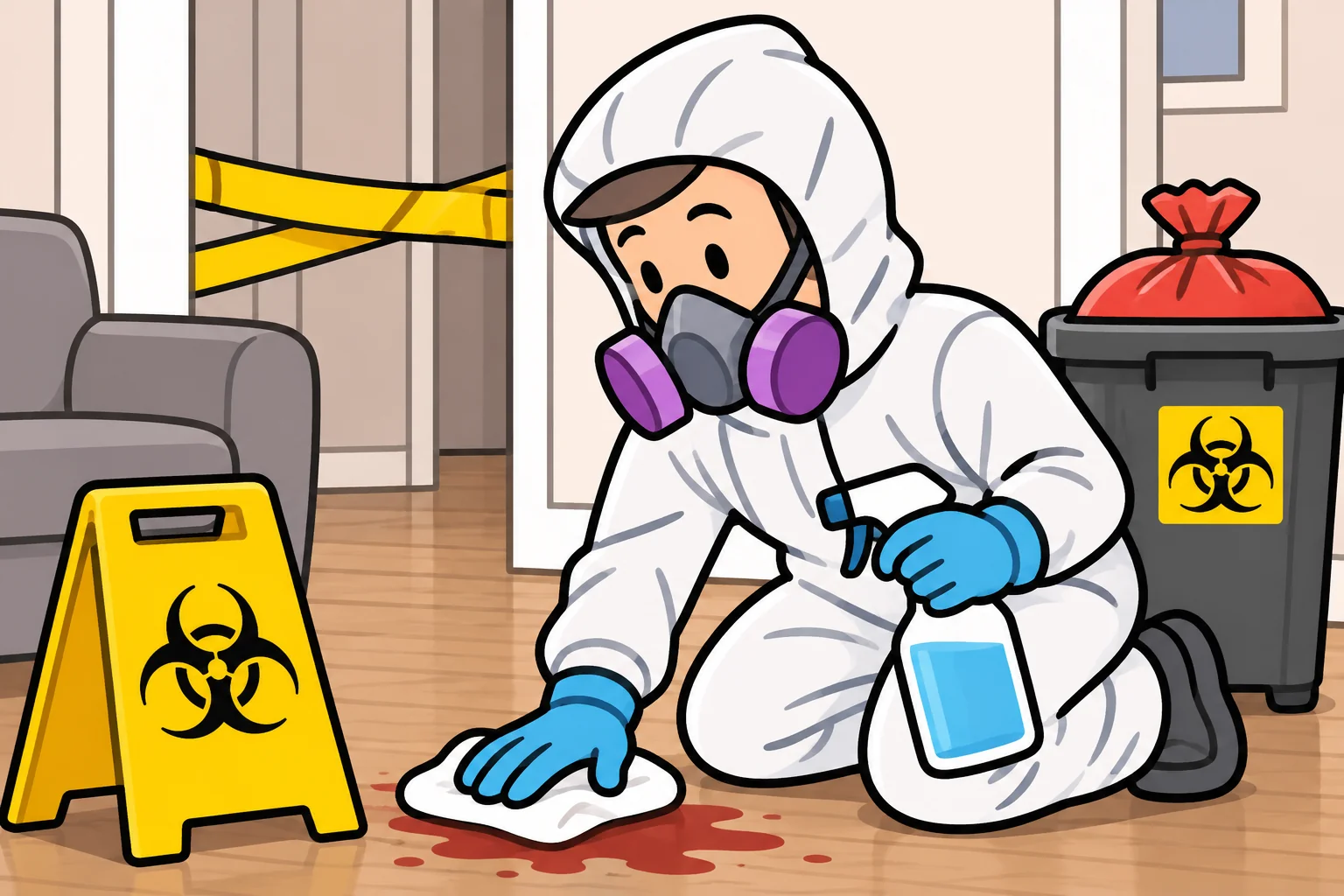
Find out how fast you can get service from your location
CONTROLLED CONTAMINATION CLEANUP Biohazard Cleanup for Nampa Properties
A Nampa apartment turnover, vacant house or commercial storage area can involve different contamination and access questions. Waste in a room full of ordinary contents should not become an owner-led sorting exercise. Describe known residues, sharp debris and any movement into corridors without going closer to identify them. The work boundary depends on what is actually present and how the affected material interfaces with flooring, furnishings or stored goods.
Nampa's mix of rental housing and commercial buildings also makes authorization important. A manager may arrange access while an owner or another responsible person must decide about personal items or building repairs. Clarify those roles and any occupied areas nearby. We discuss controlled handling, appropriate cleaning or removal and the restoration handoff, without promising that every possession can remain or that an unknown substance fits a routine biological cleanup scope.
Questions to Discuss at Your Nampa Property
Describe the Nampa incident and accessible observations, including possible tracking, moved waste or a room that has been vacant. Do not approach bird or rodent deposits, needles or unknown containers to obtain a better description. Odor and appearance alone cannot establish every hazard or the full affected area.
- Body fluids on floors or furnishings
- Waste reaching porous building materials
- Contamination tracked into adjacent rooms
- Strong odors associated with a known incident
- Affected belongings that cannot be routinely cleaned
- An officially released scene needing professional cleanup
What Happens After You Call
A sensitive cleanup begins with a practical, respectful conversation about access and affected materials. Share only the details needed to plan the work and identify the authorized contact.
- Share only the details needed to identify the affected location, access and type of contamination.
- Tell us whether emergency responders or authorities still control the property.
- Identify known affected surfaces and any possibility of tracking into other areas.
- We explain why cleanable hard surfaces and absorbent items may need different handling.
- Discuss the completed work, any remaining repair needs and the conditions for reopening the area.
Contamination and Access Questions in Nampa
Vacant rental discoveries
A property may contain ordinary rubbish alongside biological material or sharp waste. State what is known and whether anyone has already entered or begun sorting. A general turnover clean and a contamination scope need different decisions, even when both involve the same Nampa room.
Bird or rodent deposits in storage
Deposits in a loft, rafter area or warehouse can raise access and disturbance concerns. Do not dry-sweep or use a household vacuum to prepare the site. Describe the location from a safe position; an elevated or confined area may have assessment limits that need to remain explicit.
Sharp debris among belongings
A needle or sharp item can be obscured by fabrics, bags or other contents. Leave it where it is and identify its known location verbally. Collecting it into an ordinary rubbish bag can expose someone and make the remaining room's handling history less clear.
Transfer through apartment routes
Footwear, moved furnishings or waste can connect the original room with a shared landing or corridor. Explain any movement that already occurred and identify routine occupant routes. A practical boundary should consider these interfaces without automatically labeling every adjoining unit affected.
Absorbent furnishings and floor edges
An upholstered item, carpet backing and floor seam may need different retention decisions from a smooth surface. Surface appearance does not establish penetration below a finish. Ask how the proposed cleaning or removal is supported before an item is moved or a replacement floor is ordered.
Unknown residues with a sensitive incident
Not every unidentified substance is a biological-cleanup task. An unknown chemical, active release or unsafe structure can require different assessment or emergency assistance. Share what is genuinely known rather than sniff, touch or mix products to identify the material for a quote.
What to Do First: Safety and Preparation
Keep people and pets away from the affected area and avoid touching or moving contaminated objects. Do not use a household vacuum or spray cleaning chemicals into unknown residues. Leave sharps in place and identify their location from a safe position. A cleaning contractor is not a substitute for emergency medical care or official scene release.
If you have already used a cleaning product, share its name if known and explain where it was applied. Do not add another product in an attempt to neutralize the first. The crew needs an accurate description of the conditions, including any tracking or moved waste, rather than a room that has been cosmetically prepared.
- Keep pets away from affected belongings.
- Leave needles and sharp debris undisturbed.
- Do not mix cleaning products on unknown residues.
- Identify the person authorized to make property decisions.
The Biohazard Cleanup Sequence for Your Nampa Property
1. Assess the incident and property
Establish what happened at the Nampa property, what is known about the material and whether entry is permitted. Identify shared routes, occupancy and the decision-maker without requiring the owner or manager to inspect hazardous contents first.
2. Separate the work area
The plan considers occupant access, routes for moving material and protection of unaffected spaces. Keeping the work boundary understandable helps avoid transferring contamination while belongings or waste are being handled. Identify shared corridors or occupied spaces that need to remain outside the movement route.
3. Evaluate affected materials
Hard surfaces, absorbent finishes and personal items may require different approaches. We explain the proposed cleaning or removal decisions and identify areas where concealed penetration may require closer assessment. Owner decisions about sentimental or important belongings should be discussed before material is discarded.
4. Remove contamination in a controlled way
Affected material and unsuitable porous items are handled according to the agreed scope. Removing visible residue is only one part of the work; surfaces and interfaces beneath it may also need attention. Waste movement should not create a second contamination path through otherwise unaffected rooms.
5. Clean and address residual conditions
Cleaning methods and appropriate products are selected for the surfaces and contamination. Odor concerns are considered alongside physical source removal, rather than treated as proof that fragrance alone has resolved the incident. Product choice alone is not evidence that an inaccessible or absorbent material has been adequately addressed.
6. Review the completed scope
Review the completed Nampa scope and any excluded layers, contents or repairs. The handoff should say what was addressed and which decisions remain, without turning a cleaned work area into a guarantee about every building space or an individual's health.
A Clear Plan for Your Property
A useful Nampa biohazard proposal explains the incident-related material decisions, not just the number of rooms. Ask where the work begins and ends, which routes remain outside it and how belongings are considered. This is especially important in a managed property where a sensitive room opens onto a corridor used by other occupants or staff.
Disaster Cleanup discusses related building restoration when appropriate, but cleanup and repair authorization should remain understandable. A landlord's permission to inspect does not decide ownership of a tenant's effects, and an estimate does not establish insurance payment. Clear communication about affected materials, practical limitations and the authorized contact helps organize the project without replacing medical, legal or ownership advice.
What Affects the Project Schedule?
The type of contamination, time before discovery, affected layers and disposal arrangements influence the work. Access restrictions and any required repairs add separate steps. A phone or arrival estimate should not be interpreted as a guaranteed cleanup completion time.
Insurance and Project Documentation
Some incidents may involve a property claim, but the event, policy wording and exclusions matter. Ask the insurer what documentation and authorization it needs. We can explain the cleanup scope; we cannot promise that every contaminated item or restoration cost will be covered.
Safe Next Steps for Biohazard Cleanup in Nampa
Restrict routine entry to the affected Nampa area and avoid touching waste, moving furniture or sweeping deposits. Keep children and pets away from the route as well as the room. Describe known sharp objects and earlier cleanup attempts from safety. For an active medical emergency, dangerous unknown release or unreleased scene, use appropriate emergency assistance first; a restoration contractor should not be treated as the authority to remove those restrictions.
Information That Helps Define the Next Step
- Body fluids on floors or furnishings
- Waste reaching porous building materials
- Contamination tracked into adjacent rooms
- Strong odors associated with a known incident
Biohazard Cleanup Assessment, Work Planning and Restoration
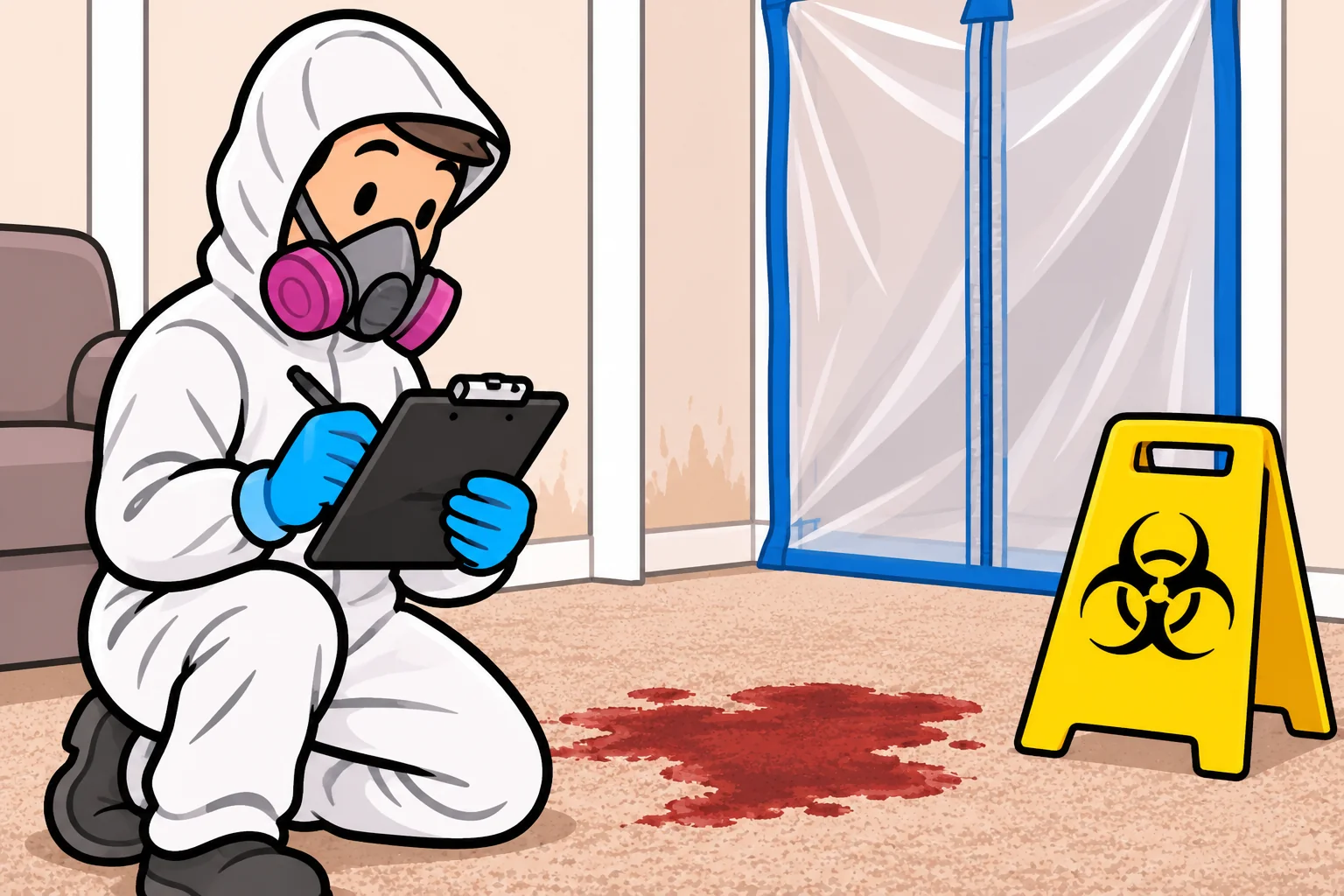
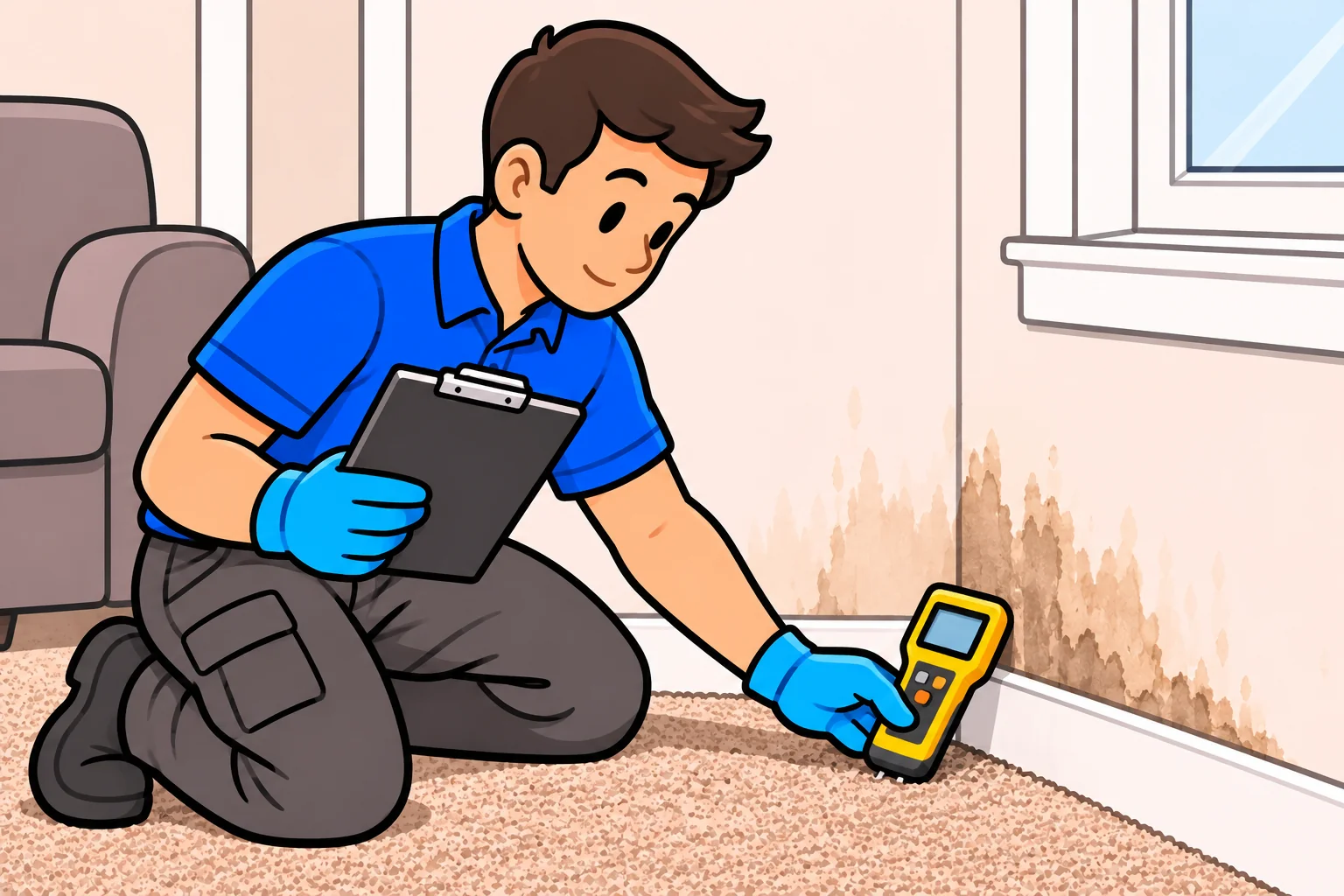
These illustrations show contamination-assessment and restoration topics rather than a specific Nampa incident or a universal cleanout package. A plan should distinguish affected contents, floor interfaces and any shared movement route, then explain controlled handling and suitable cleaning. Odor-related work follows the physical source question; a scented room or a removed visible pile is not by itself a complete account of what remains in absorbent material or inaccessible layers.
Biological contamination assessment
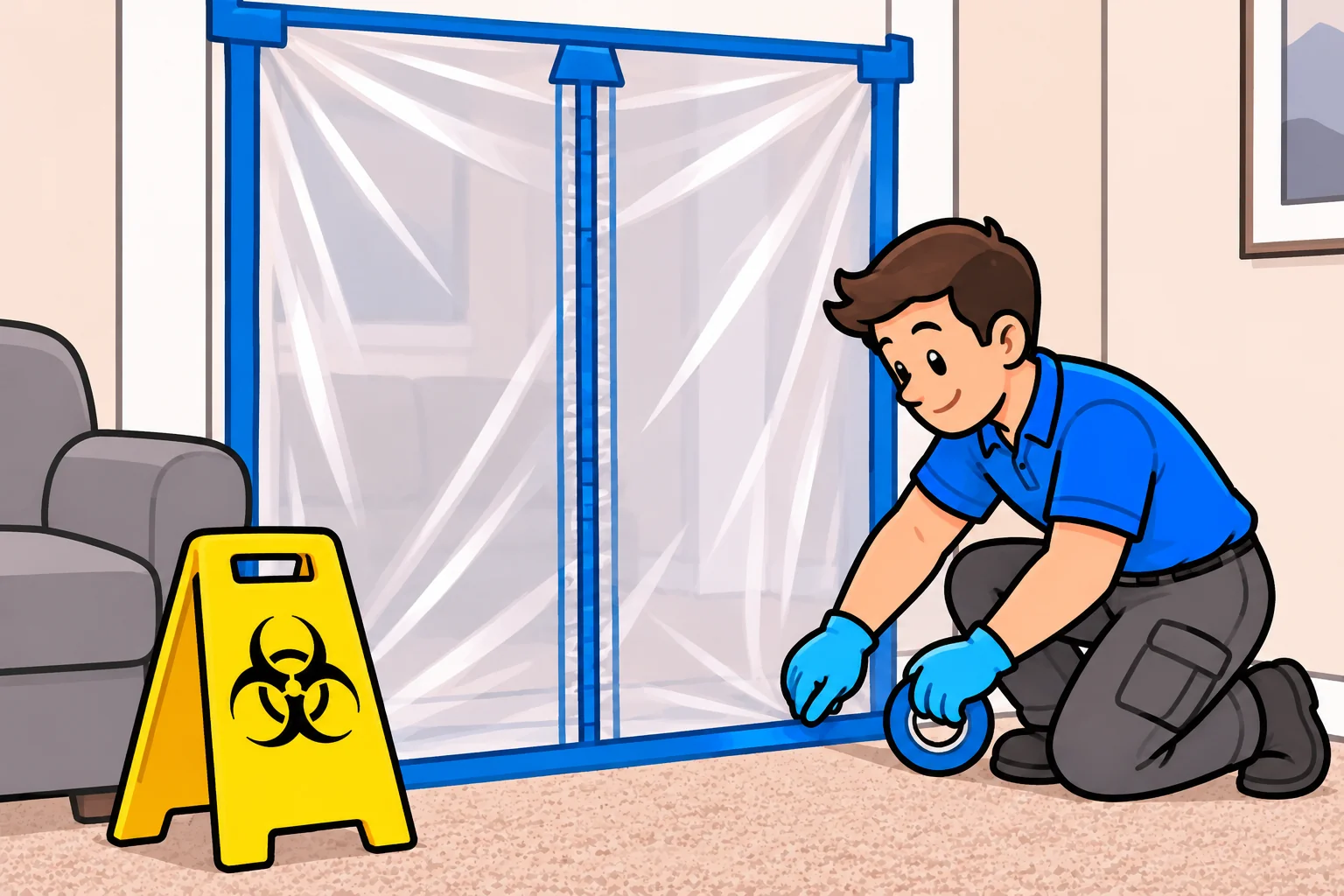
Protecting the cleanup work area
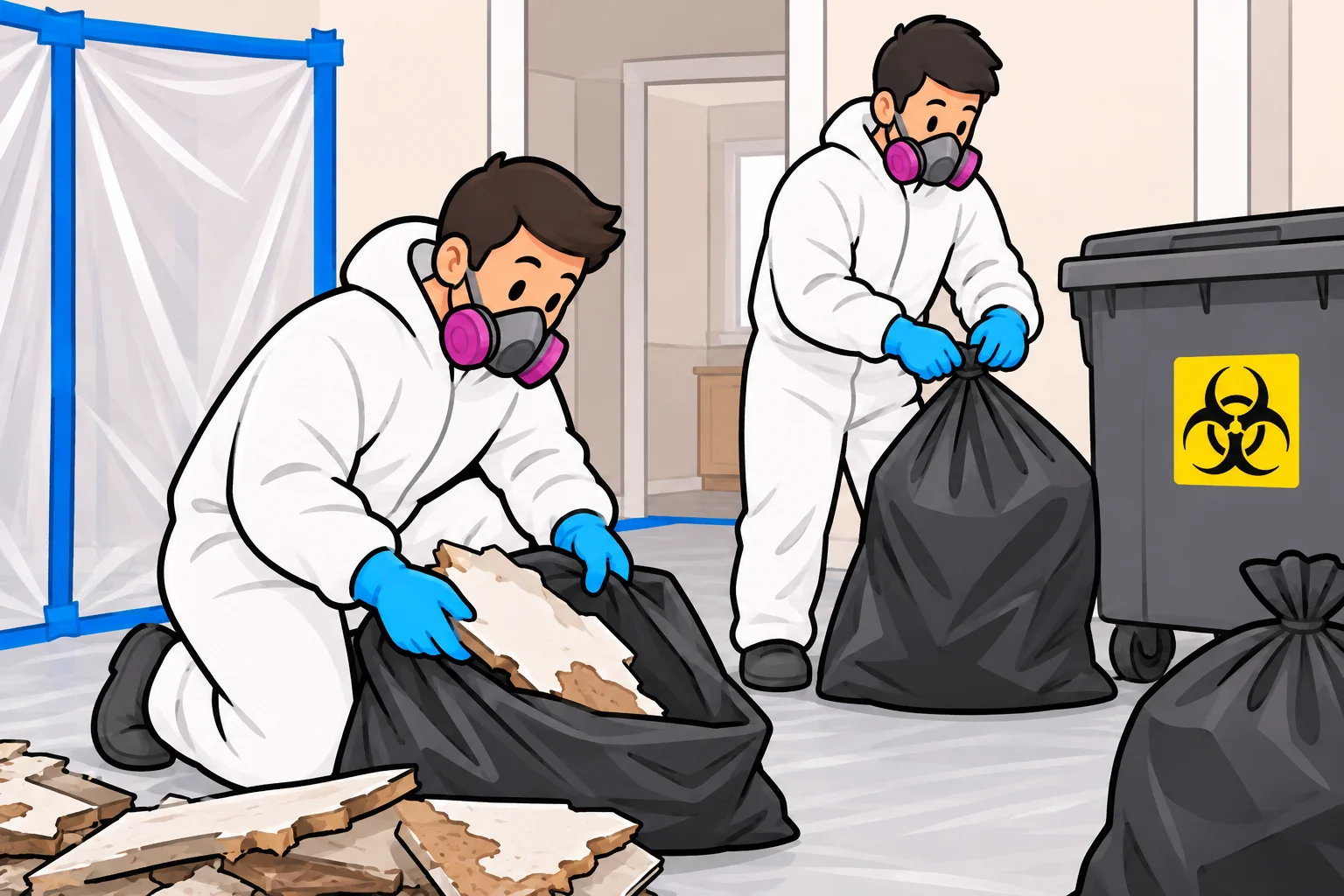
Handling affected material and waste
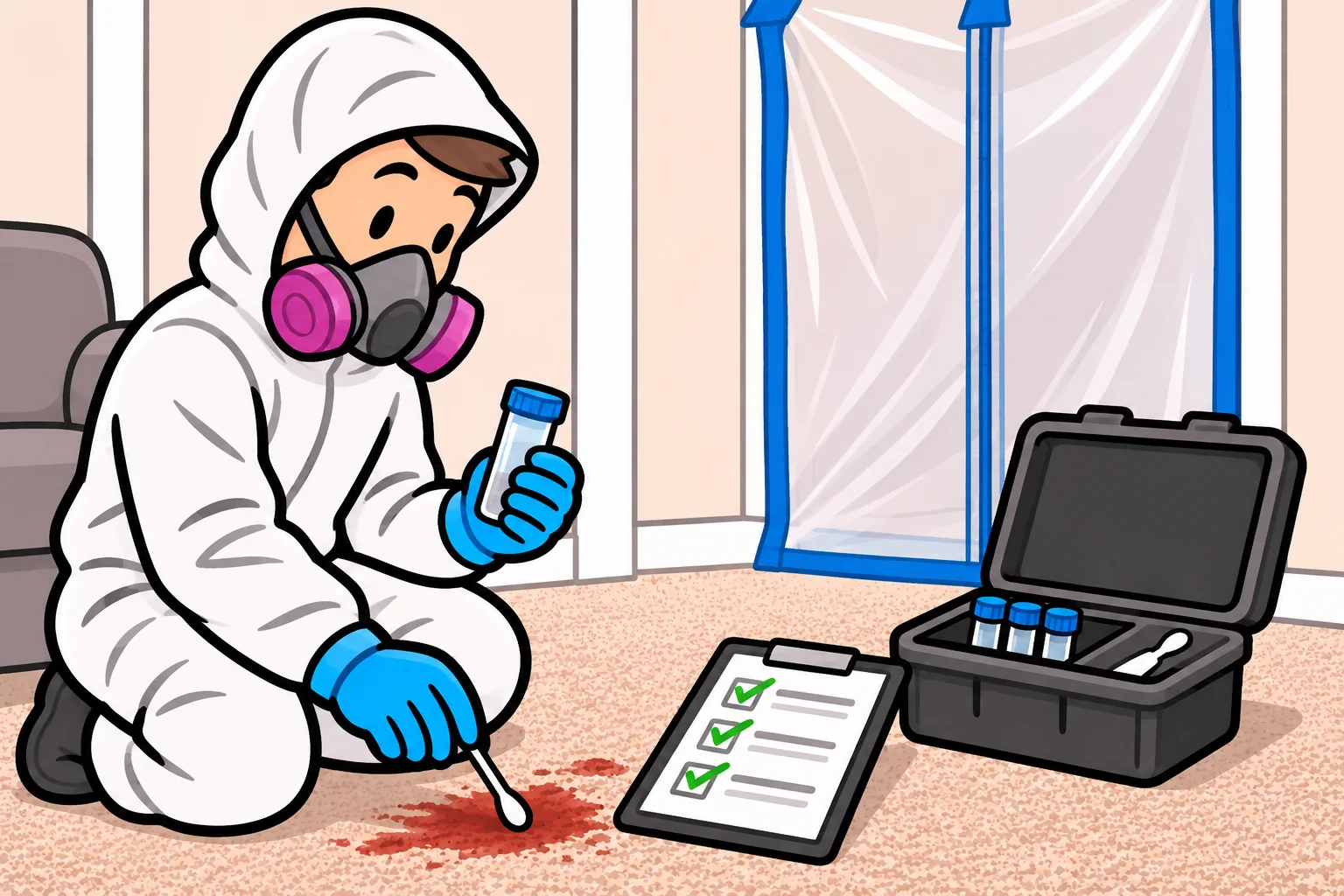
Evaluating contaminated absorbent surfaces
Surface and material decisions
Define the workA smooth floor and contaminated carpet backing are not the same cleaning problem.
Controlled movement through the home
Match the site conditionsAccess routes help keep unaffected rooms and belongings outside the work boundary.
Respectful project communication
Plan the next stageSensitive cleanup needs clear decisions about scope, belongings and repair handoff without sensational descriptions.
Serving Nampa and Nearby Communities Biohazard Cleanup in Nampa
Nampa is an existing Disaster Cleanup service area, with Caldwell, Meridian, Middleton and Kuna also listed nearby. The service includes residential, rental and commercial property concerns; it does not imply a separate Nampa office, a dedicated neighborhood crew or a fixed response window. Give the actual address and entry contact, and explain shared access or business occupancy so the discussion reflects the property rather than a city-wide assumption.

Discuss Your Nampa Property Request a Free Inspection
Discuss a free initial inspection for a Nampa contamination concern and explain who can authorize property and contents decisions. Keep known records available without collecting waste or entering a restricted room. Ask how assessment, cleaning, removal and later repairs will be separated before assuming one visit or quoted task includes every part of the project.
Call (208) 999-2353Client Reviews What People Say About Us
Rated 4.8 stars from 159 Google reviews. Read our Google reviews


Frequently Asked Questions
Can you assess a Nampa rental left with needles or waste?
Describe the known conditions and confirm who controls entry and contents decisions. Leave needles and bags undisturbed instead of sorting them for the visit. A contamination assessment is different from an ordinary turnover clean, and the actual materials and access limits determine the proposed scope.
Should warehouse droppings be swept up before calling?
No. Avoid dry sweeping, household vacuuming or moving deposits through an occupied building. Explain whether the material is elevated or in a restricted storage area. Safe access and a defined work boundary should be discussed before handling; the owner does not need close photographs to establish that help is needed.
Can a Nampa property manager authorize disposal of everything?
That should not be assumed. Clarify authority over the building and each category of belongings before removal begins. A manager arranging entry may not have the same role as the contents owner or another responsible party. Cleanup planning cannot resolve tenancy, estate or ownership questions on its own.
Does odor identify the contamination or prove the whole building is affected?
No. Odor can help frame an investigation but does not establish the source, material penetration or every affected room. Describe when it was first noticed and any moved material. The proposed boundary should follow supported findings rather than assume either a cosmetic treatment is sufficient or every adjoining space needs the same work.
What if someone already carried waste through the corridor?
Explain the route and what was moved without repeating the activity. Tracking or transfer may create questions outside the original room, so an accurate history matters. Keep routine use away from known affected areas while a practical assessment and movement plan are discussed.
Are unknown chemicals included with biohazard cleanup?
Do not assume one scope covers every substance. Share labels or existing records only if safely available, and do not touch, smell or mix an unknown residue to identify it. A dangerous release or a different material category may require emergency responders or specialist assessment before routine biological cleanup is considered.
Will an arrival estimate tell me when the rental can be occupied?
No. Travel, assessment, cleaning, material removal and repairs are separate stages. Ask about the actual work boundary and access conditions for the project. An automated lookup cannot establish a completion time, a universal reopening standard or whether every part of the property has been addressed.
How are Nampa insurance and repair questions handled?
Ask the insurer what the incident and policy require for authorization and documentation. The cleanup scope should distinguish building materials, belongings and later repairs. Coverage and payment are insurer decisions; a quote or contamination label should not be treated as automatic approval for every item or rebuilding task.