
Mold Remediation in Boise, ID
Mold remediation in Boise starts with finding the moisture that let the mold grow, whether that is a musty North End basement, a bathroom on the Bench or a slow leak in a newer West Boise home. Disaster Cleanup is a veteran-owned company based in neighboring Garden City. We assess the affected materials, contain the area, clean or remove what’s affected, dry the structure and handle the repairs. Phones are answered live 24/7 and a crew is usually on site in 1–2 hours. Leave suspected growth undisturbed until we inspect.
Schedule a Free Inspection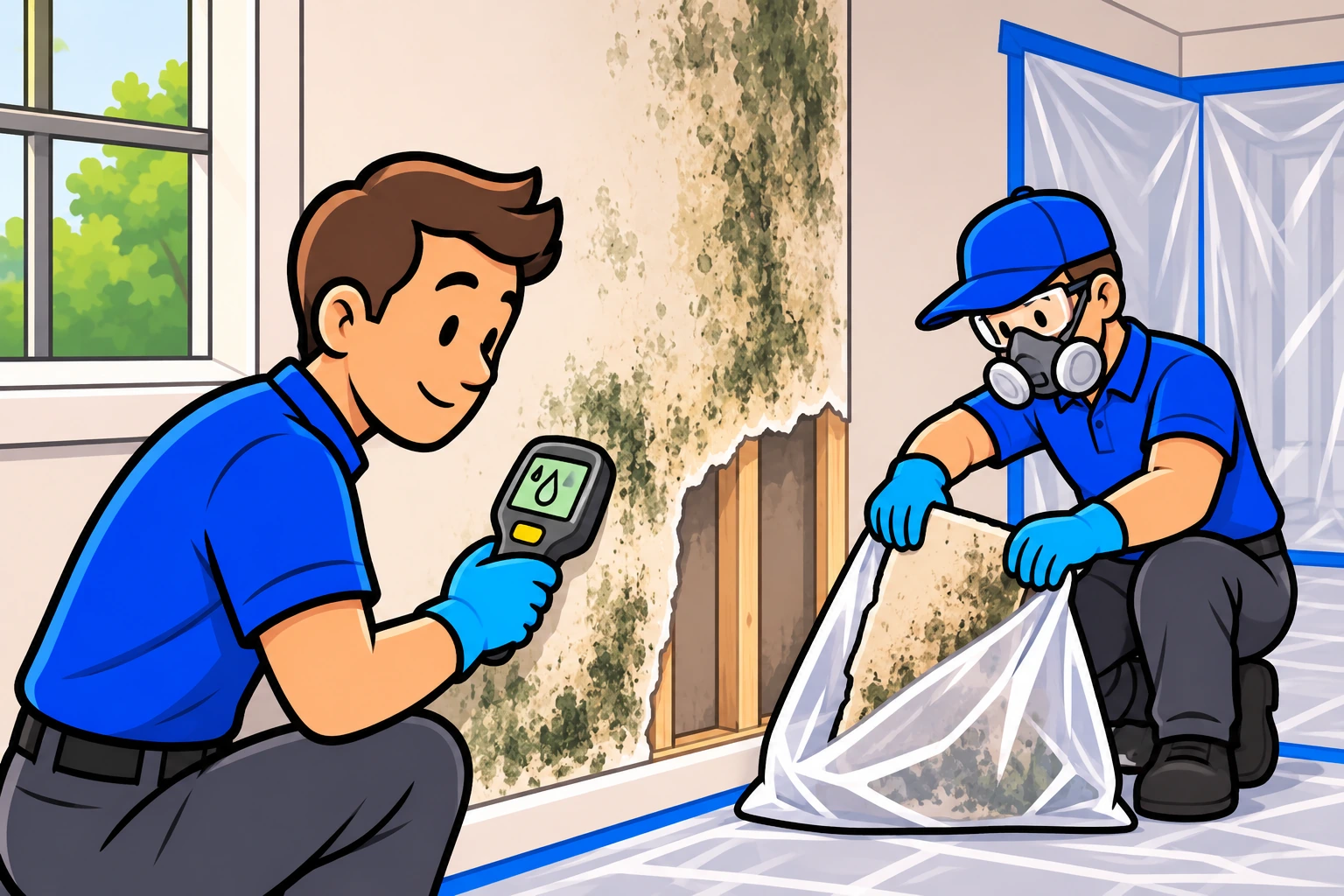
Find out how fast you can get service from your location
MOISTURE AND AFFECTED-MATERIAL RESTORATION Mold Remediation for Boise Properties
Older Boise basements, crawl spaces, bathrooms and attics each present different settings for a moisture investigation. Those examples do not identify the cause at your address. A painted plaster surface, wet insulation and framed lower wall can need different access and retention decisions. Explain which condition is visible and what happened before it rather than assume a neighborhood or building age supplies the diagnosis.
The useful question is why the affected material became wet and what has been done since. Source correction, cleaning or removal and later rebuilding need a clear sequence. Testing may help answer a specific question, but a sample cannot replace understanding the assembly or characterize every concealed surface. We discuss findings and limits so a proposed remediation boundary is understandable before work is authorized.
Signs to Discuss at Your Boise Property
A Boise odor or stain concern should be described alongside water events, room use and previous repairs. These observations can justify assessment without establishing species, severity or a person's exposure. Do not scrape growth or open older finishes to make the condition easier to show.
- Visible suspected growth after a leak
- Persistent musty odor near damp materials
- Wet or damaged insulation in a concealed space
- Recurring stains after a previous cleanup
- A wall or floor assembly that never fully dried
- A property assessment identifying material requiring remediation
What Happens After You Call
We first discuss the property location, known conditions and authorized access. The five stages below connect assessment with an understandable work scope and the decisions that follow.
- Tell us what is visible, when it appeared and what leak or drying work is already known.
- We discuss the affected space, occupancy and any concealed areas or existing reports.
- Findings guide cleaning, removal, separation and whether additional investigation is useful.
- The project follows material conditions and source-correction needs rather than one universal surface treatment.
- Understand what was addressed, what remains uncertain and which repairs or further evaluation are needed before finishes are restored.
Moisture and Remediation Questions in Boise
Older lower-room finishes
Boise basements with different construction histories can require different access and material decisions. Paneling, stored contents and a masonry surface can limit what is visible. Explain earlier dampness and repairs so the work does not treat an accessible stain as a full assessment of the underlying assembly.
Bathroom moisture and finishes
Where a bathroom has recurring damp surfaces or inadequate exhaust, cleaning a visible spot may leave the moisture question unresolved. Discuss actual use and any fan or plumbing work. Do not assume every older Boise bathroom has the same ventilation condition or needs identical removal.
Attic insulation and roof history
Roof entry and condensation can produce different questions in an attic. Tell us about the timing and repairs without walking on unsupported surfaces or moving insulation. The assessed area and safe-access limits should remain explicit when choosing cleaning or removal boundaries.
Slow supply or drain leaks
A small ongoing leak can affect a cabinet or wall assembly before a broad stain appears. The source repair and condition of the retained material are distinct. Record when the connection was corrected and whether symptoms continued so remediation is not based on an assumed completed repair.
Surface treatment without source follow-up
Painting, bleaching or wiping may change appearance without answering why the area stayed damp. Explain earlier products and dates rather than start another treatment. The next proposal should connect the actual remaining material to source and access questions.
New findings during repairs
Opening an affected finish can expose another layer or an older product needing separate assessment. An existing mold scope is not unrestricted permission to disturb every material behind it. Ask how new findings will be reviewed before removal expands into an unassessed assembly.
What to Do First: Safety and Preparation
Do not scrub, sand or tear out suspected growth to prepare for a visit. Avoid directing household fans across affected surfaces or carrying suspect debris through occupied rooms. Discuss water entry and access from a safe position. If the area has electrical or structural danger, address that first, and use a medical professional for personal health questions rather than treating material appearance as a diagnosis.
If someone already used cleaners or removed a finish, explain the activity and the products involved. Do not add another chemical in an attempt to reverse the first treatment. Assessment should consider the actual history and remaining materials rather than require the owner to create a cleaner-looking surface before the visit.
- Leave suspected growth and affected insulation undisturbed.
- Do not blow household fans across suspect surfaces.
- Keep debris out of routine occupied routes.
- Explain known water entry and previous treatment attempts.
The Restoration Sequence for Your Boise Property
1. Discuss the water and repair history
Discuss the Boise building's actual water and treatment chronology, including older finishes or earlier repairs. The aim is to define the property question and safe access, not infer a condition from a neighborhood or ask the owner to expose it by demolition.
2. Assess accessible affected materials
Visible findings, moisture information and the construction guide where attention is needed. Sampling may be useful for a defined question, but it is not automatically required in every situation or a substitute for understanding the moisture problem. Accessible findings should be distinguished from assumptions about unexamined cavities and neighboring rooms.
3. Plan the work boundary and separation
The proposed setup considers affected components, nearby occupancy and movement of belongings or debris. The owner should understand which materials will remain and which may need removal rather than receive a blanket promise of universal retention or demolition. Explain belongings and occupied routes so material movement can be considered along with the work area.
4. Clean or remove as appropriate
Material condition and the agreed scope guide controlled handling. Surfaces that remain require a suitable approach, while porous components may have different decisions. A cosmetic stain change should not be treated as the only objective of the work. Newly exposed layers or an unexpected source can require review before the work boundary expands.
5. Address moisture and review progress
Source correction and drying need to fit the assembly. Ask how unresolved water entry and accessible moisture conditions will be considered; a surface treatment cannot by itself prevent recurrence while the underlying pathway remains active. Do not equate removal of drying equipment with proof that every unrelated material was evaluated.
6. Review the restoration handoff
Review what material was addressed, which source corrections remain and what the repair trade needs to know. The completion discussion should not turn an assessed room or sample into a guarantee about every hidden area or future health and moisture condition.
A Clear Restoration Plan for Your Property
A Boise remediation proposal should explain what is known, why a material is included and what remains uncertain beyond accessible areas. That matters where an older finish meets later renovations or a reported odor has no established source. The boundary should not be an unexplained radius around a spot or a promise that every nearby item can remain.
Disaster Cleanup offers related testing, water and reconstruction services, but each still needs a defined purpose. Ask how source correction connects with cleaning, what readiness is expected before rebuilding and which tasks are separate. A clear handoff is more useful than a universal assurance about every future moisture event or an individual's health.
What Affects the Project Schedule?
The affected material, access, separation, removal needs, drying response and source repairs influence the sequence. Laboratory questions or verification arrangements may add separate stages where relevant. Discuss the actual plan after assessment instead of relying on a fixed remediation duration, a guaranteed arrival or an assurance that every concern can be resolved in one visit.
Insurance and Project Documentation
The policy and cause determine coverage, including how a sudden reported loss differs from long-running moisture or maintenance concerns. Keep source-repair records and the proposed work scope. Your insurer decides authorization and payment; visible growth, a sample result or a remediation estimate does not establish that every task or later repair is covered.
Safe Next Steps for Mold Remediation in Boise
Leave suspect surfaces undisturbed while arranging assessment. Do not sand plaster, pull insulation or use strong chemical combinations to prepare. Share the event history, treatments already attempted and any current water entry. Immediate electrical or structural hazards need appropriate urgent assistance first. Personal symptoms should be discussed with a medical professional; the property conversation should focus on supported material findings and practical next decisions rather than a diagnosis from appearance.
Information That Helps Define the Next Step
- Visible suspected growth after a leak
- Persistent musty odor near damp materials
- Wet or damaged insulation in a concealed space
- Recurring stains after a previous cleanup
Mold Remediation Assessment, Work Planning and Restoration
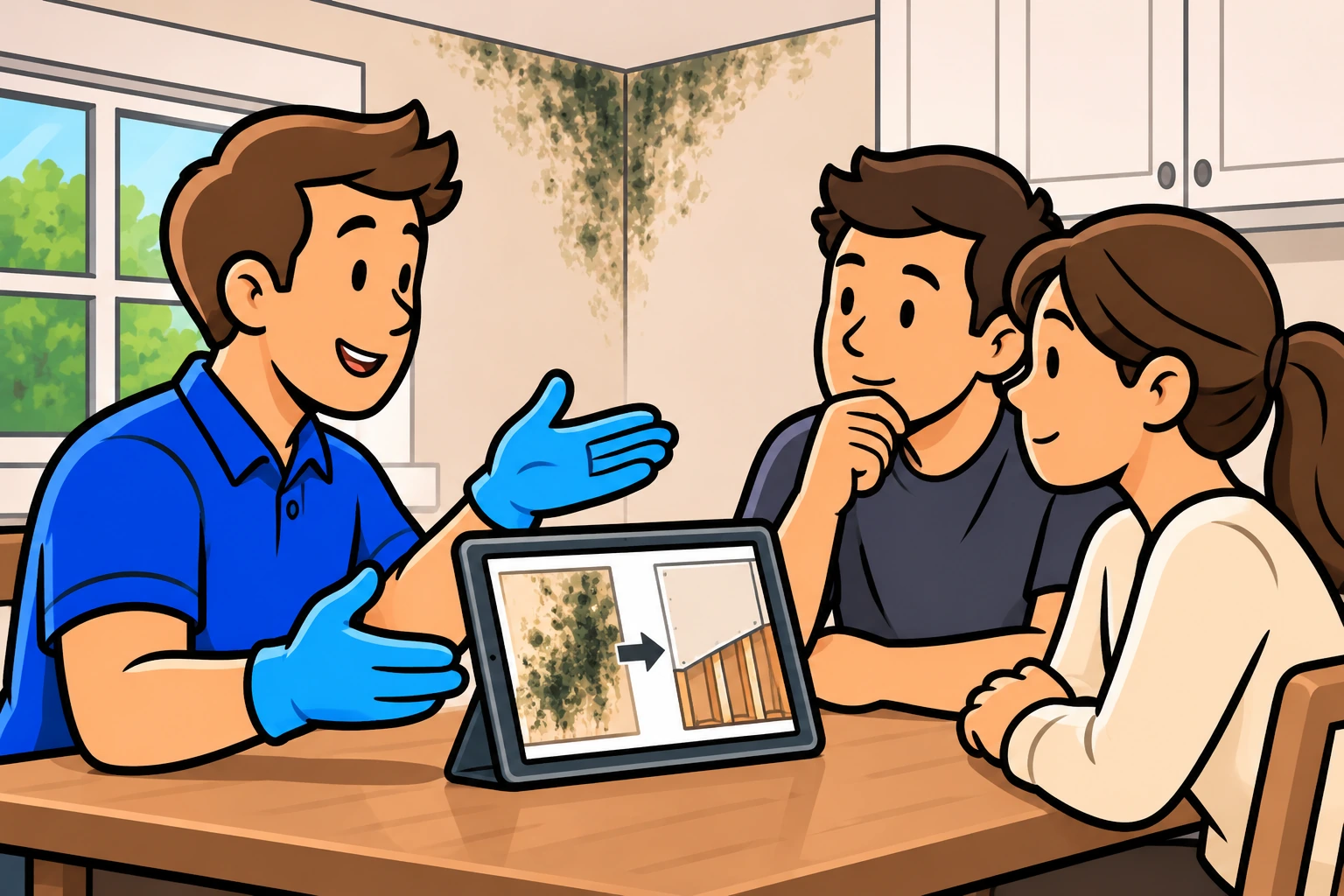
The illustrations show assessment, affected materials and restoration topics for Boise properties, not a visual species guide or evidence that every pictured finish requires removal. Discuss the actual assembly and water history. The proposed work should connect separation, cleaning or removal and moisture-related decisions before repairs begin, with a clear account of inaccessible areas rather than an unlimited whole-building clearance claim.
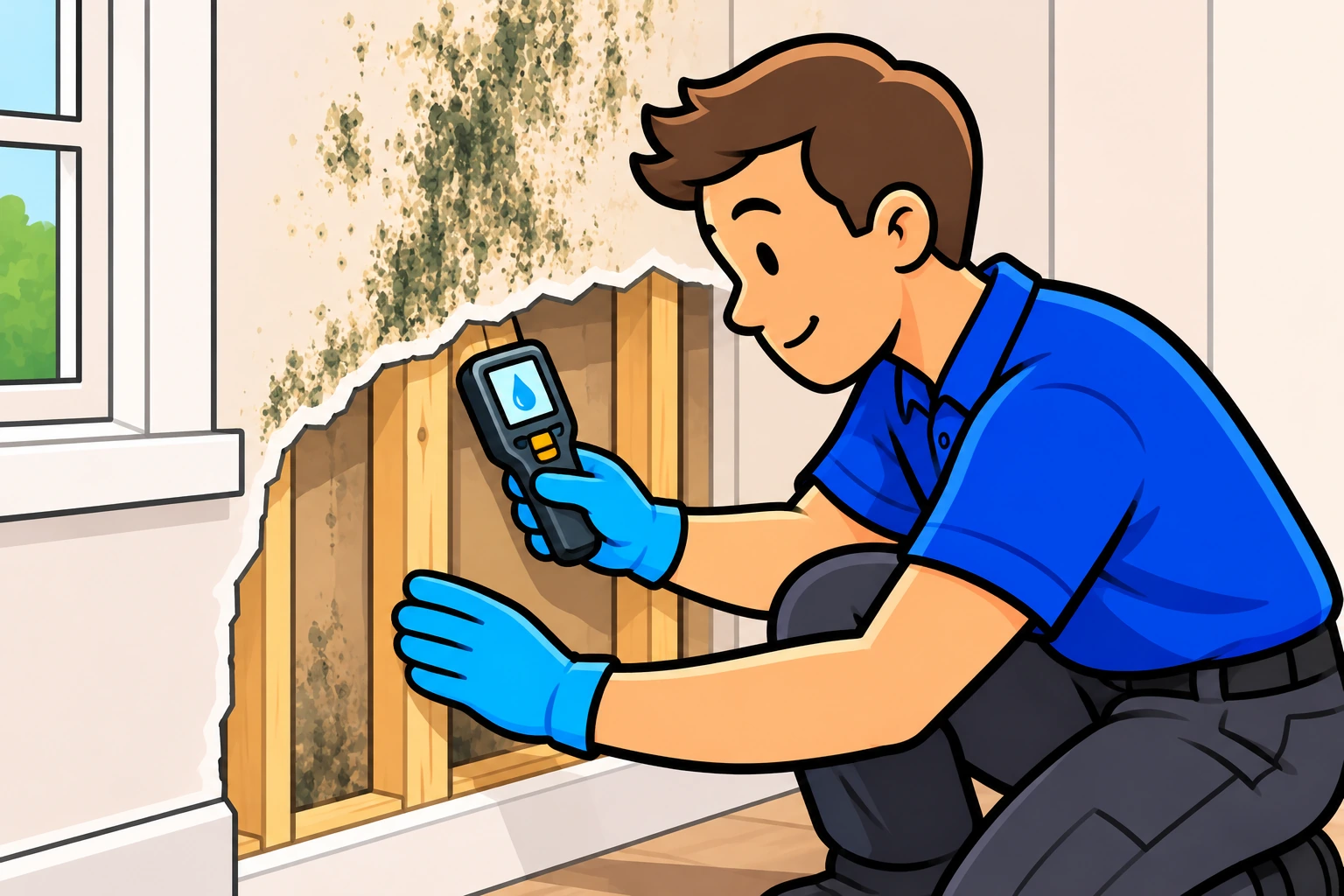
Assessing affected building materials
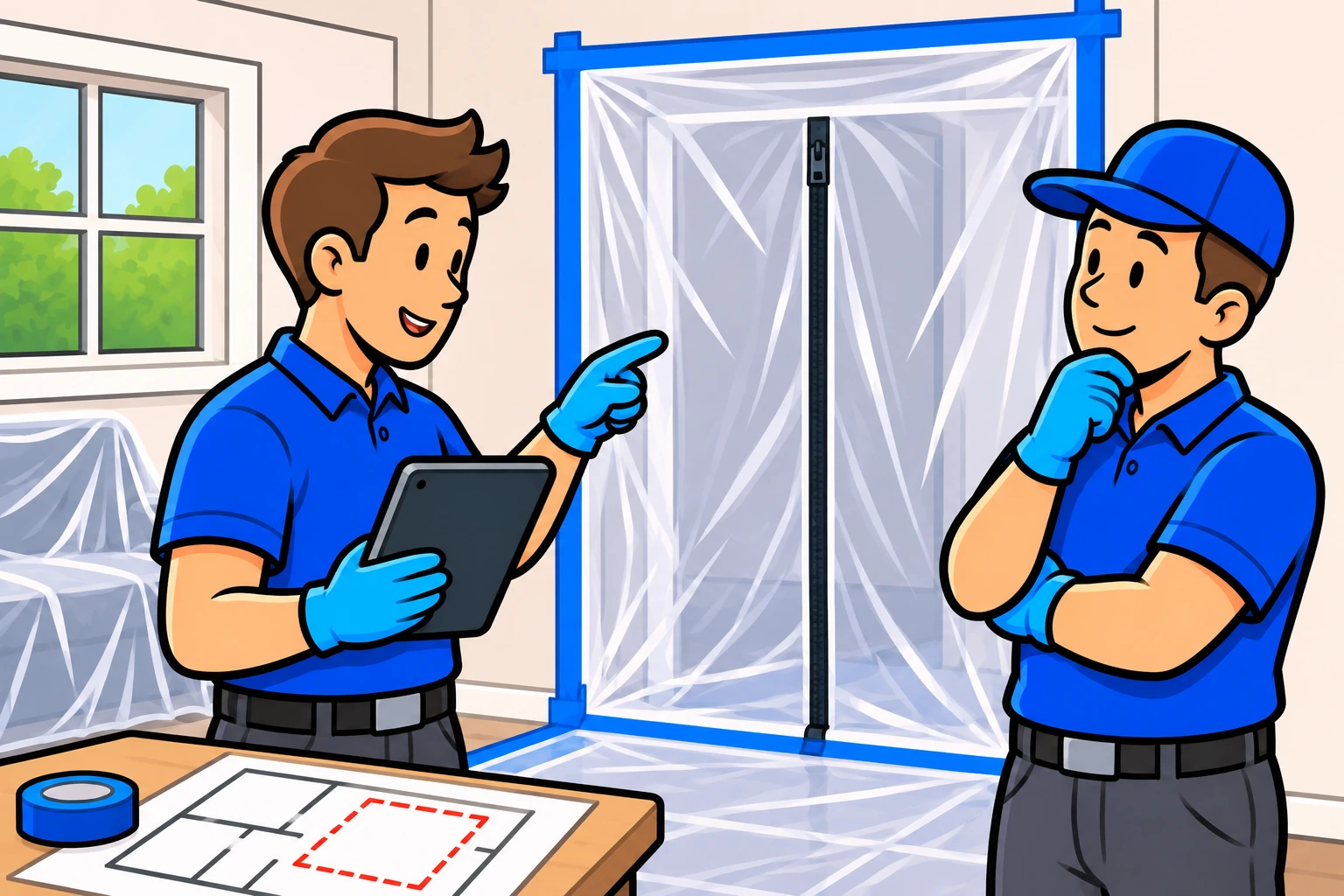
Planning the controlled work area
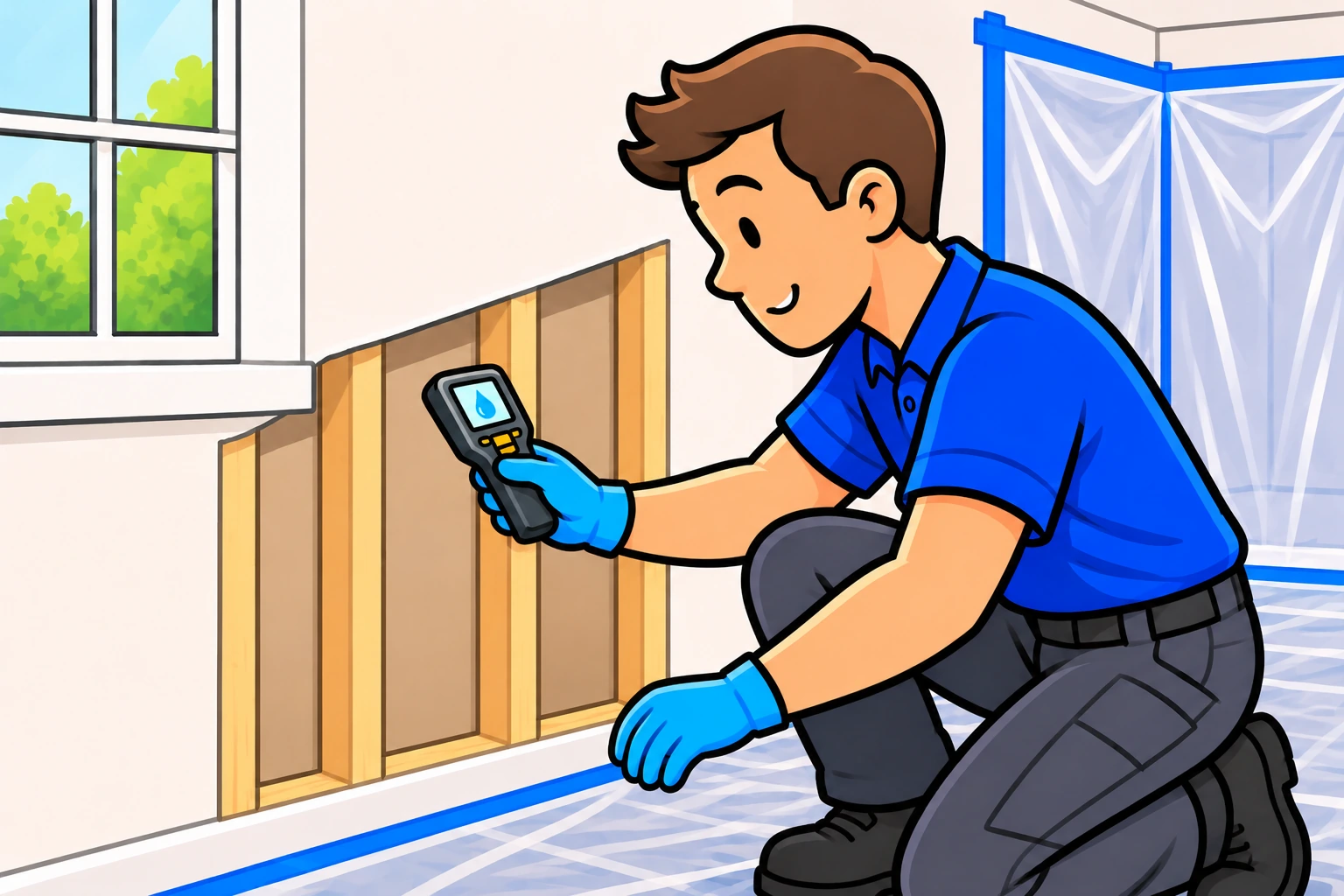
Addressing moisture and material access
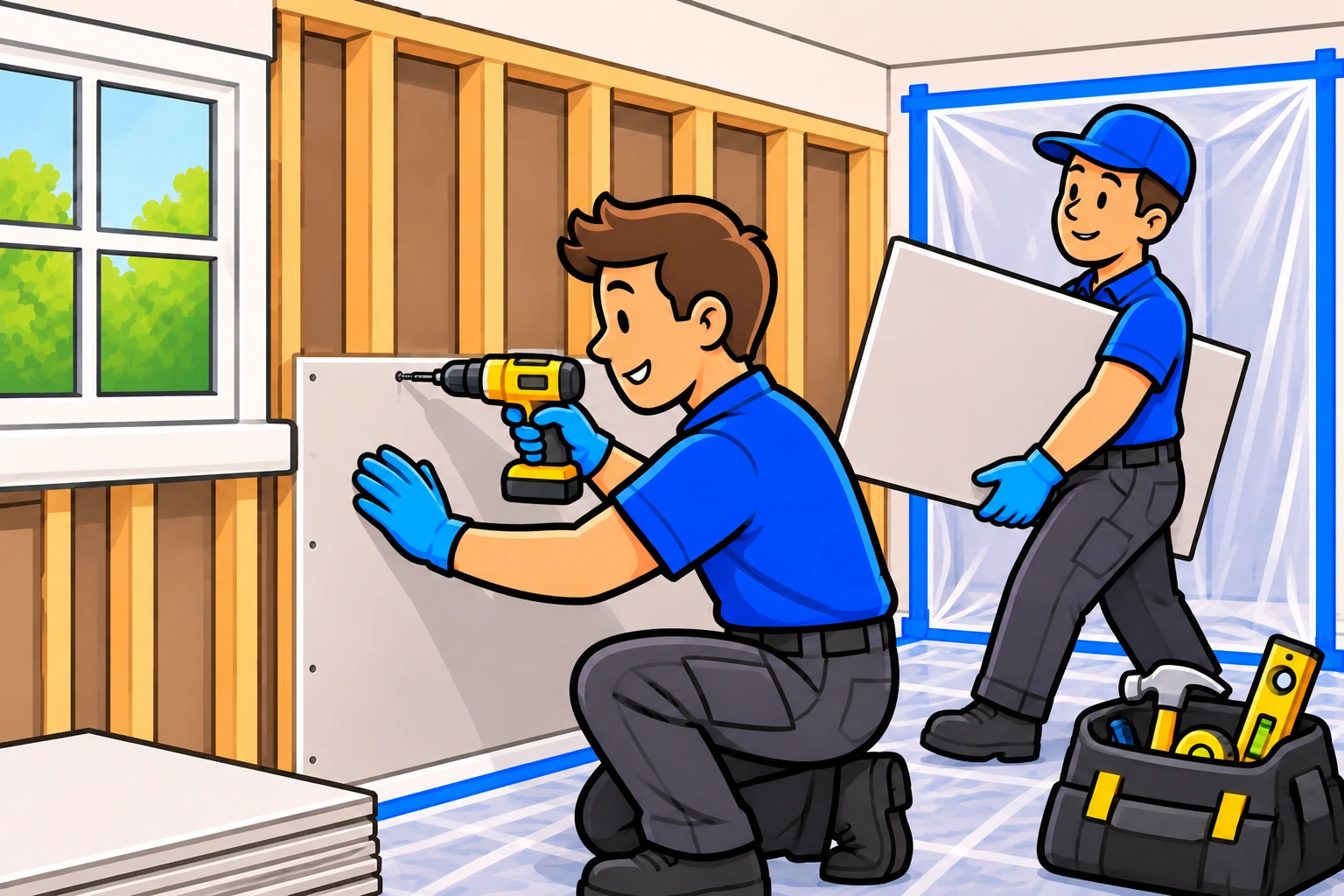
Coordinating cleanup and rebuilding
Material decisions before cosmetic results
Define the workDifferent surfaces and layers require different access, cleaning and retention decisions.
Moisture connected to the work
Match the site conditionsA continuing leak or condensation pathway can remain unresolved after a stain has been removed or covered.
Clear scope and limitations
Plan the next stageFindings should describe the affected area and supported next steps without universal health, clearance or recurrence guarantees.
Serving Boise and Nearby Communities Mold Remediation in Boise
Boise is an existing Disaster Cleanup service area, with nearby Garden City, Meridian, Eagle, Star and Kuna also listed on the site. Provide the property address, authorized contact and safe-access information when discussing remediation. Local building examples help frame questions but do not establish the condition at an address, a separate neighborhood crew or a guaranteed arrival. The work follows actual findings and the agreed scope.
Where we work in Boise: We handle mold remediation in homes and businesses across Boise, including the North End, East End, the Bench, West Boise, Southeast Boise and Harris Ranch. That ranges from musty basements in older homes to bathroom and attic moisture in newer ones. Disaster Cleanup is veteran-owned and based in neighboring Garden City. Phones are answered live 24/7 and a crew is usually on site in 1–2 hours. Call (208) 999-2353.

Discuss Your Boise Property Request a Free Inspection
Request a free initial inspection for a Boise mold concern and explain the moisture history and any earlier treatments. Ask how the findings support the proposed boundary and which sampling, source repair or reconstruction would need a separate scope. Leave materials intact rather than undertake trial cleaning or demolition before the discussion.
Call (208) 999-2353Client Reviews What People Say About Us
Rated 4.8 stars from 159 Google reviews. Read our Google reviews


Frequently Asked Questions
How soon can you inspect mold in my Boise home?
Phones are answered live 24/7, and a crew is usually on site within 1–2 hours anywhere in Boise. Until then, leave the growth undisturbed and keep the area closed off if you can.
Do you fix the moisture problem too?
Yes. Mold comes back if the moisture stays, so we look for the leak, condensation or drainage issue and include drying and repairs in the plan.
Is Disaster Cleanup a local company?
Yes. We’re a veteran-owned company based in Garden City, right next to Boise, serving Boise and the Treasure Valley.
What should I do if I find mold in a Boise basement?
Leave suspected growth and affected finishes undisturbed, and describe known leaks or earlier treatments from a safe location. Do not scrub, sand or open a wall to prepare. Arrange appropriate help for active water or immediate hazards, then discuss inspection, moisture history and the material decisions needed before cleaning, removal or repairs are authorized.
Should old plaster be removed before the inspection?
Do not disturb it as preparation. Older finishes can have material questions separate from the mold concern, and removal can change the work boundary. Share available reports and the intended repair so identification and access can be discussed before ordinary demolition begins.
Can improving a bathroom fan replace remediation?
Ventilation correction and the condition of affected material are different questions. A source-related improvement may be important but does not itself establish that an existing finish can remain. Ask what each task addresses and how the agreed cleaning or removal handoff relates to the repair.
Does black growth show which mold is present?
No. Color does not establish species or an individual health consequence. A defined sampling question may be useful in some circumstances, but it should not replace the building and moisture assessment. Leave the area undisturbed and avoid treating a photograph as a medical or whole-property diagnosis.
Is testing included in a free inspection?
Do not assume sampling or laboratory work is included without agreement. Ask what a proposed test would establish, where it represents and what it costs. A free initial visit, specialist analysis and remediation are separate activities even when they can be discussed in one conversation.
What if growth returns after a previous cleaning?
Explain the timing, products and any source work already completed. Recurrence can leave unanswered moisture or material questions, but it does not identify the cause by itself. The next plan should review the actual history rather than simply repeat a stronger cosmetic treatment or promise permanent absence everywhere.
Can a Boise property manager arrange the work?
Begin with the property concern and identify who can authorize entry, contents and repair decisions. Access alone is not permission for every removal task. Safe records and a clear contact arrangement are useful preparation; occupants should not collect debris or open affected finishes to make the visit possible.
When is rebuilding appropriate after remediation?
The repair handoff depends on the agreed material condition, moisture decisions and any project-specific evaluation. Ask which layers were addressed and what source corrections remain. A cleaner-looking surface or equipment removal does not automatically establish readiness to conceal an assembly, and the insurer separately decides coverage for proposed work.