
Frozen Pipes in Horseshoe Bend, Idaho: A Winter Checklist for Cabins and Empty Homes
A cold snap doesn’t care whether anyone is home.
Frozen pipes in Horseshoe Bend, Idaho are a particular worry for homes and cabins that sit empty for days or weeks at a time, because a split pipe can run unnoticed until someone walks in on a soaked floor. This guide is built around that situation: what to do before you leave a place for the winter, how to compare your options for protecting the plumbing, what to do the moment you find a burst line, and how professional drying keeps a bad weekend from becoming a mold problem.
Why Empty and Part-Time Homes Are the Risk in Horseshoe Bend
The City of Horseshoe Bend sits on the Payette River, and a drinking-water study posted on the city’s site notes the town grew up around ranching and logging and serves as the gateway to the central mountains for travelers coming from the south. In a town like that, some homes are lived in year-round while others may only be used on weekends or holidays. Idaho winters can bring hard freezes any time from late fall on, so it’s worth checking forecasts from the National Weather Service Boise office before you leave a property alone.
A lived-in house usually gives itself away: you hear the spray, see the stain, or notice low pressure. An empty one gives no warning. By the time a pipe is found, a small split can have run for days. The difference between a quick repair and a major cleanup is often just how long the water had to spread.
The Pipes That Freeze First
The American Red Cross guide to preventing and thawing frozen pipes explains that water expands as it freezes, and that pressure can break a pipe no matter how strong it is. It lists the usual trouble spots:
- Pipes exposed to severe cold, such as outdoor hose bibs and sprinkler or pool supply lines.
- Supply lines in unheated areas like crawl spaces, attics, garages, and basements, plus kitchen cabinets on cold walls.
- Pipes that run along exterior walls with little or no insulation.
Cabins and older houses often have several of those at once: a crawl space under the floor, a plumbing wall on the north side, and a hose bib someone forgot to drain. A walk through the building with that list in hand takes about as long as making coffee, and it tells you where your weak points are.
Before You Leave: A Winter Checklist for a Home Nobody Will Check Daily
Outdoors
- Drain and store hoses. The Red Cross advises closing the inside valve to each hose bib and opening the outside one so leftover water can expand without splitting the pipe.
- Drain sprinkler and pool supply lines following the installer’s directions. The Red Cross specifically says not to pour antifreeze into those lines unless directed.
- Look at the crawl space vents and skirting. A gap that lets wind straight onto a supply line can freeze it even when the house is warm.
Indoors
- Keep the heat on. For trips during cold weather, the Red Cross recommends a thermostat setting no lower than 55°F.
- Open cabinet doors under sinks on exterior walls so warm air reaches the pipes, and move cleaners out of reach of children and pets first.
- Insulate exposed lines in the garage, attic, and crawl space with pipe sleeves, or UL-listed heat cable installed as directed.
- Know where the main shutoff is and make sure everyone who uses the place can find it in the dark.
- Ask someone to check in. A neighbor, a family member, or a property manager walking through during a cold stretch can catch a problem in hours instead of weeks.
If you are not sure how to winterize the system fully, a licensed plumber can walk you through the right approach for your plumbing, since the best method depends on the house.
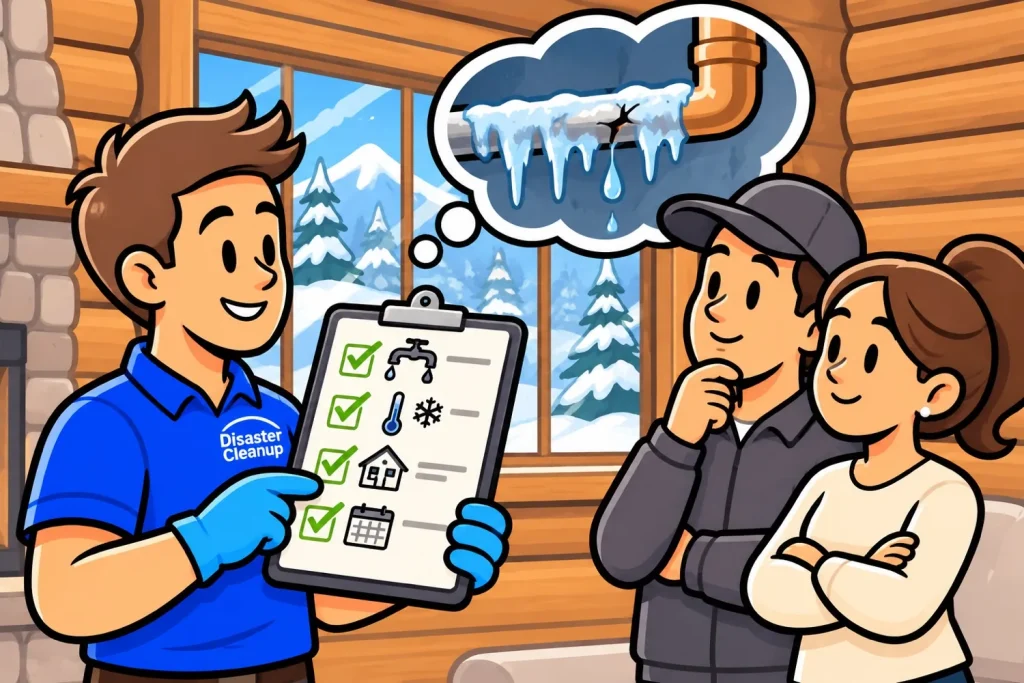
Three Ways to Protect an Empty House, Compared
There isn’t one right answer for every property. Here is how the common approaches stack up, without pricing, since costs depend on the house.
Keep it heated and let a person check on it
This is the simplest option and the one the Red Cross recommends for short trips: heat stays on, cabinet doors stay open, and someone looks in. Its weak spot is people and power. If the heat fails or the check-in is skipped, nothing else is standing guard.
Shut off and drain the water system
Closing the main and emptying the lines takes water out of the pipes entirely, which removes what freezes. It takes planning, usually works best with plumber guidance, and needs to be done completely, including low spots and fixtures. It is a better fit for a place that will sit unused for a long stretch than for a quick trip.
Add monitoring and an automatic shutoff
Leak sensors and automatic shutoff valves watch for water and can close the supply when they find it. Our leak prevention systems service covers this kind of setup. Alerts need internet and power, so it works best as a backstop alongside heat and check-ins rather than a replacement.
If You Come Home to a Burst Pipe: The First Hour
Walking into a wet house is stressful. Work through these in order:
- Don’t walk in blind. If the floor is covered in water, treat the outlets, cords, and anything plugged in as unsafe. If water has reached outlets, or you can’t reach the panel without standing in water, stay out and call an electrician or your utility.
- Shut off the main water valve. If you can’t find or turn it, call the City of Horseshoe Bend at to ask about shutoff at the street, or a plumber.
- Open a faucet or two after the main is closed to relieve pressure and help drain the lines.
- Take photos and video before moving anything: the split pipe, the wet walls, the floor, damaged belongings.
- Call your insurance agent and a restoration team the same day.
- Lift what you can off wet floors, such as furniture, rugs, and boxes, and open cabinet doors so wet areas can breathe.
Speed matters because of mold. The EPA’s guide to mold and moisture advises drying water-damaged areas and items within 24 to 48 hours. A house that has been cold and closed up is no exception once the heat comes back on.
Thawing a Frozen Pipe That Hasn’t Burst Yet
Sometimes you catch it first: you turn on a faucet and only a trickle comes out. The Red Cross suggests treating that as a likely frozen pipe, especially near exterior walls or where the water line enters through the foundation. Its guidance, in brief:
- Keep the faucet open so water can flow as the ice melts.
- Apply gentle heat with an electric heating pad, a hair dryer, a space heater kept away from anything flammable, or towels soaked in hot water.
- Never use a blowtorch or other open flame, including propane or kerosene heaters.
- Check every other faucet, since one frozen pipe often means others.
- Call a licensed plumber if you can’t find the frozen spot, can’t reach it, or can’t thaw it.
If a pipe has already split, thawing it will release the water, so shut off the main first. Our pages on frozen pipe damage and burst pipe cleanup explain what happens next.
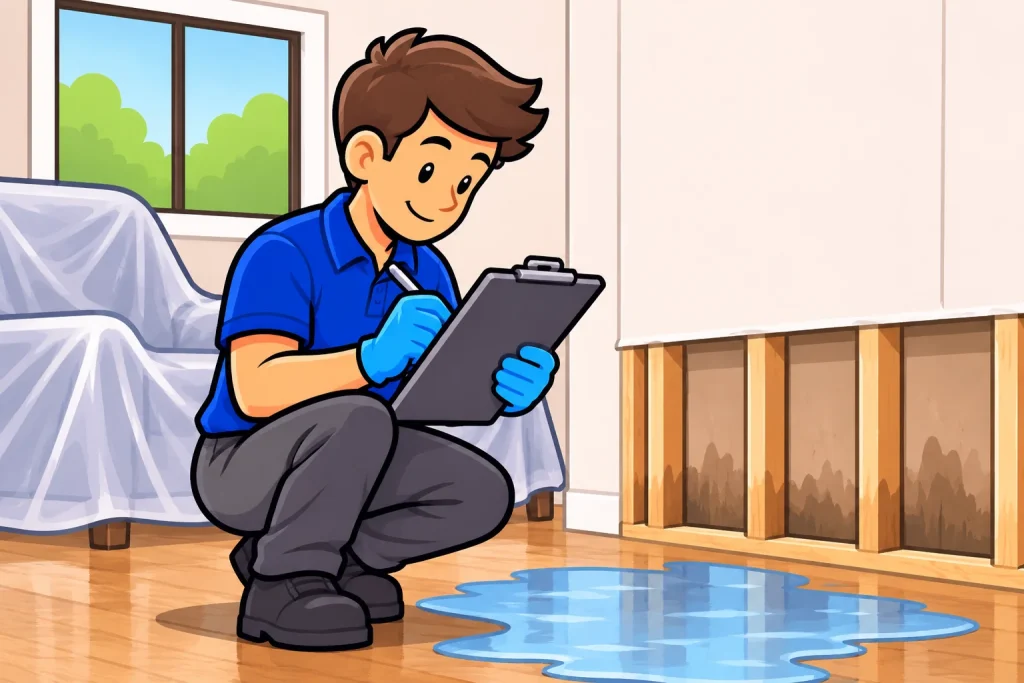
What Professional Cleanup Looks Like After a Winter Burst
A pipe that splits in a wall or crawl space sends water into places you can’t see. On a typical water damage restoration job, we:
- Trace the water with moisture meters, since it wicks into drywall, insulation, and subfloor well beyond the visible stain.
- Extract standing water and remove materials that can’t be dried, explaining what is coming out and why.
- Set air movers and dehumidifiers, then recheck readings until the structure reaches dry standards.
- Document the damage with photos and notes that support your insurance claim.
- Check for early mold growth and, if needed, bring in mold remediation.
Not sure how bad it is? Ask for a free inspection. We serve Horseshoe Bend and nearby towns, such as Emmett, and our earlier guide to frozen pipes in Star has a room-by-room winter checklist for full-time residents.
Need Help With Frozen or Burst Pipes in Horseshoe Bend?
Disaster Cleanup is a veteran-owned restoration company serving Horseshoe Bend and the Treasure Valley since 2015. Local pros answer our phones live 24/7, and we’re typically on site within 1–2 hours. Call (208) 999-2353 or schedule a free inspection. You can pay after your insurance claim closes, all work is backed by a 1-year warranty, and se habla español. Idaho contractor registration RCE-67826.
Horseshoe Bend Frozen Pipe FAQs
How low can I set the heat in a house I’m leaving for the winter?
The Red Cross recommends leaving the heat on at a temperature no lower than 55°F if you will be away during cold weather. Houses with plumbing on exterior walls or in a crawl space may need more margin, so check on them during hard freezes.
Should I leave a faucet dripping while I’m away?
The Red Cross suggests letting cold water drip from a faucet served by exposed pipes during very cold weather, because moving water is less likely to freeze. That works when someone is around to watch it, but a dripping faucet is not a plan for a home that will sit unattended for days.
Is thawing a pipe with a torch okay if I’m careful?
No. The Red Cross specifically says not to use a blowtorch, kerosene or propane heater, charcoal stove, or any open-flame device on a frozen pipe. Use a heating pad, hair dryer, or towels soaked in hot water, and call a plumber if you can’t thaw it.
How soon does a soaked house need to be dried?
The EPA advises drying water-damaged areas and items within 24 to 48 hours to help prevent mold growth. If you find water after being away, call right away rather than waiting for the next weekend.
Who do I call about water service at the street?
Start with Horseshoe Bend City Hall at . The city’s own water quality notice says residents with questions can contact City Hall, and staff can tell you who handles the shutoff to your property.
Frozen Pipe Terms to Know
Hose bib: An outdoor faucet, usually on an exterior wall, that connects a garden hose and is a common spot for freeze damage.
Main shutoff valve: The valve that stops all water from entering the house, often near where the line enters or by the water heater.
Heat cable: A UL-listed electric cable installed on exposed pipes to keep them from freezing when used as directed.
Moisture mapping: Using meters to trace how far water has spread into walls, floors, and insulation, including areas that look dry.
Air mover: A high-velocity fan used in drying to move air across wet surfaces and speed evaporation.