
Garden City, IdahoMold Testing in Garden City
Mold testing in Garden City should connect a property question with useful evidence. Disaster Cleanup discusses moisture history, accessible observations and appropriate air or surface sampling when it can inform the next step. A musty lower room, past leak or sale-related request can require different investigation choices. Clarify laboratory work and charges separately from a free initial inspection, and do not use property findings to diagnose an individual's health.
Schedule a Free Inspection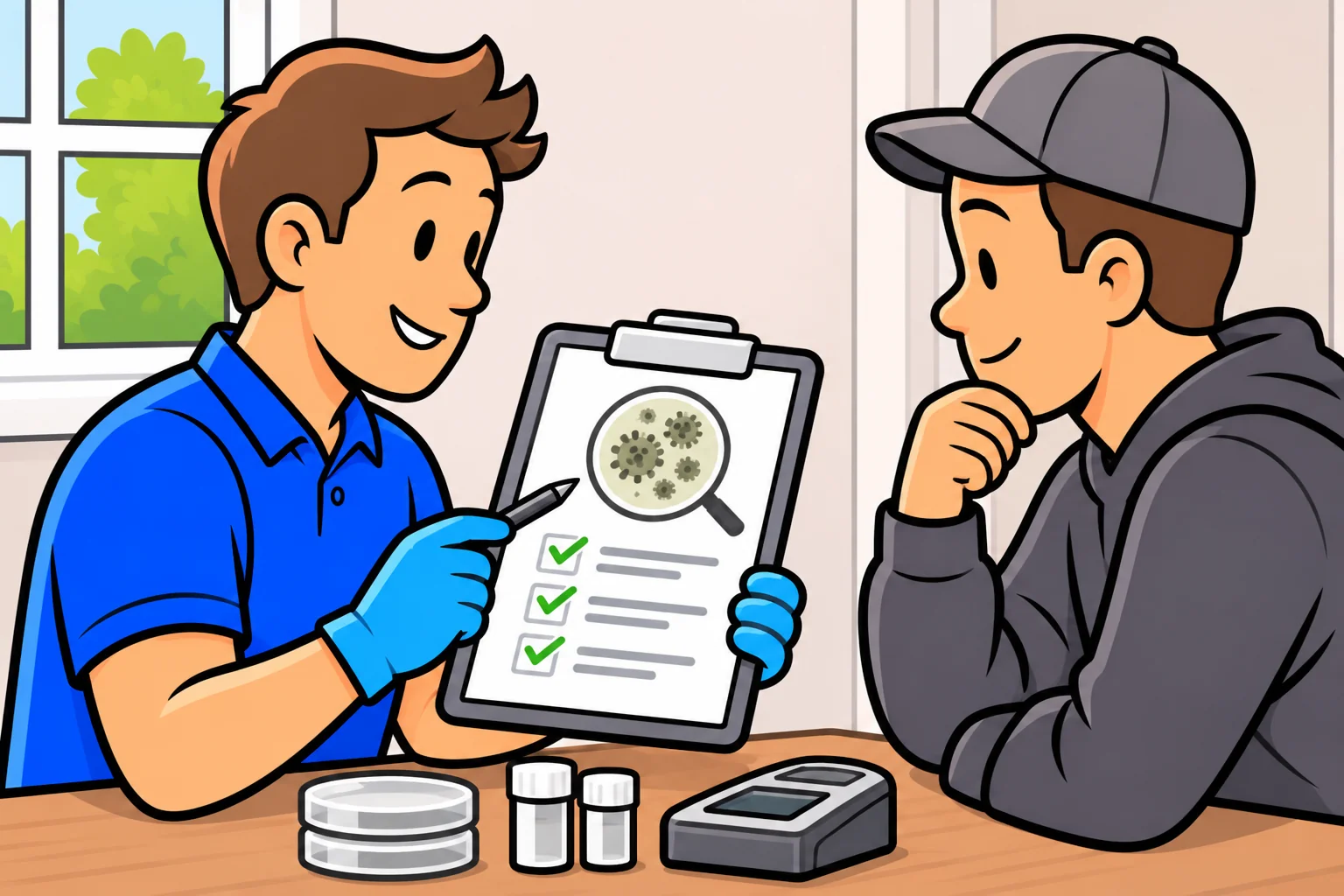
Find out how fast you can get service from your location
PROPERTY MOISTURE AND MOLD INVESTIGATIONMold Testing for Garden City Properties
A musty room in a home near the Boise River Greenbelt, a bathroom concern in Riverside Village or a documentation request for a space along Chinden Blvd can hide different material interfaces. A stain at one finish does not show the condition behind every nearby wall, and the neighborhood does not establish the moisture source. Explain the event history and what decision you need to make: locating an unresolved concern, planning repairs or responding to a buyer's specific request are not interchangeable reasons for collecting samples.
Air and surface samples represent particular locations and collection conditions. Their usefulness depends on how those observations relate to the building and the question being asked. Share earlier source repairs, drying records and testing reports rather than buy an unspecified package. We discuss what a proposed investigation can support, which areas cannot be examined and what additional evidence may be needed before any separate removal or treatment is authorized.
Questions to Discuss at Your Garden City Property
Garden City testing inquiries may begin with a recurring lower-room odor, a bathroom mark or uncertainty after an old leak. State when and where the symptoms appeared and what decision the results need to support. These details help plan an investigation; they do not by themselves require a particular sample set.
- A musty odor without an explained source
- Unresolved questions after a water event
- Staining that needs evaluation before repair
- A buyer or seller with a defined testing question
- Recurring dampness in an attic or crawl space
- A landlord needing context for a property concern
What Happens After You Call
We discuss the concern and evidence needed before selecting samples. The next steps separate an initial inspection, any agreed laboratory work and the property decisions that the findings can reasonably support.
- Describe odors, staining, earlier leaks and the decision you need help making.
- Previous repairs or sampling reports can help define what remains uncertain.
- Clarify how air or surface samples would relate to the concern and what they cannot establish.
- Review the materials, locations, laboratory work and separate charges before authorization.
- Discuss results in context, including moisture correction, further investigation or a separate remediation scope where appropriate.
Why Garden City Property Owners Ask About Testing
A musty room near the Boise River Greenbelt
Odor in a lower level or crawl-space area near the Greenbelt can raise questions about hidden moisture. Describe the history from a safe location rather than enter an uncertain space to collect your own sample. Location near the river is context, not a diagnosis.
A sale or rental inspection in Riverside Village
A buyer, seller or landlord in Riverside Village may request documentation before a closing or a tenant move. Explain the exact question and any deadline. A transaction request should still be tied to a useful building question, not an unspecified package of tests.
Commercial documentation along Chinden Blvd
A shop or office along Chinden Blvd may need a clear record of what was examined and why. Identify the authorized contact and the decision the work must support. Building findings are not a medical evaluation of staff or customers.
Symptoms after an earlier leak or repair
A stain or odor that appears after a repaired supply line, roof or appliance can mean the nearby assembly was never fully evaluated. Share the repair records and later symptoms. Sampling, if proposed, should relate to that question rather than restart as a general indoor-air package.
Uncertainty about a visible mark
A photograph of discoloration cannot identify a species or the condition behind the finish. We discuss whether a surface or air sample would actually change the next decision, or whether moisture assessment and access are the more useful first steps.
A previous report that left questions open
If an earlier laboratory report found growth or was inconclusive, bring it to the discussion along with what was repaired afterward. A new sample plan should address the remaining question instead of repeating a test that will not change the decision.
What to Do First: Safety and Preparation
Do not scrape growth, cut into walls or disturb insulation to obtain a sample yourself. Explain the moisture history and leave suspect areas undisturbed while access is arranged. If there is immediate electrical or structural danger, address that first. For symptoms or health concerns, consult a qualified medical professional rather than asking a property sample to diagnose an illness.
If another contractor has already cleaned or removed material, describe what was done and when. That history matters to what a later sample can represent. Do not deliberately leave a leak active to improve sampling, and do not change normal building conditions just to obtain a preferred result without discussing the investigation plan.
- Leave suspected growth and insulation undisturbed.
- Share earlier water and remediation records.
- Discuss testing charges before sampling proceeds.
- Use medical professionals for individual health concerns.
The Mold Testing Sequence for Your Garden City Property
1. Define the question and history
Define the Garden City question and the decision it needs to support, including past leaks, repairs or transaction requests. Safe accessible observations and existing records come before choosing a sampling package or asking the owner to disturb a concealed area.
2. Review accessible conditions
The inspection considers visible material conditions and moisture information relevant to the concern. Access limitations should be explicit; an accessible-area visit does not rule out every concealed source or characterize every room in the building. Record the distinction between an inaccessible area and an area examined without a relevant visible finding.
3. Explain a sampling plan
Air and surface samples can answer different questions. The proposed locations, comparison information where relevant and analysis should fit the investigation rather than imply one sample can describe an entire property under all future conditions. Discuss any comparison or collection conditions used and why they are relevant to the proposed question.
4. Collect within the agreed scope
Sampling should be described in relation to the location and conditions represented. Owners should not prepare by scrubbing, disturbing suspected growth or deliberately changing ventilation to obtain a preferred result. The collection history should remain traceable to the material or location described in the result.
5. Review results with context
Laboratory findings need to be considered alongside site observations and the reported history. Identification or counts should not be translated into an individual medical diagnosis, a universal safe threshold or certainty about every unexamined surface. A reported finding should not be stretched to support an unrelated diagnosis or whole-building guarantee.
6. Discuss the appropriate next step
Relate findings to the Garden City scope, accessible conditions and remaining uncertainty. Discuss whether source correction, additional access or a separately authorized remediation proposal is appropriate; a report should not become an unlimited clearance or personal medical conclusion.
A Clear Investigation Plan for Your Property
Useful Garden City mold testing begins with why the evidence is needed. Ask which sample would inform the proposed decision, what it represents and what it cannot show, including concealed areas that were not opened. A laboratory result is not a stand-alone diagnosis of the building or of a person's health.
Disaster Cleanup is a veteran-owned company based at 5332 N Sawyer Ave, STE 120 in Garden City. A free initial inspection can discuss moisture history and whether sampling is warranted. Laboratory work, when authorized, is separate from remediation and from reconstruction. Ask how findings would be used before any removal or treatment is planned. Remediation and repair work, when it follows, is backed by a 1-year warranty.
What Affects the Project Schedule?
Access, the investigation question, sampling arrangements and laboratory processing influence the sequence. Discuss current arrangements directly rather than assuming immediate results or a fixed turnaround from an automated drive-time estimate. Additional access or follow-up questions can require another scope even after an initial report is available.
Insurance and Project Documentation
Coverage depends on the policy, cause and insurer review. Testing related to a reported water event and investigation of a long-standing concern can be treated differently. Keep the agreed scope and findings, and ask the insurer about documentation or authorization. A sample result does not itself establish claim approval.
Safe Next Steps for Mold Testing in Garden City
Leave suspected growth, insulation and older finishes undisturbed while discussing a Garden City investigation. Do not sand, cut into walls or deliberately change ventilation to seek a preferred result. Explain any cleaning or source repair already completed; never leave an active leak running for sampling. Address immediate electrical or structural danger first, and use an appropriate medical professional for personal symptoms rather than asking an environmental result to establish a diagnosis.
Information That Helps Define the Next Step
- A musty odor without an explained source
- Unresolved questions after a water event
- Staining that needs evaluation before repair
- A buyer or seller with a defined testing question
Mold TestingAssessment, Work Planning and Restoration
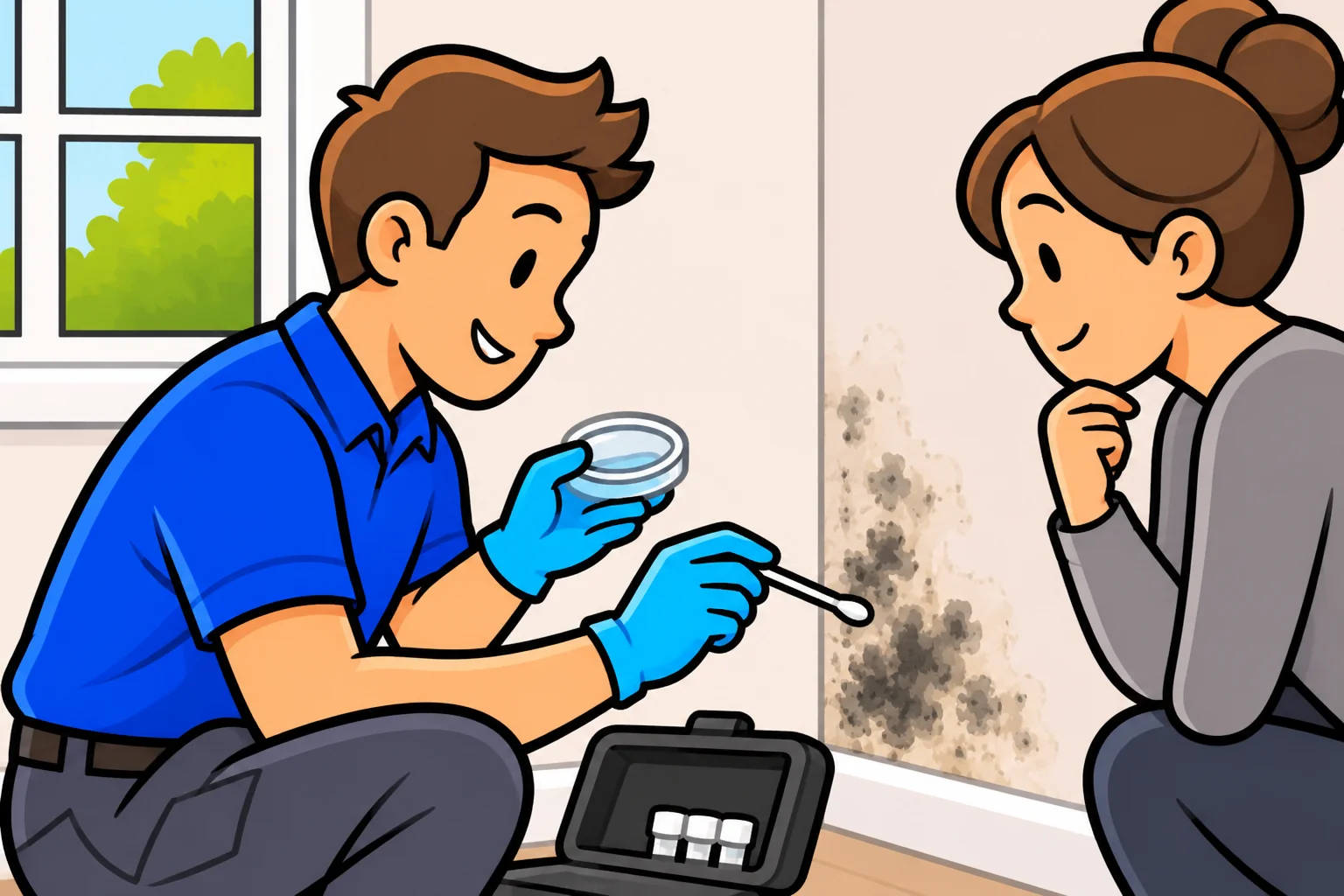
The illustrations show property assessment and sampling topics, not a visual species guide or a promise that one test characterizes a Garden City house. The plan should identify the question, collection locations and relevant conditions, then relate laboratory findings to accessible observations. Testing can inform source correction, further investigation or a separate remediation discussion; it does not itself dry a wall, repair a leak or establish every concealed layer's condition.

Reviewing visible and moisture conditions

Discussing air-sampling questions
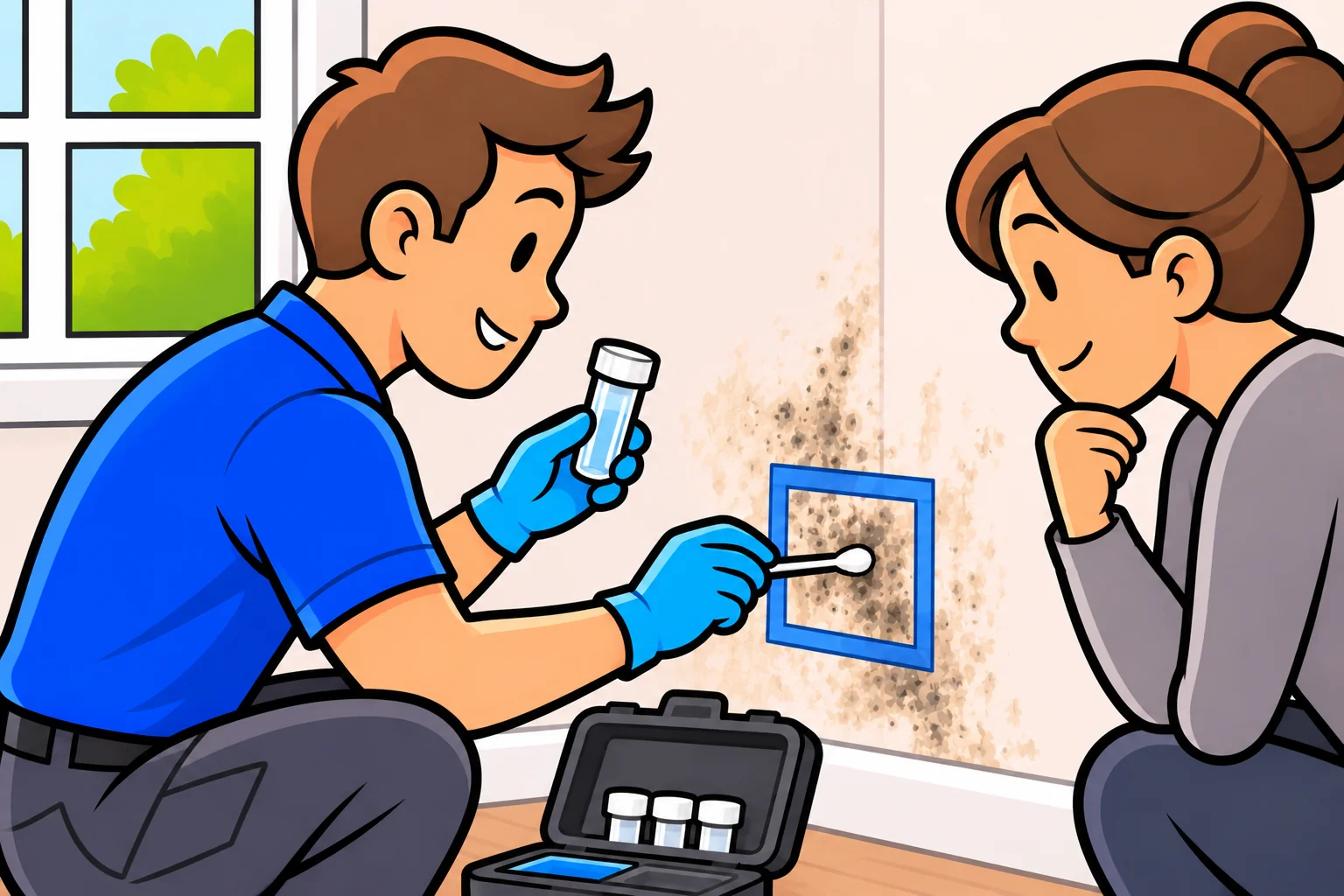
Assessing a surface-sampling location

Explaining findings and their limits
Inspection and testing are distinct
Define the workAccessible observations, moisture information and samples provide different evidence and should not be treated as interchangeable.
Results need site context
Match the site conditionsA sample represents a location and collection conditions, not every concealed surface or future state of the building.
Moisture correction still matters
Plan the next stageTesting cannot repair the source; any remediation discussion should remain connected to the actual water or humidity problem.
Serving Garden City and Nearby CommunitiesMold Testing in Garden City
Garden City is within Disaster Cleanup's mold-testing coverage, and our office is here at 5332 N Sawyer Ave, STE 120. We discuss investigation needs for homes near the Boise River Greenbelt, residences in Riverside Village and properties along Chinden Blvd, as well as nearby Boise, Meridian, Eagle, Star and Kuna. Give the actual location, authorized contact and requested documentation. Coverage does not imply a promised laboratory turnaround or that every inquiry requires samples.

Discuss Your Garden City PropertyRequest a Free Inspection
Ask about a free initial inspection for a Garden City moisture or mold concern, then clarify whether sampling would answer a useful question. Review what a proposed investigation can and cannot show. Call (208) 999-2353 any time, or use the form. Leave suspected growth undisturbed.
Call (208) 999-2353Client ReviewsWhat People Say About Us
Disaster Cleanup is 5-Star Rated on Google


Frequently Asked Questions
How can mold testing help with a Garden City moisture concern?
Testing is useful when a specific sample can inform a building decision, such as whether an accessible stain or a defined area needs further work. It is not a substitute for describing the moisture history or a way to diagnose someone's health. We first discuss whether sampling would change the next step.
Is a musty room near the Greenbelt enough reason to buy an air test?
A musty odor is a reason to discuss the property, including homes near the Boise River Greenbelt, but it does not by itself require a particular air sample. Describe the history and the decision you need to make. Moisture assessment and safe observations often come before any laboratory work.
Can a photograph identify black mold in a Garden City bathroom?
No. Color and a photograph cannot reliably identify a species or the condition behind the finish. Share the moisture history and what you can see from a safe location. The discussion should focus on the building question, not on naming a mold from a picture.
Does a free Garden City inspection include laboratory analysis?
No. A free initial inspection discusses accessible observations and whether sampling would be useful. Laboratory analysis, when authorized, is a separate step with its own scope and charges. Ask what a proposed test would support before agreeing to it.
How should a buyer describe a mold-testing request in Riverside Village?
Explain the exact question, any contract deadline and which areas are of concern. A closing request still needs a useful building question. Identify who can authorize entry to the Riverside Village property or any similar Garden City home being sold.
What if an earlier report found mold before repairs?
Bring the report and describe what was repaired afterward and which symptoms remain. A new sample plan should address the open question rather than repeat a test that will not change the decision.
Can Garden City testing determine why someone has symptoms?
No. Property findings describe building conditions under the collection circumstances. They are not a medical diagnosis. Health questions belong with an appropriate medical professional, separate from the inspection or any laboratory work.
Will ordering samples commit me to remediation?
No. Sampling, when authorized, is a separate investigative step. Any later remediation or repair would be discussed on its own, with a defined scope. Repair work, if you choose to proceed, is backed by a 1-year warranty. You decide whether to move forward after the findings are explained.