Garden City, IdahoFire and Smoke Damage Restoration in Garden City
Fire and smoke damage restoration in Garden City needs a plan for residues, affected materials and any firefighting water after the scene is cleared for access. Disaster Cleanup discusses inspection, temporary protection, cleanup and repair needs for homes, rentals and businesses. Follow emergency instructions first. Do not use fading odor or the absence of flames as permission to reenter, run damaged equipment or begin household soot cleaning.
Schedule a Free Inspection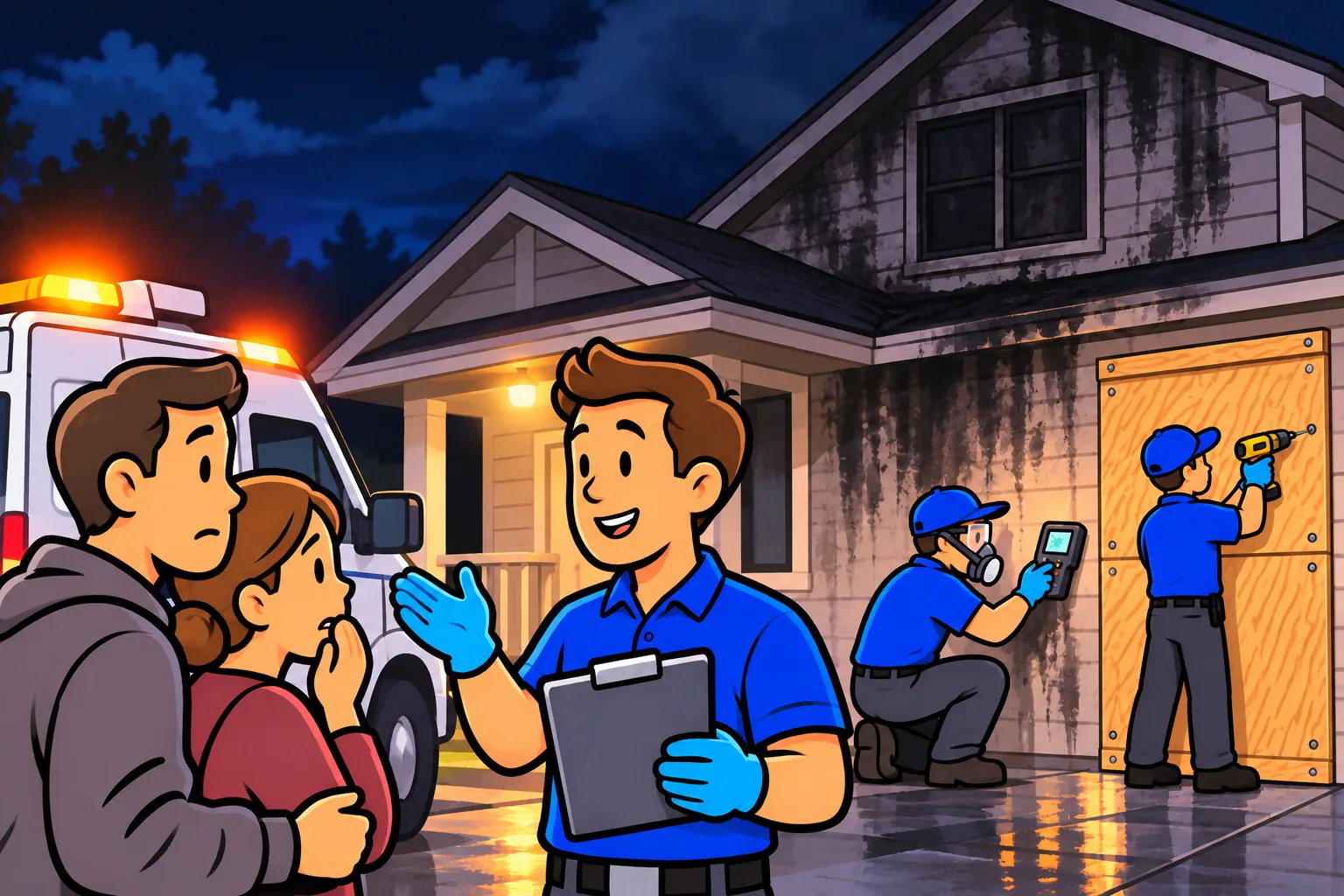
Find out how fast you can get service from your location
FIRE AND SMOKE DAMAGE ASSESSMENT AND RESTORATIONFire and Smoke Damage Restoration for Garden City Properties
A kitchen fire in a Riverside Village home can affect a different mix of finishes and concealed layers from smoke entering a shop or office along Chinden Blvd. Those settings frame questions, not a diagnosis based on the neighborhood. Explain the actual event, where residues appeared and which rooms were accessible. The assessment should connect observations to cleaning and material decisions rather than assume every wall, floor and belonging responds to one method.
Smoke concerns may follow an internal fire or an outside event without flame damage inside, including smoke that travels between close buildings near the Boise River Greenbelt. Share what is known about timing, open areas and equipment use, while following current emergency or public guidance. We discuss the restoration question, access limits and any need for moisture or source-system work. A clear sequence distinguishes cleaning from odor-related decisions and later repairs, with the proposed boundary explained before removal or treatment is authorized.
Questions to Discuss at Your Garden City Property
After permission for Garden City access, describe soot on surfaces, odor locations, damaged openings and any water left by response. Do not enter a restricted scene or start household soot cleaning to make the rooms look ready. These observations help plan the visit; they do not by themselves establish what can be cleaned or saved.
- Black, gray or greasy soot on walls, ceilings, cabinets or belongings.
- A persistent smoke smell that remains after the building has aired out.
- Discoloration, blistered finishes or heat damage around affected rooms.
- Wet flooring, damp drywall or other moisture left after firefighting.
- Charred materials, damaged openings or areas that cannot be safely used.
- Smoke residue around vents or in rooms away from the original fire.
What Happens After You Call
When you call (208) 999-2353 about fire or smoke damage, here is what happens next.
- A live team member listens to what happened, confirms the location and asks about immediate access or safety concerns.
- We coordinate a visit and safe access with you after the property has been cleared for entry.
- We explain a practical plan for the fire, smoke and water damage present.
- Identify affected areas
- Review cleanup priorities
- Discuss repairs and documentation
We explain the proposed work in plain language and help document the damage for your insurance claim.
- The crew starts the agreed work to secure affected areas, address moisture and remove fire or smoke residues.
- Cleaning and repairs move forward according to the damage and agreed scope, with updates about the next steps.
Fire and Smoke Situations We Discuss in Garden City
Kitchen and living-area fires
Cooking and heating incidents can leave residues on cabinets, walls and contents even when flame damage is limited. Explain which rooms were open and whether a suppression system or extinguisher was used. Visible soot in one room does not describe every affected finish.
Smoke in a Riverside Village home or unit
In Riverside Village and similar Garden City housing, smoke can move through a shared wall, corridor or HVAC path. Identify the authorized building contact and which neighboring spaces were involved. A unit address helps with access; it does not establish the origin of the smoke.
Commercial properties along Chinden Blvd
A fire or smoke event in a shop, restaurant or office along Chinden Blvd can involve customer areas, inventory and reopening questions. Identify who can authorize entry and which spaces must remain closed. Contents, building finishes and odor concerns may need separate decisions.
Firefighting water and other moisture
Water used to control a fire can wet floors, walls and insulation that also carry residues. Drying and smoke cleanup are related but not identical tasks. Describe where water was applied or accumulated without entering unsafe areas to collect more detail.
Smoke without an interior flame
An electrical event, a neighboring fire or outdoor smoke can leave odor and residues inside a Garden City property, including homes near the Boise River Greenbelt, without obvious charring. Share what is known about timing and openings. Do not assume the absence of flames means the air and surfaces need no assessment.
Openings that need temporary protection
Broken windows, doors or roof openings can leave a property exposed after a fire. Temporary board-up or covering may be needed before detailed cleaning. Follow official access instructions and do not enter to begin your own repairs or packing unless the scene has been released and it is safe to do so.
What to Do First: Safety Steps
If there is an active fire, heavy smoke or an immediate threat, leave the building and call 911. Restoration comes after emergency response and clearance for access. Do not reenter simply because the flames are gone.
- Wait for the fire department or appropriate authority to confirm that entry is allowed.
- Keep children, pets and other occupants out of affected areas.
- Do not turn on damaged electrical equipment or run the HVAC system until it has been checked as appropriate.
- Avoid wiping soot, disturbing damaged materials or attempting strong chemical or ozone treatments yourself.
- Photograph damage only from areas you can safely access, and contact your insurer about the claim process.
- Call Disaster Cleanup to discuss inspection, temporary protection and cleanup planning.
The Fire and Smoke Damage Restoration Sequence for Your Garden City Property
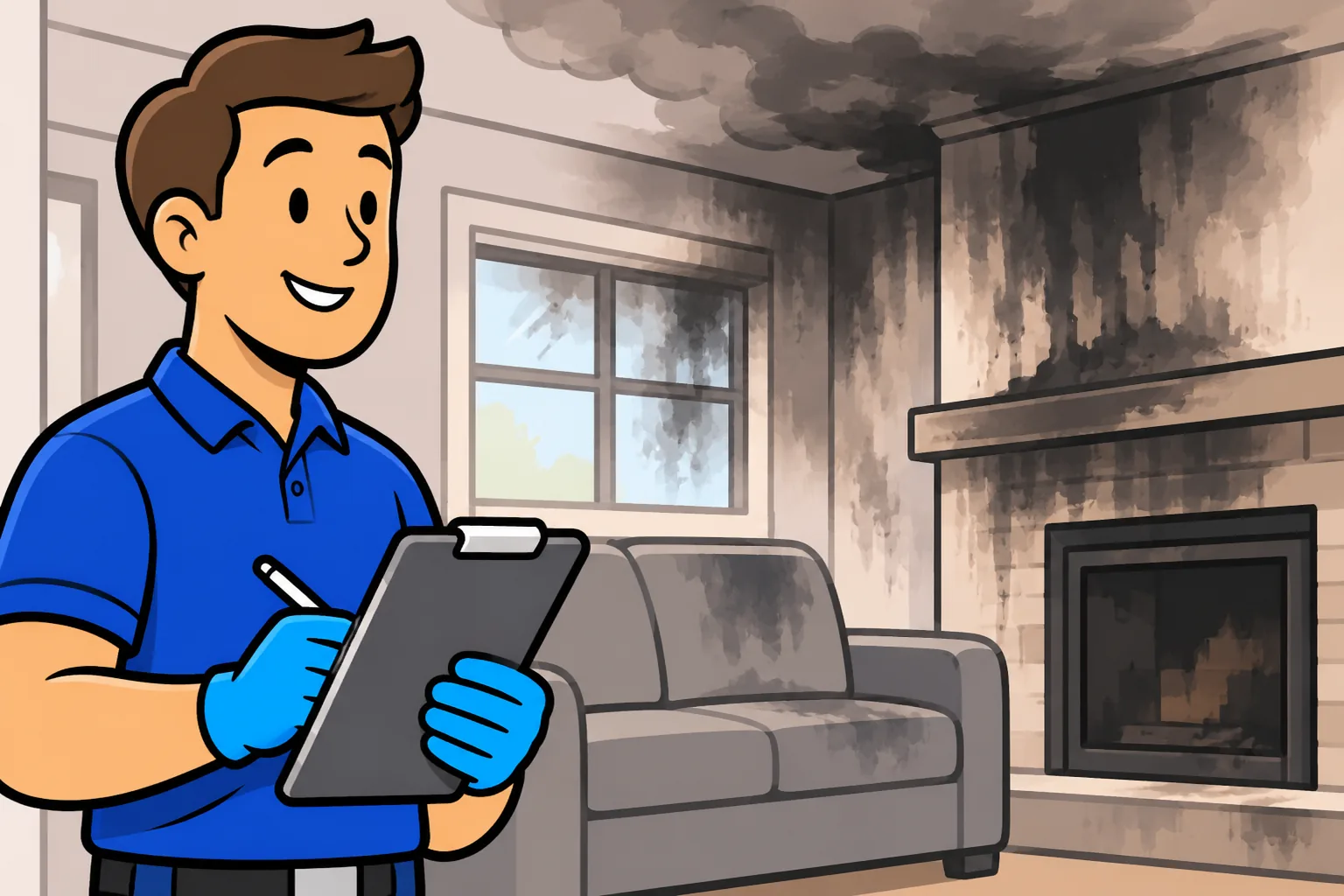
1. Inspection and Damage Documentation
Review the actual Garden City incident, access instructions and known affected materials before inspection. Document accessible residue, contents and water questions with their limitations instead of inferring a whole-building condition from the neighborhood or one visible mark.
2. Securing and Protecting the Property
When needed, temporary board-up or other agreed protection can help secure damaged openings and limit further exposure. We explain which immediate measures fit the condition of the property. This stage is about stabilizing the situation, not treating a temporary repair as the finished restoration.
3. Addressing Firefighting Water
Water used to extinguish a fire can affect flooring, walls and concealed spaces. Where that damage is present, extraction and drying may be needed alongside fire cleanup. Checking affected materials helps guide the drying work rather than relying only on whether a surface looks dry.
4. Soot and Smoke Residue Cleanup
We assess the residue and the surfaces involved before selecting the cleaning approach. Walls, ceilings, fixtures and contents may not respond to the same method. Materials that cannot reasonably be cleaned or have been damaged beyond repair may need removal and replacement as part of the agreed scope.
5. Odor and Contents Evaluation
Smoke odor treatment starts with identifying affected materials and removing the residue or source where possible. We discuss cleaning and replacement decisions for impacted belongings and finishes. Masking an odor is not a substitute for addressing the underlying smoke damage.
6. Repairs and Restoration Planning
Explain the Garden City cleanup, drying and construction handoff, including material decisions and remaining access limits. Clarify source-system and contents questions still needing authorization so equipment removal or a temporary repair does not imply the entire loss is complete.
A Clear Plan for Your Property
A Garden City restoration proposal should explain the evidence behind the work boundary and material decisions. Ask what was examined, which surfaces may respond differently and what remains inaccessible. This is particularly useful where older construction and later remodels meet, or where the incident involves residues and odor without obvious flame damage in every room.
Disaster Cleanup is a veteran-owned company based in Garden City at 5332 N Sawyer Ave, STE 120. We discuss related board-up, water response and construction needs, with the urgent and later stages kept clear. Source-system checks and occupancy questions may involve other appropriate professionals. We help describe the proposed restoration work and documentation, while the owner and insurer retain their respective decisions about belongings, authorization and coverage. All of our work is backed by a 1-year warranty.
How Long Does Fire Damage Restoration Take?
The timeline varies with the amount of damage, the materials affected and whether rebuilding is required. A limited smoke cleanup is different from a property with structural damage and substantial firefighting water. Access, drying needs, material availability and insurance decisions can also influence the schedule. We discuss the expected stages after inspecting the property instead of promising the same completion date for every fire.
Insurance: Documentation and Next Steps
Fire and smoke losses may be covered when the cause and damage fall within your policy, but coverage, limits and deductibles vary. Contact your insurer early and keep records of the loss. We can provide damage documentation and discuss the proposed restoration work with your adjuster. Your insurer determines coverage; an inspection or estimate is not a guarantee that every item will be paid.
Safe Next Steps for Fire and Smoke Damage Restoration in Garden City
Leave and call 911 for an active fire, heavy smoke or immediate danger. For a released Garden City scene, follow access restrictions and keep occupants and pets away from affected spaces. Do not turn on damaged electrical equipment or restart HVAC to see whether the smell improves. Explain urgent protection needs and known conditions from safety; take photographs only where entry is permitted and contact the insurer about its documentation requirements.
Common Fire and Smoke Cleanup Situations
- Kitchen fires with smoke and soot in nearby rooms.
- Fire-damaged living spaces, fixtures and household contents.
- Smoke odor that persists after the source fire is out.
- Wet flooring or walls after firefighting.
- Damaged openings that need temporary board-up before repairs.
Fire and Smoke Damage RestorationCleanup and Restoration Services
The illustrations show fire, smoke and material-restoration topics rather than an actual Garden City loss or a guarantee that every item can be cleaned. A useful plan relates residue, surface compatibility, contents and any firefighting water to the proposed work. Odor treatment follows the affected-material question; a fragrance, coat of paint or visually cleaner finish should not replace an account of what was addressed and what remains before rebuilding.
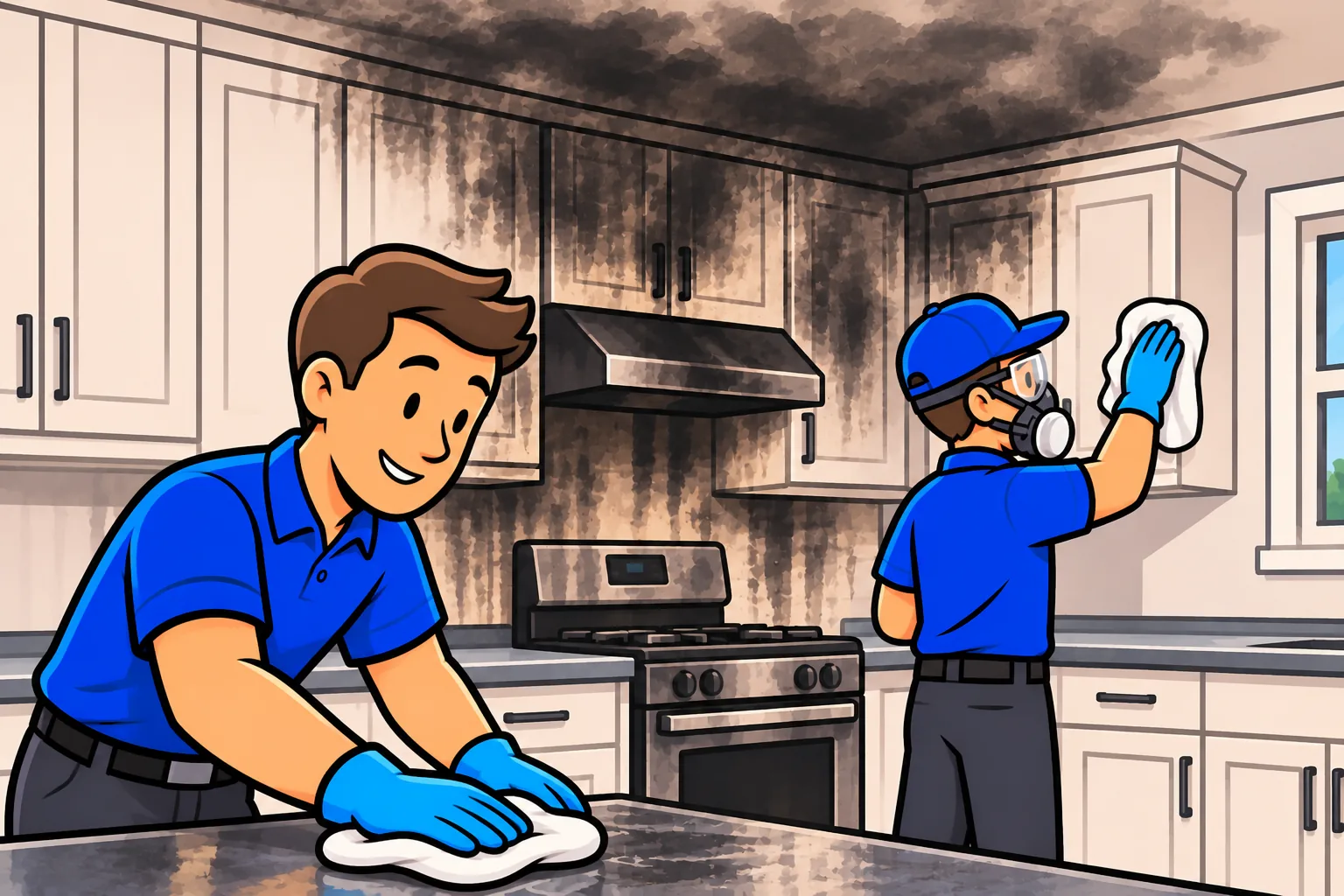
Kitchen fires and smoke residue
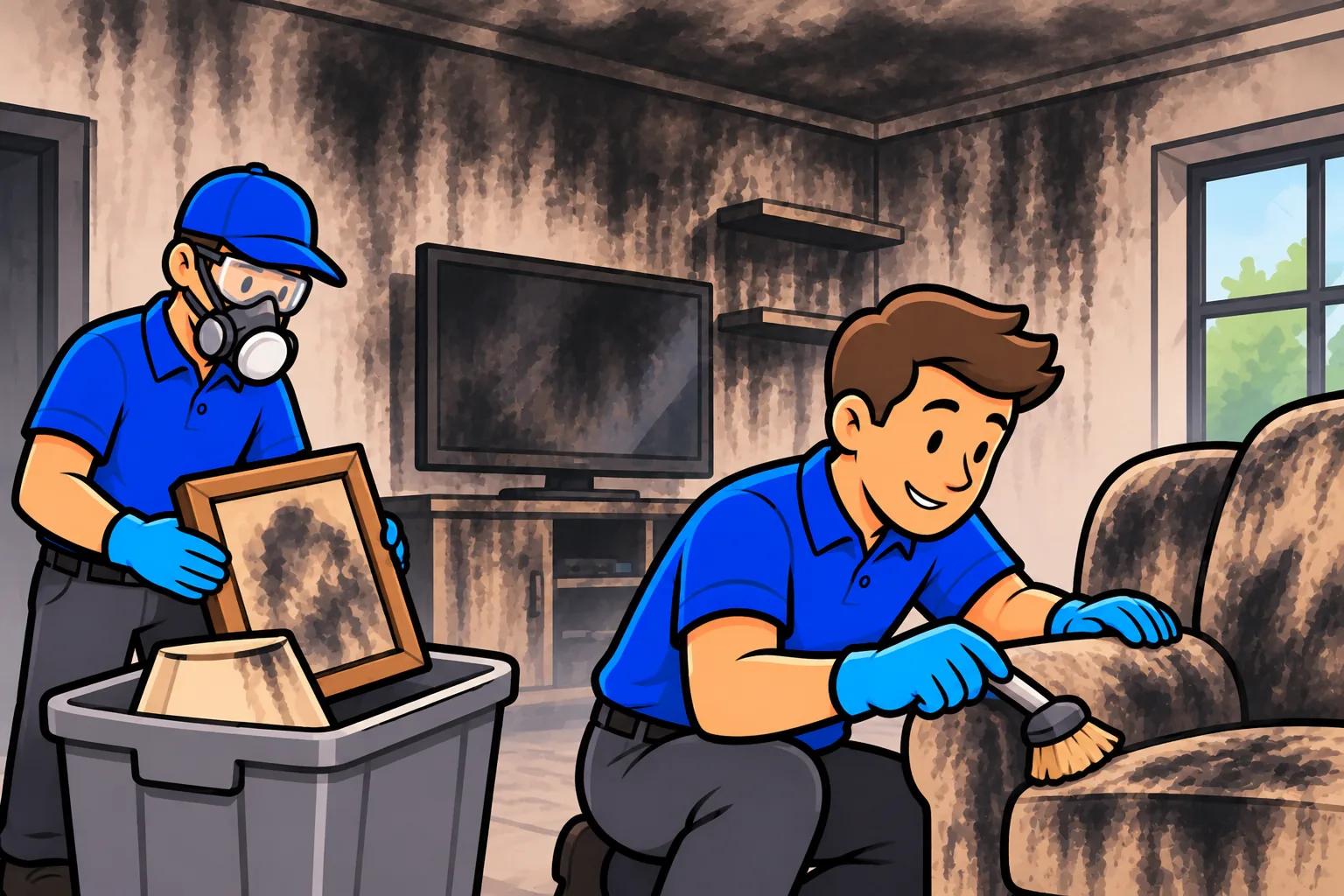
Fire-damaged rooms and belongings
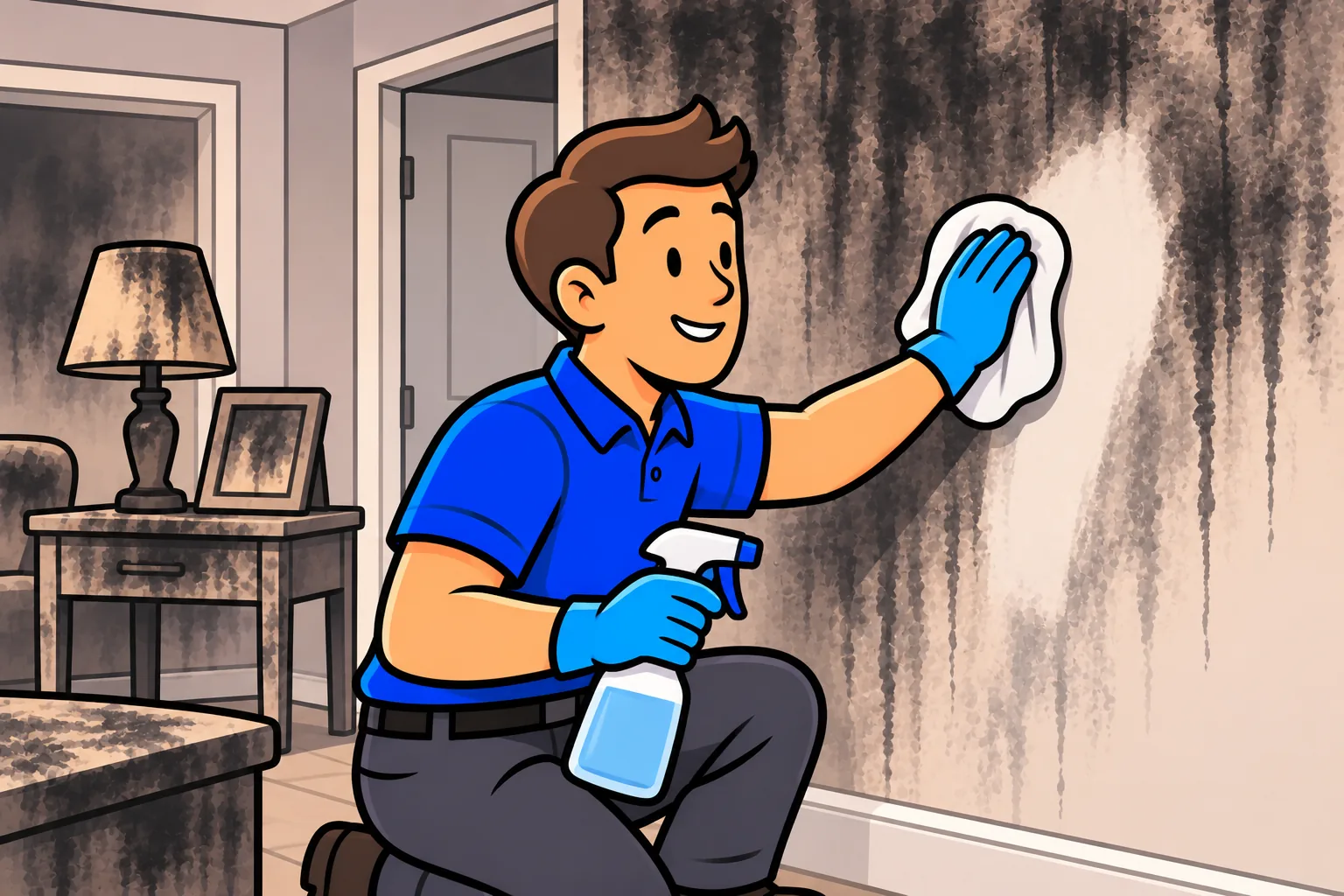
Soot buildup on walls and surfaces
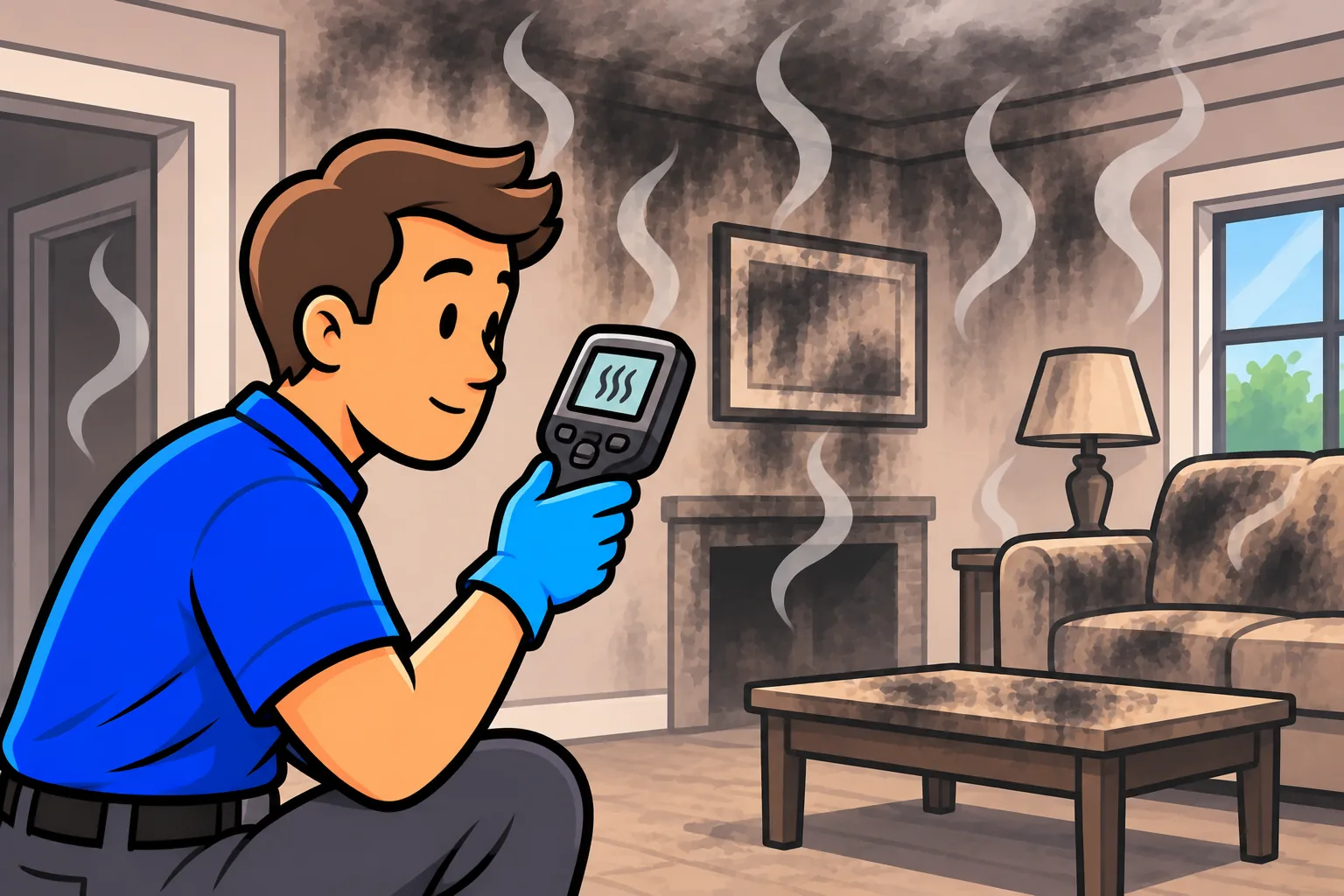
Smoke odors throughout the property
RESPONSE AND RECOVERY
Starting With the Immediate PrioritiesAfter access is permitted, the first work may include protecting damaged openings, addressing water and identifying the areas that need cleanup. We discuss the immediate priorities with you so the next step is based on the condition of the property.
DAMAGE ASSESSMENT
Looking Beyond the Burned AreaSmoke and soot may affect rooms or belongings away from the fire. We inspect accessible areas, document what we find and explain the proposed cleaning or replacement needs. The visible flame damage is only one part of that assessment.
RESTORATION AND REPAIRS
Planning the Work That Follows CleanupOnce cleanup and any necessary drying are complete, damaged finishes and materials can be addressed through the repair scope. We discuss restoration needs and the expected stages so you understand how the property moves from cleanup toward usable space.
Serving Garden City and Nearby CommunitiesFire and Smoke Damage Restoration in Garden City
Disaster Cleanup works throughout Garden City from our office at 5332 N Sawyer Ave, STE 120, including homes near the Boise River Greenbelt, properties along Chinden Blvd and neighborhoods such as Riverside Village, plus nearby Boise, Meridian, Eagle, Star and Kuna. Provide the actual location, released areas and authorized contact so the visit and proposed work can reflect the incident, safe access and the people responsible for building and contents decisions. Coverage does not imply a promised arrival at every address.
Discuss Your Garden City PropertyRequest a Free Inspection
Discuss a free initial inspection after a Garden City fire or smoke concern and explain whether responders have allowed entry. Share the event, affected rooms and authorized contact. Call (208) 999-2353 any time, or use the form, and ask what the proposed cleanup and later repairs include before work is authorized.
Call (208) 999-2353Client ReviewsWhat People Say About Us
Disaster Cleanup is 5-Star Rated on Google


Frequently Asked Questions
What should I do after the fire department leaves my Garden City property?
Follow the access instructions you were given and do not reenter if the scene is still restricted. Keep occupants and pets out of damaged areas, avoid running HVAC or cleaning soot yourself and arrange a free inspection once entry is allowed. Call (208) 999-2353 if you need help planning the next safe step.
What does a free fire-damage inspection help establish?
It is a starting point for discussing accessible residues, firefighting water, contents and proposed cleanup or protection steps. Ask which areas can be assessed and which questions remain. A free inspection is not permission to discard belongings or begin an unlimited reconstruction project.
What factors influence Garden City fire-restoration pricing?
The amount of residue, affected materials, firefighting water, access, contents handling, odor-related work and later repairs influence the proposed scope. Board-up, source-system work and reconstruction can be separate questions. Ask what is included rather than rely on a phone figure or another property as a price for yours. No project price is quoted from the city name alone.
Can you assess smoke residue when there was no fire inside?
Yes. Smoke from a neighboring incident, an electrical event or outdoor smoke can still leave residues and odor in a Garden City home or business, including properties near the Boise River Greenbelt. Describe the timing and which rooms were open. The assessment should not assume that the absence of flames means no work is needed.
Should I wipe soot from walls or cabinets before the visit?
No. Household wiping can spread residues and make later cleaning more difficult. Leave soot, film and damaged materials in place unless a responder has given a specific safety instruction. Photographs from a safe, released area are enough to begin the discussion.
Does smoke cleanup also address water from firefighting?
Water used to control a fire can wet floors, walls and insulation that also carry residues. Drying and smoke cleanup are related but planned as distinct parts of the work. Explain where water was applied or collected so both concerns can be discussed.
When can repairs start after a Garden City fire?
Repairs should follow the agreed cleanup, drying and material handoff, and any remaining source or system work. A freshly painted wall should not conceal an unresolved residue or moisture question. Ask what conditions are required before reconstruction begins. Our repair work is backed by a 1-year warranty.
How does the insurance process fit restoration planning?
Your insurer determines coverage from the policy and the actual event. We document the damage, work with your insurance company and adjuster, and you can pay after the claim closes. Keep official reports, safe photographs and the proposed scope. The cleanup proposal describes the work; it does not decide coverage.