
Garden City, IdahoWater Damage Restoration in Garden City
Water damage restoration in Garden City needs a plan for the building materials as well as the visible water. Disaster Cleanup is based here at 5332 N Sawyer Ave, STE 120, and discusses extraction, moisture assessment, drying and repairs for homes, rentals and businesses. Whether the concern is a wet lower level, a damaged ceiling or an appliance leak, report what is known from safety rather than enter water or start opening finishes to establish the extent yourself.
Schedule a Free Inspection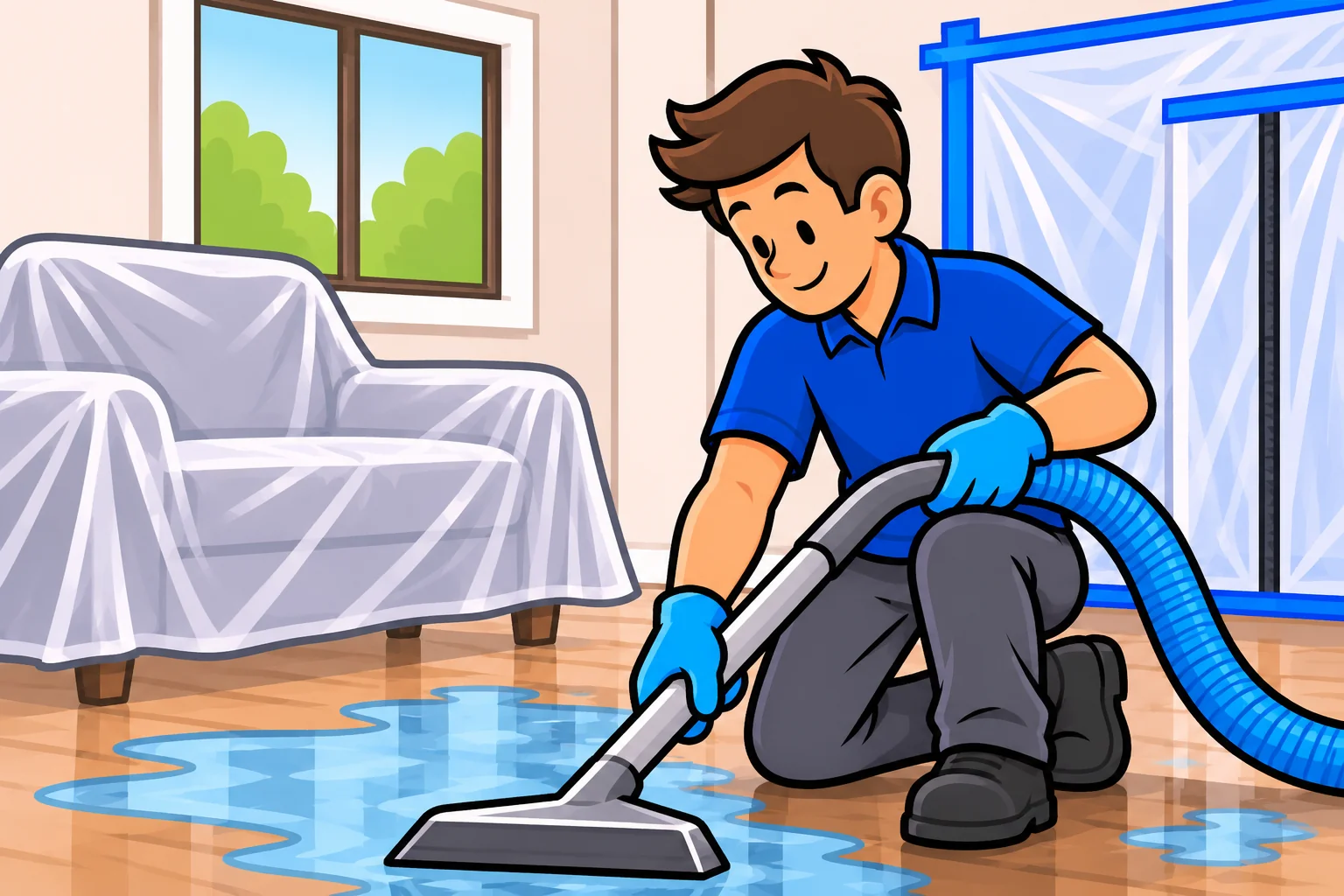
Find out how fast you can get service from your location
WATER-DAMAGE ASSESSMENT AND RESTORATIONWater Damage Restoration for Garden City Properties
Garden City properties along the Boise River Greenbelt, on Chinden Blvd and in neighborhoods such as Riverside Village do not all contain the same floor or wall assembly. A lower-level finish can conceal damp layers, while an upstairs leak can affect a ceiling and adjoining rooms before the source is obvious. The useful starting point is the actual water route and material history, not a diagnosis based on the street or the river nearby.
Explain whether water entered after weather, came from a supply connection or backed up through a drain. Mention previous repairs and any rooms with later symptoms. We then discuss how accessible water removal connects with checks of remaining materials and the next repair stage. A dry-looking surface should not be used to assume the subfloor, insulation or cavity behind it is ready to cover.
Signs to Discuss at Your Garden City Property
A Garden City owner may first notice a ceiling stain or a musty lower room rather than standing water. Record the sequence from areas you can safely reach. The signs below can help frame that discussion; they do not by themselves identify the source or decide which materials can stay.
- Standing water spreading across a room
- A failed supply line or appliance hose
- Saturated carpet and wet baseboards
- Water entering walls or adjoining rooms
- Pooling around equipment or utilities
- New water damage after firefighting or a storm
What Happens After You Call
We first discuss the property location, known conditions and authorized access. The five stages below connect assessment with an understandable work scope and the decisions that follow.
- Tell us where water is present, whether it is still entering and what can be observed safely.
- We discuss who can address the leak and how the work area can be reached.
- The amount of water, surface types and possible contamination guide the removal plan.
- We explain why extraction is followed by checks of affected material layers.
- The next stage depends on measured conditions and any materials requiring removal or replacement.
Water Situations We Discuss in Garden City
Homes near the Boise River Greenbelt
Properties close to the Greenbelt can have lower-level or crawl-space moisture histories that differ from a mid-block house farther from the river. Describe earlier seepage, flooding or repairs without assuming the river is the current source. The actual event, finishes and access guide the assessment.
Roof and ceiling water routes
A ceiling mark may appear away from the exterior entry point or a plumbing connection above it. Note its relationship to rain, snow or fixture use. Do not climb into a wet attic or open the ceiling to trace the path before the visit.
Water beneath floor transitions
Hardwood, carpet and other finishes can meet at doorways while water moves below them. The visible pool in one room may not describe the full assembly involved. Explain where water was first seen and which rooms later felt damp or uneven.
Apartment and townhome settings in Riverside Village
In a Riverside Village unit or similar Garden City housing, water can travel to a neighboring floor or a shared wall before anyone notices. Identify the authorized contact for the building and which spaces were affected. A unit address helps with access; it does not establish the source.
Appliance and fixture failures
A water heater, toilet supply or laundry connection can release water into several materials with different drying access. Source repair is one task; evaluating nearby floors, cabinets and wall layers is another. Keep the repair information and describe later symptoms.
Commercial spaces along Chinden Blvd
A release in a shop, office or restaurant along Chinden Blvd can involve customer areas, stock and after-hours access questions that a house does not. Identify who can authorize entry and which areas must stay in use. Water from a drain or from outside the building can also raise different contamination questions from a recent supply leak.
What to Do First: Safety and Preparation
Do not step into water to reach a breaker, appliance or shutoff valve. A supply valve should be used only when it can be reached safely without entering the affected area. Keep people and pets out of unknown water, avoid household extraction equipment and contact emergency services or the appropriate utility for immediate electrical or structural danger.
Electrical danger can exist even when the water appears clear and ordinary lights remain on. An owner should not be asked to prove that equipment is safe before requesting help. Keep the area isolated and explain the locations of outlets, appliances or mechanical equipment without entering the water to inspect them.
- Do not reach into water to unplug equipment.
- Keep contaminated belongings out of dry rooms.
- Explain whether the source remains active.
- Take photographs only from a safe accessible position.
The Restoration Sequence for Your Garden City Property
1. Assess safety and active water
Begin with the actual Garden City property rather than a neighborhood assumption. Describe the event, active water and restrictions so source control and safe entry can be coordinated before extraction or equipment placement is discussed.
2. Map the affected area
Visible water and appropriate moisture checks help identify the involved materials. Adjacent rooms and concealed interfaces may need consideration because water movement does not always follow the boundaries apparent from the surface. Floor transitions, cabinet bases and adjoining rooms can provide useful clues about where water traveled.
3. Remove accessible standing water
Extraction equipment is selected for the site and material conditions. Removing bulk water is an important first stage, but it does not establish that carpet backing, subfloor or wall cavities are ready for repairs. The affected material and access determine the extraction approach rather than depth alone.
4. Evaluate retention and access
Contamination and material condition guide which finishes can remain and which may need controlled removal. The decision should be explained before assuming every wet material can be dried in place. Explain proposed material removal before an owner assumes that all finishes will remain intact.
5. Set and monitor drying
Drying methods follow the materials and affected assembly. Equipment placement and progress checks help assess the response; a fixed equipment rental period alone is not evidence that the required conditions have been reached. Changes in drying response should guide the discussion instead of relying only on elapsed equipment time.
6. Plan the repair handoff
At handoff, ask which components were retained or removed and what remains for the plumber, roofer or rebuilding trade. A finished equipment visit should not be confused with completion of every source repair and replacement finish.
A Clear Restoration Plan for Your Property
A restoration proposal for Garden City should explain the affected assembly rather than depend on broad labels such as basement flood or kitchen leak. Ask which observations support removal, what can be considered for drying in place and where access remains limited. Those distinctions make the work understandable when an older finish meets a newer remodel.
Disaster Cleanup is a veteran-owned company based at 5332 N Sawyer Ave, STE 120 in Garden City. Related water, mold and reconstruction services can be discussed when needed, but each task should still have a clear purpose. Cleanup does not automatically repair the original source, and replacing a visible finish should follow the agreed material and moisture handoff rather than hide uncertainty behind a new surface.
What Affects the Project Schedule?
The quantity of water, contamination, material depth and drying response determine the sequence. Current access and availability affect scheduling. No universal arrival or drying-time promise applies to every water emergency, and a lookup estimate is not a guarantee of completion.
Insurance and Project Documentation
Sudden supply failures, storm flooding and long-running leaks may be treated differently under a policy. Notify the insurer as appropriate and retain safe photographs and source-repair records. Extraction, material removal and repairs can be separate coverage questions.
Safe Next Steps for Water Damage Restoration in Garden City
If water is still entering, tell the team that first and explain any electrical or access concerns from a safe location. Do not walk into a basement pool to reach a breaker or collect belongings. A safely reachable source valve may be useful, but no owner should risk exposure to establish the cause. For an immediate danger, obtain the appropriate emergency or utility assistance before treating the situation as an ordinary restoration appointment.
Information That Helps Define the Next Step
- Standing water spreading across a room
- A failed supply line or appliance hose
- Saturated carpet and wet baseboards
- Water entering walls or adjoining rooms
Water Damage RestorationAssessment, Work Planning and Restoration
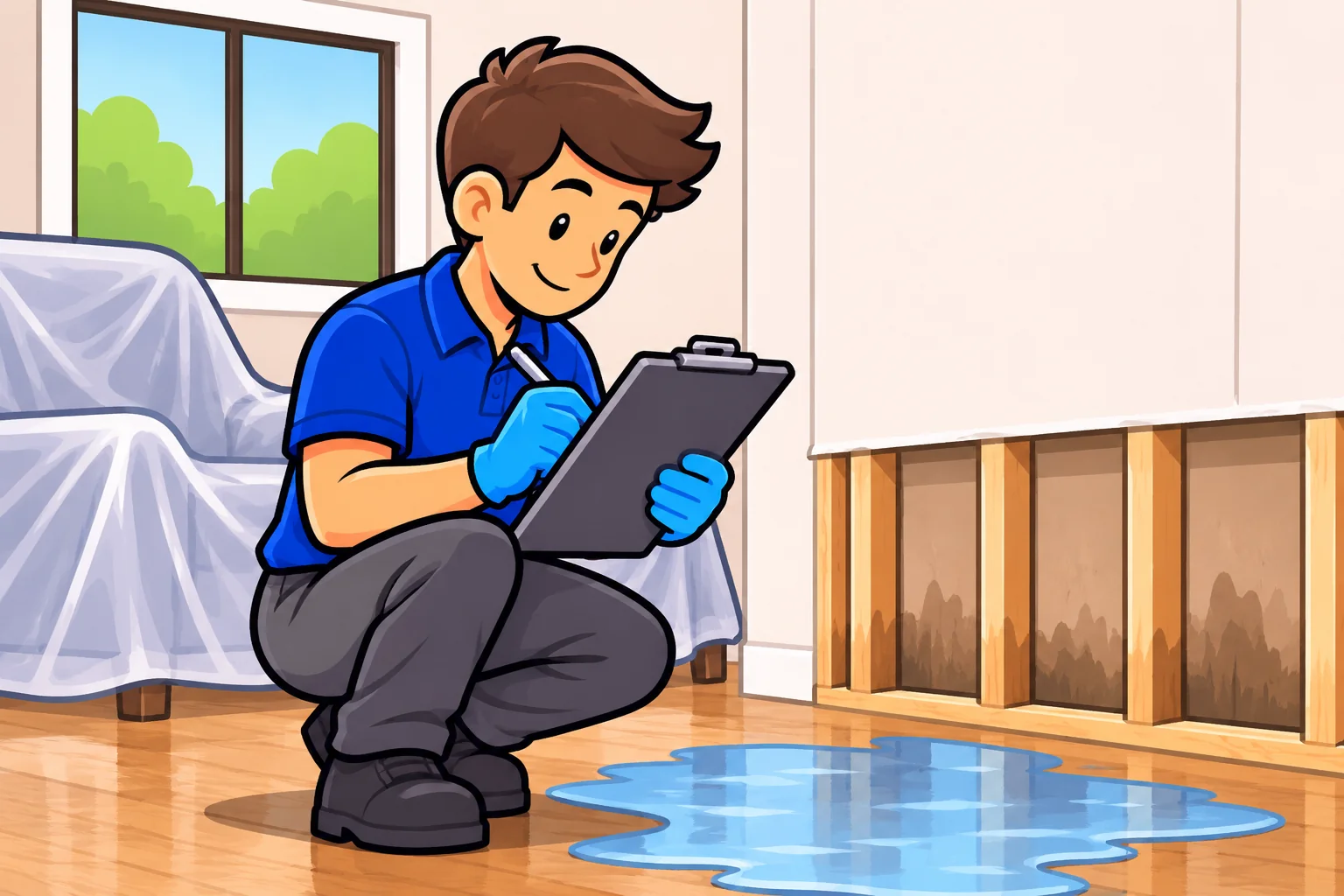
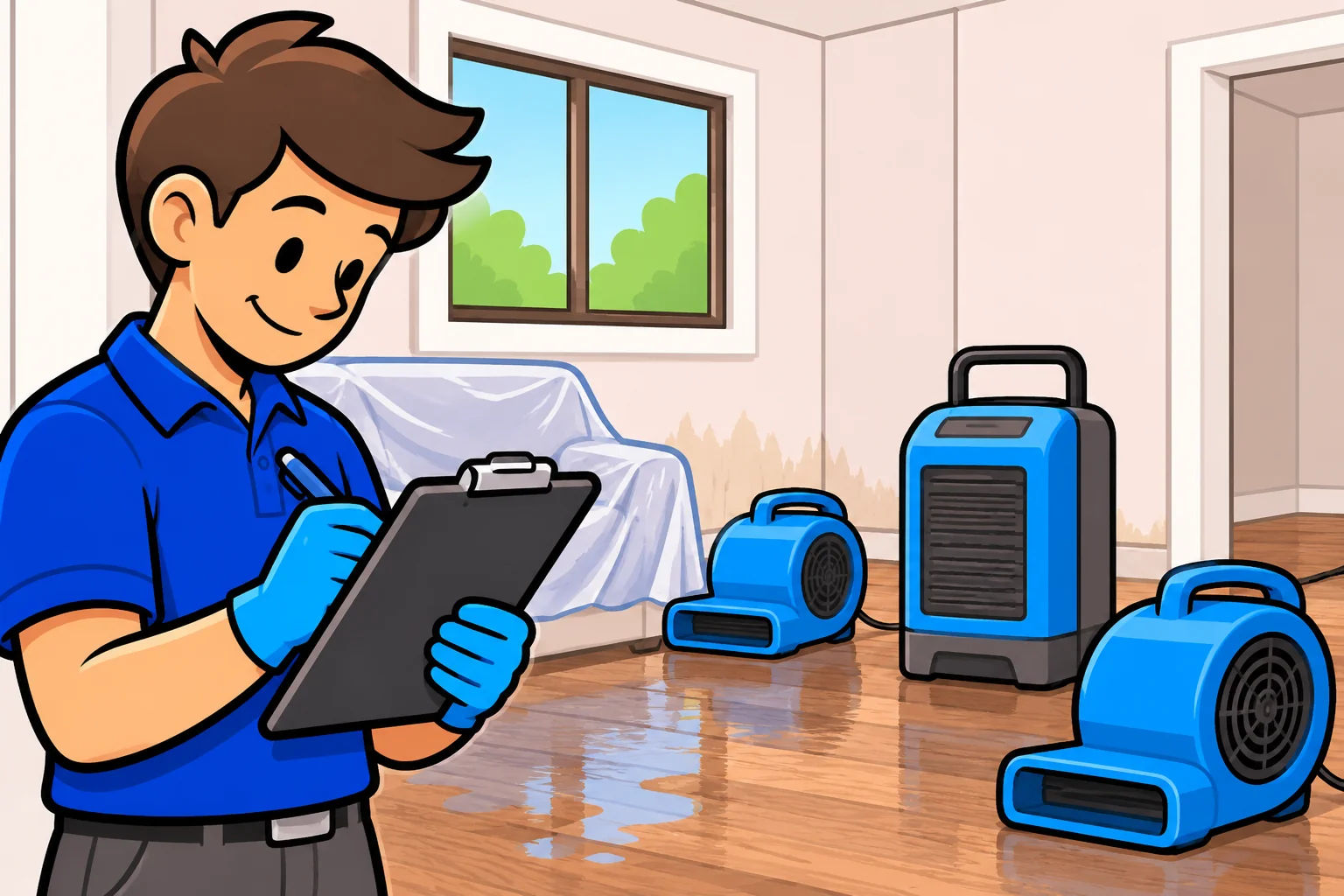
These illustrations show water removal, material assessment and restoration topics relevant to Garden City properties. They do not establish that every floor can be retained or that one drying setup fits every home. Discuss the actual finishes and water history so extraction is followed by appropriate checks of underlying layers. Repair decisions should connect with the source correction and the condition of the assembly, not only the room looking dry after equipment is placed.
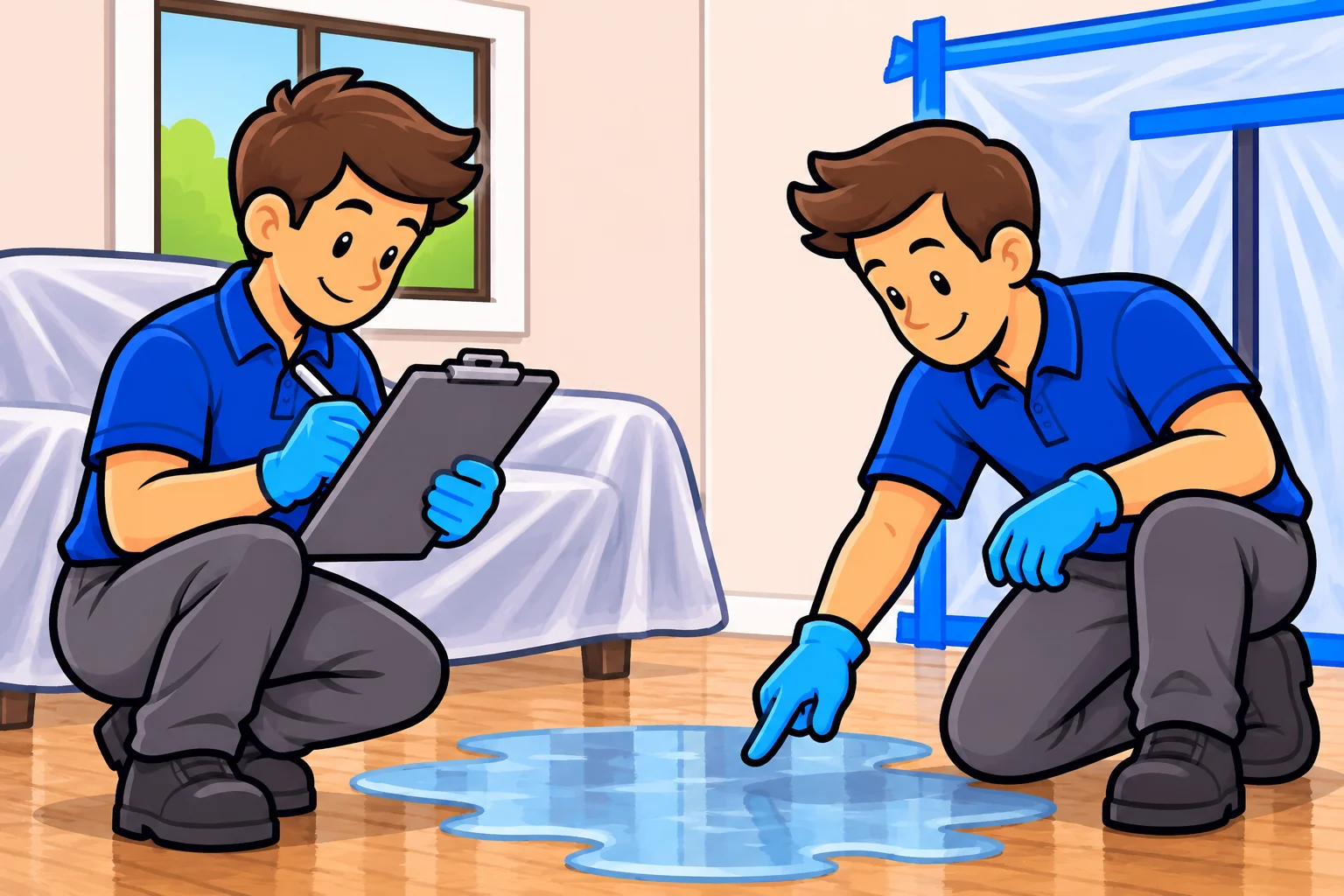
Standing-water extraction planning
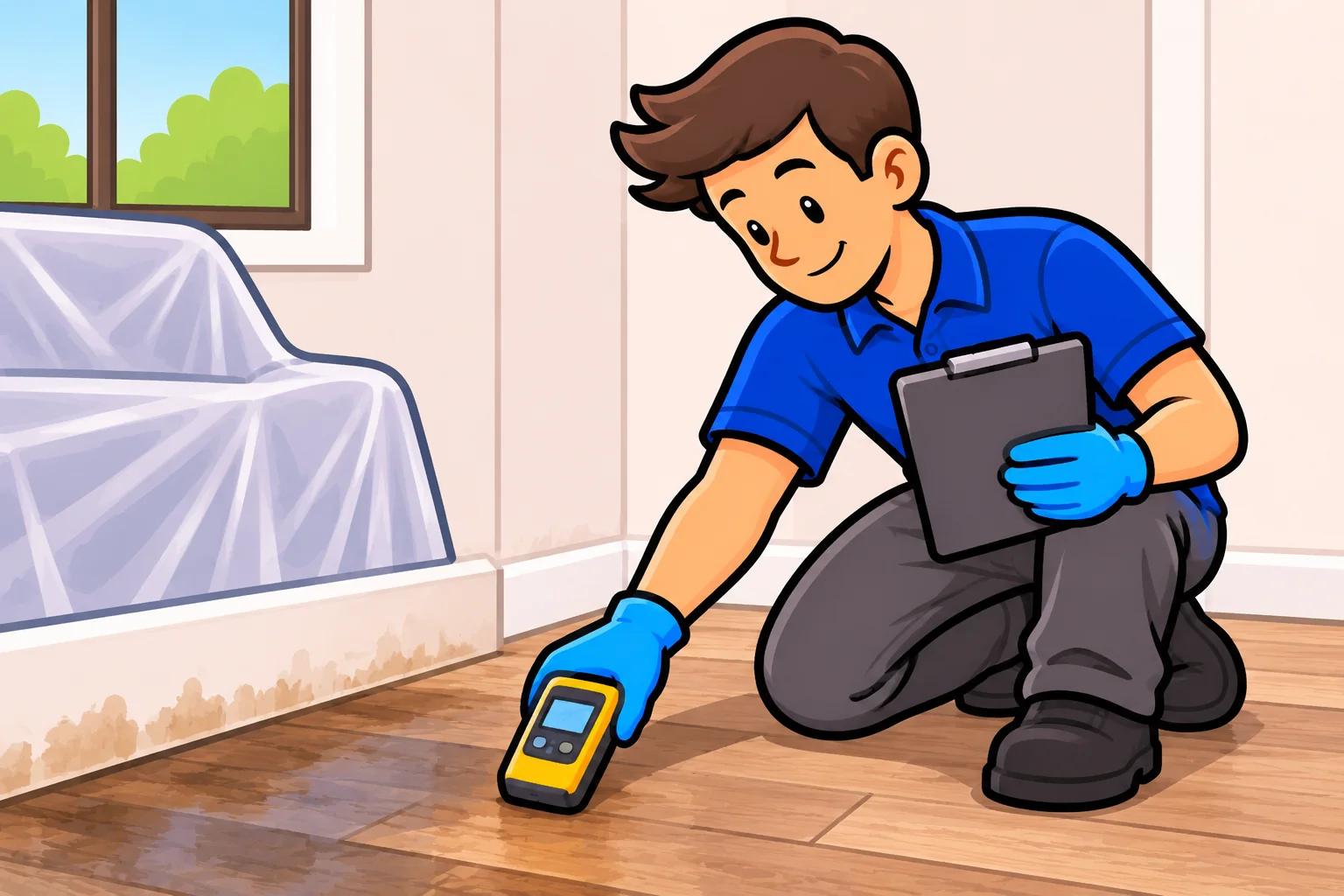
Assessing water-damaged flooring
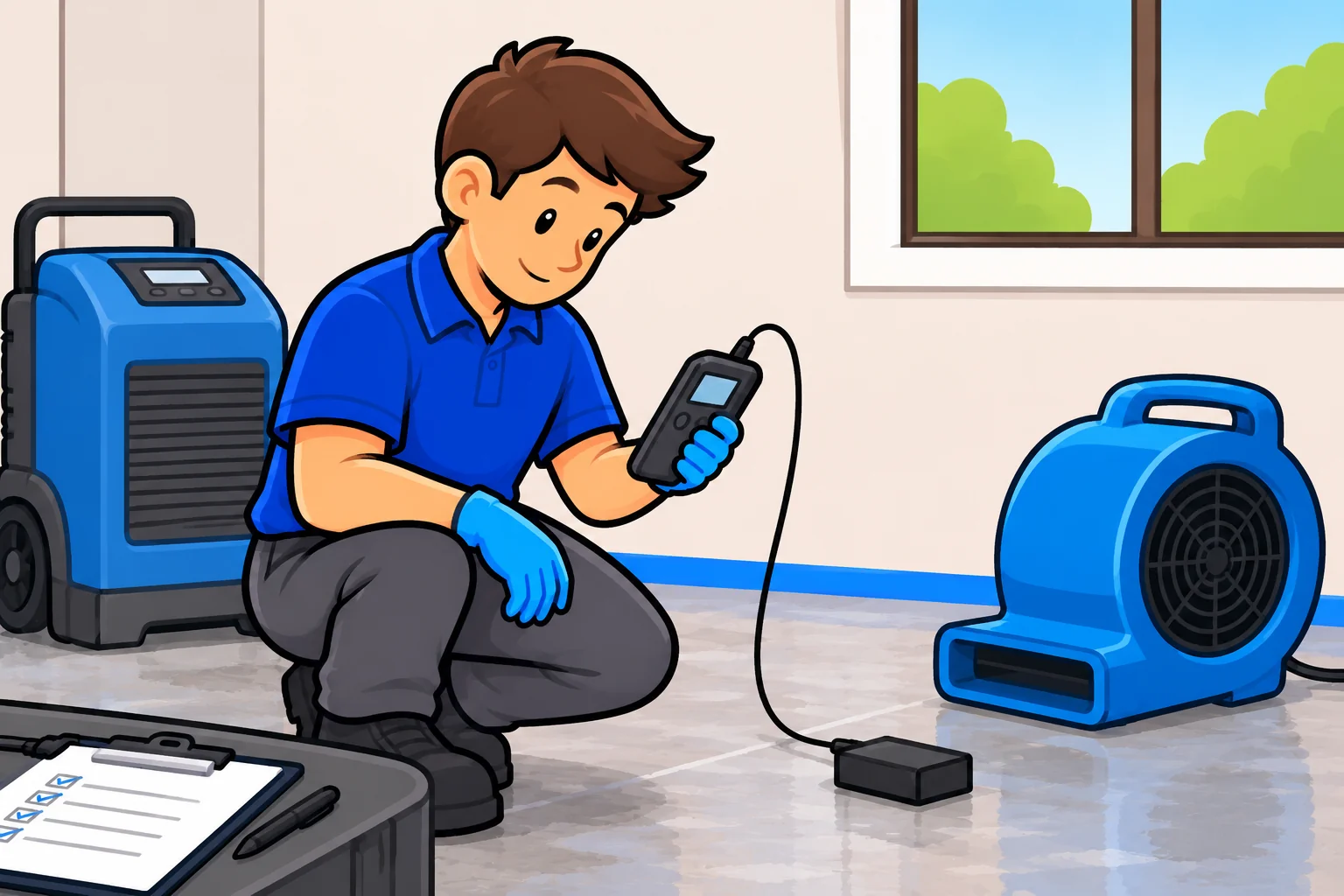
Drying equipment and material checks

Coordinating the restoration handoff
Bulk water extraction
Define the workAccessible standing water is removed as one stage of the restoration plan.
Moisture beyond the visible pool
Match the site conditionsSubfloor, wall bases and concealed interfaces can need further assessment after extraction.
Drying connected to repairs
Plan the next stageMaterial condition and moisture response help determine the appropriate restoration handoff.
Serving Garden City and Nearby CommunitiesWater Damage Restoration in Garden City
Garden City is Disaster Cleanup's home base, and crews work throughout the city, including properties near the Boise River Greenbelt, along Chinden Blvd and in Riverside Village, as well as nearby Boise, Meridian, Eagle, Star and Kuna. An address helps identify the property and arrange access; it does not establish the source or a guaranteed arrival window. Tell us which entrance and rooms are affected, and whether a property manager or another contact must authorize entry or repair decisions.
Discuss Your Garden City PropertyRequest a Free Inspection
Request a free initial inspection for a Garden City water-damage concern and explain the source history, affected materials and safe access. Keep people and pets out of standing water. Call (208) 999-2353 any time, or use the form, and ask what the proposed work includes before authorizing the next stage.
Call (208) 999-2353Client ReviewsWhat People Say About Us
Disaster Cleanup is 5-Star Rated on Google


Frequently Asked Questions
How quickly can you reach a Garden City property?
Our phones are answered live 24/7 at (208) 999-2353. Garden City is our home base at 5332 N Sawyer Ave, STE 120, and we aim to be on site within 1-2 hours, including properties near the Boise River Greenbelt, along Chinden Blvd and in Riverside Village. An arrival window is planned from the actual call and access, not a promise for every address.
What should I do first after water damage in a Garden City home?
Keep people and pets out of standing water, especially near electricity or where the source is unknown. Arrange appropriate help for active water or immediate danger. Describe what you can see from a safe location rather than entering a wet crawl space or opening finishes to document the damage.
What does the free initial inspection help establish?
It is a starting point for discussing accessible observations, known source history and proposed next steps. Ask which areas can be assessed and which questions remain. A free inspection is not authorization to begin removal or a promise about every concealed space.
What affects the cost of water damage restoration in Garden City?
The affected area, material layers, water history, access, removal or retention decisions and drying needs influence the proposed scope. Source repairs and reconstruction can be separate questions. Ask what is included instead of relying on a phone figure or a neighbor's project as a price for your property.
Can flooring be dried without replacing all of it?
Retention depends on condition, contamination, construction and drying access. The visible boards or finish and the subfloor may require separate decisions. Ask what supports keeping a material rather than assume every wet floor must come out or that a dry-looking surface is ready to cover.
What if a ceiling stain is not directly below the leak?
Water can move through an assembly before it becomes visible. Explain the source repair and locations where symptoms appeared, but do not open the ceiling yourself to trace it. The assessment should account for possible travel rather than stop at the first mark.
Who decides whether insurance pays for the Garden City loss?
Your insurer determines coverage from the policy and actual event. Keep source-repair records, safe photographs and the proposed work scope. We document the damage and work with your insurance company; you can pay after the claim closes. The policy, not the cleanup proposal, decides what is covered.
Do you handle repairs after the structure is dry?
Related needs can be discussed together, and we can handle reconstruction after drying, including drywall, paint, flooring and cabinets. Cleanup and construction remain separate stages with their own conditions. All of our work is backed by a 1-year warranty. Ask what is included and what the next trade still needs before finishes go back.