Meridian, IdahoMold Remediation in Meridian
Disaster Cleanup provides mold remediation in Meridian with a focus on the affected assembly and the moisture history behind it. A newer home, a painted patch or a working appliance does not establish that concealed material is unaffected. Discuss assessment, controlled cleaning or removal and the repair handoff from a safe location, without scraping growth or opening finishes to make the condition easier to show.
Schedule a Free Inspection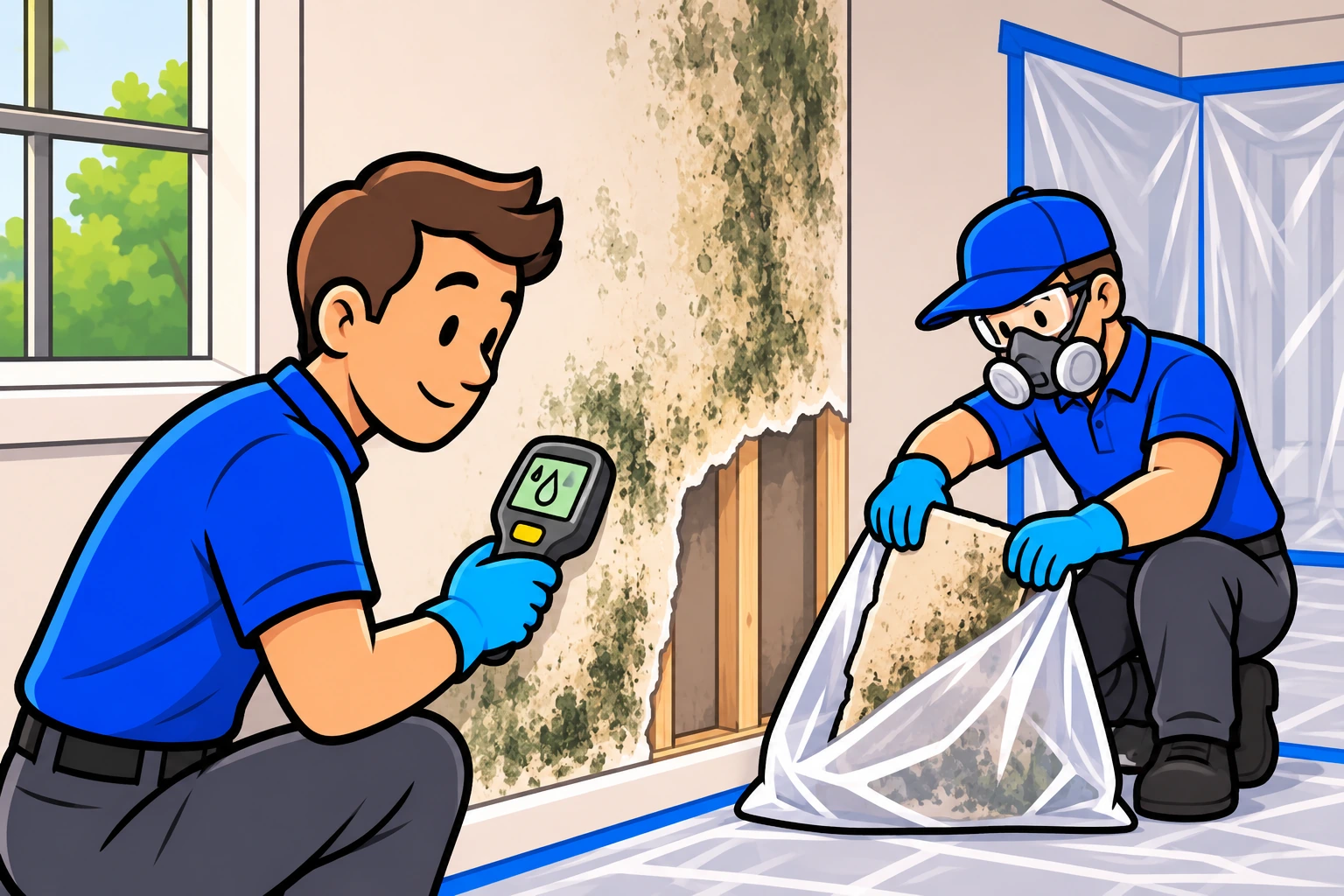
Find out how fast you can get service from your location
MOISTURE AND AFFECTED-MATERIAL RESTORATIONMold Remediation for Meridian Properties
In a Meridian mold investigation, slow plumbing leaks, bathroom exhaust and water at exterior or lower-level interfaces can require different follow-up. Those are useful investigation topics rather than proof that every similar house has the same cause. A damp cabinet, attic insulation and a room's finished wall can lead to different access and retention decisions, even when the first visible symptom is only a small patch.
Share the sequence of events and any completed source or ventilation work. Explain whether a previous treatment changed only the appearance or whether new wetting continued. We discuss material findings, uncertainty and the scope needed before rebuilding. A test can answer a defined question, but a single observation or sample should not be expanded into a statement about every concealed surface or a person's health.
Signs to Discuss at Your Meridian Property
Meridian owners may report a recurring cabinet odor, a ceiling patch or symptoms after an earlier leak. Explain what came first and which work followed. These are useful property observations, not a reason to generate another leak, alter ventilation deliberately or collect suspect material yourself.
- Visible suspected growth after a leak
- Persistent musty odor near damp materials
- Wet or damaged insulation in a concealed space
- Recurring stains after a previous cleanup
- A wall or floor assembly that never fully dried
- A property assessment identifying material requiring remediation
What Happens After You Call
We first discuss the property location, known conditions and authorized access. The five stages below connect assessment with an understandable work scope and the decisions that follow.
- Tell us what is visible, when it appeared and what leak or drying work is already known.
- We discuss the affected space, occupancy and any concealed areas or existing reports.
- Findings guide cleaning, removal, separation and whether additional investigation is useful.
- The project follows material conditions and source-correction needs rather than one universal surface treatment.
- Understand what was addressed, what remains uncertain and which repairs or further evaluation are needed before finishes are restored.
Moisture and Remediation Questions in Meridian
Concealed slow plumbing leaks
A wall or vanity can hide a source until material changes become visible. The source repair and assessment of the surrounding assembly are different decisions. Explain which professional addressed the connection and whether symptoms continued rather than assume a functioning fixture means the material question is closed.
Bathroom exhaust and attic conditions
A ventilation-related concern may need a different source correction from roof entry. Describe actual fan work or an accessible observation without entering an unsafe attic. Remediation should not rely on a generalized assumption about how every bathroom in Meridian is vented.
Water at an exterior interface
Siding, openings and irrigation timing can help frame questions about exterior water entry. At a property, timing is context rather than proof of the pathway. Ask how exterior correction and affected interior materials will be considered separately so a cleaned patch does not conceal continuing wetting.
Insulated wall and ceiling layers
A modern surface can limit what is visible in the assembly behind it. Retention and access should be explained from actual condition, not assumed unnecessary because the house is newer. Additional opening may be useful but should have a clear purpose and agreed boundary.
Past damage without a clear handoff
An earlier equipment visit or cosmetic repair can leave incomplete records of the layers addressed. Share what is available and state remaining uncertainty. The next proposal should not invent a completed drying or source repair simply to fit a standard remediation package.
Recurring symptoms in an occupied room
Cleaning, normal room use and weather history can help frame the question without establishing a diagnosis by themselves. Explain when the odor or mark changes. Avoid another surface treatment as preparation, and keep personal medical questions separate from supported property findings.
What to Do First: Safety and Preparation
Do not scrub, sand or tear out suspected growth to prepare for a visit. Avoid directing household fans across affected surfaces or carrying suspect debris through occupied rooms. Discuss water entry and access from a safe position. If the area has electrical or structural danger, address that first, and use a medical professional for personal health questions rather than treating material appearance as a diagnosis.
If someone already used cleaners or removed a finish, explain the activity and the products involved. Do not add another chemical in an attempt to reverse the first treatment. Assessment should consider the actual history and remaining materials rather than require the owner to create a cleaner-looking surface before the visit.
- Leave suspected growth and affected insulation undisturbed.
- Do not blow household fans across suspect surfaces.
- Keep debris out of routine occupied routes.
- Explain known water entry and previous treatment attempts.
The Restoration Sequence for Your Meridian Property
1. Discuss the water and repair history
Begin with the Meridian source and treatment chronology, including what is confirmed and what remains suspected. Access and room use matter to a proportionate assessment, but a newer construction date is not a substitute for checking the actual materials involved.
2. Assess accessible affected materials
Visible findings, moisture information and the construction guide where attention is needed. Sampling may be useful for a defined question, but it is not automatically required in every situation or a substitute for understanding the moisture problem. Accessible findings should be distinguished from assumptions about unexamined cavities and neighboring rooms.
3. Plan the work boundary and separation
The proposed setup considers affected components, nearby occupancy and movement of belongings or debris. The owner should understand which materials will remain and which may need removal rather than receive a blanket promise of universal retention or demolition. Explain belongings and occupied routes so material movement can be considered along with the work area.
4. Clean or remove as appropriate
Material condition and the agreed scope guide controlled handling. Surfaces that remain require a suitable approach, while porous components may have different decisions. A cosmetic stain change should not be treated as the only objective of the work. Newly exposed layers or an unexpected source can require review before the work boundary expands.
5. Address moisture and review progress
Source correction and drying need to fit the assembly. Ask how unresolved water entry and accessible moisture conditions will be considered; a surface treatment cannot by itself prevent recurrence while the underlying pathway remains active. Do not equate removal of drying equipment with proof that every unrelated material was evaluated.
6. Review the restoration handoff
Review which layers were addressed, what source work remains and what the repair trade may safely assume from the agreed completion condition. A sampling result or improved appearance should not become an unlimited statement about every future moisture or personal health concern.
A Clear Restoration Plan for Your Property
A Meridian remediation plan should say why a material is included, what can reasonably remain and what is unknown where access is limited. That clarity helps when the visible symptom is smaller than the question about the wall or ceiling behind it. An unexplained standard removal radius or a universal retention promise would not describe the actual scope.
Disaster Cleanup offers related testing, water work and rebuilding, but their purposes should remain clear. Source correction and a new finish are not substitutes for evaluating affected material, and laboratory analysis is not a personal health diagnosis. Ask how the stages connect and which decisions require separate authorization before assuming every possible task is included.
What Affects the Project Schedule?
The affected material, access, separation, removal needs, drying response and source repairs influence the sequence. Laboratory questions or verification arrangements may add separate stages where relevant. Discuss the actual plan after assessment instead of relying on a fixed remediation duration, a guaranteed arrival or an assurance that every concern can be resolved in one visit.
Insurance and Project Documentation
The policy and cause determine coverage, including how a sudden reported loss differs from long-running moisture or maintenance concerns. Keep source-repair records and the proposed work scope. Your insurer decides authorization and payment; visible growth, a sample result or a remediation estimate does not establish that every task or later repair is covered.
Safe Next Steps for Mold Remediation in Meridian
Leave suspected growth and insulation undisturbed. Explain current water entry, source repairs and earlier treatments without restarting an appliance or cutting into a finish to investigate. Obtain appropriate urgent help for immediate electrical, structural or other danger before arranging ordinary assessment. For a stable concern, gather existing records and confirm authorized access; do not apply a stronger chemical or a coat of paint merely to prepare the room.
Information That Helps Define the Next Step
- Visible suspected growth after a leak
- Persistent musty odor near damp materials
- Wet or damaged insulation in a concealed space
- Recurring stains after a previous cleanup
Mold RemediationAssessment, Work Planning and Restoration
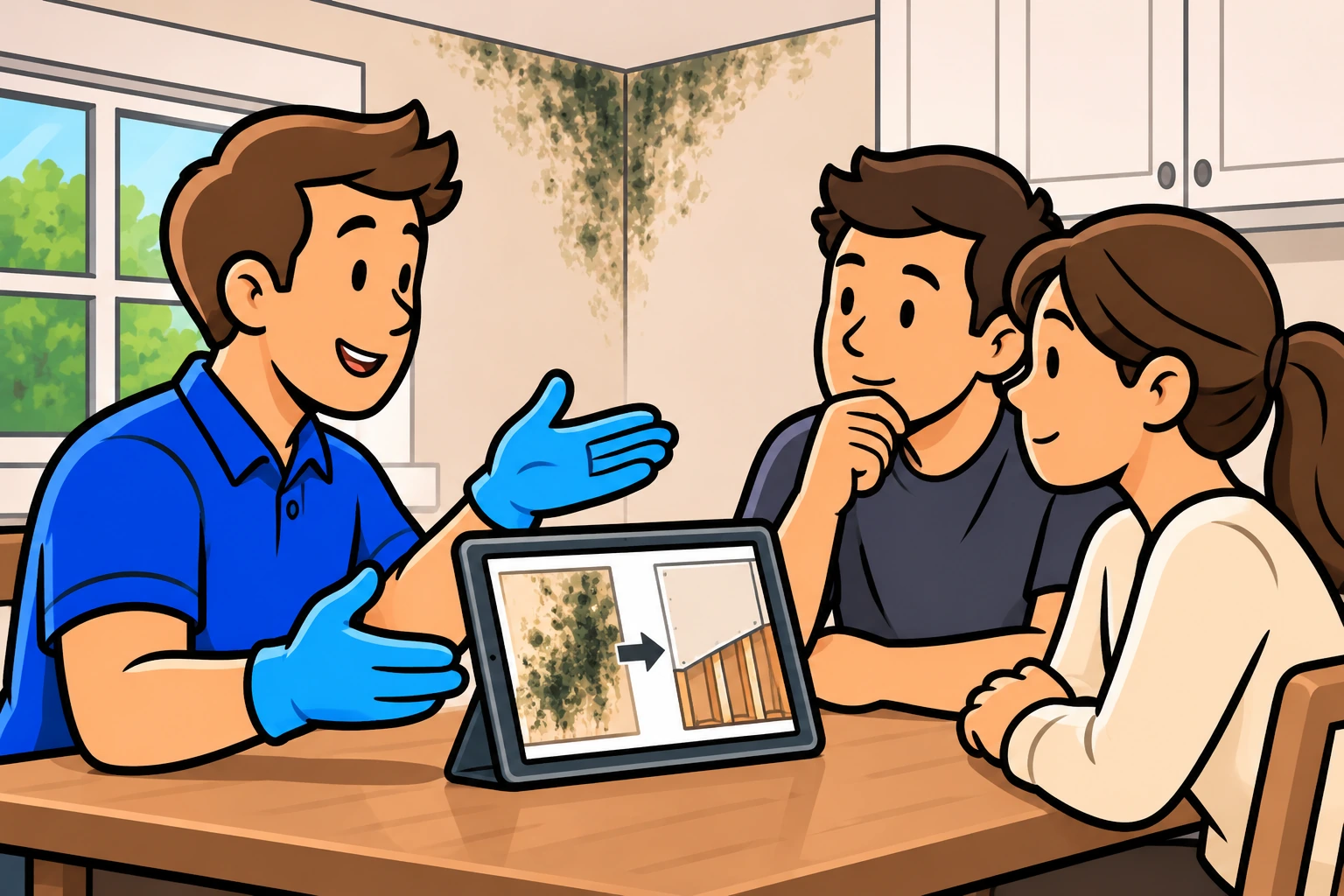
The illustrations represent material assessment and restoration topics rather than a visual mold diagnosis or a promise that one procedure suits every Meridian assembly. The proposed scope should connect source history, separation, retention or removal and moisture-related decisions. Ask what remains inaccessible and what the repair trade needs to know so completion is described by the actual work, not by the appearance of a newly treated surface alone.
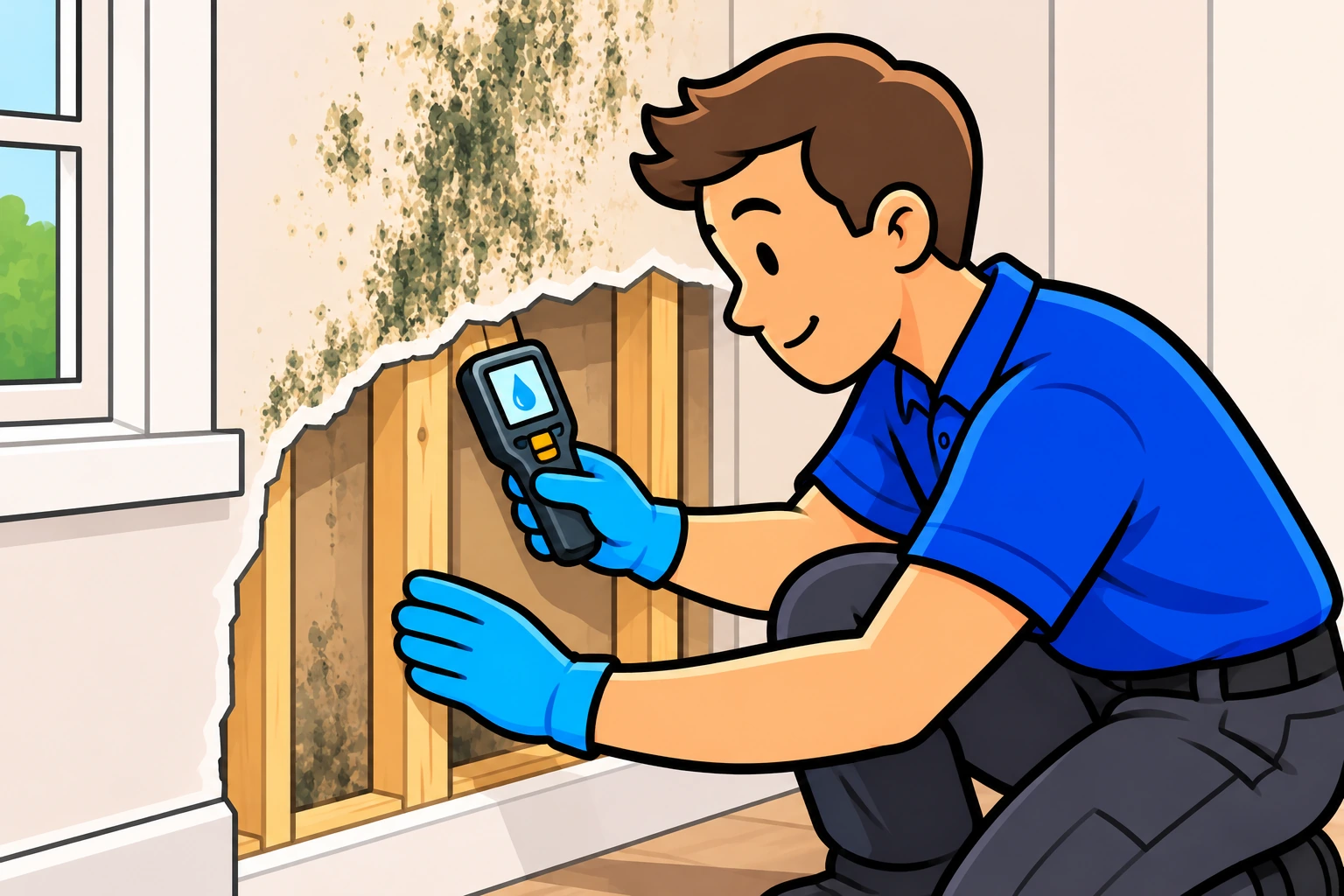
Assessing affected building materials
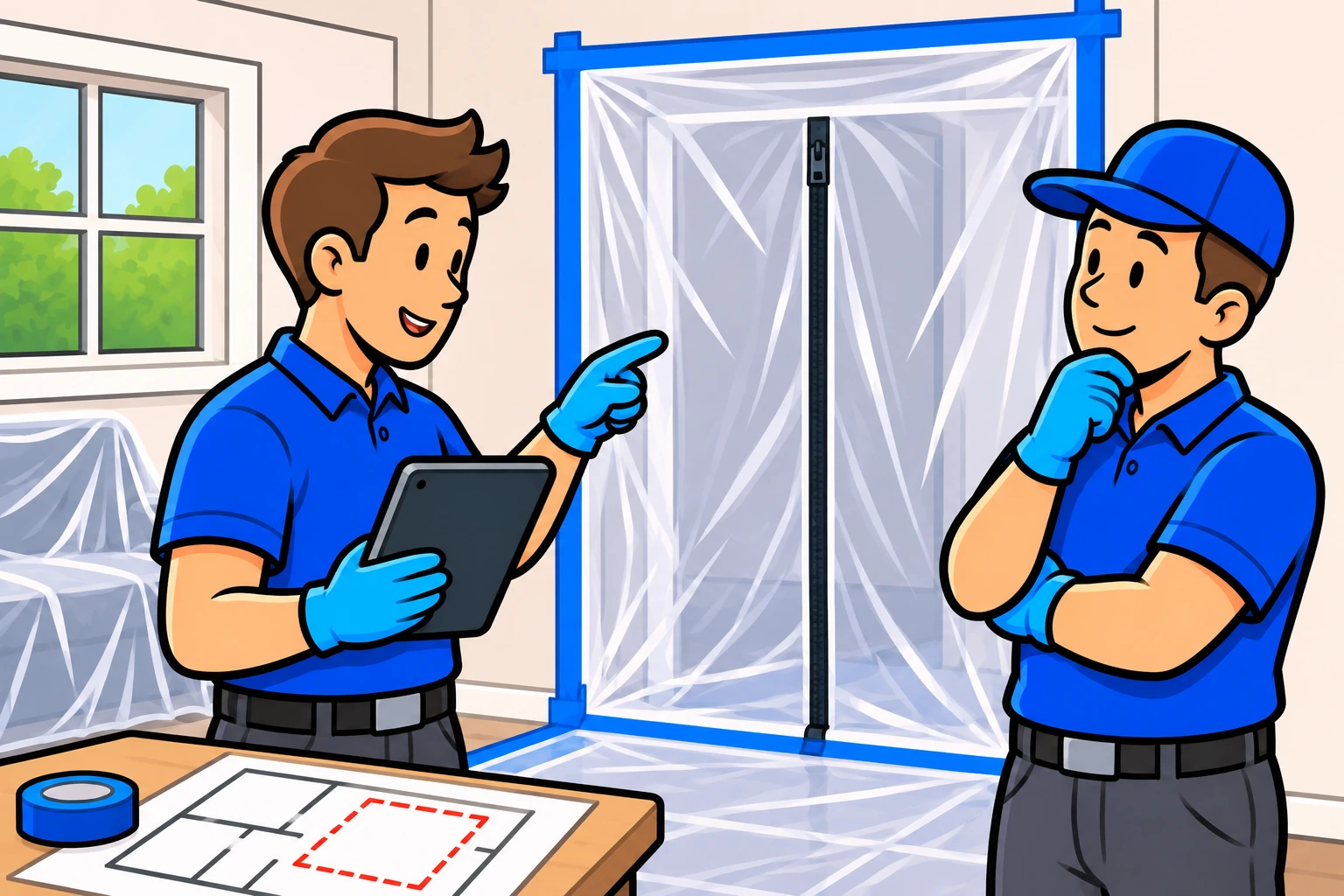
Planning the controlled work area
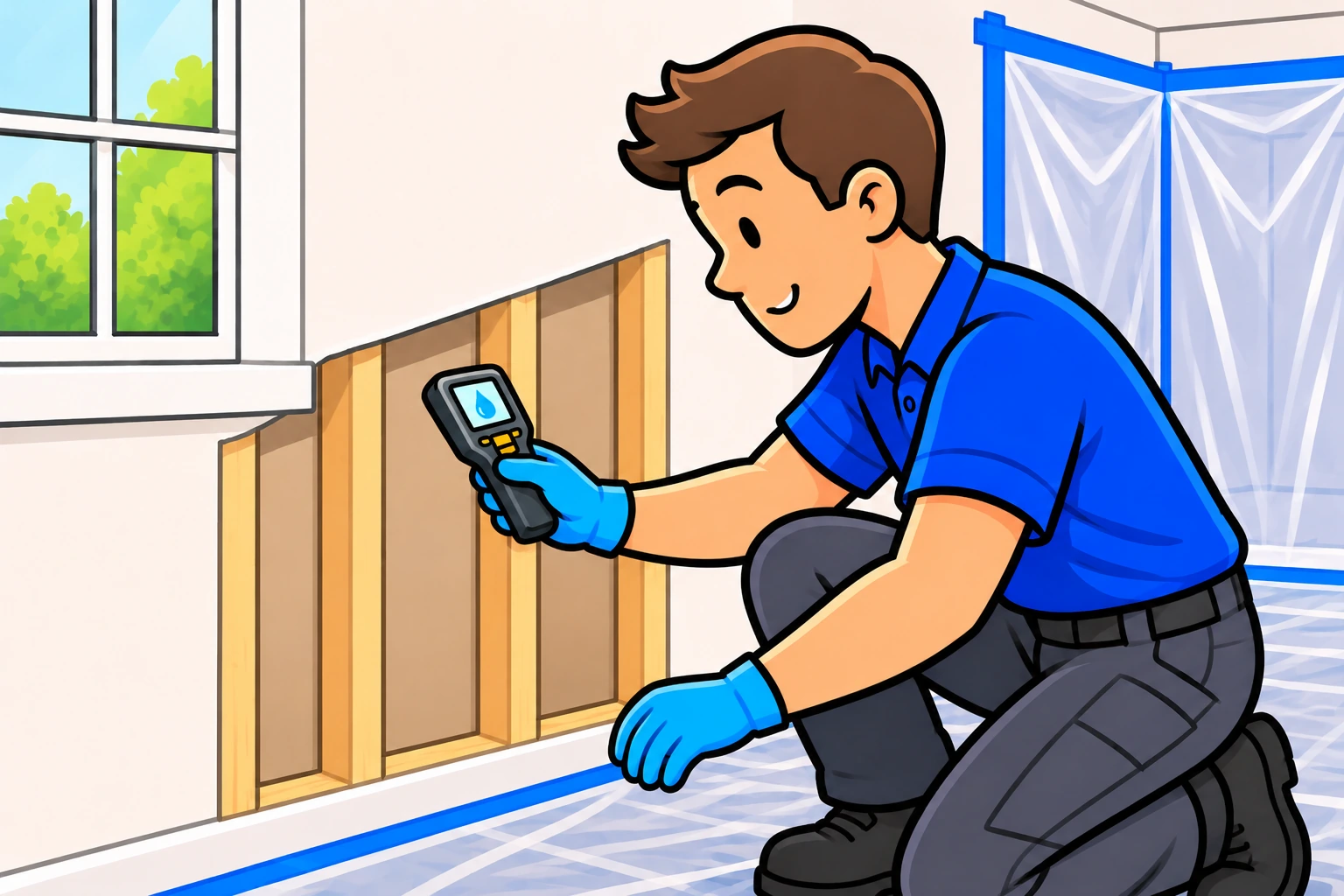
Addressing moisture and material access

Coordinating cleanup and rebuilding
Material decisions before cosmetic results
Define the workDifferent surfaces and layers require different access, cleaning and retention decisions.
Moisture connected to the work
Match the site conditionsA continuing leak or condensation pathway can remain unresolved after a stain has been removed or covered.
Clear scope and limitations
Plan the next stageFindings should describe the affected area and supported next steps without universal health, clearance or recurrence guarantees.
Serving Meridian and Nearby CommunitiesMold Remediation in Meridian
Meridian is an existing Disaster Cleanup service area, with Boise, Eagle, Star, Kuna and Nampa also listed nearby on the site. Provide the address and the person authorized to arrange entry and make decisions. The city name does not establish a separate office or fixed response guarantee, and a local building example does not determine the cause at an address; the actual history and findings guide the plan.

Discuss Your Meridian PropertyRequest a Free Inspection
Arrange a free initial inspection for a Meridian mold concern and explain the known water or ventilation history. Ask what findings support the proposed boundary and which sampling, source repair or construction tasks are separate. Keep earlier records available, but do not disturb affected material or undertake a trial treatment to demonstrate the issue.
Call (208) 999-2353Client ReviewsWhat People Say About Us
Disaster Cleanup is 5-Star Rated on Google


Frequently Asked Questions
Can a new Meridian home still need mold remediation?
Building age alone does not establish whether a leak affected material or whether it dried appropriately. Explain the event and symptoms rather than rely on a new finish's appearance. The scope should follow findings and access without assuming either every cavity is affected or newer materials are automatically suitable to retain.
Does a bathroom fan repair complete the property work?
Not necessarily. Correcting ventilation and evaluating affected material are separate decisions. Share what was changed and whether symptoms continued. Ask how the remediation boundary and repair handoff account for the source work rather than assume a new fan establishes the condition of a wall or attic layer.
Should I cut into a stained ceiling before calling?
No. The assembly, access purpose and any separate material-identification questions should be reviewed before disturbance. Safe photographs and source records are useful without an owner opening the ceiling. An assessment should make limitations explicit instead of depend on risky or destructive preparation.
What information helps assess recurring moisture near an exterior wall?
Record where the symptom appears, when it changes and which plumbing, ventilation or exterior repairs were completed. Share existing photos or reports only if safely available. That chronology helps connect the moisture question with affected materials; do not deliberately recreate wet conditions or open the finish to demonstrate a possible route.
Can an odor alone establish mold type or health effects?
No. Odor can justify investigation but does not provide a species identification or diagnose an individual. Discuss the location, changes and water history. A defined sampling question may be useful, while personal symptoms should be addressed with an appropriate medical professional rather than inferred from the building observation.
How should I describe an earlier unsuccessful cleaning?
State the products, surfaces and timing and whether the moisture source was addressed. Do not repeat the process to show the result. That history helps identify what remains uncertain and avoids assuming that a surface looking better for a while proves all material questions were resolved.
Are testing and remediation one automatic package?
No. The initial inspection, any laboratory work and later cleaning or removal need understood purposes and charges. Ask what information a sample would add and what it cannot establish. Authorizing an assessment should not silently authorize every possible removal, treatment or reconstruction task.
When can repairs or insurance decisions move forward?
The property handoff should explain completed work, remaining source correction and the condition needed before finishes are restored. The insurer separately determines coverage under the policy. A drive-time lookup, sample or estimate does not establish claim approval, a fixed completion date or universal readiness to rebuild.