
Caldwell, Idaho Emergency Water Removal in Caldwell
Standing water in a Caldwell home, rental or shop can spread into flooring, a utility room or a finished cellar before the full damage is visible. Disaster Cleanup provides emergency water removal for older homes near downtown and the College of Idaho as well as newer housing and rural-edge buildings. Stay out of water near electricity or an unknown contamination source; call (208) 999-2353 to discuss current conditions rather than relying on a guaranteed arrival window.
Schedule a Free Inspection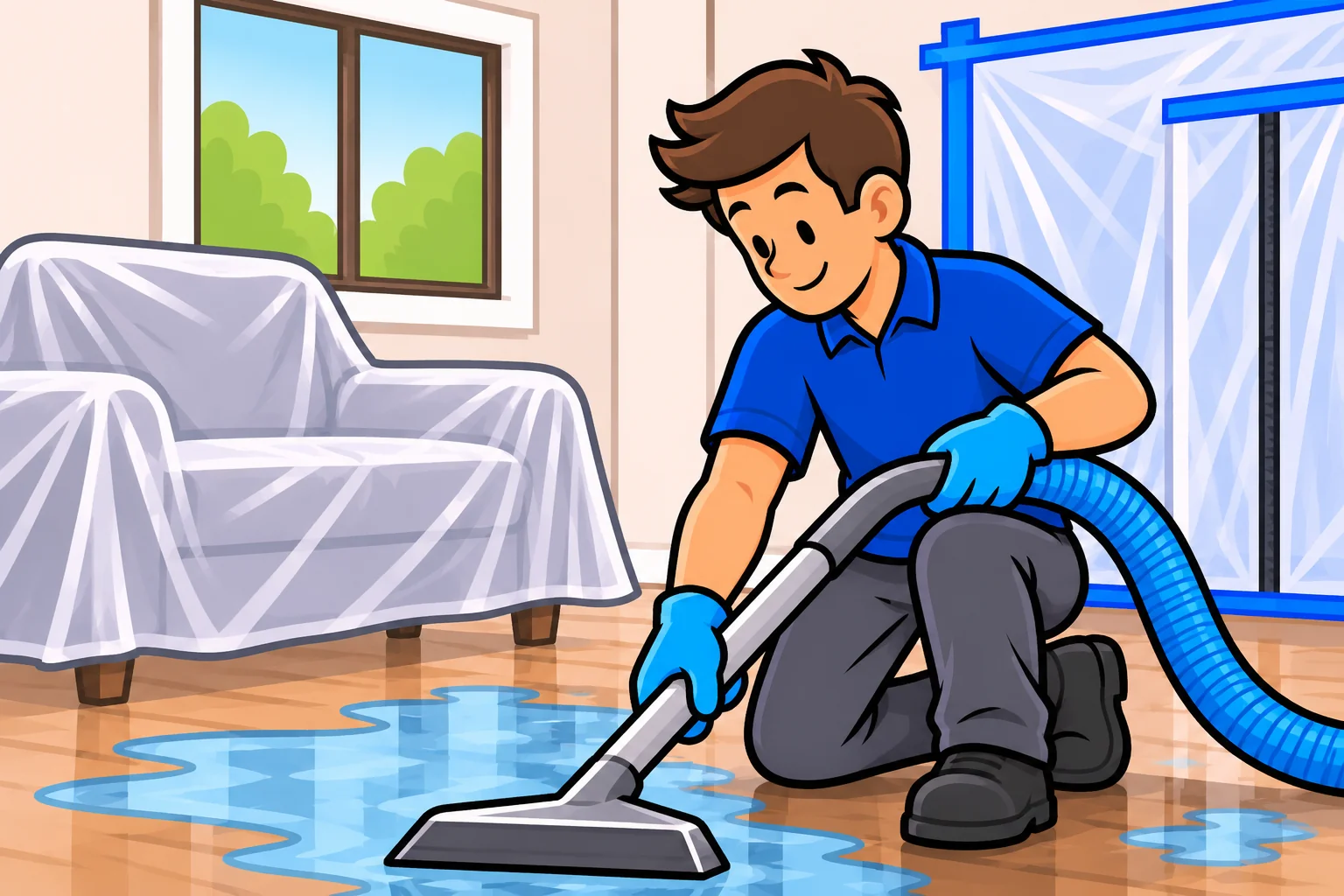
Find out how fast you can get service from your location
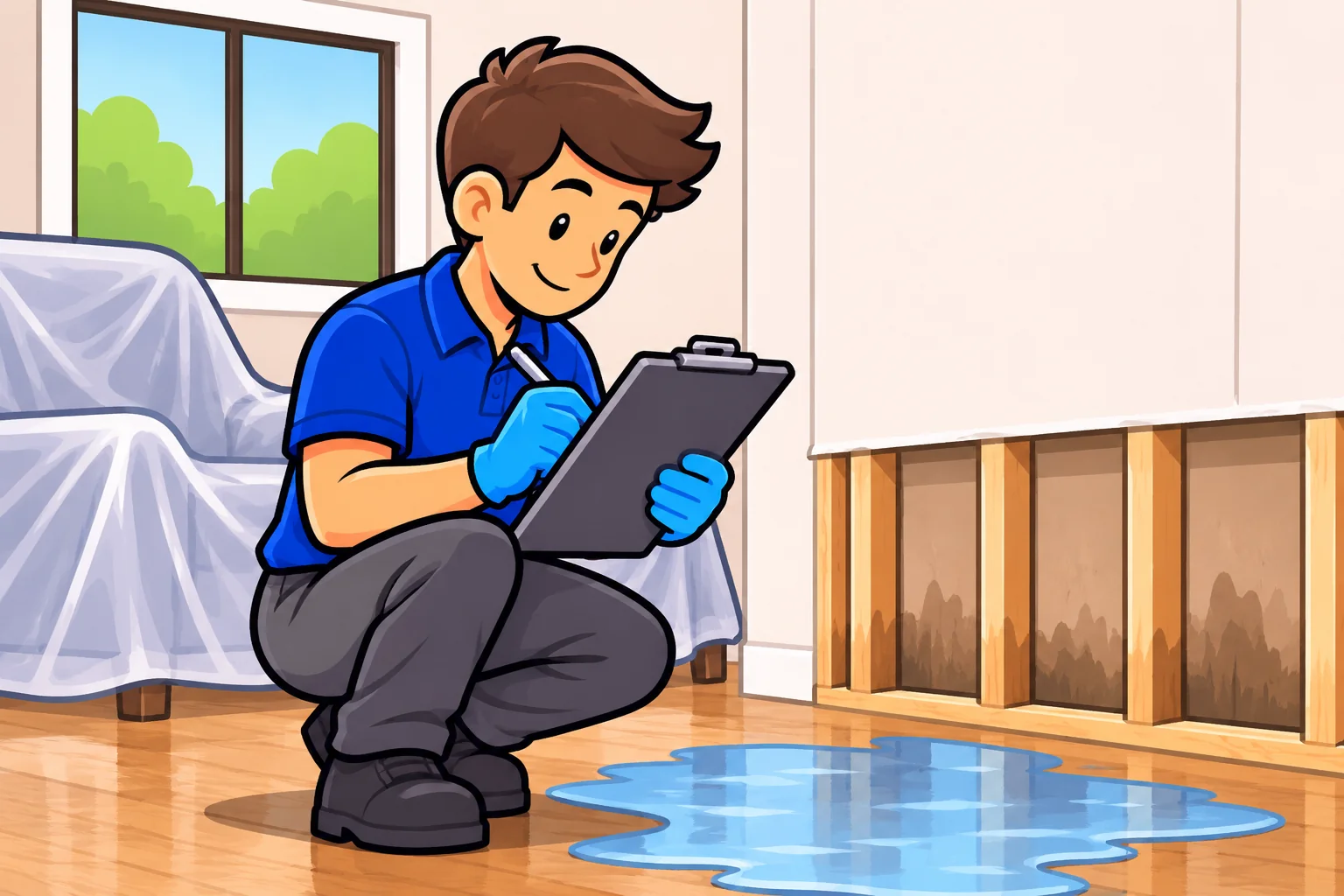
URGENT WATER-DAMAGE RESPONSE Emergency Water Removal for Caldwell Properties
Caldwell properties range from older homes near downtown and the College of Idaho to newer housing and rural-edge buildings. That variety matters to the questions asked, not as proof that a particular address has a drainage defect. A cellar finish, an enclosed crawl space and a slab-floor room can conceal water differently, so emergency extraction should follow the actual assembly.
Explain whether water entered after weather, came from a supply connection or backed up through a drain. For a rental or rural-edge building, identify the responsible contact and any source professional already involved. We then discuss how accessible water removal connects with checks of remaining materials and the next repair stage.
When to Discuss Emergency Water Removal in Caldwell
A Caldwell owner or tenant may first notice water on a slab, a damp cellar finish, or a musty enclosed crawl rather than a deep flood. Report the visible extent and anything known about a plumbing, irrigation, or weather event, and stay out of spaces that would be unsafe to enter.
- Water on a slab-floor room or in a cellar finish
- Dampness or standing water in an enclosed crawl space
- A leak in a rental, shop, or utility room
- Wet floor edges after irrigation, weather, or a plumbing failure
- Soaked belongings in a downtown or College of Idaho-area house
- Water spreading from a rural-edge mechanical space
What Happens After You Call
Caldwell jobs range from older houses near downtown and the College of Idaho to rentals, shops, and rural-edge buildings with a cellar, an enclosed crawl space, or a slab floor. We first confirm who can let us in and what can be seen safely, then use the five stages below to set a scope.
- Tell us whether water is on a slab, in a cellar finish, or under a crawl-space floor, whether it is still entering, and whether anyone is near powered equipment — all from a dry, reachable place.
- We ask who owns or manages the building, whether a plumber or irrigation repair is already underway, and how to reach a downtown, rental, or rural-edge address from the Garden City shop. Caldwell does not have its own office.
- Removal order follows the assembly: a slab-floor room, a cellar finish, and an enclosed crawl space do not take the same first step even when they sit on one Caldwell property.
- We then explain why moisture in a crawl or behind a cellar wall is checked after the visible water is gone, instead of treating a cleared floor as the end of the work.
- Follow-up depends on readings at that Caldwell address and on whether finishes in a cellar, shop, or rental still need removal or a separate reconstruction step.
Water Emergencies We Discuss in Caldwell
Burst or leaking supply pipes
Pressurized water can move through floor joints and wall penetrations in older Caldwell homes as well as newer construction. Stopping the source is a separate priority from extraction, and the affected area may extend beyond the room where the pipe failed. The repair history helps distinguish a stopped leak from continuing water entry.
Cellar finishes, crawl spaces and slab-floor rooms
A cellar finish, an enclosed crawl space and a slab-floor room can conceal water differently, as already described on the existing Caldwell water page. Visible depth alone does not define the work. Describe the building type and which rooms changed so extraction can connect to the right material checks.
Older downtown homes and College of Idaho-area properties
Older homes near downtown Caldwell and the College of Idaho can have different floor and wall histories from newer housing. Those examples help frame questions; they do not diagnose a particular address. Explain earlier repairs and the order in which symptoms appeared.
Rural-edge buildings and rentals
A rural-edge building or rental can involve different access and authorization than an owner-occupied house. Identify the responsible contact and any source professional already involved so the building work can be coordinated. A city listing does not establish a separate Caldwell office.
Appliance hose and fixture failures
A washing machine, dishwasher, refrigerator connection or overflowing fixture can release water into cabinets and nearby flooring. Do not pull an appliance through water to investigate a connection, and describe whether the supply has already been controlled.
Storm entry, drain backups and utility-room releases
Rain, a backed-up drain or a utility-room failure can carry different contaminants from a recent supply leak. Keep occupants out and state the known history. A shop or mechanical space may also need different access decisions from a finished living room.
What to Do First: Safety and Preparation
Do not drop into a Caldwell cellar, crawl space, or wet slab-floor room to reach a breaker or a shutoff. Operate a valve only if it is already reachable from dry ground. Keep people and pets away from water of unknown origin, do not start household extraction, and call emergency or utility help if the building or wiring is at risk.
Water that looks ordinary in a downtown Caldwell house or a rural-edge shop can still be energized. You are not expected to prove that equipment is safe before you call. Close off the area and describe appliances or mechanical equipment without stepping in to inspect them.
- Do not enter a wet cellar or crawl space to unplug equipment.
- Keep soaked rental or shop belongings out of dry rooms.
- Say whether irrigation, a plumbing failure, or weather came first, if you know.
- Take photographs from a dry doorway, not from inside the wet space.
The Emergency Water Removal Sequence for Your Caldwell Property
1. Assess safety and active water
Treat the actual Caldwell building as the starting point — an older house near the College of Idaho, a newer home, a rental, or a rural-edge shop — rather than a city-wide drainage story. Describe the event, active water, and who can authorize entry before equipment is discussed.
2. Map the affected area
Note whether the wet area is a slab room, a cellar finish, or an enclosed crawl. Those assemblies hide water differently, and a stain in one of them does not automatically map the others.
3. Remove accessible standing water
Pickup equipment is chosen for the surface in front of us. Clearing a cellar floor does not mean the crawl, the slab edge, or the wall cavity is ready for repairs.
4. Evaluate retention and access
Condition and contamination decide what can stay in a Caldwell cellar or shop. Ask for the reason a finish would be left in place before assuming it can be dried without removal.
5. Set and monitor drying
Drying is watched with moisture checks that fit the assembly, not with a standard rental period. A crawl space and a finished cellar will not necessarily move on the same timetable.
6. Plan the repair handoff
At handoff, ask what was removed or retained and what a plumber, irrigation repair, or rebuilding trade still has to do. Finished equipment time is not the same as a completed Caldwell repair.
A Clear Extraction and Moisture Plan in Caldwell
A fast Caldwell response is useful only when it is paired with a plan for the assembly that actually got wet — a cellar, a crawl space, a slab room, or a shop floor. Ask what will be removed, what will be checked under or behind it, and how the next drying step will be chosen.
Disaster Cleanup is veteran-owned and based at 5332 N Sawyer Ave, STE 120 in Garden City. Caldwell is served along with nearby Nampa, Middleton, Parma, and Star; the listing does not create a Caldwell office. All work is backed by a 1-year warranty.
What Affects the Project Schedule?
How much water is present, whether contamination is a concern, and whether a cellar, crawl, or slab is involved all affect the order of work. Scheduling also depends on access from the Garden City shop. There is no universal arrival or drying-time promise for every Caldwell event.
Insurance and Project Documentation
Weather, irrigation, and a plumbing failure can be reviewed under different policy terms. Tell the insurer as appropriate and keep photographs taken from a safe place, plus any source-repair notes. Pickup, material removal, and later reconstruction may be reviewed as separate items.
Safe Next Steps for Emergency Water Removal in Caldwell
If water is near electrical equipment in a Caldwell cellar, shop, or utility room, or the structure feels unsound, stay out and call the proper emergency or utility number. If a shutoff sits on dry ground outside the wet room, mention it when you call (208) 999-2353. Do not haul wet contents through a dry rental unit or delay reporting an active source while you collect pictures.
Information That Helps Define the Next Step
- Water on a slab floor or in a cellar finish
- A wet enclosed crawl space under a Caldwell house
- A plumbing, irrigation, or weather event that may still be contributing
- Standing water in a shop or rental utility room
Emergency Water Removal Assessment, Work Planning and Restoration
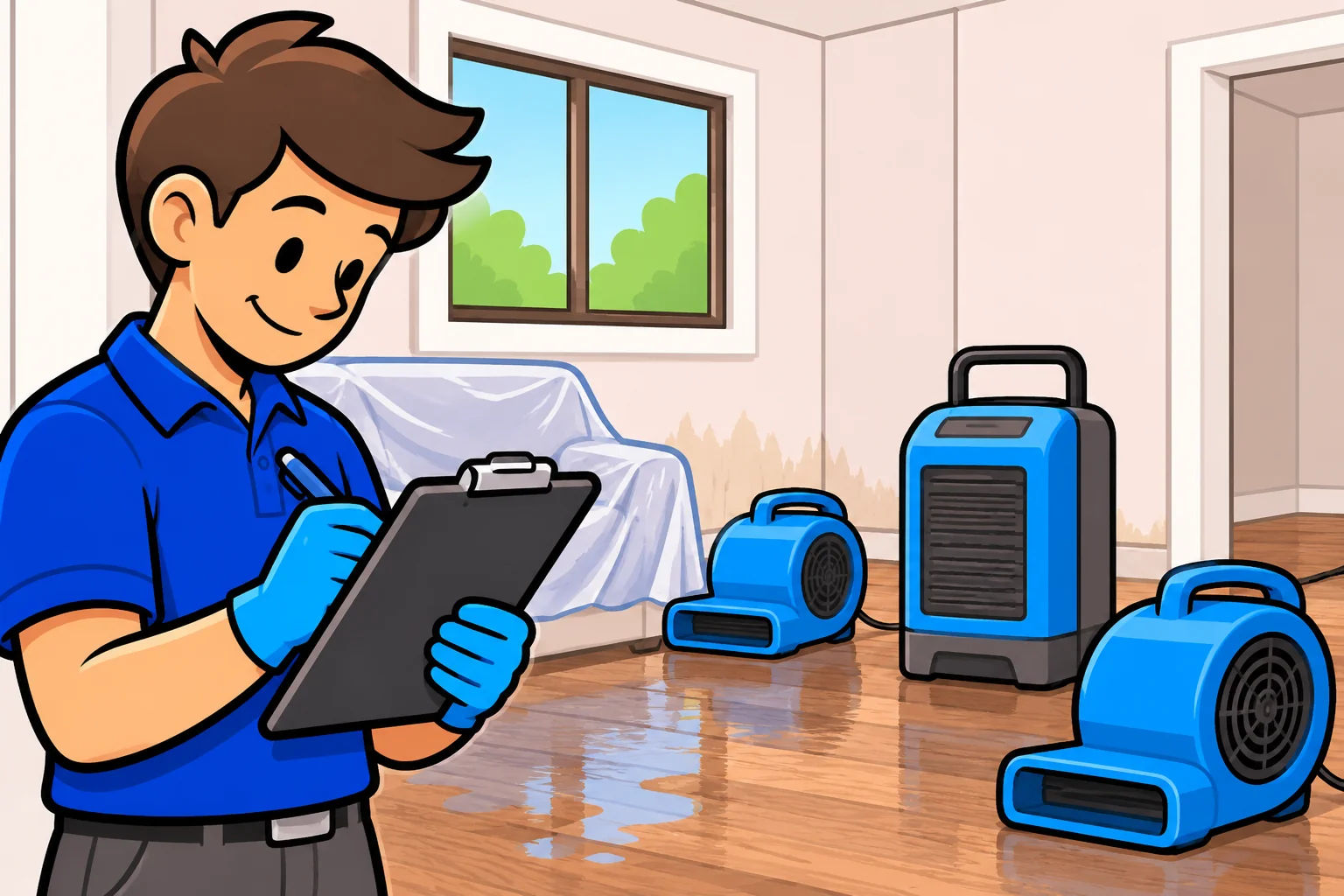
These illustrations are prompts for extraction and drying questions that come up in Caldwell cellars, crawl spaces, and slab-floor rooms. They are not a report on your building and do not promise that every surface can remain. Describe the assembly, the rooms, and any contamination concern so pickup is connected to the right cleanup plan.
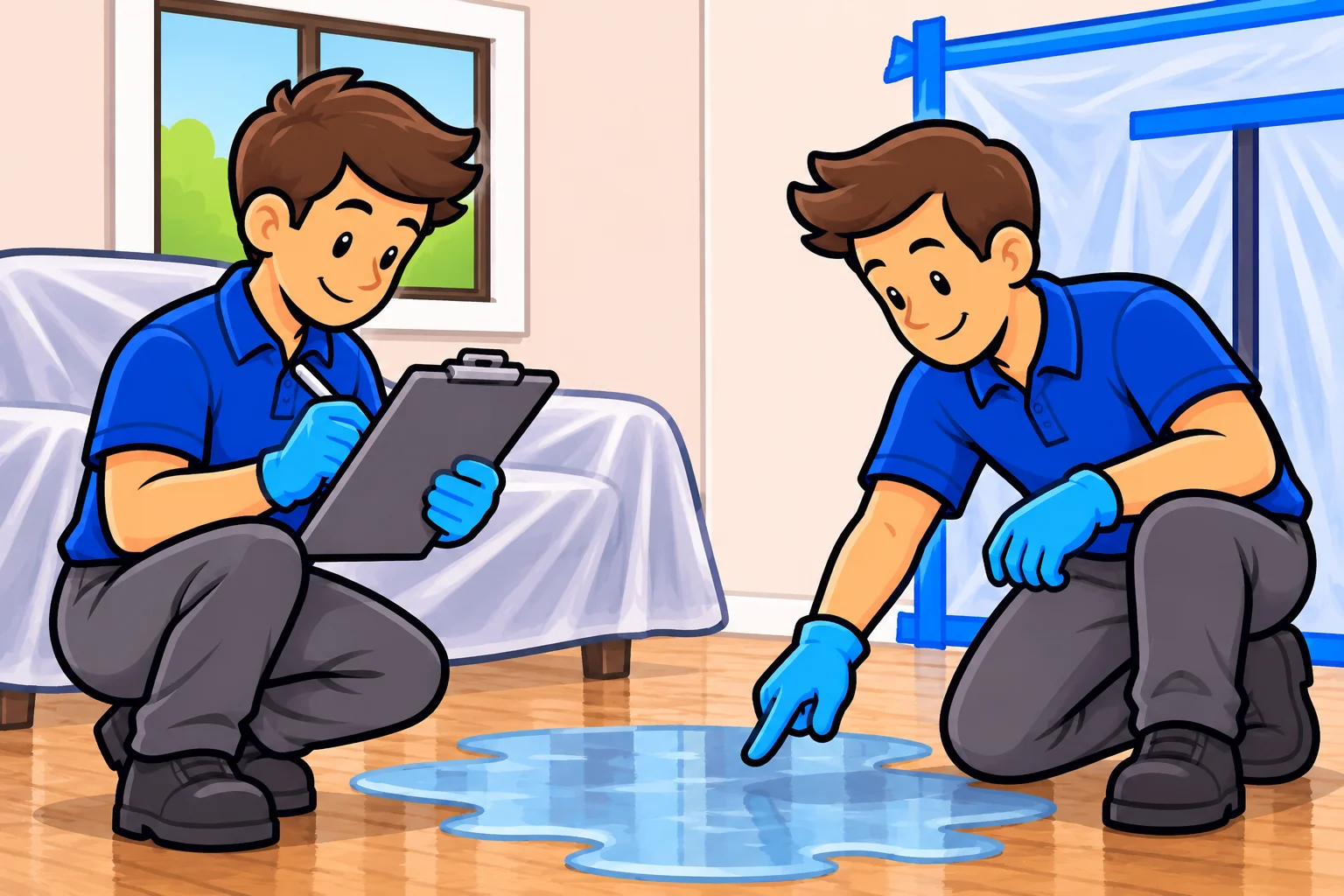
Standing-water extraction planning
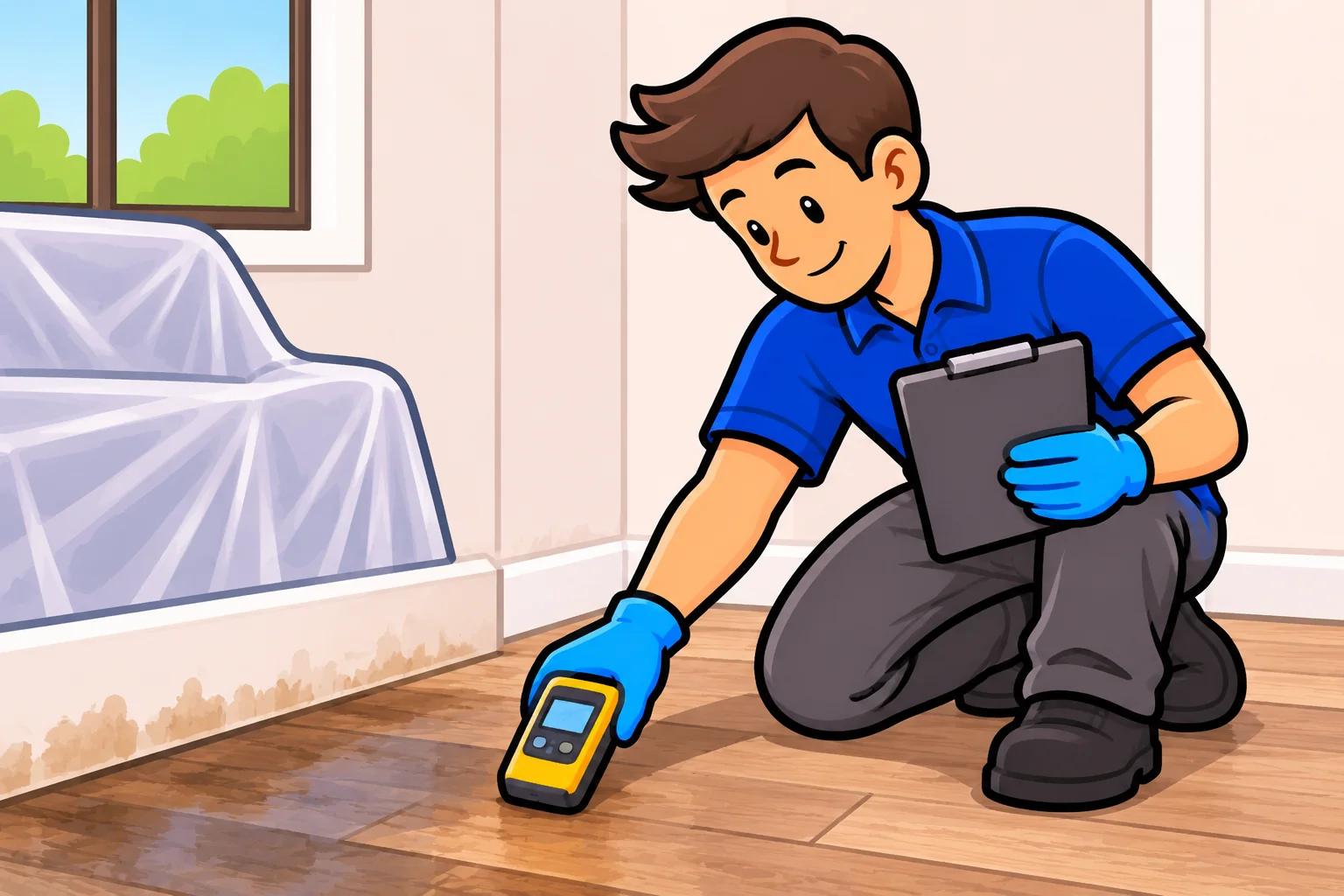
Assessing water-damaged flooring
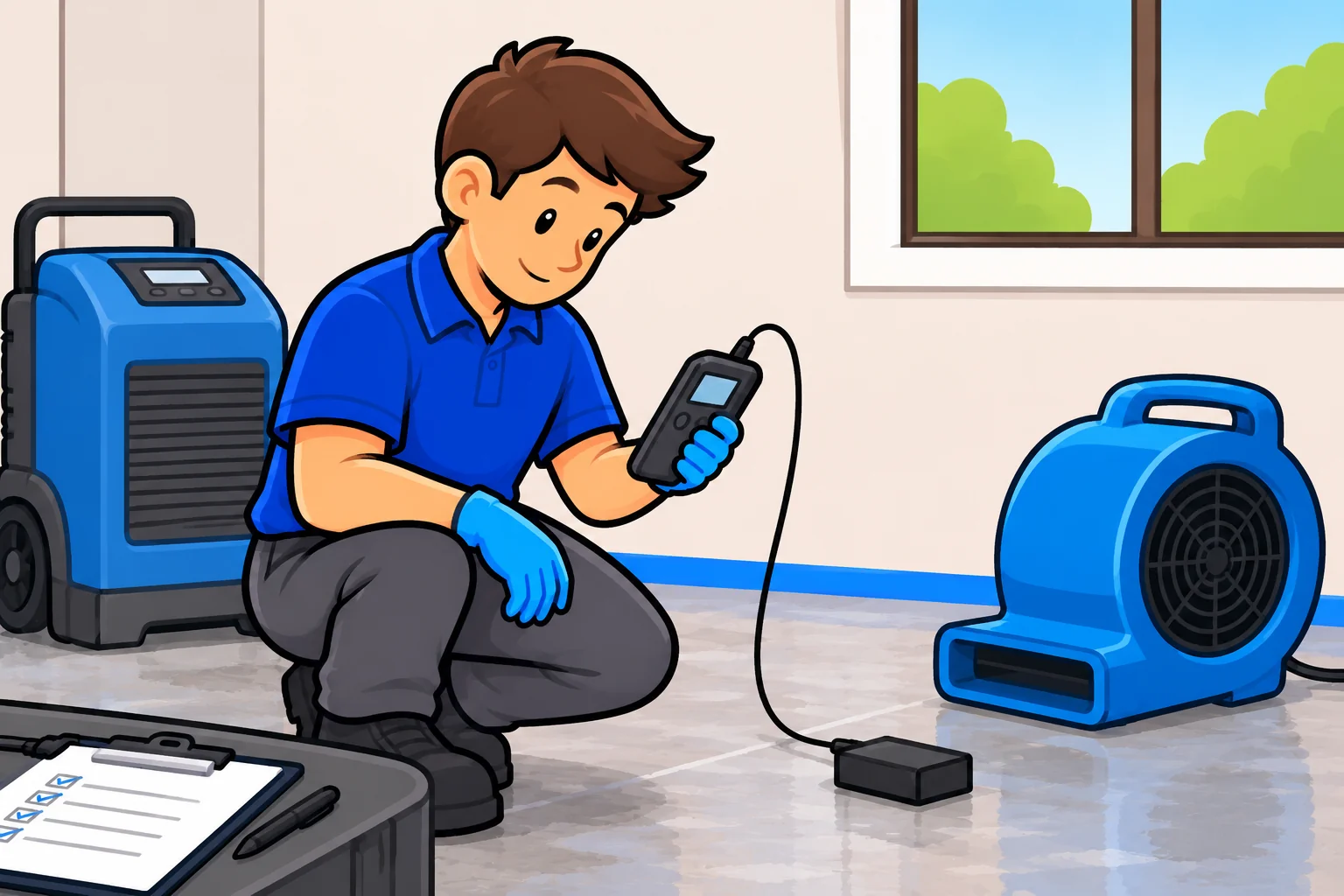
Drying equipment and material checks

Coordinating the restoration handoff
Clearing the lowest accessible water
Define the workStanding water is removed from the Caldwell cellar, shop, or room you can already enter as the first stage, not as the entire job.
Hidden moisture in crawls and slabs
Match the site conditionsAn enclosed crawl space or a slab edge can hold water after a cellar floor has been cleared and still needs its own check.
A path from drying to repairs
Plan the next stageReadings in those assemblies help decide when a Caldwell finish or crawl is ready to hand to the next trade.
Serving Caldwell and Nearby Communities Emergency Water Removal in Caldwell
Caldwell is an existing Disaster Cleanup service area. Nearby coverage described on this site includes Nampa, Middleton, Parma, and Star. Crews come from 5332 N Sawyer Ave, STE 120 in Garden City. Give us the address, the responsible contact on a rental, and any access limits; a city name is not a local office or a fixed arrival time.
Older houses near downtown and the College of Idaho, newer housing, and rural-edge buildings do not share one construction type. A cellar, crawl space, or slab should be described as it is, not inferred from the neighborhood.
Discuss Your Caldwell Property Request a Free Inspection
Call (208) 999-2353 if you have standing water in a Caldwell home, rental, or shop — including a cellar, a crawl space, or a slab-floor room. Explain hazards from a safe location and whether the source has been stopped. Phones are answered live 24/7. We aim to be on site within 1-2 hours; that window is planned from the call and access, not a guarantee. Inspections are free, and all work is backed by a 1-year warranty.
Call (208) 999-2353Client Reviews What People Say About Us
Disaster Cleanup is 5-Star Rated on Google


Frequently Asked Questions
Does emergency extraction in Caldwell include drying a crawl or cellar?
Pickup and drying are related but not the same step. Accessible water is removed first. Moisture in an enclosed crawl space, behind a cellar finish, or at a slab edge is checked afterward. A floor that looks clear is not proof those assemblies are ready to close up.
Is it safe to go into a wet Caldwell cellar to turn off power?
No. Do not enter a wet cellar, crawl, or slab-floor room to reach a breaker or appliance. Stay out and contact the utility or emergency service if electrical danger is present. Describe the situation from a dry doorway instead.
How is a Caldwell property reached if you are based in Garden City?
Phones are answered live 24/7 at (208) 999-2353, and we aim to be on site within 1-2 hours. The window is planned from the call, access, and current demand, not as a promised appointment. There is no Caldwell office; tell us how to reach a downtown, rental, or rural-edge building from 5332 N Sawyer Ave, STE 120 in Garden City.
Can a cellar finish or shop floor in Caldwell be dried in place?
Retention depends on contamination, construction, condition, and drying access. A cellar wall, a shop slab, and a crawl-space assembly can each need a different decision. Ask what supports leaving a material rather than assuming it can all be saved.
What if the water is only in the crawl space?
Describe what you can see from a safe, already-open access point and when the problem started. Do not crawl into a wet space to prepare for the visit. The assessment should include that concealed volume, not only any water that reached a finished room.
Does irrigation or a rural-edge location explain the water?
No. Irrigation, weather, or a rural-edge setting can be relevant history, but they do not diagnose the source at your address. Report the timing, any repairs already made, and what can be observed safely.
Who determines insurance payment for a Caldwell water emergency?
The event, the policy, and the insurer's review decide coverage. A plumbing failure, weather, and irrigation-related water can be treated differently. Keep records of the work, photographs, and source repairs, and ask the carrier about authorization and exclusions.
Do you rebuild after extraction in Caldwell?
Repair needs can be discussed with the cleanup, and reconstruction can follow drying. The two stages have their own conditions. All work is backed by a 1-year warranty. Ask what is included and what another trade still needs to do.