Star, Idaho Flooded Basement Cleanup in Star
Where a Star property has a basement, lower level or wet crawl space, flooded basement cleanup requires more than pumping out the visible water. Disaster Cleanup helps assess the source, safe access, affected materials and drying needs in newer subdivision homes and rural places along Highway 44 or near the Boise River. Stay out of floodwater near electrical equipment, and describe what you can see safely.
Schedule a Free Inspection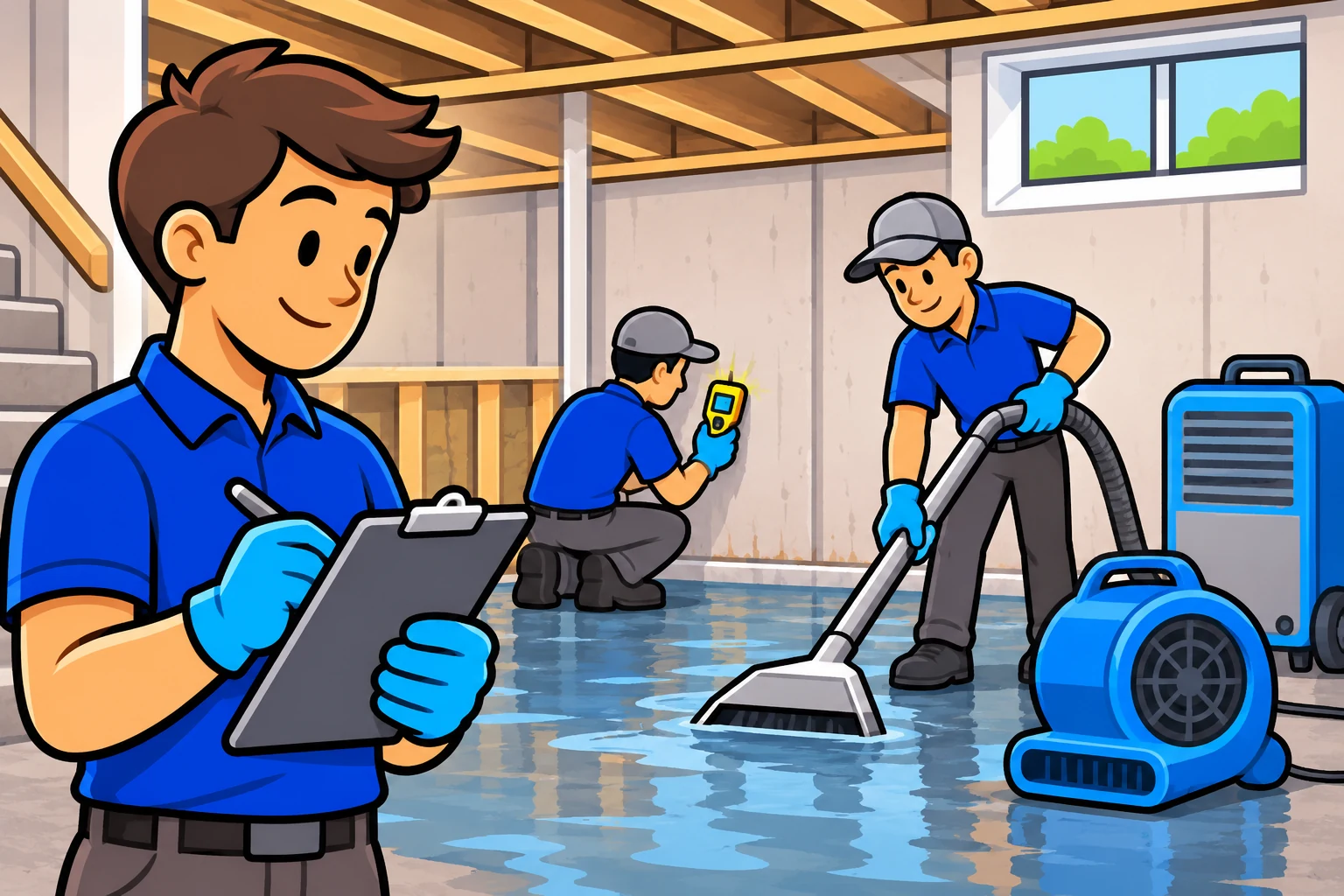
Find out how fast you can get service from your location
BELOW-GRADE WATER ASSESSMENT Flooded Basement Cleanup for Star Properties
Not every Star property has a basement. Where a lower space or crawl space is involved, water can come from a failed supply line, a water heater, a winter freeze, drainage, a sewer backup or moisture already known near the Boise River or irrigation canals. Newer construction and rural buildings can have different assemblies, so visible depth alone is not enough to define the work.
Properties near the Boise River or irrigation canals can have crawl-space moisture histories that differ from a mid-block subdivision lot, as already described on the existing Star pages. Those features frame questions; they do not diagnose the current event. Explain the building, access along Highway 44 if it matters, and whether finished rooms are also involved.
When to Discuss Flooded Basement Cleanup in Star
A Star owner may first notice water on a lower-level floor, a musty crawl-space odor, or moisture after a winter freeze rather than a wide basement flood. Report the visible extent from a dry stair or opening and anything known about the source, and stay out of areas that would be unsafe to enter.
- Standing water on a basement or lower-level floor
- A leak that appeared as a pipe thawed
- Moisture or standing water at a crawl-space opening
- Wet lower-level flooring in a rural house along Highway 44
- A musty odor or damp insulation under the house
- A known sewer or drain backup in the lowest room
What Happens After You Call
When the lowest space at a Star property is wet, we first sort out whether we are dealing with a basement, a crawl space, or both, and how that lot is reached from Garden City. The five stages below are for that lower space, not for a general water call.
- From a dry stair or already-open crawl hatch, tell us whether the water is on a basement floor, under the house, or around a water heater, and whether it is still coming in.
- We need the way in — a subdivision street or a rural drive off Highway 44 — and whether the lowest opening can already be used. The crew is coming from 5332 N Sawyer Ave, STE 120 in Garden City, not from a Star office.
- The first pumping step follows the lowest assembly we actually find. A finished subdivision basement and an open crawl under a rural house are not started the same way.
- Once the visible water in that lower space is reduced, we explain why the crawl, a basement wall cavity, or the floor assembly still has to be checked.
- What happens next depends on readings in that Star basement or crawl and on whether flooring, insulation, or another trade is still required.
Basement Water Situations We Discuss in Star
Plumbing failure below grade
A failed line or fixture in a Star basement or lower utility room can wet the floor and the wall base before anyone is downstairs. Stopping the leak is one task; checking the pad, the wall cavity, and any adjoining crawl is another. Tell us which lower room was involved, but do not go down to pull equipment apart.
Water heater releases in newer homes
A water heater in a Star basement or lower mechanical room can release enough water to cover the floor around the unit. Stay on a dry stair if the area is wet. The work then has to consider both the floor and any finishes or mechanical space below grade, not only the appliance itself.
Frozen pipes during winter cold snaps
Existing Star pages already treat a winter freeze as one possible source to discuss. If a pipe in a basement wall, garage, or crawl thawed and began leaking, describe when that happened and which lowest space is wet. Do not open the wall or enter the crawl to expose the pipe before the visit.
Homes near the Boise River
A basement or crawl on a lot near the Boise River can have a different moisture history than a house farther away. That history can be useful background. It does not, by itself, prove the river is why the lower space is wet today. The event at your address still has to be assessed on its own facts.
Irrigation canals and crawl-space moisture
The existing Star service-area discussion notes that lots near irrigation canals can see groundwater in crawl spaces. A canal beside the property does not identify the source of a current basement or crawl-space flood. Report what you can see from a safe opening and do not enter the wet space to investigate.
Rural properties and newer subdivisions along Highway 44
A newer subdivision basement and a rural crawl or lower room reached from Highway 44 can have very different access and construction. Tell us how the lot is reached and which lowest space is affected so the visit can be planned for that building, not for Star in general.
What to Do First: Safety and Preparation
Do not go down into a wet Star basement or crawl space to reach a breaker, water heater, or shutoff. Use a valve only when it can be reached from dry, solid ground. Keep people and pets out of the lowest spaces, do not start household pumping, and call emergency or utility help if there is electrical or structural danger.
Water in a newer subdivision basement or on a rural lot near the Boise River can still be energized even when it looks shallow. You are not asked to test equipment first. Stay at a dry stair or opening and describe the lower space without going in to inspect it.
- Do not crawl under a wet Star house or descend a wet basement stair to unplug equipment.
- Keep wet insulation and basement belongings out of still-dry rooms.
- Say whether a supply line, water heater, or thawed pipe is still leaking.
- Take pictures only from a dry doorway or a safe, already-open access.
The Flooded Basement Cleanup Sequence for Your Star Property
1. Assess safety and active water
Begin with the Star lower space itself — a basement in a newer subdivision or a crawl space on a rural property along Highway 44 or near the Boise River — not with a river-adjacent assumption. Describe the event, active water, and access before pumping is placed.
2. Map the affected area
Map the first wet area on the lower floor and any later signs in a crawl space or on basement walls. A lot near the river or an irrigation canal can have a different below-floor history than a mid-block subdivision home, but the map still has to follow the water at your address.
3. Remove accessible standing water
Pumping is chosen for the lowest surface and space involved. Clearing a basement room does not mean a crawl space or a wall cavity is ready for repairs.
4. Evaluate retention and access
Whether a Star basement finish or crawl-space material can stay depends on contamination, construction, and access. Ask what supports leaving flooring or insulation in place.
5. Set and monitor drying
Drying is checked with moisture readings in the lower rooms and, where it applies, in the crawl space. Elapsed equipment time alone is not evidence those assemblies are ready to close.
6. Plan the repair handoff
At handoff, ask what was kept or removed and what a plumber or rebuilding trade still has to do. A finished equipment visit is not the same as a completed Star lower-level repair.
A Clear Basement Cleanup Plan in Star
Arriving promptly at a wet Star lower level only helps when pumping is followed by a plan for that basement or crawl — in a newer subdivision or on a rural lot. Ask what will be taken out of the lowest space, what will be checked in the floor assembly or insulation, and what has to be true before a repair discussion starts.
The company is veteran-owned and works Star lower-level calls from 5332 N Sawyer Ave, STE 120 in Garden City. All work is backed by a 1-year warranty.
What Affects the Project Schedule?
How much water is in the basement or crawl, whether contamination is a concern, and how that lower assembly is built all affect the sequence. If Highway 44 is the way in, mention it so travel from Garden City can be planned. There is no single arrival or drying-time promise for every Star lower-level event.
Insurance and Project Documentation
A failed line, a freeze, a drain backup, and moisture already known under a house near the Boise River or a canal can be reviewed in different ways. Tell the insurer as appropriate and keep pictures taken from a dry stair or opening. Pumping, removal, and later rebuilding may be reviewed separately.
Safe Next Steps for a Flooded Star Basement
If water in a Star basement or crawl is near powered equipment, or the lower space looks unsafe, stay out and call the utility or emergency service. If a shutoff is already reachable from dry ground, mention it at (208) 999-2353. Do not move wet basement belongings through dry rooms or delay reporting an active source while you collect photographs.
Information That Helps Define the Next Step
- Standing water on a Star basement or lower-level floor
- A leak that appeared as a pipe thawed after a winter freeze
- Standing water or a musty odor at a crawl-space opening
- A known sewer or drain backup in the lowest room
Flooded Basement Cleanup Assessment, Work Planning and Restoration
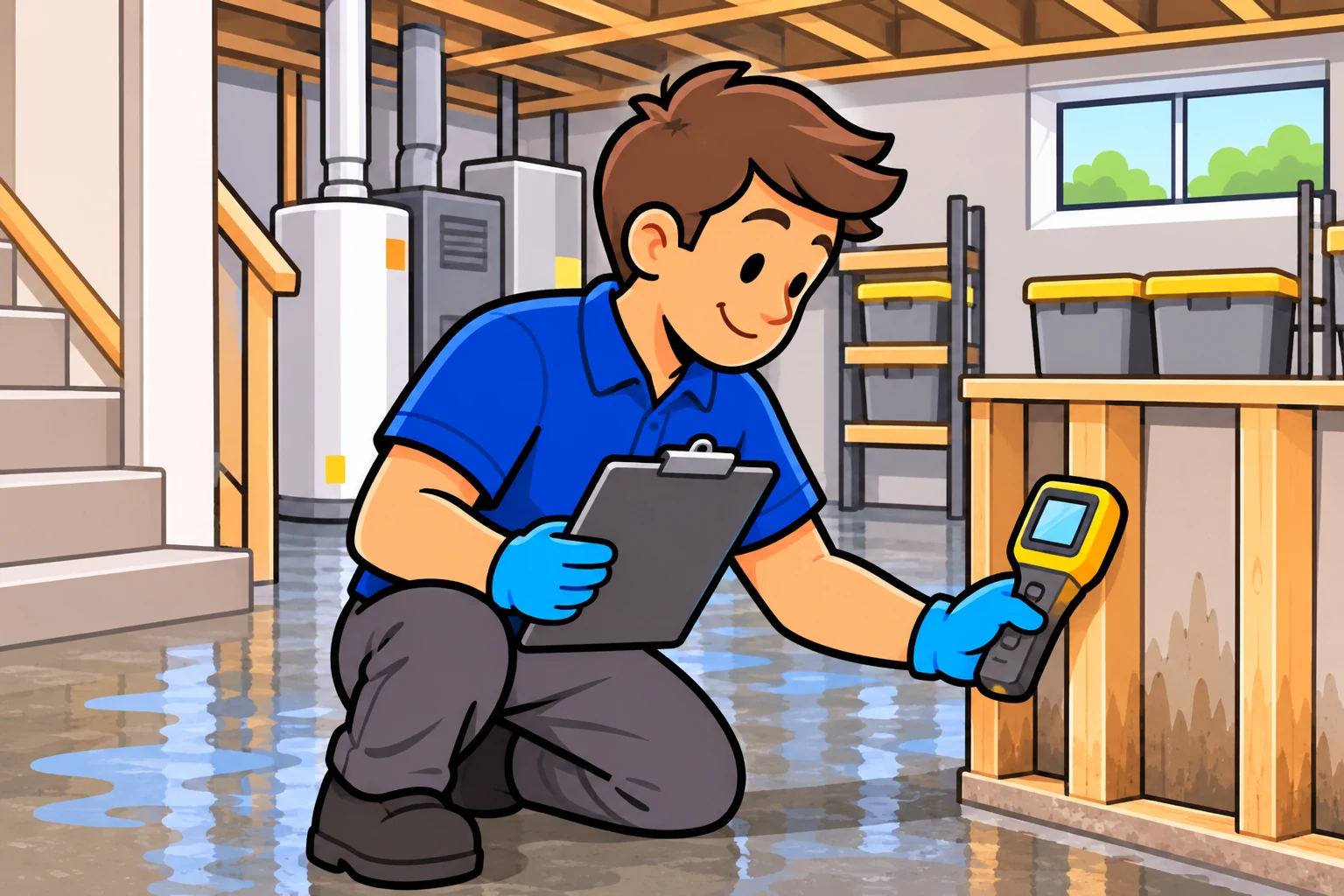
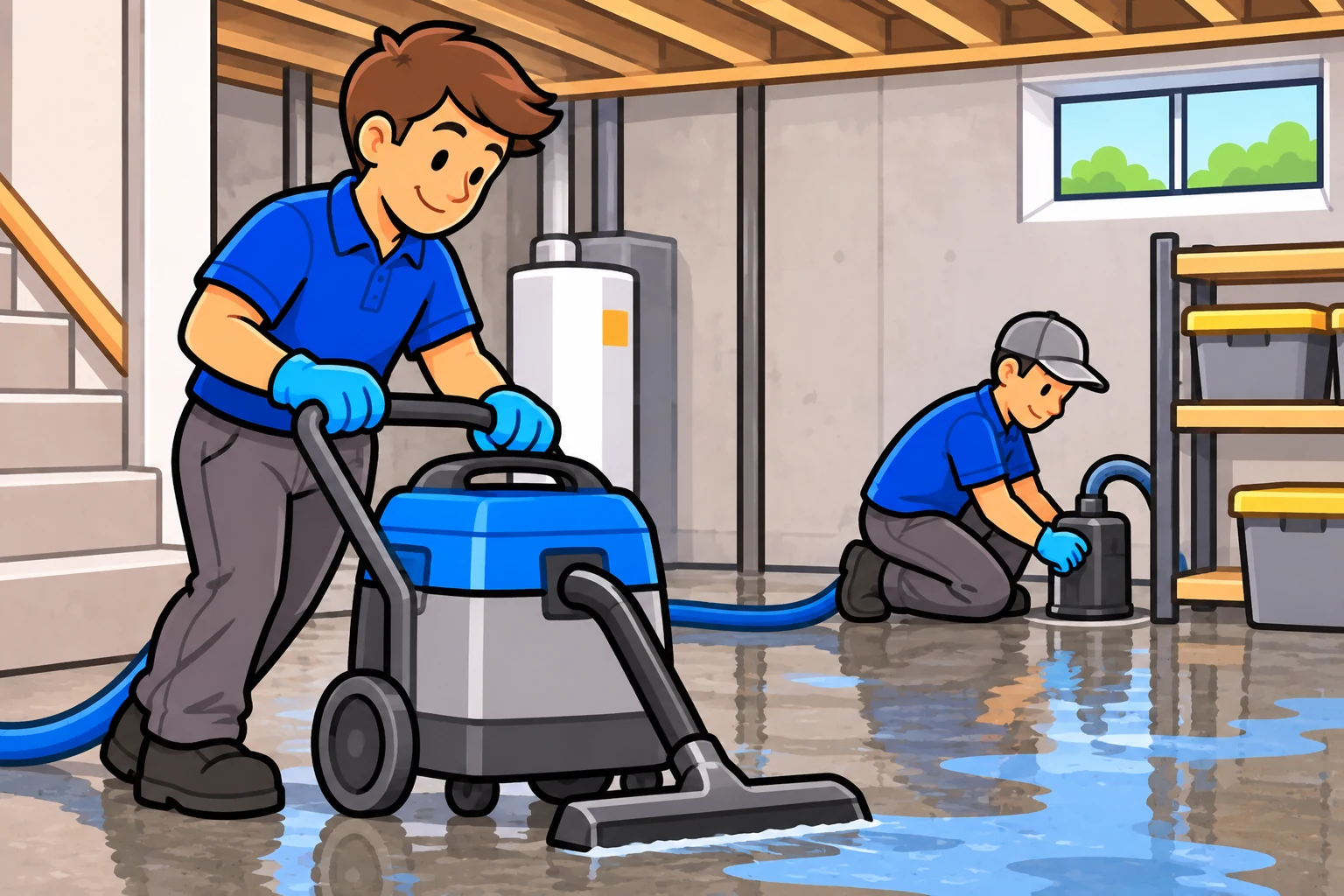
The illustrations below are prompts for pumping and drying questions that come up in Star subdivision basements and on rural properties along Highway 44 or near the Boise River. They do not report on your lower floor or promise that every material can stay. Describe the lowest space, the construction, and any contamination concern so the work is connected to the right plan.
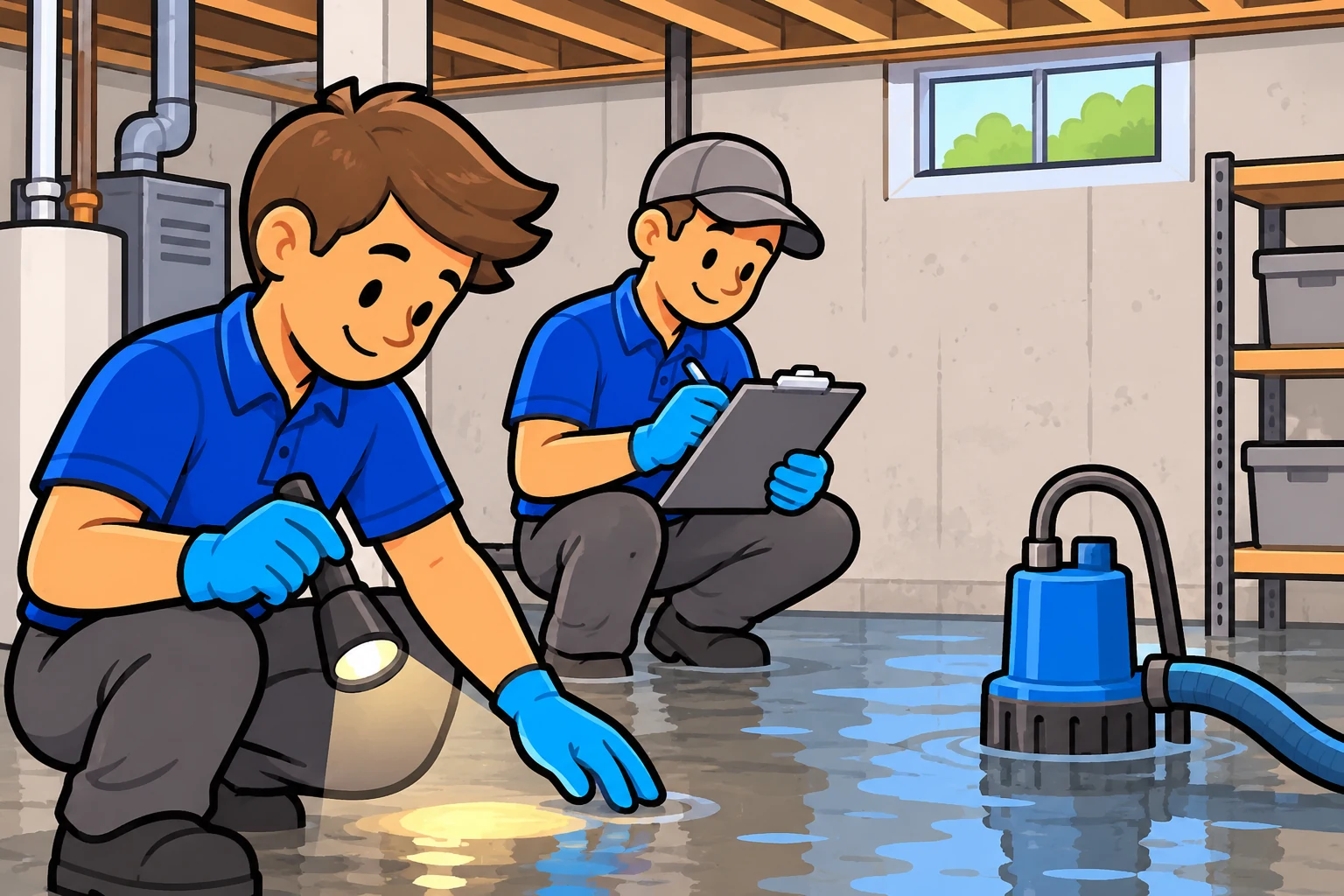
Basement water extraction
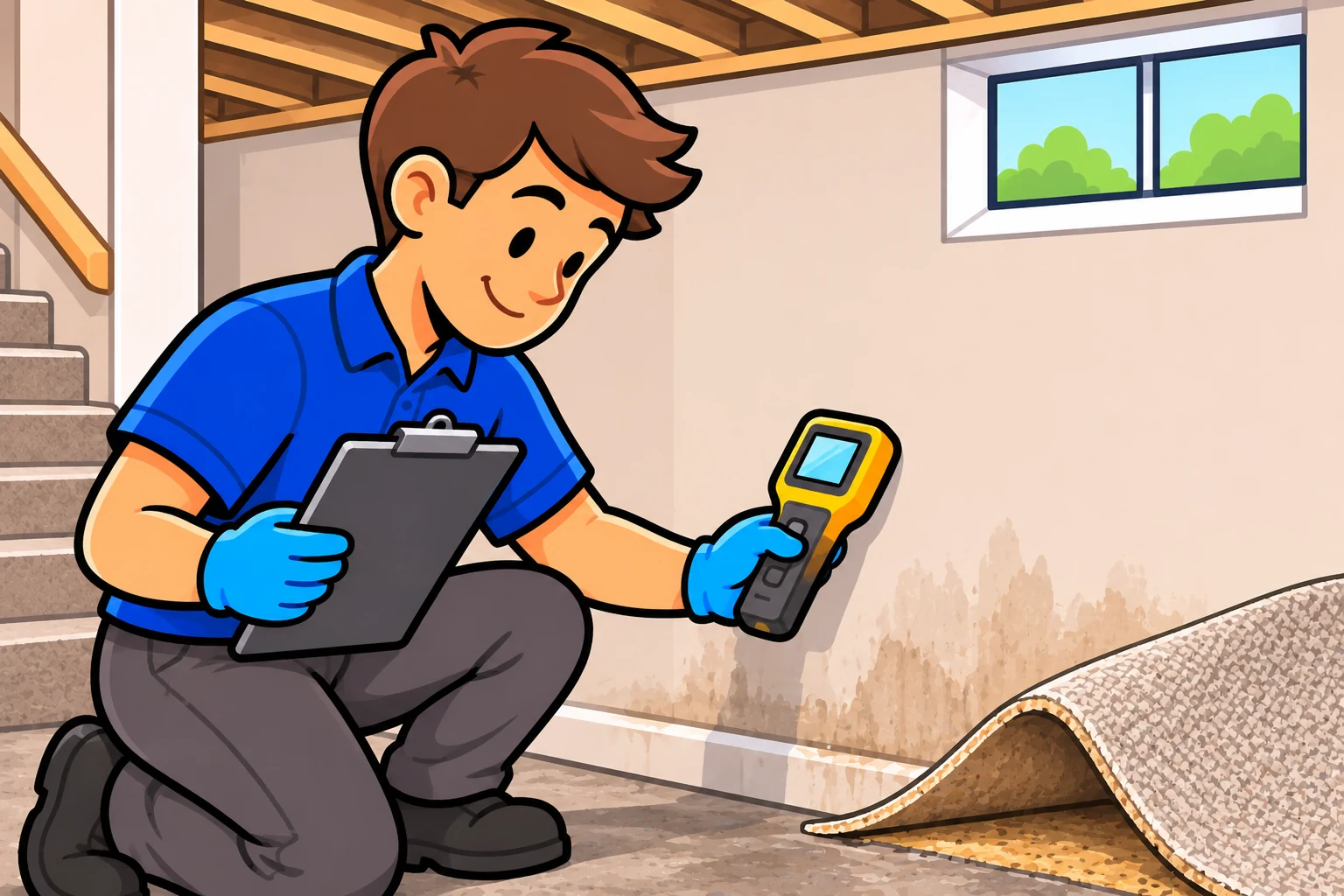
Carpet and wall assessment
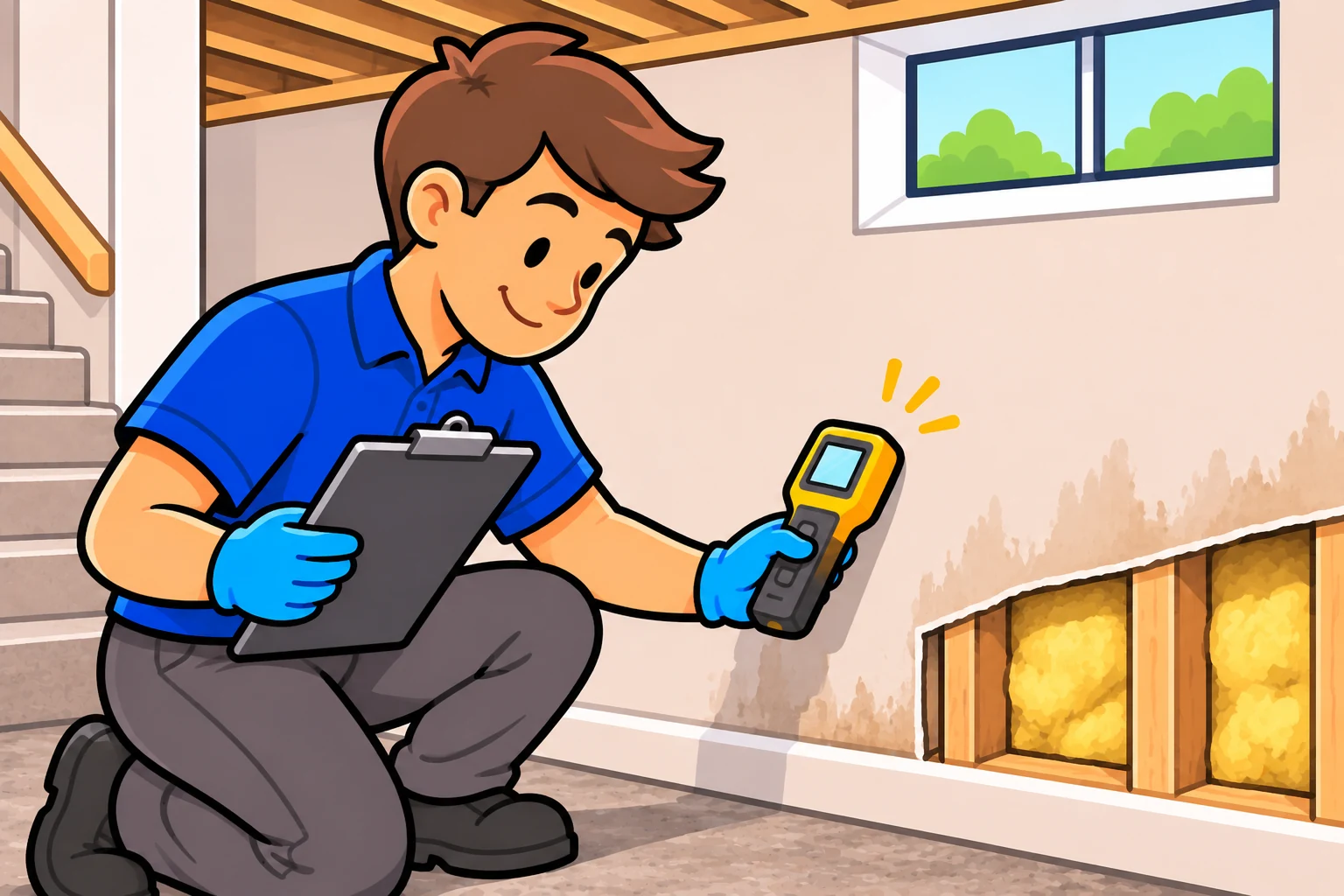
Concealed moisture in wall cavities
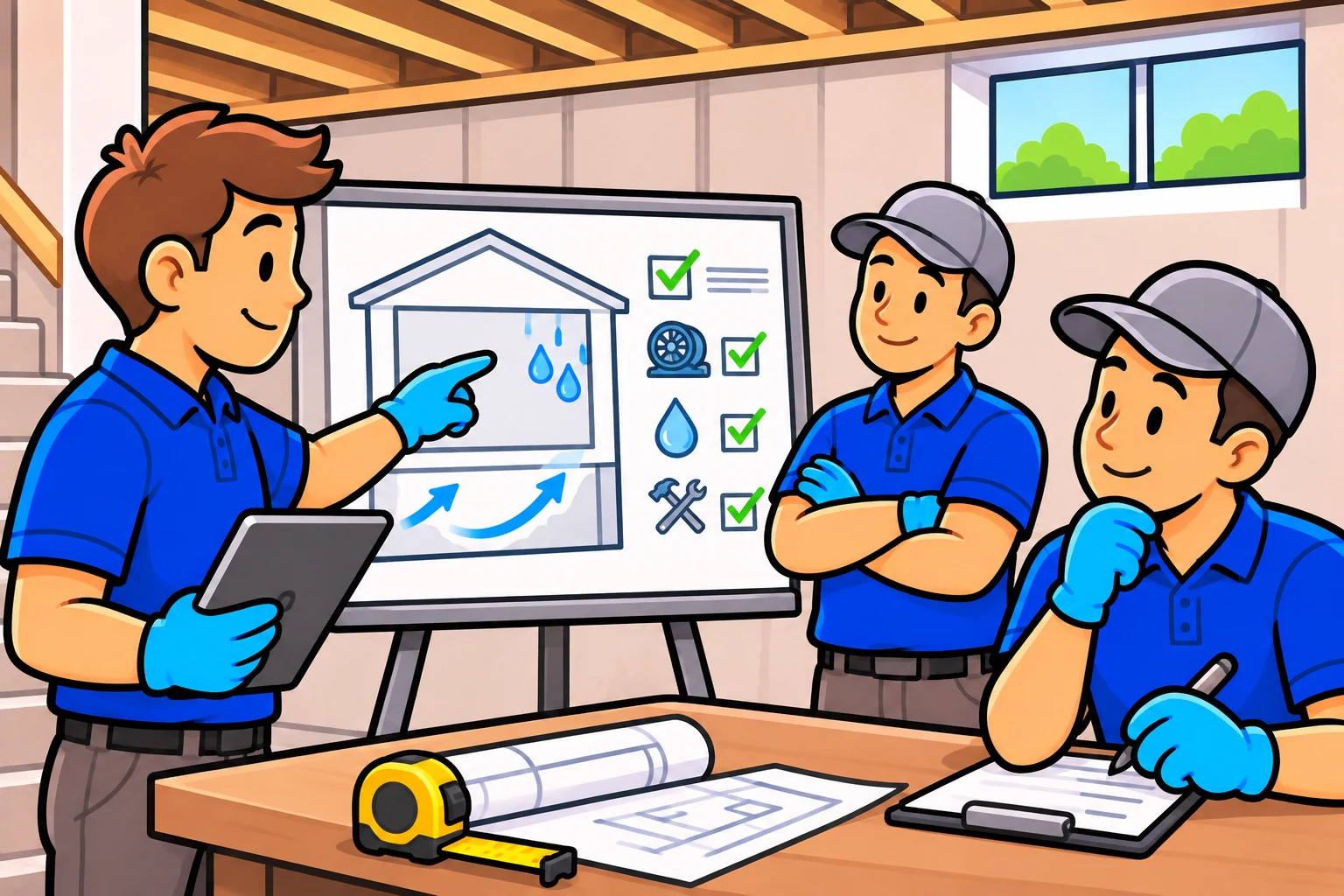
Planning the basement cleanup
Pumping the rooms you can enter
Define the workAccessible standing water is removed from the Star basement, lower room, or crawl opening that can already be used safely, as the first stage of the work.
Crawl-space and basement-cavity checks
Match the site conditionsA crawl space or a basement wall can still hold moisture after the visible surface is cleared, especially where a river or canal history has been noted on earlier Star pages.
Drying before the repair stage
Plan the next stageMoisture response in that Star lower-level assembly helps decide when flooring or a later trade can return.
Serving Star and Nearby Communities Flooded Basement Cleanup in Star
Some Star houses have a basement; many others have only a crawl space. When the lowest space is wet, tell us whether we are going to a newer subdivision, a rural drive off Highway 44, or a lot near the Boise River, and which opening we should use. The crew is dispatched from 5332 N Sawyer Ave, STE 120 in Garden City, not from a Star office, and an arrival time is not guaranteed by the city name.
A river-adjacent or canal-adjacent lot can have a different below-floor history than a mid-block subdivision home, as existing Star pages already note. That history can raise questions. It does not, by itself, identify why the basement or crawl is wet today.
Discuss Your Star Property Request a Free Inspection
If the basement or crawl space at a Star property is wet, call (208) 999-2353. That includes newer subdivision homes and rural lots reached from Highway 44 or near the Boise River. Stay at a dry stair or opening, describe what you can see, and say whether the source has been stopped. Someone answers live 24/7. We aim to arrive within 1-2 hours; that timing is planned from the call and access, not a guarantee. There is no charge for the inspection, and all work is backed by a 1-year warranty.
Call (208) 999-2353Client Reviews What People Say About Us
Disaster Cleanup is 5-Star Rated on Google


Frequently Asked Questions
I already removed the water from a Star basement or crawl. Is the lower level done?
Usually not. Taking out the visible water is only the first stage. A basement or crawl still needs drying of flooring, framing, or insulation, and a check of how far moisture traveled. A surface that looks clear is not the end of the work in that lower space.
Should I go under the house or down the stairs to take pictures before you arrive?
Not if the basement or crawl space is wet, unsafe, or otherwise uncertain. Describe what you can see from a safe opening and the water history, including any earlier seepage. The visit should account for access limits rather than rely on risky preparation.
How is a basement on a rural Star lot or off Highway 44 reached?
Someone answers live 24/7 at (208) 999-2353, and we aim to arrive within 1-2 hours. That timing is planned from the call, access to the lowest space, and current demand, not as a promised appointment. Mention how the lot is reached from 5332 N Sawyer Ave, STE 120 in Garden City, including Highway 44 if that is the way in.
Can basement floors or crawl-space materials in a Star home be saved?
Retention depends on contamination, construction, condition, and drying access. Crawl-space insulation can need a different decision than a finished basement floor. Ask what supports leaving a material rather than assuming it can all stay.
What if the leak in the lower level started when a frozen pipe thawed?
If a shutoff can be reached from dry ground, use it; otherwise stay out of the water. Describe when the leak appeared and whether the basement or the crawl space is involved. Do not open walls or enter a wet crawl to get ready for the visit.
Does living near the Boise River or an irrigation canal explain a basement or crawl-space flood?
No. Those features can be relevant to crawl-space history, but they do not diagnose the current source at your address. Report the actual event and what can be seen safely.
Who decides whether insurance pays for a Star basement flood?
The event, the policy, and the insurer's review decide coverage. A supply failure, a winter freeze, a drain backup, and other water events can be treated differently. Keep photographs, work notes, and source-repair records, and ask the carrier about authorization and exclusions.
Can you handle repairs after a Star basement or crawl is dried?
Repair needs can be discussed with the cleanup, and reconstruction can follow drying. The stages remain separate. All work is backed by a 1-year warranty. Ask what is included and what another trade still has to complete.