Boise, IdahoMold Damage Remediation
Disaster Cleanup provides mold damage remediation in Boise and the Treasure Valley. The work connects affected-material assessment, appropriate separation and cleaning or removal with the moisture conditions that allowed the problem to develop. A dark patch or musty odor alone does not establish species or individual health risk. Leave suspected growth undisturbed and discuss the water history before choosing a treatment or repair scope.
Schedule a Free Inspection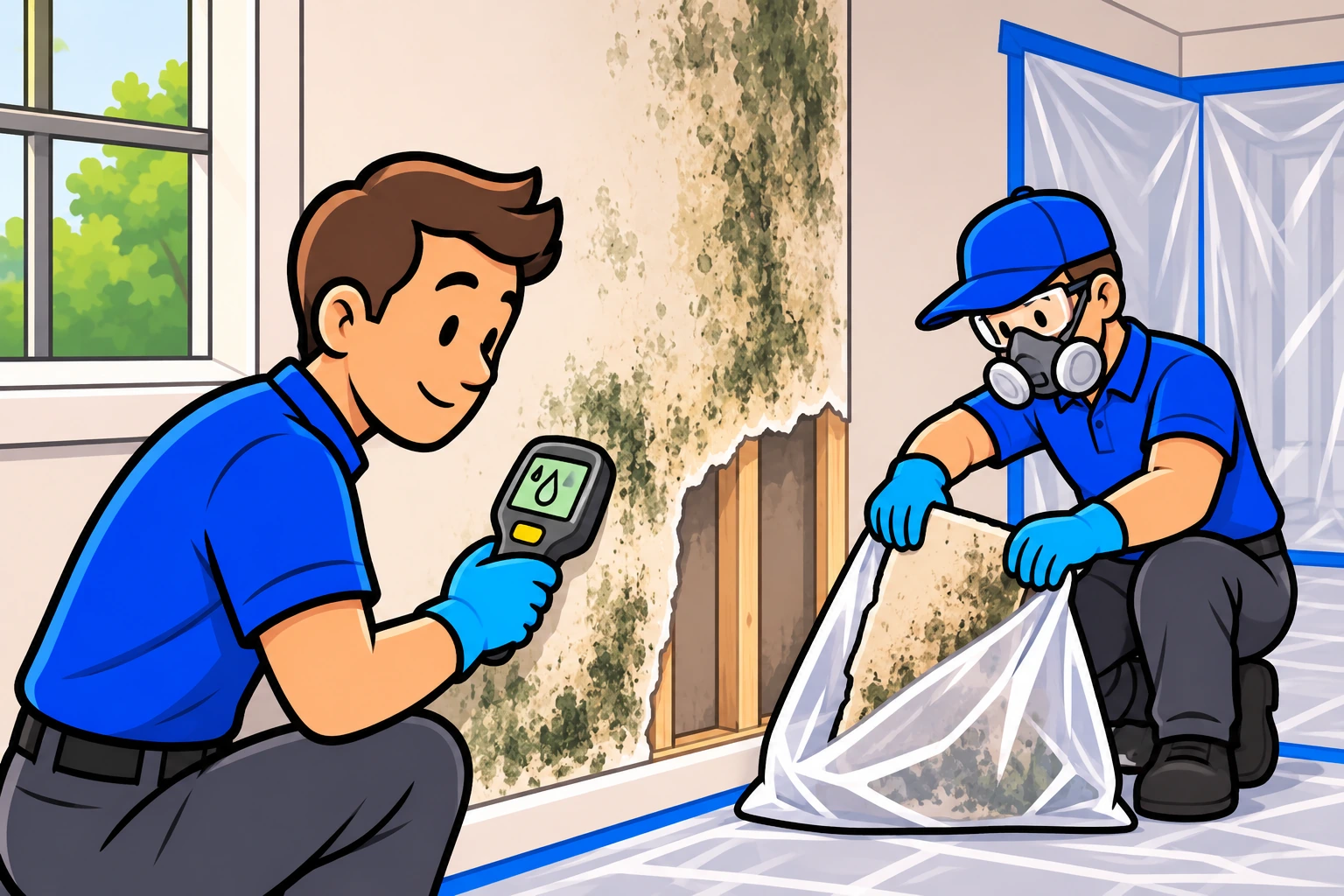
Find out how fast you can get service from your location
MOISTURE CORRECTION AND CONTROLLED REMOVALMold Damage Remediation in Boise
Remediation should address the affected assembly, not only how a stain looks afterward. Porous finishes, framing and hidden interfaces can require different decisions about access and retention. At the same time, a continuing leak or condensation problem can undermine a cosmetic repair. We discuss the moisture source, accessible findings and any remaining uncertainty so cleaning, removal, drying and rebuilding fit together.
The same visible symptom can follow different histories. A cabinet leak, a damp crawl space and roof entry require different source questions even when each has produced a stained finish. Tell us when the condition appeared, whether it changes and what repairs have already been attempted. The work should respond to that history rather than promise a single chemical treatment or a standard removal radius for every property.
When to Discuss Mold Damage Remediation
These symptoms justify a conversation about materials and moisture; they do not establish a species or a health diagnosis. Note any recurring wetting and earlier repairs from a safe position. You do not need to scrape a surface or open a wall to demonstrate the concern.
- Visible suspected growth after a leak
- Persistent musty odor near damp materials
- Wet or damaged insulation in a concealed space
- Recurring stains after a previous cleanup
- A wall or floor assembly that never fully dried
- A property assessment identifying material requiring remediation
What Happens After You Call
We start with the moisture history, material concern and access. The next steps connect a clear work boundary, source-related decisions and the restoration handoff rather than treat every stain as the same automatic remediation package.
- Tell us what is visible, when it appeared and what leak or drying work is already known.
- We discuss the affected space, occupancy and any concealed areas or existing reports.
- Findings guide cleaning, removal, separation and whether additional investigation is useful.
- The project follows material conditions and source-correction needs rather than one universal surface treatment.
- Understand what was addressed, what remains uncertain and which repairs or further evaluation are needed before finishes are restored.
Common Situations We Assess
Slow plumbing leaks
A supply or drain problem can wet materials behind cabinets or walls before a large pool appears. Source repair and evaluation of the affected assembly are separate questions. A repaired pipe does not alone establish that nearby finishes are ready to be covered. Describe whether the source was confirmed and repaired or remains only suspected.
Incomplete drying after a water event
Moisture can remain in insulation, subfloor or wall interfaces after a visible surface feels dry. The event history and accessible findings guide the remediation discussion rather than assume that elapsed time or removed drying equipment proves every layer was unaffected. Moisture can move between layers without a matching stain on every exposed surface.
Attic condensation or roof entry
Different moisture pathways can produce symptoms in similar locations. Explain any roof repairs, ventilation changes and recurrence. Safe access and the condition of insulation and adjacent framing matter; do not climb onto unsupported ceiling surfaces to investigate. Explain the relationship to weather or seasonal use without entering an unsafe attic.
Crawl-space moisture
Plumbing leaks, outside water and other conditions can affect lower building spaces in different ways. Cleanup should connect to the actual source instead of treating every crawl space as one identical moisture problem. Access and contaminated material questions need an appropriate assessment. Ground covering, drainage and plumbing are different questions and should not be conflated.
Repeated wetting around fixtures or windows
A finish that is cleaned repeatedly while the water pathway continues may show recurring symptoms. Describe when wetting occurs and any previous repairs so the plan does not rely on another cosmetic treatment without addressing the underlying condition. Repeated cosmetic cleaning can obscure the history without correcting the wetting pathway.
Unassessed concealed layers
Opening one affected finish can reveal another material or moisture route. The work boundary should be reviewed when new findings appear rather than assume the first visible patch represents every layer or that every adjacent room requires the same removal. A limited view from an opening should not be presented as a full assessment of the cavity.
What to Do First: Safety and Preparation
Do not scrub, sand or tear out suspected growth to prepare for a visit. Avoid directing household fans across affected surfaces or carrying suspect debris through occupied rooms. Discuss water entry and access from a safe position. If the area has electrical or structural danger, address that first, and use a medical professional for personal health questions rather than treating material appearance as a diagnosis.
If someone already used cleaners or removed a finish, explain the activity and the products involved. Do not add another chemical in an attempt to reverse the first treatment. Assessment should consider the actual history and remaining materials rather than require the owner to create a cleaner-looking surface before the visit.
- Leave suspected growth and affected insulation undisturbed.
- Do not blow household fans across suspect surfaces.
- Keep debris out of routine occupied routes.
- Explain known water entry and previous treatment attempts.
Our Mold Damage Remediation Process
1. Discuss the water and repair history
We review the reported concern, earlier leaks and any previous cleaning, testing or removal. A clear chronology helps distinguish the actual assessment question from assumptions based only on the current surface appearance. An earlier water repair may explain the event without proving every material dried afterward.
2. Assess accessible affected materials
Visible findings, moisture information and the construction guide where attention is needed. Sampling may be useful for a defined question, but it is not automatically required in every situation or a substitute for understanding the moisture problem. Accessible findings should be distinguished from assumptions about unexamined cavities and neighboring rooms.
3. Plan the work boundary and separation
The proposed setup considers affected components, nearby occupancy and movement of belongings or debris. The owner should understand which materials will remain and which may need removal rather than receive a blanket promise of universal retention or demolition. Explain belongings and occupied routes so material movement can be considered along with the work area.
4. Clean or remove as appropriate
Material condition and the agreed scope guide controlled handling. Surfaces that remain require a suitable approach, while porous components may have different decisions. A cosmetic stain change should not be treated as the only objective of the work. Newly exposed layers or an unexpected source can require review before the work boundary expands.
5. Address moisture and review progress
Source correction and drying need to fit the assembly. Ask how unresolved water entry and accessible moisture conditions will be considered; a surface treatment cannot by itself prevent recurrence while the underlying pathway remains active. Do not equate removal of drying equipment with proof that every unrelated material was evaluated.
6. Review the restoration handoff
Discuss the completed boundary, any evaluation steps applicable to the project and remaining repair needs. Rebuilding should follow the agreed condition and source decisions, without implying that one project guarantees no future growth anywhere in the property. Ask what the next trade needs to know so the repair does not conceal unresolved source or access questions.
Why Choose Disaster Cleanup
A useful remediation plan explains both the material work and the moisture question. Disaster Cleanup offers related water-damage, testing, concealed-space and reconstruction services, allowing those needs to be discussed together. The proposed work should still be specific: which assembly is affected, which source correction is assumed and which conclusions cannot be made about inaccessible areas or a person's health.
An understandable remediation boundary helps avoid two opposite mistakes: treating every nearby component as requiring removal or assuming all materials can remain after a cosmetic wipe. Ask how condition and access support the proposed decisions. Where a concealed space cannot be evaluated, the limitation should stay explicit. This allows an owner to review the work and coordinate repairs without turning a limited observation into a guarantee about the entire building.
What Affects the Project Schedule?
The affected material, access, separation, removal needs, drying response and source repairs influence the sequence. Laboratory questions or verification arrangements may add separate stages where relevant. Discuss the actual plan after assessment instead of relying on a fixed remediation duration, a guaranteed arrival or an assurance that every concern can be resolved in one visit.
Insurance and Project Documentation
The policy and cause determine coverage, including how a sudden reported loss differs from long-running moisture or maintenance concerns. Keep source-repair records and the proposed work scope. Your insurer decides authorization and payment; visible growth, a sample result or a remediation estimate does not establish that every task or later repair is covered.
Address the moisture question without disturbing the growth
For a stable concern, leave the surface undisturbed and arrange assessment with the leak, odor or repair history available. If water is still entering, describe it rather than wait for testing before reporting the active source. Do not use strong chemical combinations or uncontrolled removal as preparation, and obtain appropriate emergency assistance where immediate hazards exist.
For a stable condition, useful preparation is assembling the history and arranging authorized access. For active water or immediate hazards, report those conditions promptly. Neither situation benefits from an owner sanding growth or mixing cleaners to make the room appear ready for inspection.
Information That Helps Define the Next Step
- Visible suspected growth after a leak
- Persistent musty odor near damp materials
- Wet or damaged insulation in a concealed space
- Recurring stains after a previous cleanup
Mold Damage RemediationAssessment, Work Planning and Restoration
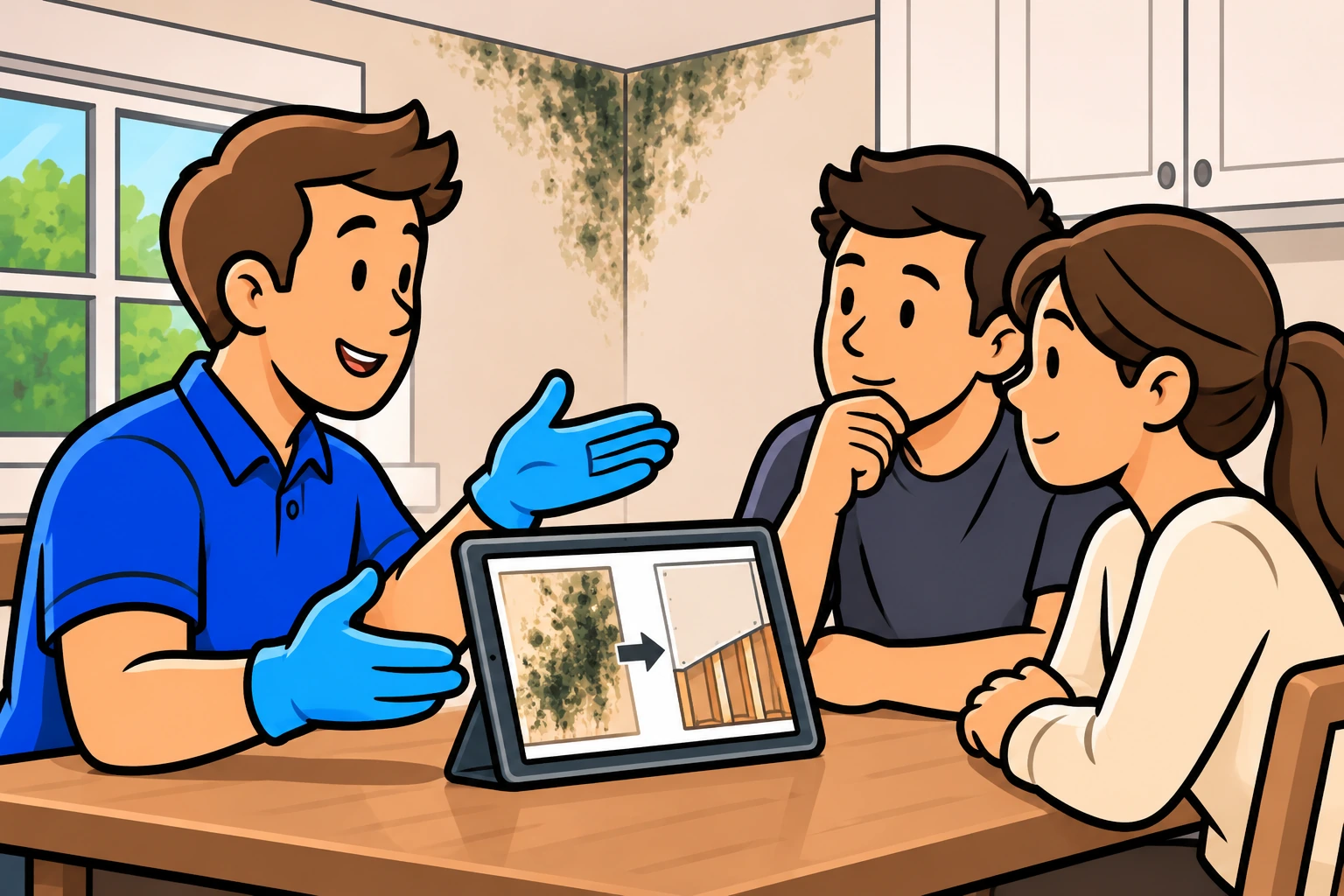
The illustrations represent affected materials, moisture questions and restoration work, not a visual identification guide. A remediated wall, a damp crawl space and a wet floor can each need different access and retention decisions. Discuss the actual source history and assembly before agreeing to removal or treatment. The objective is a defined work scope connected to moisture correction and rebuilding, without claiming one product can eliminate every future mold condition.
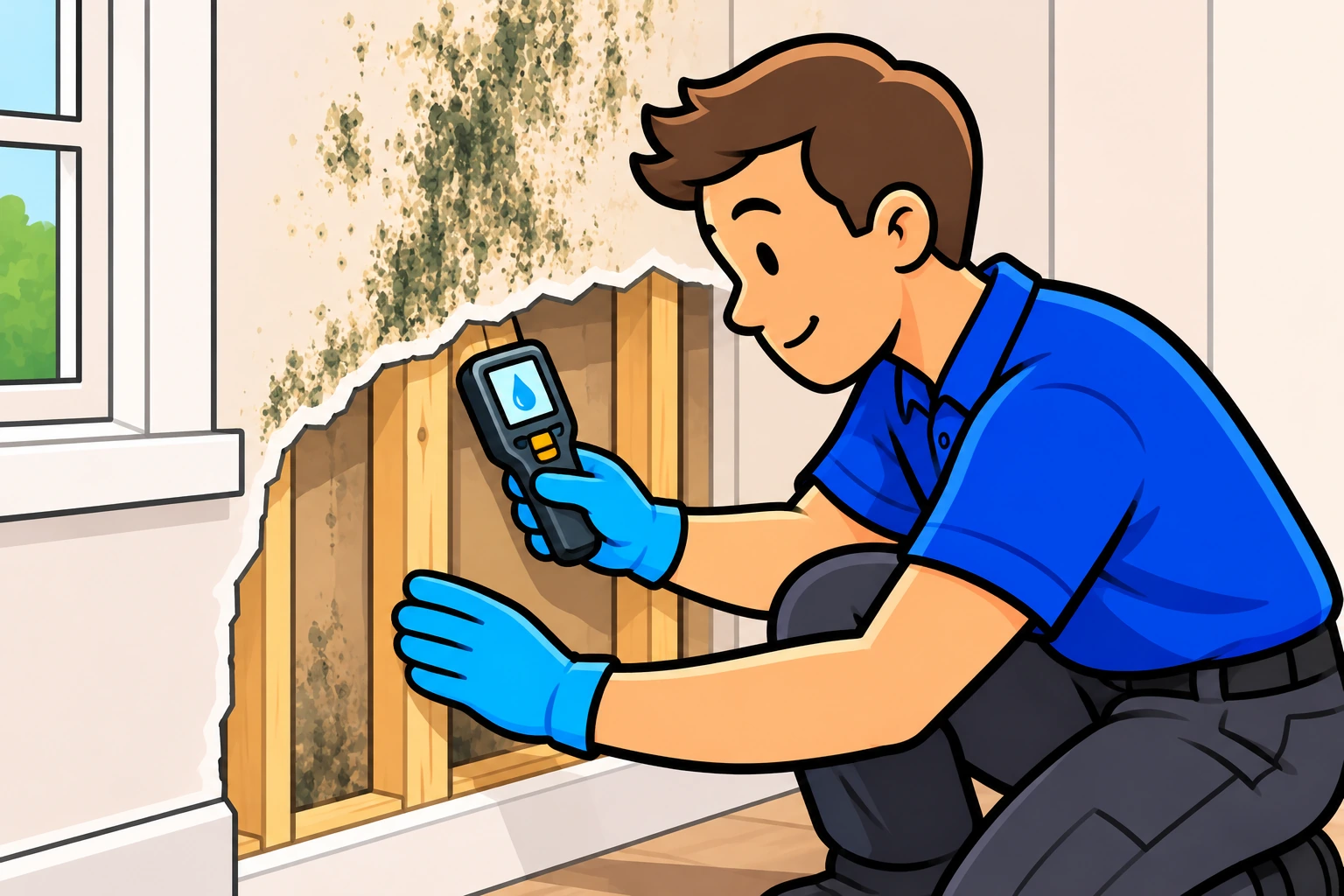
Assessing affected building materials
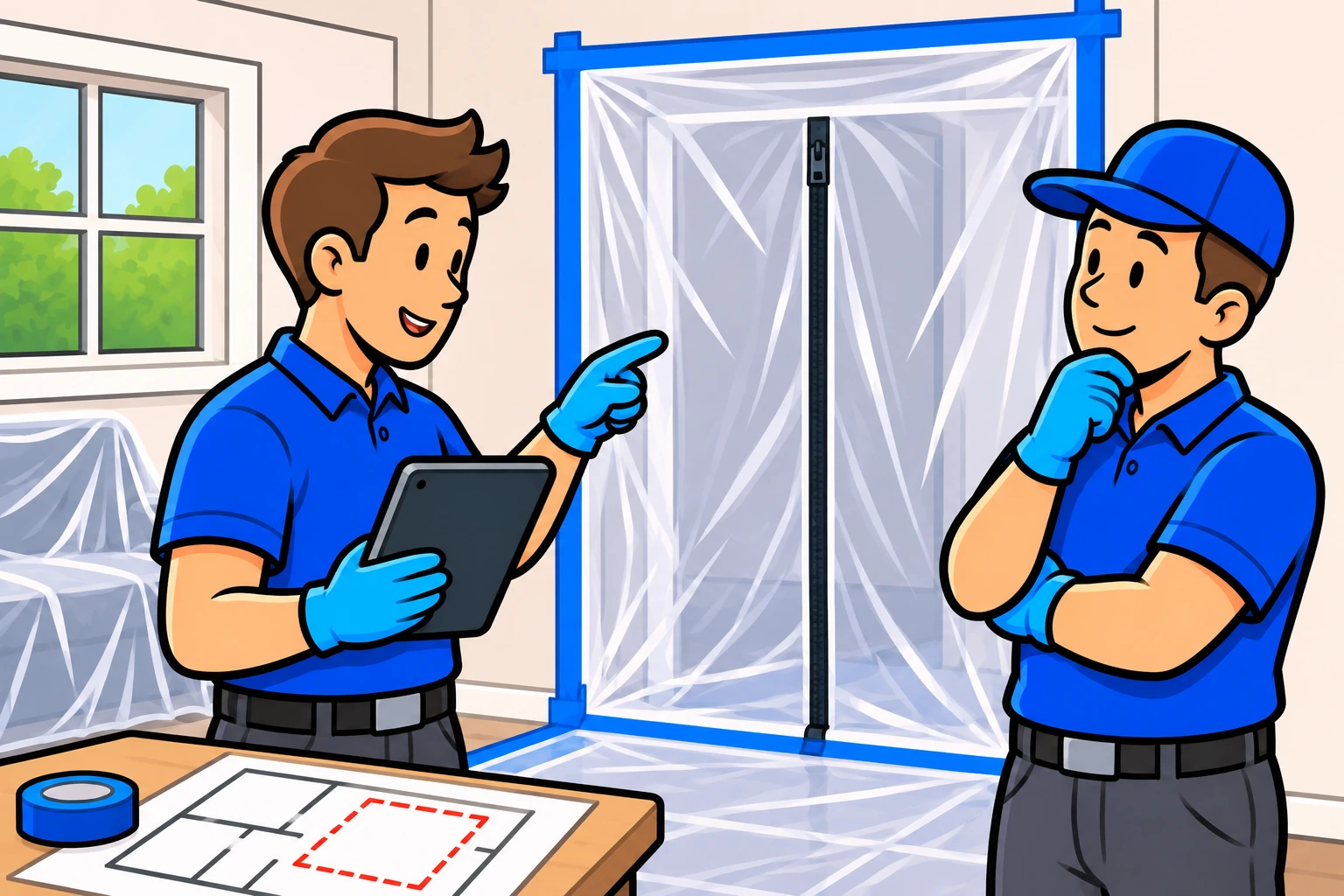
Planning the controlled work area

Addressing moisture and material access

Coordinating cleanup and rebuilding
Material decisions before cosmetic results
Define the workDifferent surfaces and layers require different access, cleaning and retention decisions.
Moisture connected to the work
Match the site conditionsA continuing leak or condensation pathway can remain unresolved after a stain has been removed or covered.
Clear scope and limitations
Plan the next stageFindings should describe the affected area and supported next steps without universal health, clearance or recurrence guarantees.
Serving Boise and the Treasure ValleyMold Damage Remediation in Boise and Nearby Communities
Mold damage remediation is offered for Boise and the Treasure Valley service areas listed on this website. Homes and commercial buildings can have different moisture pathways even on the same street. Share the address, symptoms and known repairs when arranging assessment. Local examples help frame questions, but a neighborhood or city name does not identify the material condition or cause at your property.
The existing service-area listings include Ada County, Boise, Caldwell, Canyon County, Eagle, Emmett, Garden City, Hidden Springs, Horseshoe Bend, Kuna, Marsing, Meridian, Middleton, Mountain Home, Nampa, Parma, Payette and Star. Call to discuss your address and access needs.

Discuss Your PropertyRequest a Free Inspection
Contact Disaster Cleanup to discuss suspected growth, an unresolved moisture history or remediation planning. Arrange a free initial inspection and explain access limits or previous work. Ask how findings support the proposed cleaning or removal boundary and what separate testing, source repair or reconstruction decisions remain before authorizing the project.
Call (208) 999-2353Client ReviewsWhat People Say About Us
Disaster Cleanup is 5-Star Rated on Google


Frequently Asked Questions
Is mold remediation just cleaning a stain?
No. A stain's appearance does not describe the whole affected assembly or moisture problem. The scope may involve cleaning, material removal, drying and source correction depending on conditions. A surface that looks better afterward should not be treated as proof that every concealed concern has been addressed. The condition of the remaining assembly matters as well as the visible finish.
Does black-colored growth identify a particular mold?
No. Color alone does not establish species or individual health implications. Treat suspected growth as a property condition needing an appropriate assessment rather than a diagnosis from a photograph. Discuss whether sampling would answer a useful question for the proposed work. Any proposed identification should be supported by the assessment or sampling rather than a color label.
Should I spray bleach before you inspect?
Do not scrub, sand or apply chemicals simply to prepare for assessment. Chemical use can alter the surface without addressing underlying moisture or material condition. Explain any products already used and avoid mixing cleaners or moving suspect debris through occupied rooms. Tell the team what has already been used so the original history is not lost.
Will every affected material need demolition?
Retention depends on material construction, condition and feasible cleaning or drying access. A smooth surface and an absorbent finish may require different decisions. The proposal should explain the boundary rather than promise either that everything can stay or that every nearby component must be removed. Different layers in one room can lead to different decisions about retention and access.
Is testing always required before remediation?
Testing can be useful when it answers a defined question, but sampling and remediation are different scopes. Accessible findings and moisture history also matter. Ask what a proposed sample would establish and what it cannot determine, including conditions in unexamined layers. A laboratory question should have an understood purpose and separate charges where applicable.
Can you guarantee mold will never return?
No. Future water entry, condensation or another moisture event can create new conditions. The work should connect to source correction and clearly describe the area addressed. No remediation of one assembly guarantees every concealed surface or all future moisture behavior throughout a property. Future maintenance and new water events remain relevant even after a well-defined project is complete.
When can repairs begin after remediation?
The repair handoff depends on the agreed cleanup condition, moisture source and relevant assessment or drying decisions. New finishes should not cover a continuing problem. Discuss the remaining work and any project-specific evaluation rather than assume a standard number of days applies. The handoff should make clear what was addressed and which prerequisite repairs remain.
Does remediation diagnose a health concern or establish coverage?
No. Medical professionals address individual health questions, and the insurer determines coverage under the policy. A property assessment or work scope should not substitute for either decision. Keep material findings, source history and proposed repairs understandable for their respective purposes. Keep the property findings, medical concerns and claim decisions in their appropriate separate conversations.