Water Damage Drying in Melba, Idaho: How Dehumidifiers and Air Movers Really Dry a Home
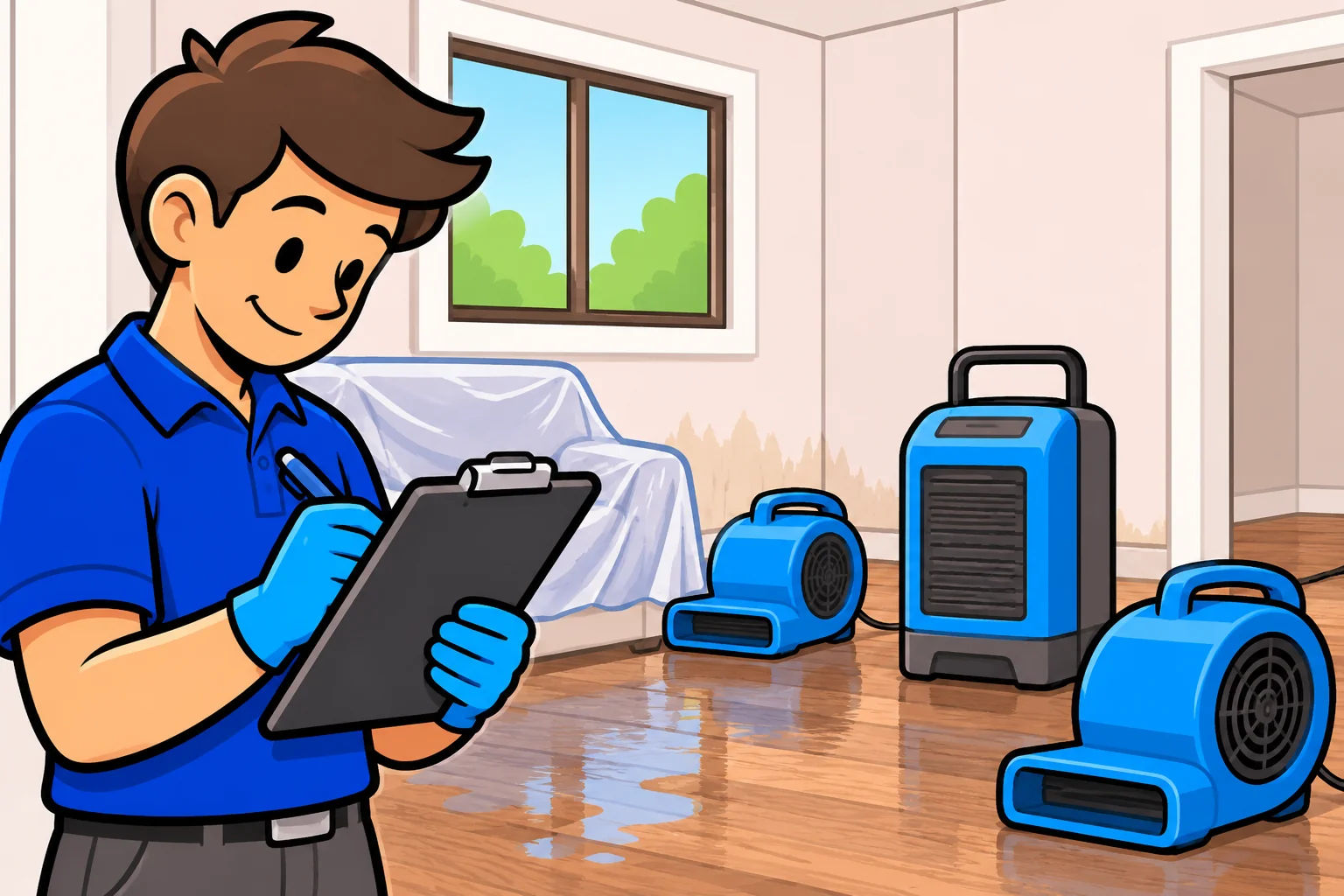
Dry to the touch is not the same as dry.
Water damage drying in Melba, Idaho usually starts with a mop, a few towels, and a box fan. A day later the floor looks fine, so it is easy to assume the job is done. The trouble is that drywall, subfloors, insulation, and crawl space framing keep holding water long after the surface dries, and that hidden moisture is what leads to musty smells, warped floors, and mold. This guide compares household fans, store-bought dehumidifiers, and professional drying equipment, explains what a real drying process looks like, and lists the signs that a Melba home still is not dry.
Why Drying Takes Extra Care in Melba Homes
The City of Melba calls itself the “Seed Heart of America.” It is a small farming town in the Snake River Valley, surrounded by fields of potatoes, beans, sugar beets, onions, corn, and grain, and known for seed crops like onions, carrots, peas, and sweet corn. Just south of town, Canyon County runs Celebration Park, Idaho’s only archaeological park, along the river.
That mix of in-town houses and rural properties shapes how water damage plays out. Homes inside city limits get drinking water and sewer service through Melba Public Works. Farmhouses and acreage outside town often come with private wells, shops, and outbuildings, and plenty of homes across the Treasure Valley sit over crawl spaces instead of basements.
Winter adds another wrinkle. A leak found in November or January often soaks a space that is cold to begin with, like a crawl space, a mudroom, or a closet on an outside wall. Cold, damp air dries slowly, and as you will see below, most household dehumidifiers struggle in a chilly room.
Where Water Hides After the Puddle Is Gone
Standing water is the part you can see. The moisture that causes long-term trouble is the water that has already moved into building materials.
Drywall and baseboards
Gypsum board wicks water upward like a paper towel. A wall can look dry at eye level while the bottom few inches, and the back side facing the stud cavity, stay wet.
Carpet pad and the subfloor
Carpet can feel only slightly damp while the pad underneath is saturated. Water that gets through the pad soaks into the wood subfloor, where a fan blowing across the carpet barely reaches it.
Under hard flooring and cabinets
Laminate, vinyl plank, and hardwood trap water beneath them. Kitchen and bathroom cabinets sit on top of the floor, so a dishwasher or sink leak can pool under the toe kick where no one looks.
Wall cavities and insulation
Insulation behind the drywall holds water and blocks airflow, which keeps the inside of the wall damp for a long time.
The crawl space
Water from a leak upstairs runs down through the floor and collects on the vapor barrier or the soil below. Joists, insulation, and the subfloor above can stay wet for weeks if no one goes down to check.
Comparing the Tools: Fans, Home Dehumidifiers, and Professional Drying Equipment
Drying a building is about two jobs happening at once: getting water to evaporate out of materials, and then pulling that moisture out of the air before it soaks back into something else. Here is how the common options handle each job.
Household box fans and ceiling fans
Fans speed up evaporation from surfaces, which helps in the first hours. On their own, though, they only move moisture around the room. Without something to remove that water vapor, humidity climbs and the damp air settles into drywall, furniture, and the rest of the house.
Store-bought portable dehumidifiers
A home dehumidifier does remove water from the air, and it is a smart tool for a damp room. ENERGY STAR’s dehumidifier buying guide recommends the largest capacities for spaces where walls or floors are sweating or seepage is present. It also warns that frost can form on the coils when the air drops below 65 degrees Fahrenheit, which can make the unit cycle on and off without removing moisture. That matters in a cold Melba crawl space or an unheated room in winter.
Professional air movers
Air movers are low, powerful blowers aimed across wet floors and up along walls. They push a steady sheet of air over the surface so water keeps leaving the material. Technicians place them based on where moisture readings are highest, not just where the room looks wet.
Commercial dehumidifiers
Restoration-grade dehumidifiers are built to pull large amounts of water out of the air in a closed-off work area. Some are refrigerant units designed to keep working as the air gets drier, and desiccant units can handle colder spaces where a typical home model loses ground.
Moisture meters and humidity readings
The tool that ties it together is measurement. Moisture meters show how wet a wall, floor, or framing member is, and humidity readings show whether the air is actually getting drier. Without numbers, “dry” is a guess.
What a Professional Drying Job Looks Like, Step by Step
1. Find the edges of the wet area
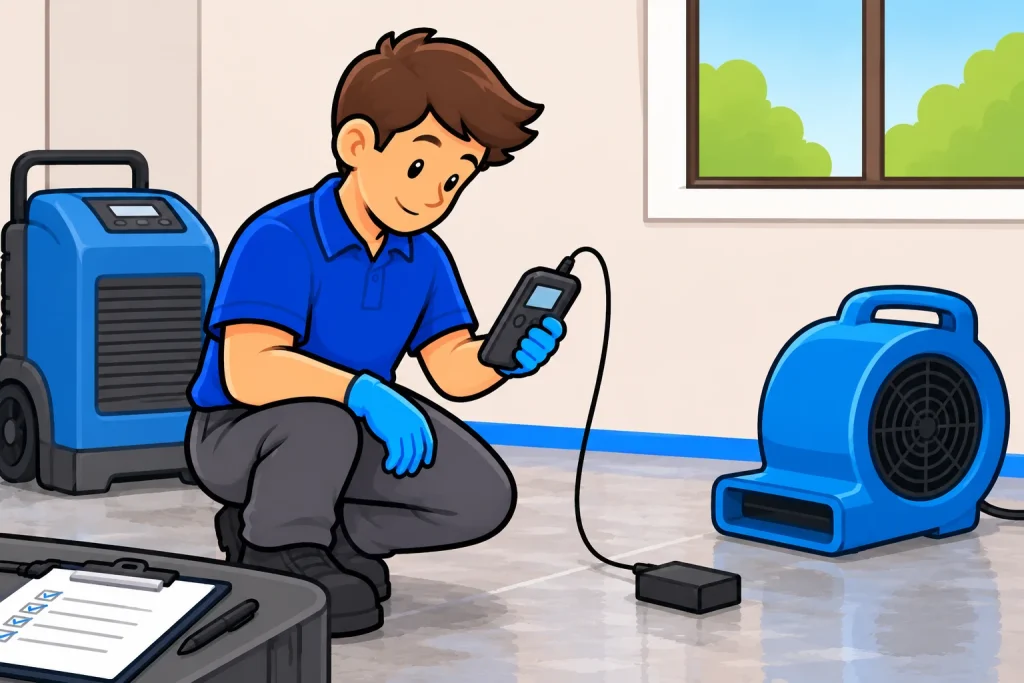
Before any equipment goes in, the technician checks walls, floors, cabinets, and the crawl space with moisture meters to map how far the water traveled. The wet area is almost always larger than the stain.
2. Pull out the bulk water
Extraction removes standing water from floors and carpet. Every gallon pulled out now is a gallon the dehumidifiers will not have to remove later. Our emergency water removal crews handle this first stage.
3. Remove what will not dry in time
The CDC’s mold guidance advises removing or replacing carpets and upholstery that have been soaked and cannot be dried right away. Saturated carpet pad, swollen particleboard, and wet insulation often fall into this group.
4. Set up a drying chamber
Air movers and dehumidifiers go in, and the work area is closed off so the equipment is drying one space instead of the whole outdoors. ENERGY STAR gives the same advice for home units: keep doors and windows to the space closed while the dehumidifier runs.
5. Measure, adjust, and measure again
Readings are taken and recorded on each visit. Equipment gets moved toward the spots that are lagging, and pieces come out as areas reach their drying goal. Those records also help document the claim for your insurance company.
6. Confirm it is dry before anything gets closed up
New drywall, flooring, or paint goes on only after the readings say the materials underneath are dry. Covering damp framing is one of the most common ways a mold problem starts months after the leak. That is the core of our water damage restoration process.
What You Can Do in the First Few Hours
The EPA’s brief guide to mold, moisture, and your home says it is important to dry water-damaged areas and items within 24 to 48 hours to prevent mold growth. These steps buy you time until drying equipment arrives:
- Stop the source. Close the fixture valve or the main shutoff. On a city connection, Melba Public Works is the contact for the city’s water system. On a private well, turn off the pump at its breaker so it stops pushing water into a broken line. Our guide to well pump and pressure tank leaks walks through that in more detail.
- Be careful with power. Stay out of standing water near outlets and cords, and shut off power to wet areas at the panel only if you can reach it from a dry spot.
- Take photos and video. Capture the water, the source, and damaged belongings before you move things.
- Get belongings up and out. Lift furniture off wet carpet, pull rugs, and move boxes and keepsakes to a dry room.
- Remove clean water you can reach. A mop or wet-vac helps with clean water from a supply line. If the water came from a toilet, a sewer line, or outdoors, stay out of it and call for help.
- Run what you have. Fans and a home dehumidifier are worth turning on while you wait, as long as the area is electrically safe.
If water has reached walls, carpet pad, more than one room, or the crawl space, that is more than household equipment can handle within the EPA’s 24 to 48 hour window.
Signs Your Melba Home Is Not Fully Dry Yet
Watch for these clues in the days and weeks after a leak, even if everything looked fine at first:
- A musty or earthy smell that comes back when the house is closed up. The CDC notes mold can smell musty.
- Wood or laminate floors that cup, crown, or feel soft underfoot.
- Baseboards that swell, separate from the wall, or show a water line.
- Paint that bubbles or peels near the floor.
- Windows that sweat on the inside. ENERGY STAR suggests keeping indoor humidity around 30 to 40 percent during the heating season in colder climates to prevent window condensation.
- A humidity gauge that keeps reading above 50 percent. The CDC recommends keeping indoor humidity no higher than 50 percent all day long.
If you notice any of these, a moisture check can tell you whether the problem is leftover water, a new leak, or the start of mold growth that calls for mold damage remediation.
Myths vs. Facts About Drying Out a Wet House
Myth: If the carpet feels dry, the floor is dry.
Fact: The pad and subfloor under carpet can stay wet long after the fibers on top feel dry. Only a moisture reading underneath tells you for sure.
Myth: Cranking the heat will dry everything out.
Fact: Warm air helps water evaporate, but that moisture has to go somewhere. Without dehumidification it spreads into other rooms and materials, which can make the problem bigger.
Myth: Opening every window is the fastest way to dry a house.
Fact: Fresh air can help early on, but drying equipment works best in a closed space. ENERGY STAR advises keeping doors and windows closed while a dehumidifier runs.
Myth: A little dampness in the crawl space is normal, so it can wait.
Fact: Water from a plumbing leak is not normal ground moisture. It soaks joists, insulation, and the subfloor, and it needs the same 24 to 48 hour urgency as water on the main floor.
After It Is Dry: Making a Repeat Less Likely
Once the home is dry, fix the cause and look for weak spots. A crawl space that stays damp may need its vapor barrier, insulation, or drainage addressed through crawl space and attic restoration. Our article on crawl space flooding in Middleton covers warning signs that apply to Melba homes, too.
For supply lines, water heaters, and appliances, Disaster Cleanup sells and installs leak prevention systems with sensors and automatic shutoff valves that can stop water before it spreads. Not sure whether an old leak left moisture behind? Start with a free inspection.
Need Help Drying Out a Home in Melba?
Disaster Cleanup is a veteran-owned restoration company serving Melba, the rural properties around it, and the rest of Canyon County and the Treasure Valley since 2015. Local pros answer our phones live 24/7, and we’re typically on site within 1–2 hours. Call (208) 999-2353 or schedule a free inspection. You can pay after your insurance claim closes, all work is backed by a 1-year warranty, and se habla español. Idaho contractor registration RCE-67826.
Melba Water Damage Drying FAQs
How long does it take to dry a house after water damage?
It depends on how much water there was, what it soaked into, and how cold and humid the space is. Rather than going by the calendar, a professional drying job keeps going until moisture readings show the materials have reached their drying goal.
Is my own dehumidifier enough?
For a small spill caught right away on a hard floor, it may be. Once water has reached drywall, carpet pad, cabinets, or the crawl space, a single home unit usually cannot keep up, especially in a room below 65 degrees, where ENERGY STAR notes frost can form on the coils.
Why can’t I just open the windows and wait?
Waiting is the risk. The EPA advises drying water-damaged areas within 24 to 48 hours to prevent mold growth, and materials inside walls and under floors rarely dry that fast without equipment.
Will insurance pay for professional drying?
That depends on your policy and what caused the water. Call your agent or insurer early and keep photos and receipts. With Disaster Cleanup, you can pay after your insurance claim closes.
Do you serve farms and rural homes outside Melba city limits?
Yes. We serve Melba and the rural properties between Canyon County communities. Give us the full address when you call so we can route a crew.
Drying Terms to Know
Relative humidity (RH): The amount of water vapor in the air compared with the most the air can hold at that temperature, shown as a percentage.
Wicking: The way porous materials like drywall and wood pull water upward and outward from the wet spot.
Air mover: A low, high-velocity blower used to push air across wet floors and walls so moisture keeps evaporating.
Drying chamber: A closed-off area where air movers and dehumidifiers work together without fighting outside air.
Desiccant dehumidifier: A dehumidifier that uses a moisture-absorbing material instead of cold coils, which helps it work in cooler spaces.
Drying goal: The moisture reading a material needs to reach before it is considered dry and ready for repairs.