Water Damage Repair in Meridian, Idaho: What to Do and What to Expect
A practical guide to protecting your home after a leak or flood
A burst supply line, overflowing appliance, or hidden plumbing leak can leave a Meridian home with more than a wet floor. Water can travel beneath flooring, soak insulation, and collect inside walls long after the visible puddle is gone. Knowing what to do first—and when to call for help—can make the repair process safer and more manageable.
Why water damage repair starts with more than drying the surface
Water damage repair involves stopping the source, assessing affected materials, removing water, drying the structure, and repairing what cannot be restored. The right approach depends on where the water came from, how long it has been present, and which parts of the property are wet.
A leak under a kitchen sink, for example, may affect the cabinet base, subfloor, and wall behind the plumbing. A ceiling stain below an upstairs bathroom may indicate moisture in the ceiling cavity, not just a cosmetic problem. Painting over the stain without finding and correcting the leak can leave the underlying damage unresolved.
Prompt attention matters because mold can grow on wet building materials and furnishings. The U.S. Environmental Protection Agency recommends cleaning and drying wet materials within 24 to 48 hours when possible. That is a prevention goal, not a guarantee that every material can be saved. (epa.gov)
Common signs of hidden water damage
Standing water is easy to spot. Slower leaks often leave subtler clues, especially around bathrooms, kitchens, laundry rooms, crawl spaces, and exterior walls. Watch for:
- Discoloration or expanding stains on ceilings and walls.
- Peeling paint, bubbling finishes, or soft drywall.
- Warped floorboards, loose flooring, or swollen cabinet materials.
- A persistent musty odor or visible mold growth.
- Damp insulation or standing water in a crawl space.
- An unexplained increase in water use or the sound of running water when fixtures are off.
These signs do not identify the cause on their own. A restoration professional can assess the affected area, while a plumber or other appropriate specialist may be needed to locate and repair the source.
Did you know?
- Dry-looking does not always mean dry. Moisture can remain inside walls, under flooring, and in other concealed spaces. Moisture measurements help inform when materials are ready for repairs. (epa.gov)
- The water source changes the cleanup plan. Sewage and floodwater may carry contaminants and should not be treated like a small leak from a clean supply line. (epa.gov)
- Air movement is not always the first step. Fans can spread mold or contaminants, so avoid using them when mold is visible or the water may be contaminated. (epa.gov)
Different water problems call for different responses
| Situation | Primary concern | Practical response |
|---|---|---|
| Supply line or appliance leak | Water can spread beneath cabinets and flooring. | Stop the source if safe, then assess and dry affected materials. |
| Roof or exterior leak | Moisture may enter ceilings, insulation, or walls. | Keep clear of sagging ceilings and arrange for the source and interior damage to be assessed. |
| Sewage backup or floodwater | The water may contain harmful contaminants. | Avoid contact, keep people and pets away, and request professional cleanup. |
The extent of damage and the condition of materials determine the specific work needed. Even water from a clean source can become contaminated as it moves through a building or sits for an extended period.
What to do when you discover water damage
1. Put safety first
Keep people and pets out of affected areas, especially if water is near outlets, appliances, or electrical equipment. Do not touch electrical equipment while standing in water. If the main power can only be reached by entering standing water, call an electrician rather than attempting to switch it off yourself. Stay away from sagging ceilings and other areas that may be structurally unsafe. (cdc.gov)
2. Stop the water source if it is safe
For a leaking fixture or appliance, close its supply valve if you can reach it safely. If you cannot isolate the leak, shut off the home’s main water supply if accessible. A plumber may need to repair the failed pipe or fixture. If sewage is backing up, avoid using drains and toilets until the cause has been assessed.
3. Document what you can
Once you are safely able to do so, photograph affected rooms, belongings, and the suspected source. Note when you discovered the damage and keep receipts for emergency work. Contact your insurer promptly and ask what documentation it needs and how to handle damaged items before disposal.
4. Arrange an assessment and begin appropriate cleanup
A professional assessment is especially useful when water has reached multiple rooms, entered walls or flooring, remained unnoticed, or may be contaminated. Let the restoration team know about any visible mold, unusual odors, affected electrical equipment, or concerns about older building materials.
5. Wait for drying before rebuilding
Replacing drywall or flooring too soon can conceal remaining moisture. Ask how the team will check that affected materials are dry and what repairs are recommended before finishes go back in place. Drying time varies with the material, the amount of water, and site conditions. (epa.gov)
What professional water damage restoration may include
Every property is different, but a restoration plan often follows a sequence like this:
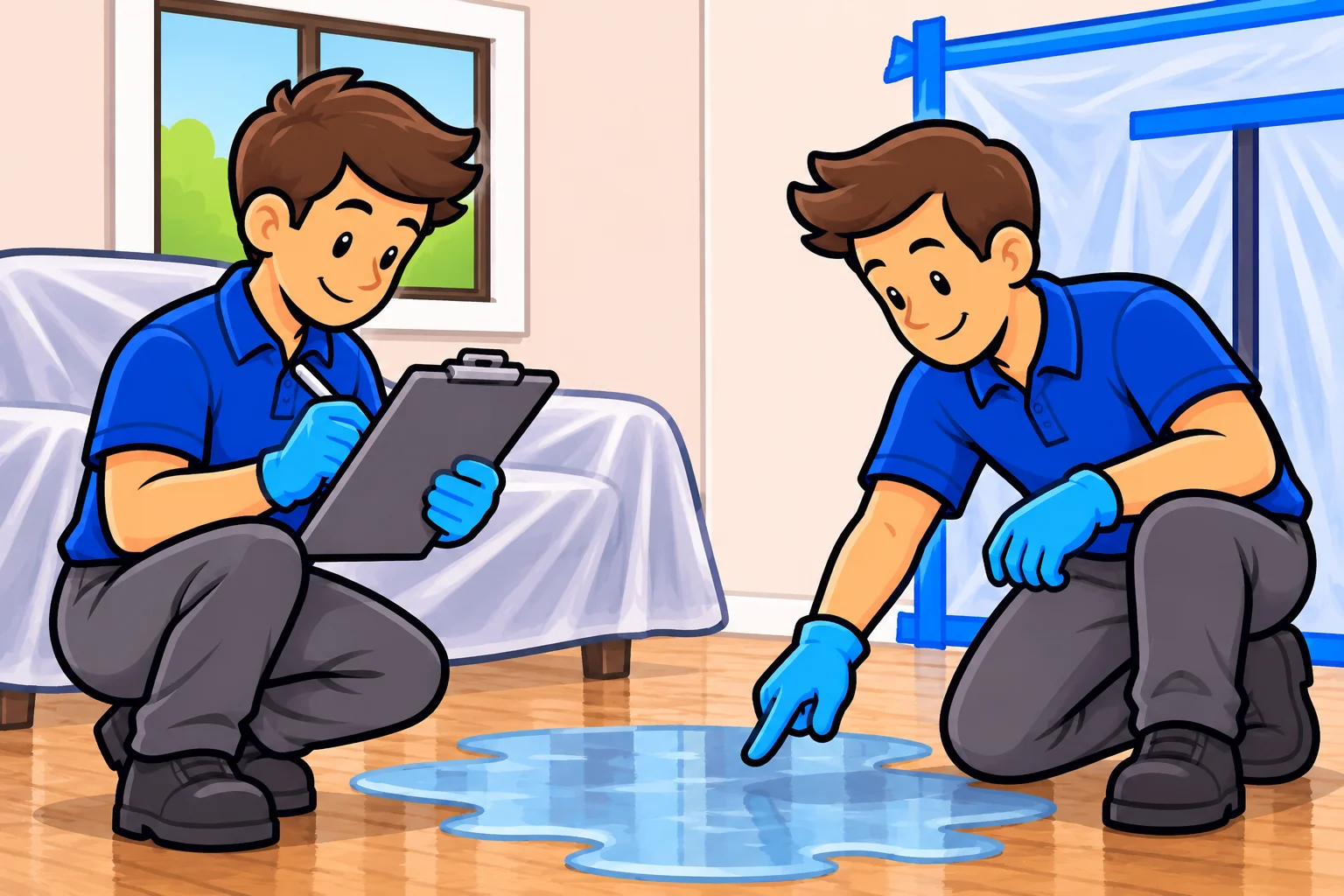
- Inspection: Identify the affected areas, the likely water source, and any immediate safety concerns.
- Water removal: Extract standing water where appropriate and determine which belongings and materials can be addressed safely.
- Drying and monitoring: Use suitable drying equipment and moisture measurements to track affected materials.
- Cleaning and material removal: Clean salvageable surfaces and remove materials that cannot be adequately cleaned or dried, as appropriate to the water source and condition.
- Repairs and reconstruction: Restore affected finishes and building materials after the source is corrected and drying is complete.
Some jobs also require mold remediation, crawl space work, or specialized handling of hazardous materials. If you suspect damaged flooring, insulation, or another material might contain asbestos, do not disturb or sample it yourself. A trained and accredited asbestos professional can assess suspect materials. (epa.gov)
Insurance and water damage: questions to ask
Coverage depends on your policy, the cause of the damage, applicable exclusions, and your deductible. Do not assume that a plumbing leak, sewage backup, and outside floodwater will be handled the same way. Ask your insurer or agent to explain the coverage that applies to your situation.
The Idaho Department of Insurance advises property owners to document the loss and take necessary steps to prevent additional damage. Keep copies of estimates, drying records, photographs, and correspondence. Disaster Cleanup offers insurance claims assistance to help customers organize information during the restoration process; the insurer determines coverage under the policy. (doi.idaho.gov)
Preventing water damage in Meridian homes
Meridian homeowners can reduce some common risks with regular checks throughout the year. During cold weather, pay particular attention to plumbing in unheated or exposed areas. The National Weather Service notes that pipes in places such as exterior walls, basements, attics, and cabinets are more vulnerable to freezing. (weather.gov)
- Know where your main water shutoff is and make sure household members can locate it.
- Check appliance hoses and the areas beneath sinks for drips or corrosion.
- Inspect accessible crawl spaces for dampness, standing water, or musty odors.
- Keep gutters and downspouts clear and direct runoff away from the foundation.
- Consider water-leak alarms near washing machines, water heaters, and sinks.
- Protect exposed pipes from freezing and have plumbing concerns addressed promptly.
Prevention cannot eliminate every leak, but finding a problem early can make it easier to limit the affected area.
Need help with water damage in Meridian?
Disaster Cleanup provides 24-hour emergency cleanup and restoration services across the Treasure Valley. Whether you are dealing with a sudden leak or need help assessing damage that developed over time, the team can discuss the next steps for your property.
Learn more about water damage restoration in Meridian. Contact Disaster Cleanup Call (208) 999-2353.
Frequently asked questions
How long does water damage repair take?
There is no single timeline. Drying may take days or longer, while repairs and reconstruction add time. The size of the affected area, materials, contamination, and availability of replacement materials can all affect the schedule. Ask for an updated plan after the property has been assessed.
Can I clean up water damage myself?
A small, promptly discovered spill from a clean source may be manageable if there are no electrical or other hazards and everything can be thoroughly dried. For sewage, floodwater, extensive damage, visible mold, or water inside walls and flooring, seek professional help. Never enter an unsafe area to begin cleanup.
Does all wet drywall need to be replaced?
Not always. The decision depends on the water source, how long the drywall was wet, its condition, and whether it can be dried and cleaned appropriately. Contaminated or deteriorated materials may need removal. An assessment helps determine the appropriate approach.
Will a musty smell go away once the room feels dry?
It may not. A musty odor can be a sign that moisture or mold remains in a concealed area. If the smell persists after a leak or cleanup, have the area assessed rather than covering the odor with fragrance or paint.
Should I wait for my insurance adjuster before calling for help?
Contact your insurer promptly, but ask about arranging necessary emergency work to prevent further damage. Take photos when safe, keep receipts, and follow your insurer’s instructions for documenting and handling damaged property. Do not delay addressing an active safety hazard.
Glossary
Extraction: The removal of standing water from a property or affected materials.
Moisture meter: A tool used to help measure moisture in building materials and monitor drying progress.
Remediation: Work performed to address a contamination problem, such as removing mold-affected materials and correcting the moisture source.
Subfloor: The structural layer beneath a finished floor covering, such as carpet, tile, or wood flooring.