Fireplace and Wood Stove Smoke Damage in Kuna, Idaho: A Heating-Season Guide
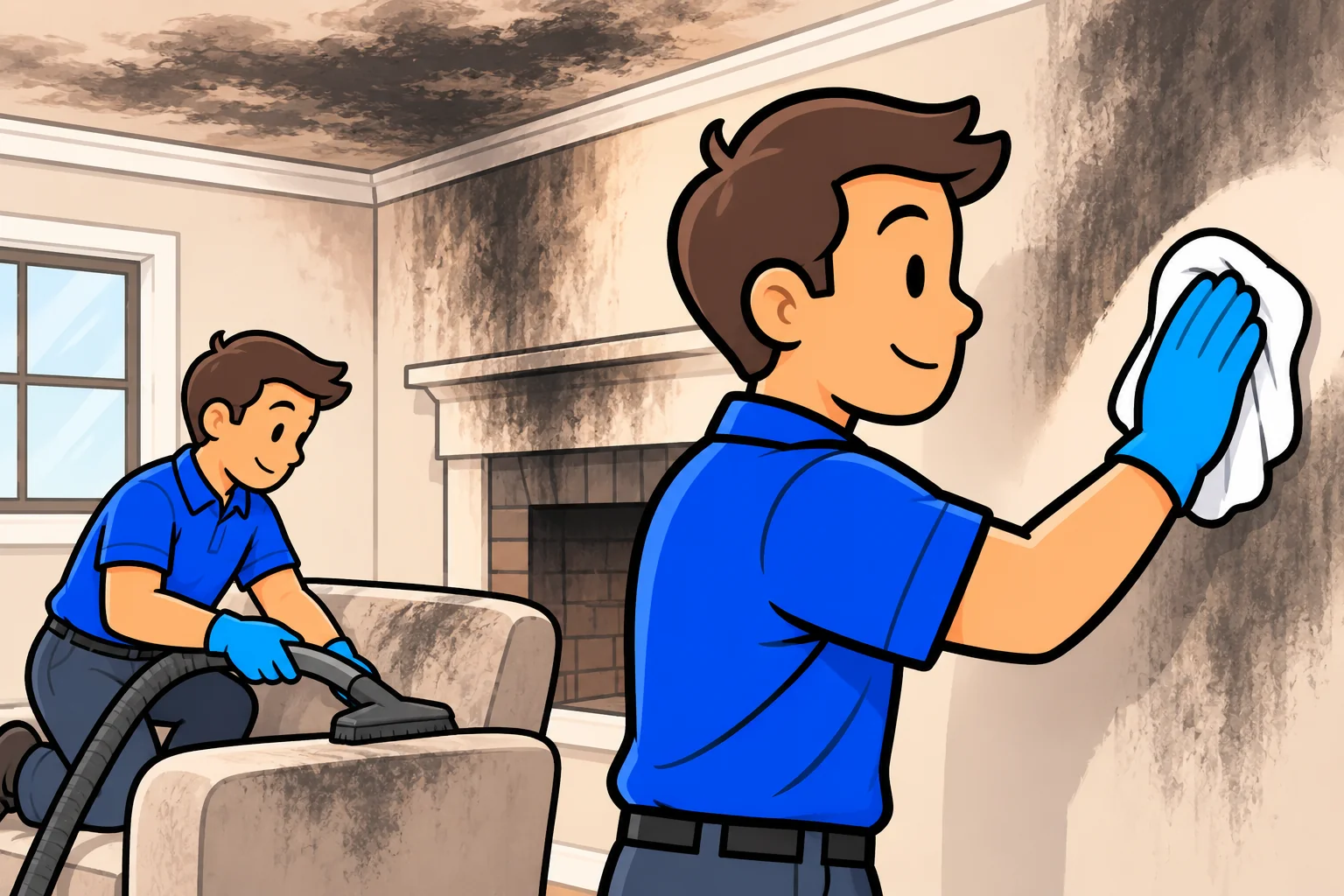
A cozy fire should not leave a gray film on your walls.
Fireplace and wood stove smoke damage in Kuna, Idaho tends to show up once heating season is in full swing. A damper left half closed, a cold chimney that will not draft, a stove door opened at the wrong moment, or a furnace that misfires can push smoke and soot into the living room and, from there, into the rest of the house. This guide explains the main ways heating equipment causes smoke damage, how to spot soot you might be overlooking, what to do in the first hours, and how to get your fireplace, stove, and furnace ready before the coldest months arrive.
Why Heating Season Matters for Kuna Homes
The City of Kuna’s community profile traces the town back to a townsite along Indian Creek in the early 1900s and notes it incorporated as a city in 1915. Today it is a fast-growing small city of under 50,000 people with four distinct seasons. That growth means Kuna has everything from older homes near downtown with original masonry chimneys to new subdivisions with gas fireplaces and high-efficiency furnaces, plus acreage on the edge of town where a wood stove may still do a lot of the heating.
Winter timing is not a guess. The National Fire Protection Association reports that heating equipment was involved in about 11 percent of reported home fires from 2020 to 2024, and that nearly half of those heating fires happened from December through February.
Kuna also has wood-burning rules tied to air quality. The Idaho Department of Environmental Quality’s Treasure Valley burn ordinance table lists Kuna as prohibiting open or outdoor burning when the forecast AQI reaches 64, and prohibiting fireplaces and older wood stoves when it reaches 74, while wood stoves that meet EPA emission standards are still allowed. Checking the forecast before you light a fire keeps you within the rules and cuts down on the smoke that settles into neighborhoods on still winter days.
Four Ways Heating Equipment Causes Smoke Damage
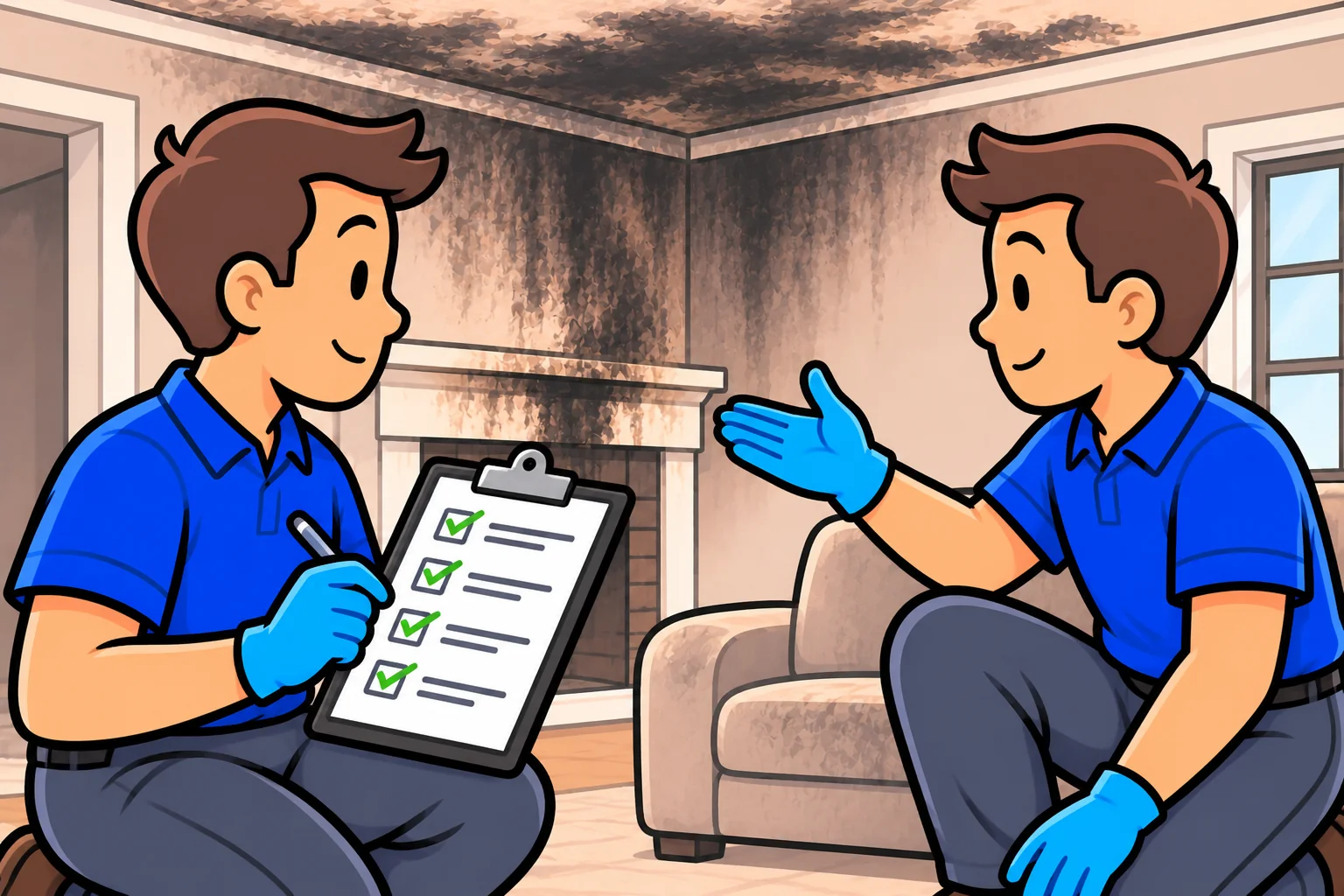
Not every smoke problem is a house fire. Most heating-season smoke damage we see falls into one of these groups, and each one leaves a different kind of mess.
1. Fireplace smoke spill
Smoke rolls out of the firebox instead of going up the flue. Common causes include a closed or partly closed damper, a cold chimney that has not started to draft, a house that is pulling air in through the chimney because exhaust fans are running, or a flue partly blocked by creosote or debris. Damage is usually heaviest on the fireplace wall, mantel, ceiling above it, and nearby furniture.
2. Wood stove backdraft
Opening a loading door on a hot, smoky fire, or burning wet wood that smolders instead of burning cleanly, can send a puff of smoke straight into the room. One event may leave a light film. Repeated small puffs over a season build up into a dull gray layer on walls, ceilings, and window glass.
3. Chimney fire
Creosote that builds up inside a flue can ignite. Even when firefighters keep it contained to the chimney, a chimney fire can crack flue liners, scorch nearby framing, and push heavy soot into the home. The NFPA notes that larger fires involving fireplaces or chimneys made up only about 6 percent of heating equipment fires but caused nearly a fifth of the direct property damage.
4. Furnace or heater malfunction
A furnace or heater that is not burning properly can produce soot that the blower then spreads through ductwork into every room. Signs include black streaks around supply registers, a dark furnace filter, and a fine film appearing in rooms far from any fireplace. This type tends to be the most widespread because the HVAC system carries the residue for you.
Signs of Smoke and Soot Damage You Might Miss
Fine soot is easy to mistake for ordinary dust, especially when it builds up slowly over a few weeks of fires. Walk through the house in daylight and look for:
- A gray or brown haze on the wall or ceiling above the fireplace or stove.
- Dark lines on ceilings or along outside walls that follow framing, sometimes called ghosting.
- Black wisps hanging in ceiling corners or on light fixtures.
- Dark streaks around HVAC supply registers or return grilles.
- Window glass, blinds, or TV screens that smear when you wipe them.
- A smoky odor in closets, bedding, or upholstery that lingers after the fire is out.
A quick test: lightly touch a dry white tissue to a wall or lampshade. A gray smudge usually means soot, not dust.
What to Do in the First Hours After a Smoke Event
Put safety first
If there is active fire, flames in the chimney, or heavy smoke, get everyone out and call 911. After any fire, the American Red Cross advises staying out of a fire-damaged home until local fire authorities say it is safe, and throwing away food that was exposed to heat, smoke, or soot. Kuna and the surrounding area are covered by the Kuna Rural Fire District.
Think about carbon monoxide
Smoke you can see is not the only concern. The EPA’s page on carbon monoxide and indoor air quality lists back-drafting from furnaces, gas water heaters, wood stoves, and fireplaces among the sources of this odorless, colorless gas. If a CO alarm sounds, or people feel dizzy, nauseated, or headachy, leave the house and call for help.
Stop using the appliance
Do not relight the fireplace or stove, or keep running a furnace you suspect, until it has been inspected and repaired. If the furnace is the source, turning the system off keeps the blower from moving more soot through the ducts.
Ventilate, but do not scrub
Open windows if the weather allows. Resist the urge to wipe walls with a wet rag or an all-purpose cleaner. Soot is oily, and rubbing it often smears it deeper into paint and textured ceilings, which can make professional cleaning harder.
Protect and document
Take photos and video of every affected room before anything is moved or cleaned, including close-ups of walls, ceilings, registers, and furniture. Write down what happened and when. Then call your insurance agent and a restoration company that handles fire and smoke damage restoration in Kuna.
What Shapes the Cleanup Scope
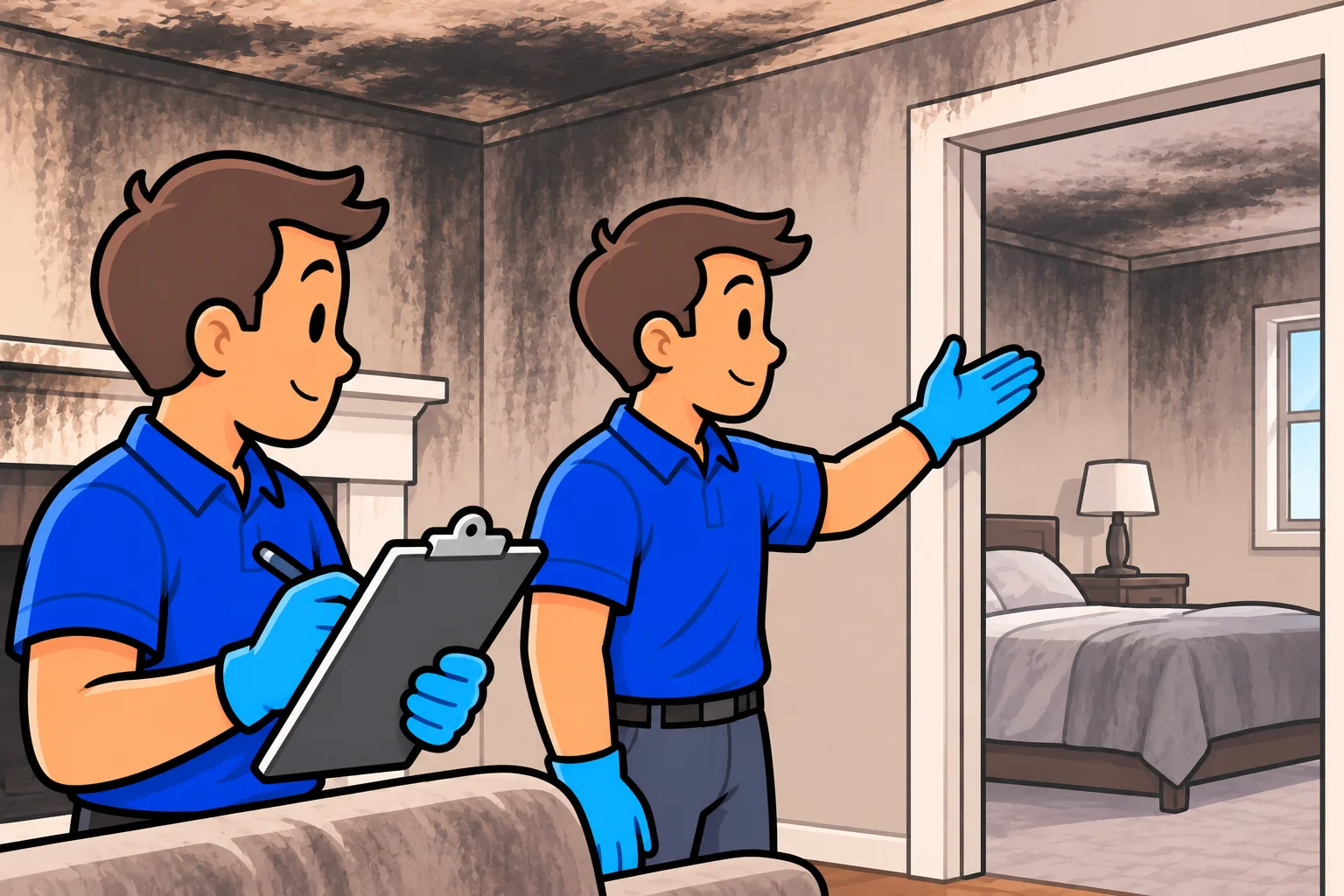
Two smoke events that look similar can need very different work. Here is what usually decides how big the job is:
- The source. A one-time fireplace spill tends to stay near the hearth. A furnace problem or chimney fire may reach every room.
- How long it went on. A single puff is different from a season of small backdrafts building up layer by layer.
- Surfaces involved. Flat painted walls, textured ceilings, brick, wood trim, and fabric each clean differently, and some may need sealing or replacement.
- Contents. Upholstery, rugs, curtains, clothing, and electronics may need separate cleaning.
- The HVAC system. If soot moved through the ducts, the system has to be addressed or it will keep redistributing residue.
- Odor. Lingering smell often needs its own treatment after surfaces are cleaned. Our smoke odor removal service handles that step.
- Water from firefighting. If a chimney fire was put out with water, drying the structure becomes part of the job too.
Fireplace and Wood Stove Smoke Myths vs. Facts
Myth: If the fire was small, there is nothing to clean.
Fact: Smoke travels well beyond the fire. Light soot often settles in rooms down the hall, inside closets, and on cold surfaces like outside walls and windows.
Myth: A little smoke in the house is harmless.
Fact: The EPA’s wood smoke and health page explains that wood smoke is a mix of gases and fine particles, and that fine particles can irritate eyes and lungs and make asthma worse.
Myth: Painting over soot stains solves the problem.
Fact: Paint applied over soot often fails to stick well, and stains and odor can bleed back through. Surfaces need to be cleaned first, and some need a sealing primer.
Myth: Gas fireplaces and furnaces never make soot.
Fact: Gas appliances burn cleaner, but a misadjusted burner, a dirty unit, or a blocked vent can still produce soot. Black streaks around registers are a sign to have the system checked.
A Heating-Season Prep Checklist for Kuna Homeowners
Most smoke damage from heating equipment is preventable. Before the coldest weeks arrive, work through this list:
- Have chimneys, fireplaces, wood stoves, and furnaces cleaned and inspected by a professional every year, as the U.S. Fire Administration recommends.
- Keep anything that can burn at least 3 feet from fireplaces, wood stoves, space heaters, and candles.
- Burn only dry, seasoned wood, and never burn trash, cardboard, or treated lumber indoors.
- Make sure the damper is fully open before you light a fire, and keep it open until the ashes are cold.
- Replace furnace filters on schedule and look at them for dark or oily residue.
- Test smoke alarms and carbon monoxide alarms, and replace batteries as needed.
- Turn space heaters off when you leave the room or go to bed.
- Check the DEQ air quality forecast before burning so you stay within Kuna’s wood-burning restrictions.
Winter brings water problems as well as smoke. If you have not prepped your plumbing yet, our winter frozen pipe checklist from nearby Star works for Kuna homes too, and our kitchen fire cleanup guide covers the other common source of smoke at holiday time.
Need Help With Smoke Damage in Kuna?
Disaster Cleanup is a veteran-owned restoration company serving Kuna, southern Ada County, and the rest of the Treasure Valley since 2015. Local pros answer our phones live 24/7, and we’re typically on site within 1–2 hours. Call (208) 999-2353 or schedule a free inspection. You can pay after your insurance claim closes, all work is backed by a 1-year warranty, and se habla español. Idaho contractor registration RCE-67826.
Kuna Fireplace and Wood Stove Smoke Damage FAQs
Can I clean light soot myself?
Very light, dry residue on a small hard surface may come off with a dry soot sponge. If soot covers walls or ceilings, has reached several rooms, or came through the HVAC system, professional cleaning is usually the safer choice because wet wiping can set stains.
How do I know if soot got into my ductwork?
Look for dark streaks around supply registers, a gray or black furnace filter, and soot showing up in rooms nowhere near the fireplace or stove. Any of those suggests the system is carrying residue.
Is it safe to stay in the house after a fireplace smoke spill?
After a minor spill with no fire damage, many families stay home while the area is cleaned, but anyone with asthma or breathing problems may be more comfortable elsewhere. After an actual fire, wait until fire officials say it is safe to go back in.
Does homeowners insurance cover smoke damage from a fireplace?
Coverage depends on your policy and on what caused the damage. Document everything, call your agent early, and ask what they need. With Disaster Cleanup, you can pay after your insurance claim closes.
Do you serve homes outside Kuna city limits?
Yes. We serve Kuna, the acreage and rural homes around it, and communities across Ada County and the Treasure Valley. Our fire and smoke damage restoration page explains our full process.
Heating-Season Smoke Terms to Know
Damper: The movable plate in a fireplace flue that opens to let smoke out and closes to keep heat in when the fireplace is not in use.
Draft: The upward flow of air and smoke through a chimney. A weak draft lets smoke spill into the room.
Backdraft: Smoke or exhaust flowing back into the house instead of out through the flue or vent.
Creosote: A tar-like residue from wood smoke that builds up inside chimneys and can catch fire.
Ghosting: Dark lines of soot that collect on walls and ceilings, often along framing or cooler spots.
EPA-compliant wood stove: A stove that meets EPA emission standards. In Kuna, these stoves can still be used at AQI levels when fireplaces and older stoves are restricted.