
Hidden Water Leaks in Wilder, Idaho: A Room-by-Room Self-Check and When to Get a Free Inspection
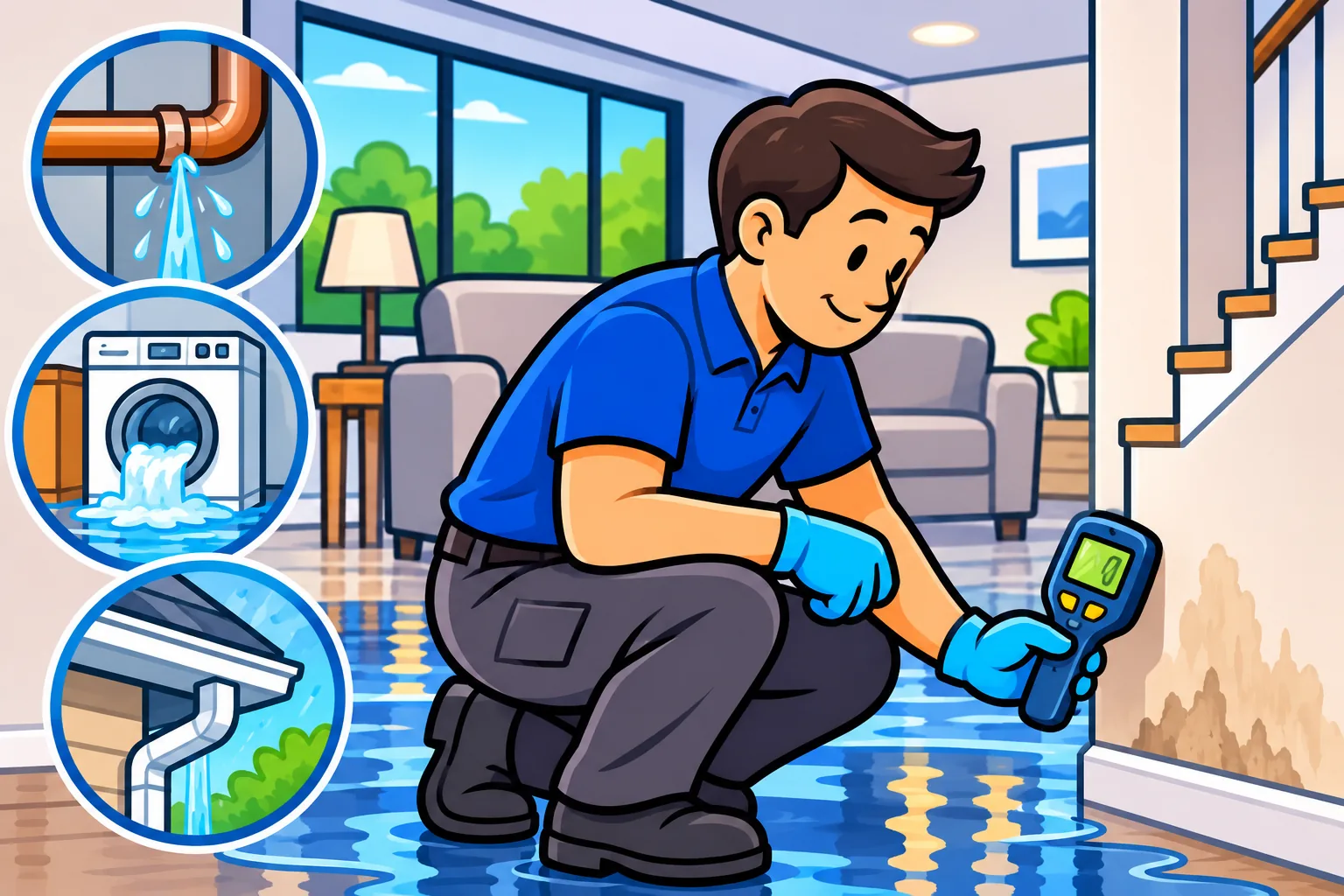
The leaks that cost the most are usually the quiet ones.
Hidden water leaks in Wilder, Idaho rarely announce themselves with a gush. More often it is a slow drip behind a cabinet, a supply line seeping inside a wall, or a pipe weeping under the floor, and by the time a stain or musty smell shows up, the water has been working for weeks. This guide walks you through a room-by-room self-check you can do in an afternoon, explains how to test for leaks whether you are on a water meter or a private well, and shows when it makes sense to book a free damage inspection instead of guessing.
Why Hidden Leaks Deserve a Look in Wilder Homes
The City of Wilder describes itself as a small farming community on the western side of Canyon County near the Oregon border, surrounded by fields of potatoes, sugar beets, onions, corn, grain, and mint, and known for growing hops. The city also notes several new housing developments, so Wilder has a mix of older farmhouses, in-town homes, and newer construction.
Each of those has its own weak spots. Older homes may have aging supply lines and fittings that have been repaired more than once. Newer homes have plenty of plastic supply lines and push-fit connections behind appliances. Rural properties often have a well, a pressure tank, outbuildings, and long buried lines that nobody looks at until something goes wrong.
Late fall is a smart time to check. Cold nights put extra stress on pipes near outside walls, and a small leak found now is far easier to deal with than one discovered after a January freeze.
How Much Water Can a Small Leak Waste?
More than most people expect. According to the EPA’s WaterSense Fix a Leak Week page, the average household’s leaks can waste more than 9,300 gallons of water a year, and nine percent of homes have leaks that waste 50 gallons or more per day. The most common culprits it lists are worn toilet flappers, dripping faucets, and other leaking valves.
Wasted water is only part of the story. A leak you can see costs money on a bill. A leak you cannot see soaks drywall, subfloors, insulation, and framing, and that is where the real damage starts.
Step One: Test for a Leak Before You Hunt for It
Before you start pulling things out of cabinets, find out whether water is moving when it should not be.
If your Wilder home has a water meter
The EPA suggests checking your water meter before and after a two-hour stretch when no water is being used. If the reading changes at all, you probably have a leak. Make sure the dishwasher, washing machine, ice maker, water softener, and any irrigation are not running during the test.
If your property runs on a private well
Many rural homes around Wilder have no meter to read. Instead, turn off every fixture and appliance and listen. A well pump that kicks on, or a pressure gauge that slowly drops, while nothing in the house is using water points to a leak somewhere in the system. Our guide to well pump and pressure tank leaks in nearby Parma covers the warning signs in more detail.
Check your winter water use
The EPA also recommends looking at water use during a colder month, when outdoor watering is off. If a family of four uses more than 12,000 gallons in a winter month, there could be a serious leak.
A Room-by-Room Hidden Leak Self-Check
Grab a flashlight and a dry paper towel. Wipe around fittings and the base of fixtures; a damp towel tells you more than your eyes will.
Kitchen
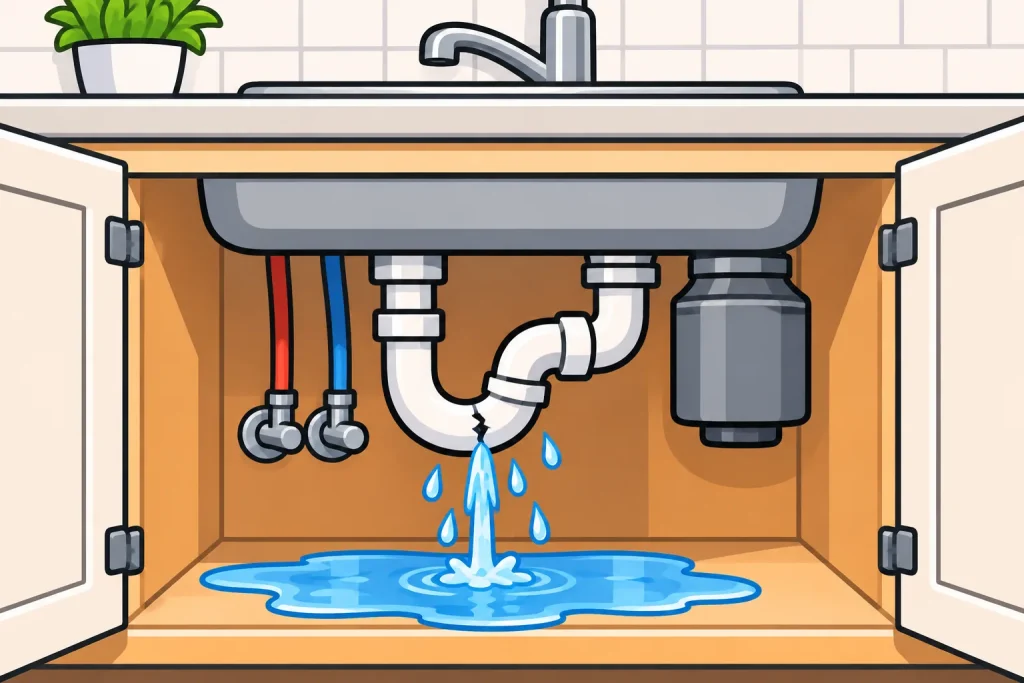
Empty the sink cabinet and look at the drain trap, the supply lines, and the cabinet floor for swelling, stains, or soft spots. Pull the refrigerator out if it has an ice maker line. Look at the toe kick under the dishwasher for warped flooring or a lifted edge.
Bathrooms
Put a few drops of food coloring in each toilet tank, as the EPA suggests. If color shows up in the bowl after about 10 minutes, the flapper is leaking. Press gently on the floor around the toilet base and along the tub. Look for loose tiles, cracked grout, or caulk that has pulled away.
Laundry and utility areas
Check the washer hoses for bulges or cracks, and look behind the machine for a wet floor or stained wall. Around the water heater, look for rust, mineral crust, or water under the tank. If you have a water softener or filter system, check its fittings and drain line.
Walls and ceilings
Watch for paint that bubbles or peels, baseboards that are swelling or separating, and ceiling stains under bathrooms. Trace any stain toward the nearest plumbing fixture above or beside it.
Crawl space or basement
If you can safely get into the crawl space, look for puddles on the vapor barrier, damp or sagging insulation, and dark staining on joists under kitchens and bathrooms. A musty smell coming up through floor registers is worth investigating.
Outside and outbuildings
Look for soggy spots in the yard when the ground should be dry, hose bibs that drip, and wet areas along the foundation. On acreage, check the well house, shop, and any heated outbuilding with plumbing before temperatures drop.
DIY Fix or Free Inspection? How to Decide
Some leaks are simple. A worn toilet flapper, a dripping faucet, or a loose hose connection that you caught right away is often a quick repair, and the EPA notes that many common household leaks can be fixed with a few tools and inexpensive hardware.
It is a different situation when water has already moved into building materials. Consider a free damage inspection if you notice any of these:
- Your meter or well test shows a leak, but you cannot find the source.
- Flooring is cupping, buckling, or soft, or a cabinet base is swollen.
- A stain keeps growing, or drywall feels soft or crumbly.
- There is a musty odor or visible mold near plumbing.
- You have fixed a leak but do not know how far the water traveled or whether it ever dried.
Timing matters here. The EPA’s guide to mold, moisture, and your home advises drying water-damaged areas and items within 24 to 48 hours to prevent mold growth. A slow hidden leak has usually blown past that window, which is why checking for moisture behind the surface is so important.
What a Free Damage Inspection Covers
A free inspection is a practical starting point, not a lab investigation. During a visit, a Disaster Cleanup technician reviews the accessible affected areas, talks with you about what you have noticed and the history of the property, and explains what cleanup or repair may be needed.
Before the visit
Write down when you first noticed the problem, take photos of stains or damage, and keep any recent water bills or meter readings. If you already had a plumber repair the source, keep the invoice.
During the visit
Expect the technician to check how far moisture has spread using moisture readings, not just what looks wet, and to look at nearby rooms, the crawl space, or the area below the leak when it can be reached.
After the visit
You will know whether the area needs water damage restoration and drying, whether there are signs that call for mold remediation, or whether it was a small problem you caught in time. If there is a claim, we can help you work with your insurance, and you can pay after the claim closes.

Hidden Leak Myths vs. Facts
Myth: If the water bill looks normal, there is no leak.
Fact: A slow drip can hide inside normal month-to-month swings, and homes on private wells do not get a water bill at all. A meter test or a well pump check is a better answer.
Myth: A stain that dried up means the problem is over.
Fact: Surface stains can dry while the back of the drywall, the insulation, or the subfloor stays wet. The only way to know is to measure.
Myth: Small leaks are not worth worrying about.
Fact: The EPA counts nine percent of homes as having leaks that waste 50 gallons or more per day. Small leaks that keep running are exactly the ones that soak framing and feed mold.
Myth: Bleach on a musty spot takes care of it.
Fact: The EPA’s mold guidance stresses fixing the water problem first. Cleaning the surface without stopping the moisture means the problem will come back.
Catching the Next Leak Sooner
Once a leak is found and fixed, a few habits make the next one easier to catch: read your meter or watch your well pressure now and then, peek under sinks when you swap out cleaning supplies, and replace aging washer and appliance hoses before they fail.
For an extra layer of protection, Disaster Cleanup sells and installs leak prevention systems with water sensors and automatic shutoff valves that can stop the flow before a small drip turns into a soaked floor. Our post on appliance leak water damage in Fruitland also has an appliance-by-appliance checklist that works just as well in Wilder.
Need Help With a Hidden Leak in Wilder?
Disaster Cleanup is a veteran-owned restoration company serving Wilder, Greenleaf, the farms and acreage around them, and the rest of Canyon County and the Treasure Valley since 2015. Local pros answer our phones live 24/7, and we’re typically on site within 1–2 hours. Call (208) 999-2353 or schedule a free inspection. You can pay after your insurance claim closes, all work is backed by a 1-year warranty, and se habla español. Idaho contractor registration RCE-67826.
Wilder Hidden Water Leak FAQs
How can I tell if water is leaking inside a wall?
Common clues include bubbling or peeling paint, swollen baseboards, a stain that spreads, a musty smell, or a meter that moves when nothing is running. A moisture reading confirms it without opening the wall.
Is the inspection really free?
Yes. Disaster Cleanup offers free damage inspections. The technician looks at the accessible affected areas and explains what they find and what the next step could be.
Should I call a plumber or a restoration company first?
If water is actively running, shut off the supply and get the source repaired. If water has already soaked into floors, walls, cabinets, or the crawl space, call a restoration company to measure the moisture and dry the structure. Often you need both.
Does homeowners insurance cover hidden leak damage?
It depends on your policy and on how the damage happened. Call your agent or insurer early, keep photos and repair invoices, and ask what they need from you. With Disaster Cleanup, you can pay after your insurance claim closes.
Do you serve farms and rural homes outside Wilder city limits?
Yes. We serve Wilder, Greenleaf, Melba, and the rural properties between Canyon County communities. Give us the full address when you call so we can send a crew to the right place.
Hidden Leak Terms to Know
Meter test: Reading the water meter before and after a period with no water use. Any change suggests a leak.
Flapper: The rubber seal at the bottom of a toilet tank. When it wears out, water slowly runs into the bowl.
Supply line: The flexible or rigid pipe that carries pressurized water to a fixture or appliance.
Pressure tank: The tank on a well system that stores water under pressure so the pump does not run every time a tap opens.
Moisture reading: A measurement of how much water is in a building material, used to find the edges of a wet area.
Automatic shutoff valve: A valve that closes the main water supply when a connected sensor detects a leak.