Holiday Sewage Backups in Notus, Idaho: A Drain Plan for Hosts and the First Hour After a Backup
A full house, a full fridge, and a drain line that has to handle all of it.
A sewage backup in Notus, Idaho rarely picks a convenient day, and holiday weeks are when drains work hardest. Extra guests mean more showers, more flushes, more loads of dishes, and more turkey drippings and gravy looking for a place to go. This guide walks Notus homeowners and hosts through a simple holiday drain plan, the warning signs that a line is starting to clog, what to do in the first hour if wastewater comes up through a toilet, tub, or floor drain, and how a backup on city sewer differs from one on a rural septic system.
Why Holiday Weeks Are Hard on Notus Drains
Notus is a small farm town on the north side of the Boise River, west of Caldwell. An Idaho Press local history feature recounts how the town grew up around a post office moved beside a railroad siding in 1904, got its depot in 1914, and incorporated seven years later after extending its limits to reach the 200 residents it needed. Many homes near the old business district date from those early decades, and older drain lines can be less forgiving when they are pushed hard.
In town, wastewater flows through city-owned sewer lines to a lagoon treatment system. A 2013 EPA permit fact sheet for the City of Notus Wastewater Treatment Facility describes a city-owned plant that treats domestic sewage from residents and businesses in a series of lagoons, with treated water discharged to Conway Gulch, which leads to the Boise River. It also notes that the collection system has no combined sewers, so it is built to carry wastewater, not storm runoff. Outside city limits, many farmhouses and rural homes rely on private septic systems instead.
Either way, the weak point during a busy week is usually the line between your fixtures and the main. The EPA’s page on sanitary sewer overflows lists blockages and line breaks among the common causes of sewage releases and notes that they can back up into homes, causing property damage and threatening public health. Grease, food scraps, and wipes are the kind of material that builds those blockages, one sink full at a time.
What Goes Down the Drain During a Holiday Meal (and What Shouldn’t)
The EPA’s guide on how to care for a septic system puts it simply: toilets are not trash cans, and nothing besides human waste and toilet paper should be flushed. Its “never flush” list includes cooking grease or oil, non-flushable wipes such as baby wipes, paper towels, and coffee grounds. That advice protects city sewer lines just as much as a septic tank. Here is how common holiday leftovers line up:
| Item | Why it causes trouble | Better place for it |
|---|---|---|
| Turkey drippings, bacon fat, gravy, butter | Pours as a liquid when hot, then cools and coats the inside of the pipe. Each layer narrows the line a little more. | Let it cool in a can or jar, seal it, and put it in the trash. |
| Cooking oil from frying | Large volumes overwhelm a drain quickly and cling to anything else in the line. | Cool it completely and seal it in its original container or another lidded container for the trash. |
| Potato peels, stuffing, rice, pasta | Starchy scraps swell and form a paste, even after a garbage disposal grinds them up. | Scrape plates and pans into the trash or compost before rinsing. |
| Coffee grounds and eggshells | Gritty material settles in low spots and traps grease. | Trash or compost. |
| Wipes, paper towels, and napkins | Do not break down the way toilet paper does. They snag in the line and give grease something to build on. | A small lidded wastebasket in every bathroom guests will use. |
Kitchen safety goes beyond the drain during holiday cooking. Our kitchen fire guide from nearby Homedale includes a holiday cooking checklist that pairs well with this one.
A Holiday Drain Plan for Notus Hosts
Before guests arrive
- Put a lidded wastebasket and a short “please don’t flush wipes” note in each bathroom.
- Set out a grease can or jar near the stove so nobody has to ask where drippings go.
- Put strainers in the kitchen sink drains.
- Find your sewer cleanout (often a capped pipe near the foundation or in a crawl space) and your main water shutoff, so you are not searching for them mid-crisis.
- Notice any drain that is already slow. A sluggish line before the holiday tends to get worse under heavy use, so have it cleared first.
On the big day
- Wipe greasy pans and plates with a paper towel, then throw the towel away before washing.
- Run the dishwasher with full loads, and give the drains a break between loads when you can.
- Ask whoever is helping in the kitchen to scrape scraps into the trash, not the sink.
Through the long weekend
- Stagger showers in the morning if you have a full house.
- On a septic system, spread laundry across the week. The EPA’s septic care guide warns that doing all the laundry in one day does not give the tank enough time to treat waste and could flood the drainfield.
- Check the lowest fixtures in the house, such as a basement or ground-floor shower, once a day for slow draining or odor.
Warning Signs a Sewage Backup Is Building
A full backup usually gives some warning. Pay attention if you notice any of these:
- More than one drain running slow at the same time, especially fixtures on the lowest level.
- Gurgling from a toilet or tub when the washer drains or someone runs the kitchen sink.
- Water rising in a shower or tub when a toilet is flushed.
- A sewer odor near floor drains, the cleanout, or in the crawl space.
- Wet ground or seepage around the cleanout outside.
- On septic, soggy ground or a strong odor over the drainfield.
One slow sink is usually a local clog. Several fixtures acting up at once points to a problem farther down the line, and that is the time to stop using water and get help, not to keep flushing to “push it through.”
Step by Step: The First Hour After Sewage Comes Up in a Notus Home
Step 1: Stop all water use
Tell everyone in the house, including guests, not to flush, shower, run the dishwasher, or start laundry. Every gallon that goes down a drain has to go somewhere, and with a blocked line it comes back up at the lowest opening.
Step 2: Keep people and pets out
The CDC’s guidelines for cleaning safely advise keeping children and pets away from affected areas until cleanup is complete, and wearing rubber boots, rubber gloves, and goggles if sewage is involved. Close the door to the affected room if you can.
Step 3: Watch for electrical hazards
If water has reached outlets, cords, or appliances, the CDC advises turning off power at the main breaker, but only if you can reach the panel without standing in water. If you cannot, call an electrician.
Step 4: Figure out if it is your line or a bigger problem
If neighbors are having the same trouble, the blockage may be in the public sewer, so contact the City of Notus. If it is only your home, the problem is more likely in your own drain or service line, or in your septic system if you are outside town.
Step 5: Document before anything is moved
Take photos and video of the water line on walls, flooring, and affected belongings, and note when the backup started. That record helps with any insurance conversation later.
Step 6: Skip the bleach-and-mop approach
Do not mix cleaning products. The CDC warns never to mix bleach with ammonia or any other cleaner. Wiping the visible mess also does not reach sewage that soaked into carpet pad, drywall, or subfloor. The CDC recommends removing and discarding drywall and insulation that has been contaminated with sewage, which is why porous materials usually need professional assessment rather than a quick surface cleaning.
City Sewer vs. Rural Septic: How a Backup Differs Around Notus
| Question | Home on city sewer | Home on a septic system |
|---|---|---|
| Where does the clog usually sit? | Often in the home’s drain lines or the service line to the street. Less often, in the public main. | In the house drain, the line to the tank, a full tank, or a struggling drainfield. |
| First call besides cleanup | A plumber or drain service, or the city if neighbors are affected too. | A septic service professional to inspect and pump the tank if needed. |
| Prevention that matters most | Keeping grease, scraps, and wipes out of drains. | The same habits, plus regular inspection and pumping. The EPA says a typical household system should be inspected at least every three years, with tanks typically pumped every three to five years. |
| Holiday-specific risk | Grease from cooking and heavy use of older drain lines. | A surge of water from guests and laundry arriving faster than the tank can treat it. |
The cleanup is the same either way: sewage-affected materials need to be removed or disinfected, and the structure needs to be dried. Our Kuna sewage backup guide walks through what that process looks like on the job.
Holiday Sewage Myths vs. Facts
Myth: Hot water and dish soap wash grease safely away.
Fact: Hot water only carries grease farther down the line before it cools and sticks. The grease is still in your pipes; it has just moved somewhere harder to reach.
Myth: A garbage disposal makes food scraps safe for the drain.
Fact: A disposal makes scraps smaller, not gone. Starchy and greasy food still collects in the line, especially in older plumbing.
Myth: Wipes labeled “flushable” are fine.
Fact: The EPA’s septic guidance tells homeowners not to flush anything besides human waste and toilet paper. A wastebasket is the safer choice for any wipe.
Myth: A small backup can be cleaned with a mop and bleach.
Fact: Hard, non-porous surfaces can often be cleaned, but sewage that wicks into carpet pad, drywall, baseboards, or subfloor stays behind. Those materials usually need to come out, and the area needs to be dried so moisture does not turn into a mold problem. The EPA’s brief guide to mold, moisture, and your home notes that drying wet areas within 24 to 48 hours will, in most cases, keep mold from growing.
Myth: Homeowners insurance always covers a sewer backup.
Fact: Coverage depends on your policy. Many policies treat a backup through sewers or drains differently from a sudden burst pipe, and some only cover it with an added endorsement. Ask your agent before the holidays, and if you have questions about your policy, the Idaho Department of Insurance home and renters insurance page lists how to reach its Consumer Affairs team.
What Professional Sewage Cleanup Looks Like in Notus
Every backup is different, but a professional sewage cleanup generally follows the same order:
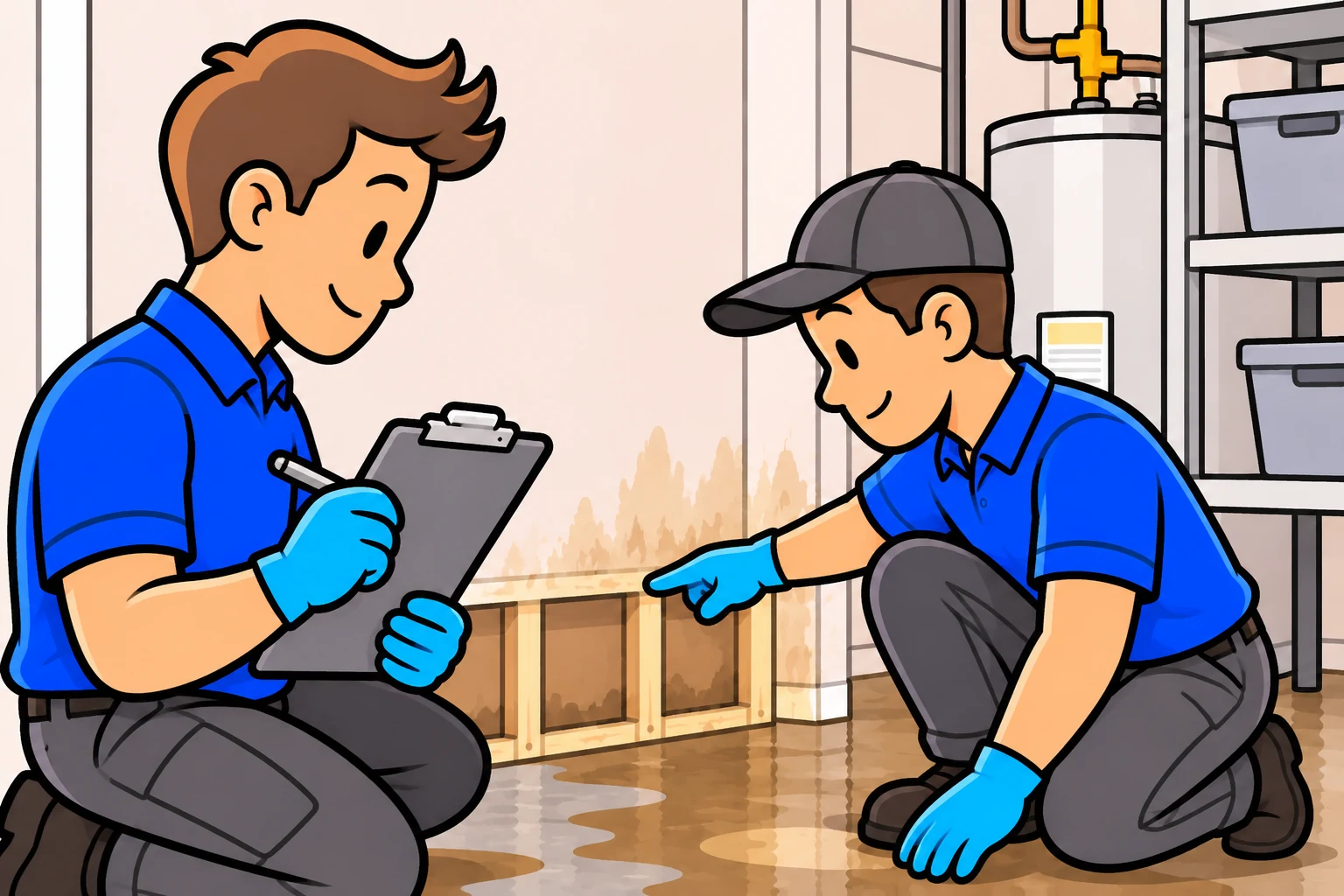
- Assessment: Find where the water traveled, including under flooring, into wall cavities, and down into a crawl space, and check moisture levels in surrounding materials.
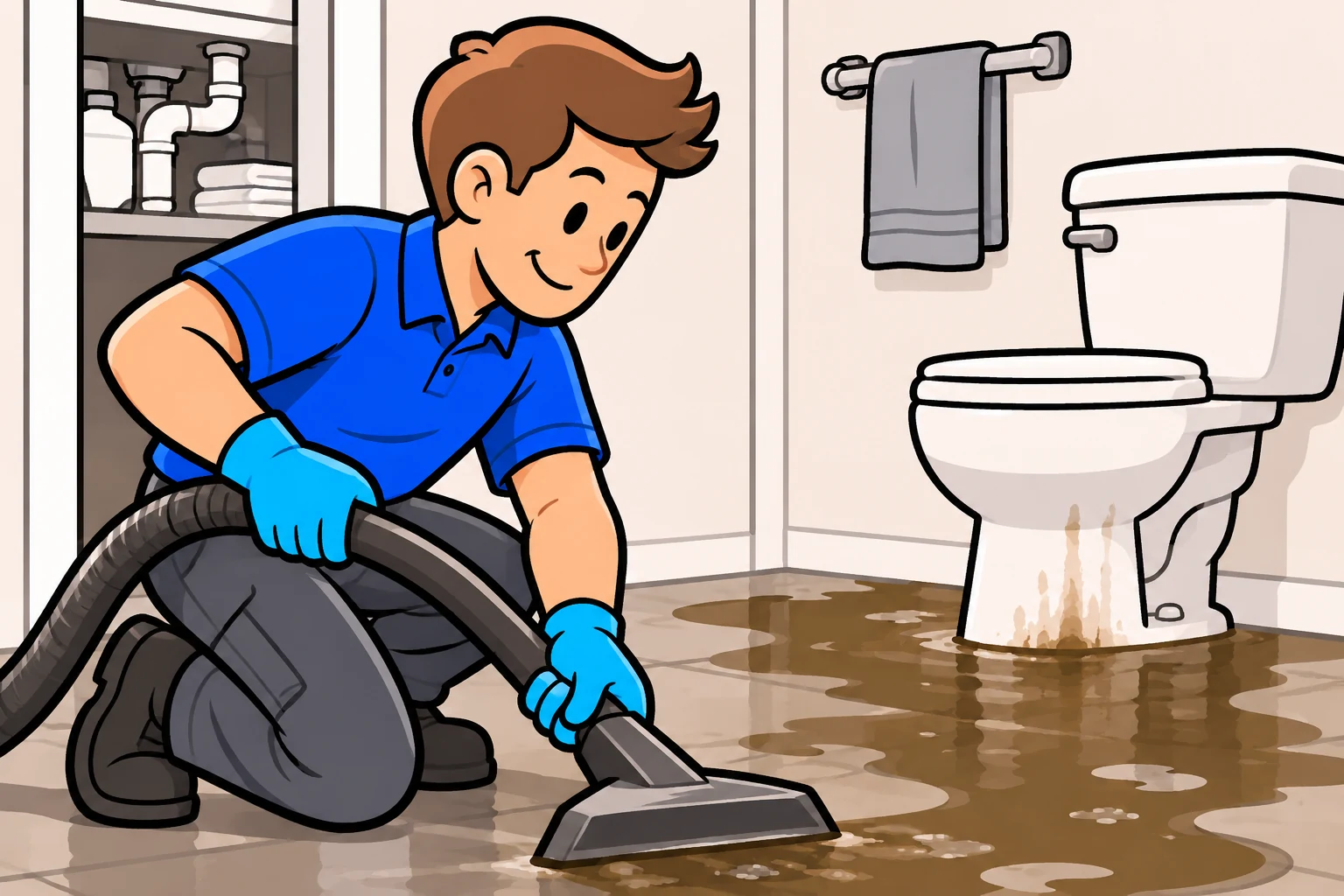
- Extraction: Remove standing wastewater with equipment designed for contaminated water.
- Removal: Take out sewage-soaked porous materials such as carpet, pad, drywall, and insulation.
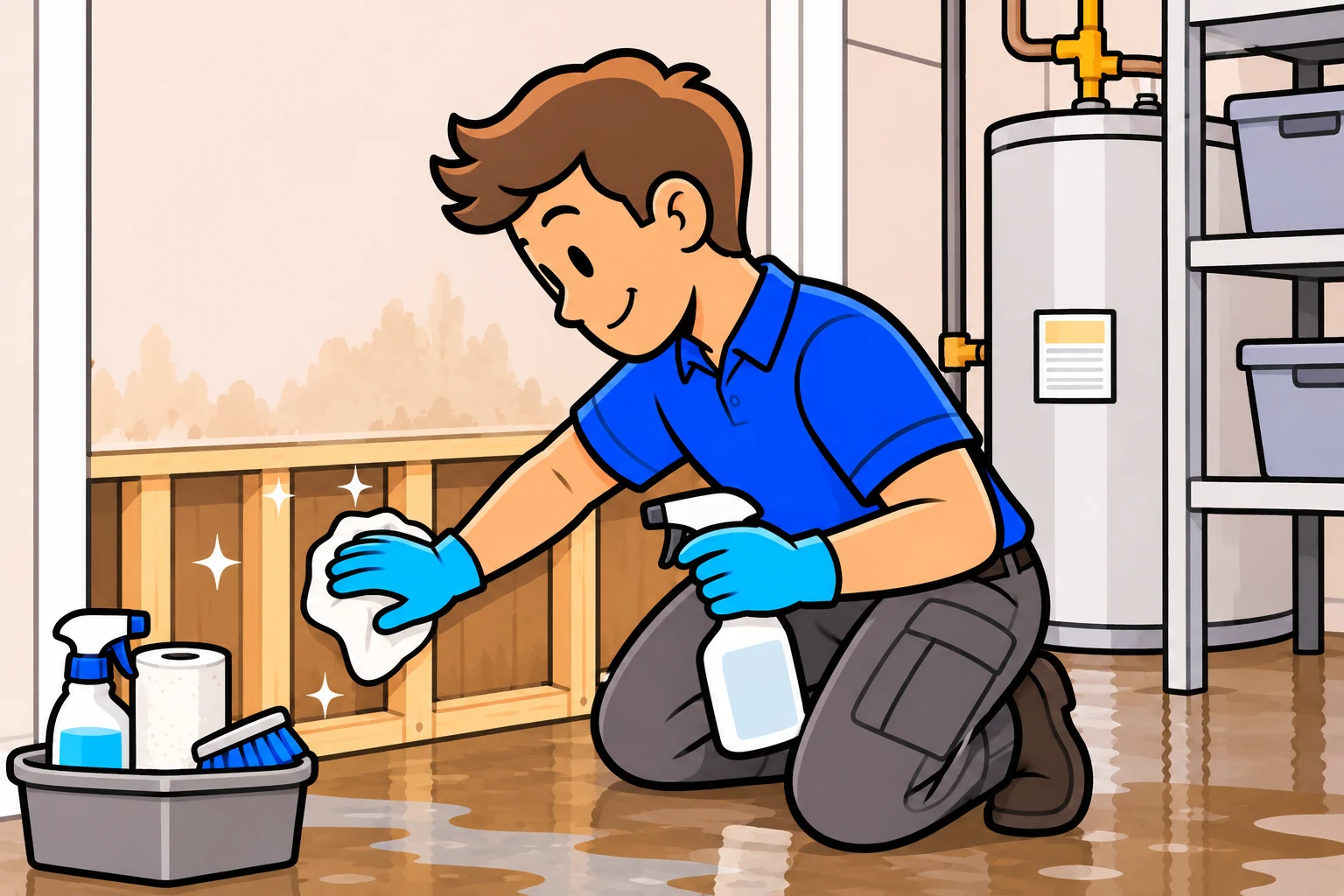
- Cleaning and disinfection: Clean and disinfect the remaining structure, including exposed studs, subfloor, and hard surfaces.
- Drying: Use air movers and dehumidifiers to dry the structure, with moisture readings to confirm it is actually dry.
- Repair planning: Once the area is clean and dry, plan the rebuild of anything that had to be removed.
If clean water from a burst pipe or appliance is part of the picture too, our water damage restoration team handles both. Homeowners in neighboring Caldwell can find details on our Caldwell sewage cleanup page.
Need Help With a Sewage Backup in Notus?
Disaster Cleanup is a veteran-owned restoration company serving Notus, Canyon County, and the rest of the Treasure Valley, and we have been helping local property owners since 2015. Local pros answer our phones live 24/7, including holidays, and we’re typically on site within 1–2 hours for sewage cleanup and water damage restoration. Call (208) 999-2353 or schedule a free inspection. You can pay after your insurance claim closes, our work is backed by a 1-year warranty, and se habla español. Idaho contractor registration RCE-67826.
Notus Sewage Backup FAQs
Can I keep using the other bathroom if only one toilet backed up?
Not until you know where the blockage is. If the clog is in the main drain or service line, water from any fixture can come back up at the lowest opening in the house. Stop using water everywhere until the line has been checked.
Is it safe to stay in the house during cleanup?
It depends on how much of the home is affected. Keep children, pets, and anyone with health concerns away from the affected rooms, as the CDC recommends. If the only working bathroom is involved or the backup is widespread, staying elsewhere for a short time may be the simpler choice.
Should I pour a drain cleaner into a backed-up line?
It is better not to. If the line is fully blocked, the chemical sits in standing water that someone will have to work in later, and it adds one more hazard to the cleanup. A plumber or septic professional can clear the line safely.
Can carpet be saved after a sewage backup?
Usually not. The CDC lists carpeting, carpet padding, rugs, and upholstered furniture among the items to throw away when they cannot be cleaned and dried quickly, and sewage contamination makes that even more important. Hard flooring and some belongings can often be cleaned and disinfected.
Do you serve homes outside Notus city limits?
Yes. We serve Notus, the farms and rural homes around it, nearby Parma and Caldwell, and communities across Canyon County. If something on your property just doesn’t seem right, a free inspection is a good place to start.
Sewage Backup Terms to Know
Sewer cleanout: A capped access pipe on the drain line, often near the foundation or in a crawl space, that lets a plumber reach the line to clear a clog.
Service line: The private pipe that carries wastewater from a house to the public sewer main.
FOG: Short for fats, oils, and grease, the kitchen byproducts that harden in pipes and help cause blockages.
Lagoon treatment: A wastewater treatment method that holds sewage in a series of ponds so natural processes can break it down before release.
Drainfield: The underground area where a septic system releases treated liquid into the soil.
Category 3 water: A restoration industry term for grossly contaminated water, such as sewage, that requires removal of affected porous materials and disinfection.