Mold Damage in Meridian, Idaho: Signs, Cleanup, and Prevention
Find the moisture problem before mold spreads
A musty smell under the kitchen sink or a dark patch on a wall can be more than a cosmetic concern. Mold damage often points to a moisture problem that needs attention. For homeowners and property managers in Meridian, knowing what to look for—and when to call for help—can make cleanup more manageable and help protect the property from further damage.
What Causes Mold Damage?
Mold can grow indoors when moisture collects on materials such as drywall, wood, carpet, or insulation. A plumbing leak, roof leak, appliance failure, sewage backup, or recurring condensation can create the damp conditions mold needs. Sometimes the source is obvious; other times, it is hidden behind a wall or beneath a floor.
Cleaning the visible growth is only part of the job. If the underlying moisture remains, mold can return. Damp materials also need to be dried or removed, depending on their condition and whether they can be cleaned effectively.
After water damage, prompt drying matters. The U.S. Environmental Protection Agency recommends drying damp or wet surfaces within 24 to 48 hours when possible and fixing the water source. That window is a goal, not a guarantee that mold will or will not develop. (epa.gov)
Common Signs of Mold Damage
Mold is not always visible from the middle of a room. Check areas with a history of leaks or moisture, including cabinets, laundry rooms, crawl spaces, attics, and the spaces around windows.
- Musty odors: A persistent earthy smell can be a reason to investigate, even when you cannot see growth.
- Visible spots or patches: Mold can appear in different colors and textures. Color alone does not establish the type of mold or the health risk.
- Water stains or discoloration: Ceiling marks, stained baseboards, and discolored drywall may point to a leak.
- Peeling paint or warped materials: Bubbling paint, swollen trim, and buckled flooring can indicate ongoing moisture.
- Recurring condensation: Repeated moisture on windows, pipes, or other cool surfaces deserves attention.
Mold exposure can cause symptoms such as a stuffy nose, coughing, wheezing, irritated eyes, or a skin rash. People with asthma, mold allergies, weakened immune systems, or chronic lung disease may be more vulnerable. If you are concerned about symptoms, contact a healthcare professional. (cdc.gov)
Where to Look for Moisture Problems
| Area | What to check | Possible moisture source |
|---|---|---|
| Kitchen and bathroom | Damp cabinets, stained walls, recurring condensation | Plumbing leaks or inadequate ventilation |
| Laundry room | Wet flooring or discoloration behind appliances | Hose leaks or drainage problems |
| Crawl space | Damp insulation, standing water, musty odors | Plumbing leaks or moisture entering near the foundation |
| Attic | Stained wood, wet insulation, roof sheathing discoloration | Roof leaks or condensation |
Do not enter a crawl space or attic if access is unsafe, wiring may be wet, or you would have to disturb suspected mold. A professional can assess hard-to-reach areas and help identify the moisture source.
What to Do When You Find Suspected Mold
1. Limit contact with the affected area
Keep children and pets away, and avoid touching or disturbing the growth. Do not cut into walls or pull up flooring to investigate on your own. If you suspect mold in the heating or cooling system, avoid running it until it has been assessed; operating a contaminated system could spread mold through the property. (epa.gov)
2. Stop the water source if it is safe
For an active plumbing leak, shut off the appropriate water supply if you can reach it safely. Stay out of standing water when electrical hazards may be present. Sewage and other contaminated water require professional cleanup rather than ordinary household drying.
3. Document the damage
Take photos of visible damage and note when you first noticed the problem. Contact your insurance provider to discuss your policy and its documentation requirements. Mold coverage varies by policy and cause of loss, so ask your insurer before assuming cleanup or repairs are covered.
4. Decide whether professional help is needed
The EPA notes that homeowners can often clean a small moldy area of less than about 10 square feet themselves, provided they follow appropriate precautions. That size is not the only consideration: extensive water damage, sewage, suspected hidden growth, HVAC contamination, and health concerns call for additional care or professional help. (epa.gov)
For a suitable small cleanup, use protective gloves, goggles, and at least a properly fitted N95 respirator. Scrub mold from hard surfaces with detergent and water, then dry completely. People with asthma, mold allergies, weakened immune systems, or chronic lung disease should not take part in mold cleanup. Porous materials with mold growth may need to be discarded rather than scrubbed. (cdc.gov)
What Professional Mold Remediation May Involve
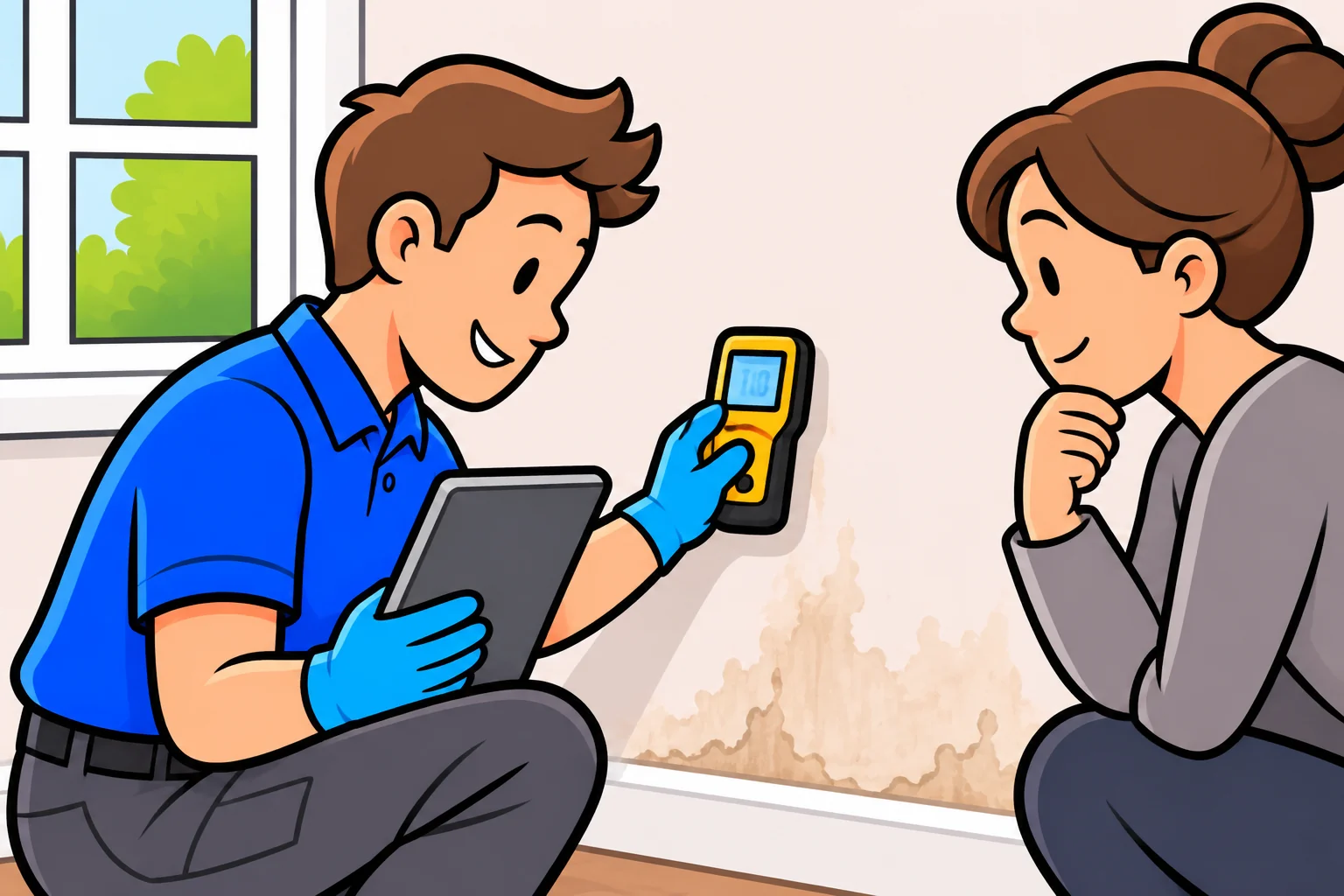
The right approach depends on the extent of the damage, the materials involved, and the source of moisture. A professional assessment may include checking visible growth, tracing leaks, and using moisture-measuring equipment to identify damp building materials.
A remediation plan may then include:
- Containing the work area to help limit the spread of mold and dust.
- Correcting the moisture source or coordinating the necessary plumbing, roofing, or other repairs.
- Removing unsalvageable materials such as affected drywall or insulation when cleaning is not practical.
- Cleaning suitable surfaces and drying the affected area.
- Checking the completed work and planning repairs to restore the property.
Disaster Cleanup provides mold damage remediation, water damage restoration, and reconstruction services. The team can also assist with insurance claim documentation. The scope of work should be tailored to the property rather than assumed from a spot of discoloration alone.
Did You Know?
- Visible mold usually does not need testing first. The EPA says sampling is unnecessary in most cases when mold is visible. The priority is to address the growth and its moisture source. (epa.gov)
- Paint is not a mold remedy. Mold needs to be cleaned up and the surface dried before painting; covering it does not fix the moisture problem. (epa.gov)
- Indoor humidity is worth monitoring. The EPA recommends keeping relative humidity below 60%, ideally between 30% and 50% when possible. (epa.gov)
Preventing Mold Damage in Meridian Homes
Meridian properties can develop moisture problems in any season. A slow supply-line leak, water entering around a roof penetration, or condensation on a cold surface can go unnoticed until staining or a musty odor appears. Regular checks are especially useful in spaces you do not visit often, such as attics and crawl spaces.
- Inspect under sinks and around toilets, water heaters, and washing machines for leaks.
- Run bathroom and kitchen exhaust fans when moisture is being produced, and make sure they vent outdoors.
- Keep gutters and downspouts clear, and direct drainage away from the foundation.
- Use a humidity gauge to monitor indoor conditions, especially where condensation is recurring.
- Have roof leaks, plumbing problems, and wet materials addressed promptly.
- After a water incident, check adjacent rooms and building materials—not just the area where the water first appeared.
If a damp spot returns after cleaning, look for an unresolved leak or condensation issue rather than repeatedly treating the surface.
Need Help With Mold Damage in Meridian?
Disaster Cleanup serves Meridian and the Treasure Valley with 24-hour emergency cleanup and restoration services. Contact the team to discuss suspected mold, water damage, or the next steps for your property.
Learn more about mold remediation in Meridian. Contact Disaster Cleanup Call (208) 999-2353.
Frequently Asked Questions
How quickly can mold grow after water damage?
Mold can develop after water damage when wet materials are not dried promptly. Aim to dry affected areas within 24 to 48 hours when possible, but remember that hidden moisture may require professional drying and assessment. (epa.gov)
Do I need mold testing before cleanup?
Not always. When mold is visible, the EPA says sampling is unnecessary in most cases. Testing may be useful in certain circumstances, but it has limitations and does not replace finding the moisture source and cleaning up the mold. (epa.gov)
Can I stay in my home during mold remediation?
It depends on the affected area, the work being performed, and the health needs of the people in the home. Ask the remediation team about containment and access. People with asthma, chronic lung disease, or weakened immune systems should avoid moldy areas and discuss concerns with a healthcare professional. (cdc.gov)
Will homeowners insurance pay for mold removal?
Coverage depends on your policy, the cause of the moisture, and any applicable exclusions or limits. Contact your insurer promptly, keep photographs and records, and ask what documentation is needed for a claim.
Can mold come back after remediation?
Yes. Mold can return if a leak, condensation, or another moisture problem remains unresolved—or if a new water problem occurs. Proper drying, repairs, and ongoing moisture control are important parts of prevention.
Glossary
Containment: Measures used to separate a cleanup area from unaffected parts of a property.
Porous material: A material that can absorb water, such as drywall, carpet, or insulation.
Relative humidity: A measure of how much moisture is in the air compared with how much it can hold at that temperature.
Remediation: The process of addressing contamination, including removing or cleaning affected materials and correcting the conditions that contributed to the problem.