Mold Damage in Nampa, Idaho: Signs, Cleanup, and Prevention
A moisture problem can become a mold problem.
A musty smell under the kitchen sink or a dark patch on a crawl space joist can be unsettling. Mold damage often starts with a less obvious issue: a slow leak, trapped moisture, or water that was never fully dried. For Nampa homeowners and property managers, recognizing the warning signs and addressing the moisture source are important first steps. This guide covers what causes mold in Nampa homes, when cleanup is a professional job, a two-level check of signs and first steps, common myths, prevention for freezing weather, and how remediation and insurance work.
Why Mold Damage Happens in Nampa Homes
Mold can grow indoors when moisture remains on drywall, wood, insulation, carpet, or stored belongings. A burst pipe may leave an obvious mess, but smaller problems can go unnoticed for weeks or longer. Common moisture sources include leaking supply lines, drains, water heaters, or appliances; roof leaks or water entering around windows and exterior walls; wet crawl spaces, poor drainage, or water collecting near the foundation; condensation on cold pipes and windows; bathroom and kitchen moisture that isn’t vented outdoors; and wet flooring, drywall, or insulation left behind after a leak.
Nampa’s freezing weather adds another risk. The City of Nampa advises homeowners to protect pipes in places such as crawl spaces, attics, and garages, and a pipe that freezes and leaks can leave water in an area nobody checks every day. A dry surface doesn’t always mean the material underneath is dry. Water can travel behind baseboards, beneath flooring, and into wall cavities, where it may be hard to see without an inspection. The EPA advises drying wet areas and materials within 24 to 48 hours when possible to help prevent mold growth, which is why the time between a leak and its cleanup matters so much.
Small Patch or Professional Job? Knowing When to Call
Some small areas on hard surfaces may be manageable for a person without relevant health risks, but larger or hidden problems need more care. Effective remediation is more than wiping away a stain.
When a careful DIY cleanup may fit
- The growth is small, visible, and on a hard surface.
- The moisture source is known and already fixed, and the surrounding materials have dried.
- No one doing the work has asthma, mold allergies, chronic lung conditions, or a weakened immune system.
- You can clean and fully dry the area and watch it afterward for returning growth or odor.
When to bring in a professional
- The affected area is extensive, spans several rooms, or keeps coming back after cleaning.
- The mold involves sewage or other contaminated water.
- Growth may be inside walls, under carpet, in a crawl space, or in the HVAC system.
- The extent is unclear; the EPA notes opening a concealed area may disturb growth, so an experienced professional should investigate.
A small visible patch may be connected to a larger moisture problem behind a wall or under a floor. A free inspection can help you decide which side of the line your situation falls on. If you do clean a small area yourself, never mix bleach with ammonia or other cleaners, bag the waste, and keep checking the spot. Growth or odor that returns usually means moisture is still reaching it.
A Two-Level Check: Warning Signs and First Steps
Visible growth is one clue, but it isn’t the only one. Pay attention to changes that appear after a leak or persist in a damp area, then respond in a way that limits disturbance.
Level 1: Warning signs
- A musty odor, which can point to moisture or hidden growth even when no mold is visible.
- Discolored spots or patches on walls, ceilings, joists, or stored items, though some stains have other causes.
- Peeling paint or swollen drywall, signaling a current or past moisture problem.
- Warped flooring or damp carpet, meaning water may have reached the padding or subfloor.
- Recurring condensation on windows, pipes, or exterior walls that keeps a surface damp enough to support growth.
Level 2: What to do first
- Keep people and pets away, especially anyone with respiratory conditions or weakened immune systems.
- Shut off water to a leaking fixture if it’s safe; don’t enter standing water near electrical equipment.
- Don’t scrape, paint over, or aim a household fan at the growth, since disturbing mold can spread particles.
- Photograph visible damage, note when you found it, keep receipts, and contact your insurer promptly if you plan to file a claim.
Mold exposure can cause coughing, wheezing, eye irritation, or skin irritation, and reactions vary. Symptoms alone can’t establish that mold is the cause, so if anyone in the home has asthma or another lung condition, keep them away from the affected area until it’s addressed, and the CDC suggests speaking with a healthcare professional if you have health concerns.
Mold Myths vs. Facts
Myth: “You always need a mold test.”
Fact: The EPA says sampling is unnecessary in most cases when growth is visible. Testing should answer a specific question and be interpreted by someone experienced.
Myth: “The color tells you how dangerous it is.”
Fact: Mold can appear in many colors, and color alone doesn’t establish how dangerous it is.
Myth: “A musty smell always means mold.”
Fact: Odors can have other causes, but a persistent musty smell is a reason to look for dampness or hidden growth.
Myth: “Once it’s cleaned, mold won’t come back.”
Fact: If a leak continues or materials get damp again, new growth can develop.
How to Help Prevent Mold in Your Nampa Home
- Check plumbing and appliances. Look under sinks and around water heaters, washing machines, and dishwashers for dampness or staining.
- Protect pipes from freezing. Wrap pipes in crawl spaces, attics, and garages, seal gaps where cold air gets in, and open sink cabinets on exterior walls during cold snaps, as the city recommends.
- Manage gutters and downspouts. Keep gutters clear and direct discharge away from the foundation.
- Watch landscaping and irrigation. Make sure sprinklers, flower beds, and grading aren’t directing water toward the foundation or crawl space vents.
- Vent moisture outdoors. Use bathroom and kitchen exhaust fans that vent outside, and make sure the dryer vents outside.
- Monitor humidity. The EPA recommends keeping indoor relative humidity below 60 percent, ideally between 30 and 50 percent; a humidity meter helps you spot problems.
- Inspect hidden spaces. Check accessible crawl spaces and attics for leaks, damp insulation, or musty odors, and stay out of any with standing water, damaged wiring, or sewage.
What Professional Mold Remediation Involves
The scope depends on the amount of growth, the materials affected, and the source of moisture. A typical project includes these steps:
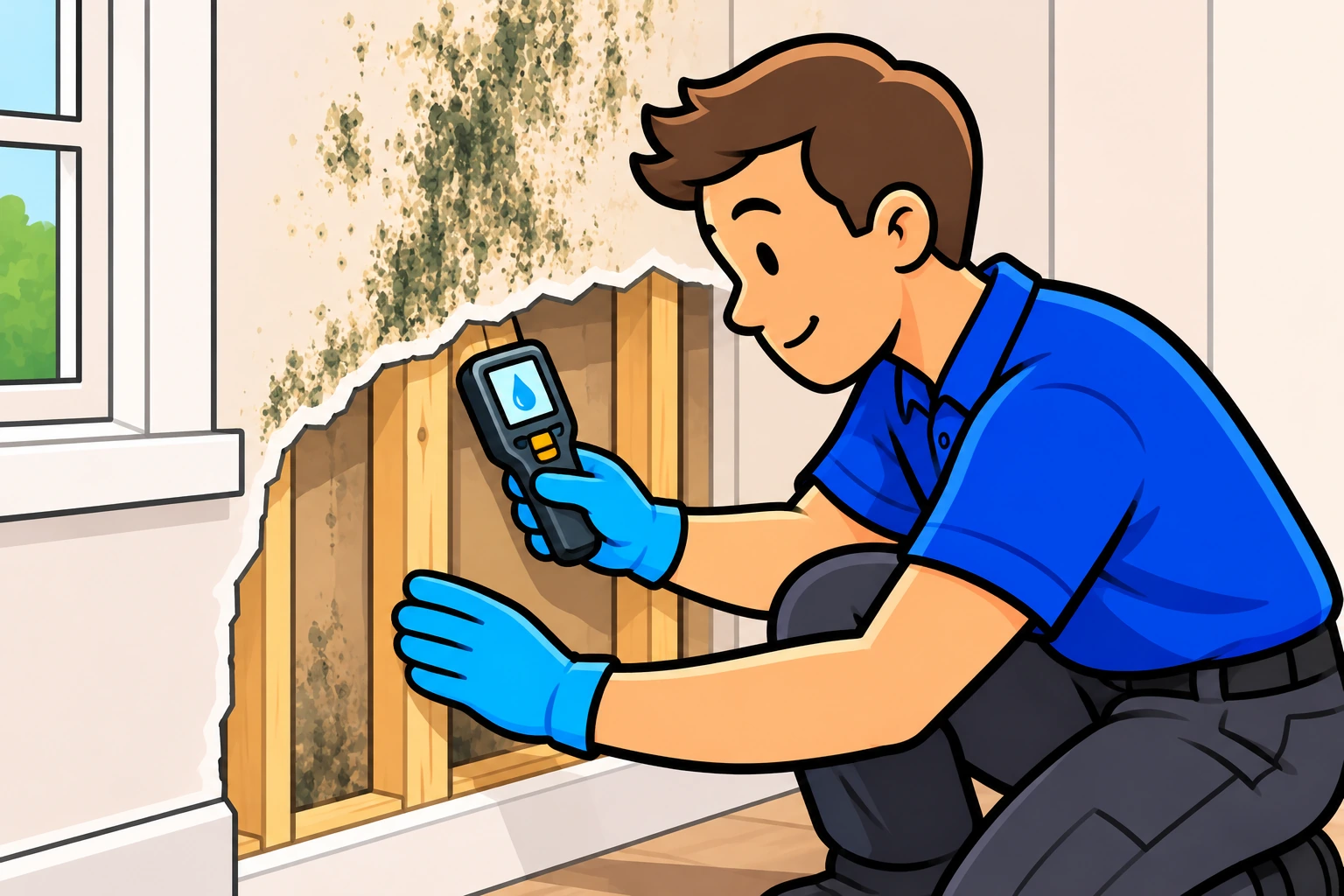
- Inspection and moisture assessment, examining the area, finding the water source, and using moisture meters to locate nearby wet materials that may not look damp.
- Testing only when useful, asking what results would tell you and how they’d change the plan, without delaying repair of an active leak.
- Containment and protection, isolating the work area and using protective equipment and specialized air filtration as appropriate.
- Removal and cleaning, cleaning materials that can be cleaned and removing porous materials, such as mold-damaged drywall or insulation, that can’t.
- Drying and moisture correction, fixing the leak, drainage issue, or other source and drying materials before repairs.
- Repairs and follow-up, repairing finishes and explaining what was removed, what was cleaned, and how to monitor the area for a returning leak or odor.
Coverage depends on your policy, the cause, limits, and the insurer’s assessment, so ask about your deductible, documentation, and exclusions. The Idaho Department of Insurance notes policyholders may need to take reasonable steps to prevent additional damage. Photographs, a timeline, receipts, and restoration documents can all help support a claim. Learn more about mold remediation and crawl space and attic restoration.
Need Help With Mold Damage in Nampa?
Disaster Cleanup is a veteran-owned restoration company serving Nampa and the rest of Canyon County since 2015. Local pros answer our phones live 24/7, and we’re typically on site within 1–2 hours. Call (208) 999-2353 or schedule a free inspection. You can pay after your insurance claim closes, all work is backed by a 1-year warranty, and se habla español. Idaho contractor registration RCE-67826.
Nampa Mold Damage FAQs
Can I stay in my home during mold remediation?
It depends on the location and extent of the work, containment, and the needs of the people in the home. Discuss the plan with the remediation team and your healthcare professional when health conditions are a concern, and don’t enter areas identified as unsafe.
How long does mold remediation take?
There’s no single timeline. A small, accessible area may need less work than damage involving a crawl space, several rooms, or materials that must be removed and rebuilt. Drying time and fixing the moisture source also matter.
Can mold return after cleanup?
Yes. If a leak continues, humidity stays high, or materials become damp again, new growth can develop. Fixing the source, drying affected materials, and checking the area afterward are key to prevention.
Will insurance cover mold cleanup?
It depends on your policy and the cause of the damage. Photos, a timeline, receipts, and restoration documents help support a claim. We can assist with documentation, and you can pay after your claim closes.
Does Disaster Cleanup serve Nampa?
Yes. We serve Nampa and the Treasure Valley with mold remediation, water damage restoration, and repairs, 24/7. Call (208) 999-2353 any time to discuss the next step.
Mold Terms to Know
Containment: Measures used to separate a work area and reduce the spread of dust and mold particles during cleanup.
HEPA filtration: High-efficiency particulate air filtration used in certain equipment to capture small airborne particles.
Porous materials: Materials with spaces that can absorb moisture, such as drywall, carpet padding, and some insulation.
Relative humidity: The amount of moisture in the air relative to the amount it can hold at a given temperature.
Remediation: Addressing and cleaning mold growth, including correcting the moisture conditions that allowed it.