
Water Damage Repair in Eagle, Idaho: What Homeowners Should Know
From the first leak to the final repair
A burst pipe, overflowing appliance, or hidden roof leak can leave an Eagle home with more than a wet floor. Water can move beneath flooring, into wall cavities, and down into a crawl space before the full extent of the damage becomes clear. Knowing what to do first—and what a professional restoration process involves—can help you protect your home and make informed repair decisions.
Why prompt water damage repair matters
Water damage repair is about more than removing a stain or replacing a section of drywall. Materials need to be evaluated for moisture, contamination, and physical damage before repairs begin. A surface that feels dry can still have trapped moisture underneath it.
The U.S. Environmental Protection Agency recommends drying water-damaged areas and belongings within 24 to 48 hours when possible to help prevent mold growth. That is a prevention goal, not a guarantee that mold will appear at a specific hour or that every repair can be completed within that window. (epa.gov)
Early attention can also help identify materials that may be saved. The appropriate response depends on the water source, how long materials have been wet, and whether they can be cleaned and dried thoroughly.
Common causes of water damage in Eagle homes
Some leaks are hard to miss. Others develop slowly in places homeowners do not check every day. Common sources include:
- Plumbing failures: Burst pipes, leaking supply lines, and failed water heaters can release water into walls, floors, and utility areas.
- Appliance leaks: Washing machines, dishwashers, and refrigerator supply lines can soak flooring and cabinetry.
- Roof and exterior leaks: Damaged roofing, flashing, or drainage can allow water into an attic or along interior walls.
- Crawl space moisture: Plumbing leaks or water entering from outside can affect insulation, framing, and stored belongings.
- Drain or sewage backups: These incidents require particular care because the water may contain harmful contaminants.
Watch for a musty odor, bubbling paint, warped flooring, staining, or a sudden change in your water bill. These signs do not prove where a leak is located, but they are good reasons to investigate promptly.
How the water source affects cleanup
The source of the water helps determine which precautions and cleaning methods are appropriate. Even water from a supply line can become contaminated after contacting building materials or remaining in place.
| Water source | Example | Important consideration |
|---|---|---|
| Supply water | A broken supply pipe | Stop the flow and assess how far water traveled and what it contacted. |
| Used water | An overflowing washing machine | The water may contain detergents or other contaminants; cleanup depends on the circumstances. |
| Sewage or outdoor floodwater | A sewer backup or water entering from outside | Avoid contact and arrange professional assessment and cleanup. |
Floodwater may contain sewage and other harmful substances, so it should not be treated like an ordinary clean-water spill. (epa.gov)
Did you know?
Mold can grow in hidden spaces, including behind drywall and beneath carpet. A visual check alone may not reveal all affected areas, which is why moisture measurements can be useful when assessing water damage and tracking drying progress. (epa.gov)
What to do when you discover water damage
1. Keep people away from hazards
Keep children and pets out of the affected area. Do not enter standing water to reach an electrical panel, and do not touch wet electrical equipment. If power cannot be shut off safely from a dry location, contact an electrician. Stay away from sagging ceilings and other areas that may be unstable. (cdc.gov)
2. Stop the water if it is safe
For a plumbing leak, turn off the appliance valve or the home’s main water supply if you can reach it safely. A plumber may be needed to repair the source. If water is entering through the roof or another exterior opening, avoid climbing onto a wet or damaged roof.
3. Document the damage
Take photos or videos from a safe location, including affected rooms and belongings. Contact your insurance company to report the loss and ask what documentation it needs. Keep receipts for reasonable emergency measures and discuss disposal of damaged belongings with your insurer when practical.
4. Arrange an assessment and drying plan
Standing water, wet wall cavities, sewage, or damage across multiple rooms are good reasons to seek professional help. If you see mold, avoid directing fans at it; airflow can spread mold. Do not use household electrical equipment in a wet area unless the electrical system and equipment are safe to use. (epa.gov)
What professional water damage restoration can involve
Each property is different, but a restoration plan commonly moves through these stages:
- Inspection: Identify the water source, affected materials, potential hazards, and areas where moisture may have traveled.
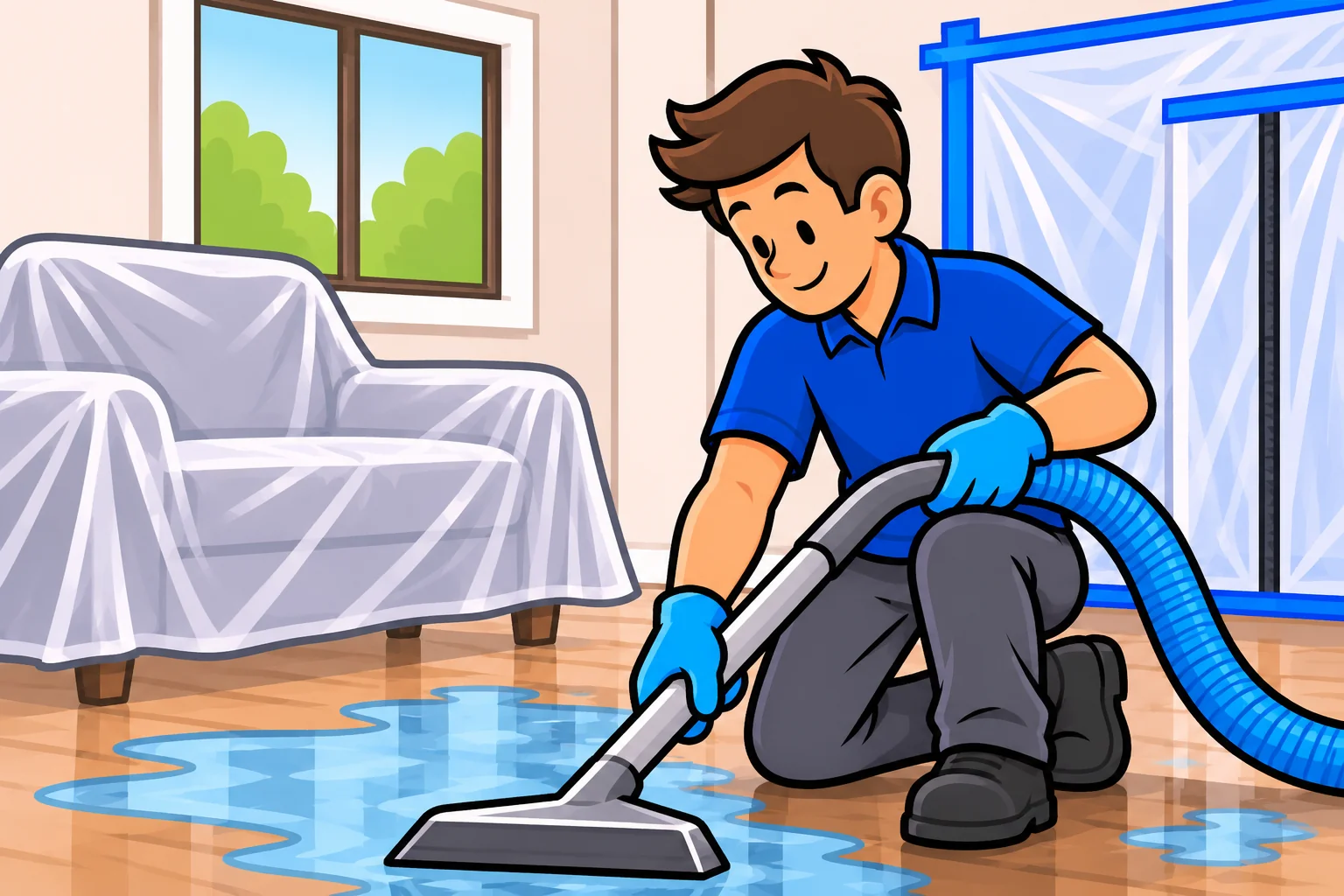
- Water removal: Extract standing water where needed and safe to do so.
- Drying and monitoring: Use appropriate drying equipment and moisture readings to track progress in affected materials.
- Cleaning and material removal: Clean salvageable surfaces and remove materials that cannot be adequately cleaned or dried.
- Repairs and reconstruction: Once affected areas are ready, repair or replace damaged components such as drywall, trim, flooring, or cabinetry.
If mold is present, the work may also require containment and remediation. Fixing the underlying moisture problem remains important; otherwise, mold can return. (epa.gov)
Before removing damaged materials in an older home, consider whether they could contain asbestos or lead-based paint. Do not disturb suspected asbestos-containing materials; consult a qualified professional. Homes built before 1978 may also contain lead-based paint, which requires appropriate precautions during repair work. (epa.gov)
Insurance and water damage repair costs
Repair costs depend on the amount and source of water, the size of the affected area, the materials involved, and the repairs needed after drying. A small, accessible leak may require a very different scope of work from a sewage backup or water that has reached several rooms.
Coverage depends on your policy and the cause of the loss. Do not assume that every water-related event is covered: Idaho’s Department of Insurance notes that a standard homeowners policy does not typically cover flood damage. Ask your insurer about applicable exclusions, deductibles, and any separate coverage or endorsements. (doi.idaho.gov)
Disaster Cleanup offers insurance claims assistance, including help with documentation and communication. Your insurer determines coverage and claim decisions.
Planning ahead for water damage in Eagle, Idaho
Treasure Valley winters can bring freezing conditions, making exposed or poorly protected pipes worth checking before cold weather arrives. The National Weather Service notes that cold periods and winter precipitation are part of the region’s climate. (weather.gov)
Know where your main water shutoff is located, inspect appliance hoses and accessible plumbing, and keep gutters and drainage paths clear. If your home has a crawl space or attic, check those areas periodically for staining, damp insulation, or signs of a leak. These habits will not prevent every incident, but they can help you spot problems sooner.
Disaster Cleanup is based in Boise and serves Eagle and the surrounding Treasure Valley. Its team provides emergency water cleanup and restoration, with repair and reconstruction services available when the property is ready.
Need help with water damage in Eagle?
Disaster Cleanup provides 24-hour emergency cleanup and restoration services. Contact the team to discuss the water source, affected areas, and next steps for your property.
Learn more about water damage restoration in Eagle. Contact Disaster Cleanup Call (208) 999-2353.
Frequently asked questions
How quickly should I address water damage?
As soon as it is safe to do so. Stop the water source if possible and arrange an assessment promptly. Drying within 24 to 48 hours, when feasible, helps reduce the chance of mold growth, though the full restoration may take longer.
Can I dry water damage myself?
A small spill from a known clean-water source may be manageable if you can safely clean and thoroughly dry the affected area. Standing water, hidden moisture, sewage, visible mold, or electrical concerns call for professional assessment. Do not take risks to begin cleanup.
Does wet drywall always need to be replaced?
Not always. The decision depends on the water source, how long the drywall was wet, its condition, and whether it can be properly dried and cleaned. Contamination, mold, or loss of structural integrity can make removal necessary.
How long does water damage repair take?
There is no single timeline. Drying time varies with the materials and extent of moisture; repairs may add time depending on the scope of work. Ask for an estimated schedule after the affected areas have been inspected.
Will my homeowners insurance pay for the damage?
It may, depending on your policy and the cause of the loss. Contact your insurer promptly, explain what happened, and ask which documentation is needed. Separate flood or sewer backup coverage may be relevant to some incidents.
Water damage glossary
Extraction: Removal of standing or excess water using equipment suited to the affected area.
Moisture meter: A tool used to assess moisture in building materials and help monitor drying.
Remediation: Work performed to address a problem such as mold, including cleanup and steps to control its spread.
Reconstruction: Repair or replacement of damaged building components after cleanup and drying.