
Kitchen Sink Leak Water Damage in Eagle, Idaho: A Post-Holiday Cabinet Check
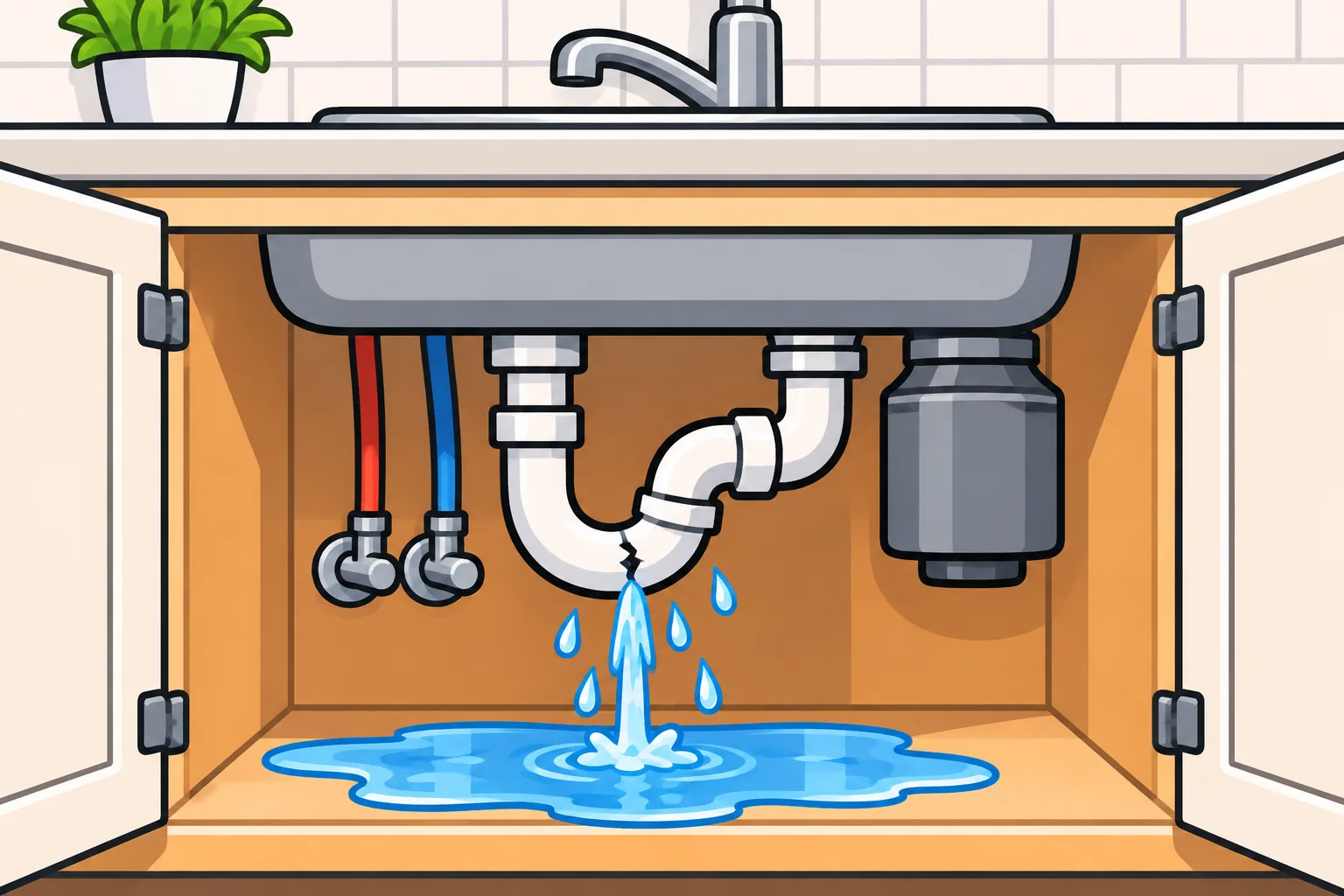
The dishes are done, but the cabinet floor is still wet.
A kitchen sink leak in Eagle, Idaho often stays hidden behind the cabinet doors until someone reaches for the dish soap and finds a warped shelf, a swollen toe kick, or a musty smell. Between Thanksgiving and New Year’s, the sink, disposal, and dishwasher work overtime. This guide explains why Eagle kitchens are worth a post-holiday look, how to tell a supply leak from a drain leak, a quick two-level check, common myths, seven prevention steps, and what a professional cleanup involves.
Why Eagle Kitchens Deserve a Post-Holiday Sink Check
Eagle homes do not all share the same utilities, and that shapes how a leak shows up. The City of Eagle’s utilities page explains that sewer service comes from the Eagle Sewer District, while drinking water comes from either the City of Eagle Water Department or Veolia depending on location, and some properties still use private wells and septic. On a meter, a hidden drip can show up on the bill. On a private well, the pump keeps feeding the leak and nothing on paper warns you.
The drain side matters just as much during the holidays. The Eagle Sewer District notes that fats, oils, and grease from cooking can harden into grease balls ranging from the size of marbles to cantaloupes, and that this is a leading cause of sewer overflows. The same grease builds up in the trap under your sink, where a partial clog strains joints never meant to hold standing water. The EPA’s WaterSense leak guide estimates that the average household’s leaks waste more than 9,300 gallons a year, and the EPA advises drying wet materials within 24–48 hours to prevent mold growth. (epa.gov)
Supply Leak or Drain Leak? How to Tell the Difference
Water under a sink comes from one of two systems. Supply lines are always under pressure, so they leak even when the sink is idle. Drain lines only carry water when something runs.
Signs that point to a supply-side leak
- The cabinet floor is wet even after the sink has sat unused overnight.
- Beads of water form on the shutoff valves, the braided supply hoses, or the base of the faucet.
- A faint hiss or a steady drip comes from the back of the cabinet when the house is quiet.
- The water meter keeps moving when every fixture in the house is off.
Signs that point to a drain-side leak
- Water only appears after you run the faucet, the disposal, or a dishwasher cycle.
- The puddle sits under the P-trap, the disposal, or the slip nuts where drain pieces join.
- The water looks cloudy, smells of food, or leaves a greasy film on the cabinet floor.
- The sink drains slowly or gurgles, which suggests a partial clog is backing water up into the joints.
Some leaks start under the sink but belong to the appliances next to it. Our appliance leak guide covers dishwashers, refrigerator ice-maker lines, and other connections, and our hidden water leak self-check walks through a full meter test, room by room.
A Two-Level Sink Leak Check for Eagle Homeowners
All you need is a flashlight, a dry paper towel, and about ten minutes. Start inside the cabinet, then check the areas around it.
Inside the sink cabinet
- Empty the cabinet completely so you can see the floor, the back wall, and the corners.
- Wipe each connection with a dry paper towel: both shutoff valves, both supply hoses, the faucet base, the disposal, and every slip nut on the drain.
- Run the faucet for a minute, then the disposal, and check the towel again to see which joint gets wet.
- Press on the cabinet floor. Soft, bubbled, or delaminating particleboard means water has been there longer than a day or two.
- Look for dark spots, a fuzzy film, or a musty odor on the underside of the countertop and along the back panel.
Beyond the cabinet
- Check the toe kick under the cabinet and the flooring in front of it for swelling, lifting, or gaps between planks.
- Look at the floor beside the dishwasher, since its drain hose and water line usually connect inside the sink cabinet.
- If there is a basement, crawl space, or room below the kitchen, look up for stains on the ceiling, joists, or subfloor.
- If you are on city or Veolia water, do the EPA’s two-hour meter test: read the meter, use no water for two hours, and read it again. Any change points to a leak somewhere.
If you find active water, turn off the shutoff valves under the sink, or the main if those valves will not close. Stop using the disposal and dishwasher, pull wet items out, and photograph the cabinet, floor, and leaking part before repairs, since photos help with an insurance claim.
Kitchen Sink Leak Myths vs. Facts
Myth: “A garbage disposal can handle anything after a holiday meal.”
Fact: A disposal grinds food, but grease, peels, and stuffing still go somewhere. Those scraps mix with fats in the trap and slow the flow, and water that cannot drain backs up into joints and seals.
Myth: “Hot water and dish soap wash grease safely down the drain.”
Fact: Hot water only moves grease a little farther before it cools and sticks. The Eagle Sewer District recommends scraping plates into the trash, wiping pans with a paper towel before washing, and pouring extra oil or grease into a disposable container, freezing it, and throwing it away.
Myth: “If the cabinet floor feels dry, the damage is over.”
Fact: The cabinet floor is often a thin panel sitting on top of the subfloor. Water that runs off the back can soak the subfloor or wall cavity and stay damp long after the surface feels dry. A moisture meter shows what your hand cannot.
Myth: “A slow drip under the sink is not worth worrying about.”
Fact: The EPA’s WaterSense program reports that nine percent of homes have leaks that waste 50 gallons or more per day. A steady drip on particleboard can rot a cabinet floor and feed mold without ever reaching the kitchen floor.
Hosting Through the Holidays in Eagle: Prevention Steps That Work
- Keep grease out of the sink. Set a lidded can or jar by the stove before the cooking starts.
- Use a sink strainer. It catches peels, rice, and scraps before they reach the trap.
- Feed the disposal slowly. Run cold water, add small amounts at a time, and let it clear completely before adding more.
- Test your shutoff valves now. Turn each valve under the sink off and back on. A valve that will not budge or drips at the stem should be replaced before it is needed in an emergency.
- Look at the supply hoses. Replace hoses that are kinked, rusty at the ends, or bulging,.
- Do a quick cabinet check after big meals. After the final load of the night, open the cabinet with a flashlight and run a hand across the floor.
- Add a water sensor. A small leak sensor on the cabinet floor alerts you the moment water touches it. Our leak prevention systems page explains sensors and automatic shutoff valves.
What Professional Kitchen Sink Leak Water Damage Repair Involves
Once the leaking part is fixed, the water that already escaped still has to be found and dried. A thorough kitchen job usually follows this order:
- Moisture mapping of the cabinet base, the subfloor, the wall behind the sink, the flooring in front of the cabinets, and any ceiling below.
- Water removal from the cabinet, the floor, and any area where water has pooled under flooring.
- Careful access, such as pulling the toe kick, so moisture under the cabinets can dry without tearing out the kitchen.
- Drying with air movers and dehumidifiers, with readings taken until materials are actually dry. Drying out a house typically takes about 5 days, longer if the damage is extensive.
- A mold check on the cabinet back, the subfloor, and the wall cavity before anything is sealed up again.
- Repairs to the cabinet floor, flooring, drywall, and trim, done once readings confirm the area is dry.
Learn more about our water damage restoration in Eagle. If a leak left a musty smell or visible growth, an inspection can show how far the moisture traveled.
Need Help With a Kitchen Sink Leak in Eagle?
Disaster Cleanup is a veteran-owned restoration company serving Eagle, Boise, and the Treasure Valley since 2015. Local pros answer our phones live 24/7, and we’re typically on site within 1–2 hours. Call (208) 999-2353 or schedule a free inspection. You can pay after your insurance claim closes, all work is backed by a 1-year warranty, and se habla español. Idaho contractor registration RCE-67826.
Eagle Kitchen Sink Leak FAQs
Can I keep using the sink if the leak is small?
If the leak is on the drain side, you can usually stop it by not running the faucet, disposal, or dishwasher until the joint is repaired. A supply-side leak keeps going when the sink is idle, so close the shutoff valves until it is fixed.
Is a swollen cabinet floor a sign of bigger damage?
It can be. Particleboard swells when it has been wet for a while, so water may also have reached the subfloor or the wall behind it. A moisture check shows whether the problem stops at the cabinet.
Why does my sink cabinet smell musty even though I don’t see water?
A musty smell often means moisture has been sitting somewhere you cannot see, such as under the cabinet floor or behind the back panel. Since the EPA recommends drying wet materials within 24–48 hours, it is worth finding the source instead of covering the smell.
My home is on a private well. How do I check for a leak?
Without a water meter, listen for the well pump. If it turns on when no one is using water, something in the house may be leaking. Check under every sink and behind the dishwasher, and call for a free inspection if you cannot find the source.
Does Disaster Cleanup serve Eagle?
Yes. We serve Eagle, Star, Meridian, Garden City, and homes across Boise and the Treasure Valley. Call (208) 999-2353 any time, day or night, to talk with a local pro.
Kitchen Sink Leak Terms to Know
P-trap: The U-shaped section of drain pipe under the sink that holds a little water to block sewer gases.
Slip joint: A drain connection held together by a plastic nut and washer. It can loosen or leak when a drain backs up.
Supply line: The flexible hose that carries pressurized hot or cold water from the shutoff valve to the faucet or dishwasher.
Shutoff valve: The small valve under the sink that stops water to one fixture without shutting off the whole house.
FOG: Short for fats, oils, and grease, the cooking byproducts that harden in drains and sewer lines.