
Leak Prevention Systems in Greenleaf, Idaho: Sensors vs. Automatic Shutoff Valves and Where to Put Them
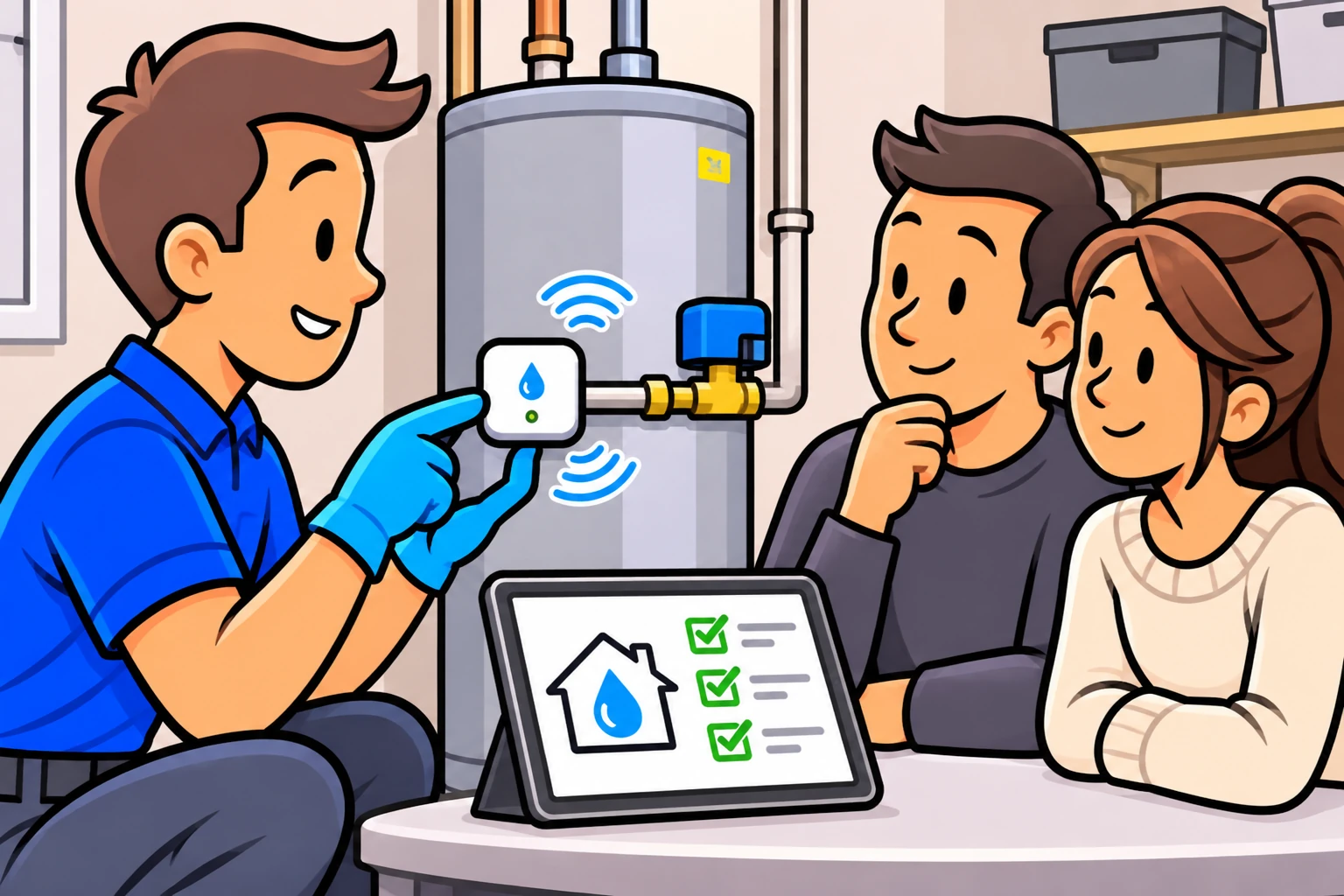
A leak you hear about in minutes is a very different problem from one you find days later.
Leak prevention systems in Greenleaf, Idaho give homeowners, landlords, and small farm and shop owners a way to catch water where it starts: under a sink, behind a washer, next to a water heater, or on the main line. Some products only sound an alarm, some watch how water flows through the whole house, and some can shut the water off on their own. They are not interchangeable. This guide compares the main types, shows where sensors tend to earn their keep in a Greenleaf home, clears up a few common myths, and lays out a simple routine for testing the system once it is in place.
Why Leak Prevention Makes Sense for Greenleaf Properties
Greenleaf is a small town with deep farm roots. The City of Greenleaf’s history page describes homesteaders arriving shortly after 1900, the Greenleaf Friends Church starting in 1906 and the Greenleaf Friends Academy in 1908, and a commercial center that later shifted toward State Highway 19. The city incorporated in 1973, largely because of the need for a community sewer system, and after a water and wastewater bond election in 2000 it took over the water and sewer systems that a private association had run until then.
That mix matters for leak planning. In town, many homes are on the city system, while farmhouses, shops, and outbuildings in the surrounding countryside may rely on private wells. Homes and outbuildings from many different decades sit side by side, and plenty of them have laundry rooms, water heaters, and plumbing in garages, utility rooms, or crawl spaces that nobody walks past every day. A leak in one of those spots can run quietly until it shows up as a stain, a soft floor, or a musty smell.
Leaks are also more common than most people think. The EPA’s Fix a Leak Week page reports that the average household’s leaks can waste more than 9,300 gallons of water a year, and that nine percent of homes have leaks wasting 50 gallons or more per day. Wasted water is only part of it. The EPA’s brief guide to mold, moisture, and your home explains that if wet areas are dried within 24 to 48 hours after a leak or spill, in most cases mold will not grow. Early warning is what makes that window possible.
Sensors vs. Flow Monitors vs. Automatic Shutoff: How They Compare
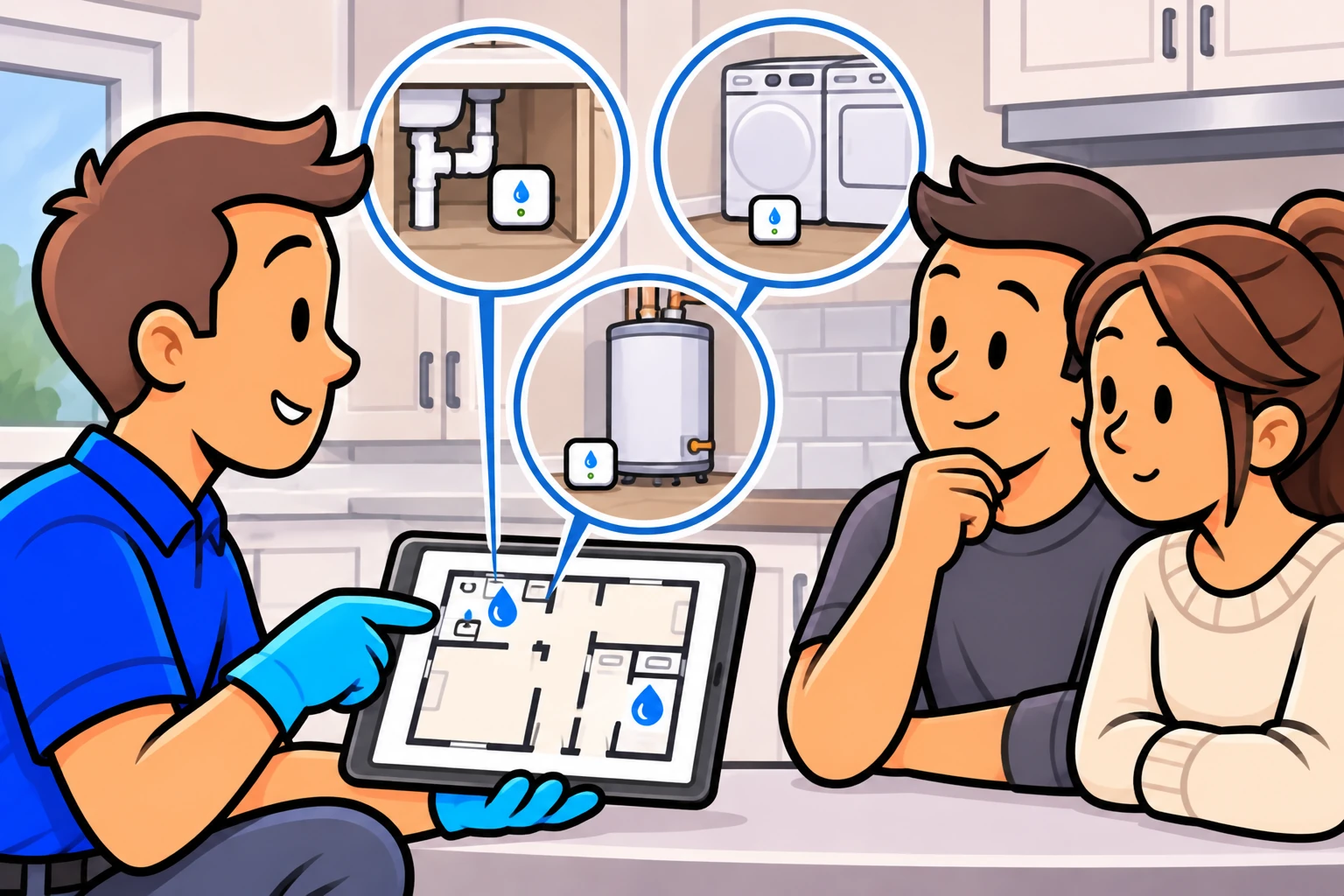
The EPA’s WaterSense program publishes a consumer guide to leak detection and flow monitoring devices that sorts products into two broad groups. Point-of-use devices sit at a specific fixture or leak-prone spot. Point-of-entry devices go on the main water line or at the meter and watch water use for the whole building. Here is how the common options line up:
| Device type | What it does well | What it can miss |
|---|---|---|
| Moisture sensors (point-of-use) | Sound an alarm or send a phone alert when water touches the sensor. Good for leaks not tied to water flow, like an AC condensate drip, a drain leak under a sink, or water pooling near a water heater. You know exactly where the problem is. | Only detect water that reaches the sensor itself. A leak a few feet away, or upstream in a wall, may not trigger it. Some can false-alarm in high humidity if sensitivity is not adjusted. |
| In-line flow monitors at a fixture (point-of-use) | Alert you when water keeps running at one fixture, such as a toilet with a worn flapper. Some models include a shutoff for that fixture. | Watch only that one fixture. They do not see what is happening elsewhere in the house. |
| Whole-home flow monitors (point-of-entry) | Track water use for the entire building and flag continuous flow or unusual volume, which can point to a leak anywhere downstream of the device. In-line versions usually include a shutoff valve. | Cannot tell you which room the leak is in, and cannot sense water that is not running through the supply line, like a roof leak or a drain leak. |
| Hybrid systems | Pair moisture sensors with a main-line automatic shutoff, so water detected in one spot can close the valve for the whole home. | More parts to set up and maintain. Everyone in the household needs to know how to reset the valve and what the alerts mean. |
The WaterSense guide also notes that in-line devices may need a plumber to install at the point of entry, that whole-home devices usually need power (some have battery backup), and that devices with automatic shutoff valves can stop the supply during a catastrophic leak such as a failed water heater, a burst pipe, or a washing machine hose failure. Our leak prevention systems page explains how we match those functions to a specific property.
Where to Put Leak Sensors in a Greenleaf Home: A Room-by-Room Checklist
Start with the places where water is under pressure, where appliances connect to supply lines, and where nobody looks very often. For most homes, that list looks like this:
Kitchen
- Under the sink, near the supply valves and the drain trap.
- Behind or beside the dishwasher, where the supply and drain lines connect.
- Behind the refrigerator if it has an ice maker or water dispenser line.
Laundry room
- On the floor behind the washing machine, near the hot and cold supply hoses.
- Near any utility sink or floor drain that could back up.
Water heater and utility areas
- Next to the base of the water heater, where a failing tank or relief valve would drip first.
- Beside the furnace or air conditioner, where condensate lines run.
- Near a water softener or filtration system if you have one.
Bathrooms
- At the base of each toilet and under vanity sinks.
- Under a tub or shower access panel if the home has one.
Garages, crawl spaces, shops, and outbuildings
- Anywhere plumbing runs through an unheated space, which matters every winter in the Treasure Valley.
- Near a well pressure tank or pump on rural properties outside town.
- In a shop or barn with a utility sink, hose bib, or livestock water line.
If you are not sure where the weak spots are, our room-by-room hidden leak self-check from neighboring Wilder is a good place to start, and our appliance leak guide covers the connections that fail most often.
Leak Prevention Myths vs. Facts
Myth: One sensor protects the whole house.
Fact: A moisture sensor only reacts when water reaches it. It watches a few square inches of floor, not the house. Whole-home coverage comes from a point-of-entry flow monitor, several well-placed sensors, or both.
Myth: An automatic shutoff valve means water damage cannot happen.
Fact: A shutoff limits how much water escapes after a problem is detected. It cannot stop a roof leak, a drain backup, or water that already soaked into flooring before the alert. It also only works if it has power or battery backup and has been tested.
Myth: If I have a flow monitor, I don’t need sensors.
Fact: The EPA’s guide points out that point-of-entry flow monitors cannot detect leaks that are not associated with water use, such as an air conditioner condensate leak or water pooling under a sink from a drain pipe. Sensors fill that gap.
Myth: A leak prevention system replaces fixing known problems.
Fact: If a fitting is already weeping or a water heater is near the end of its life, the repair comes first. A system is there to catch the next surprise, not to babysit a problem you already know about.
Myth: Any shutoff valve can go anywhere on the line.
Fact: Placement matters. The WaterSense guide reminds homeowners to make sure a device will not interfere with or stop the water supply to a home fire sprinkler system.
Which Setup Fits Which Property?
You live in the home year-round
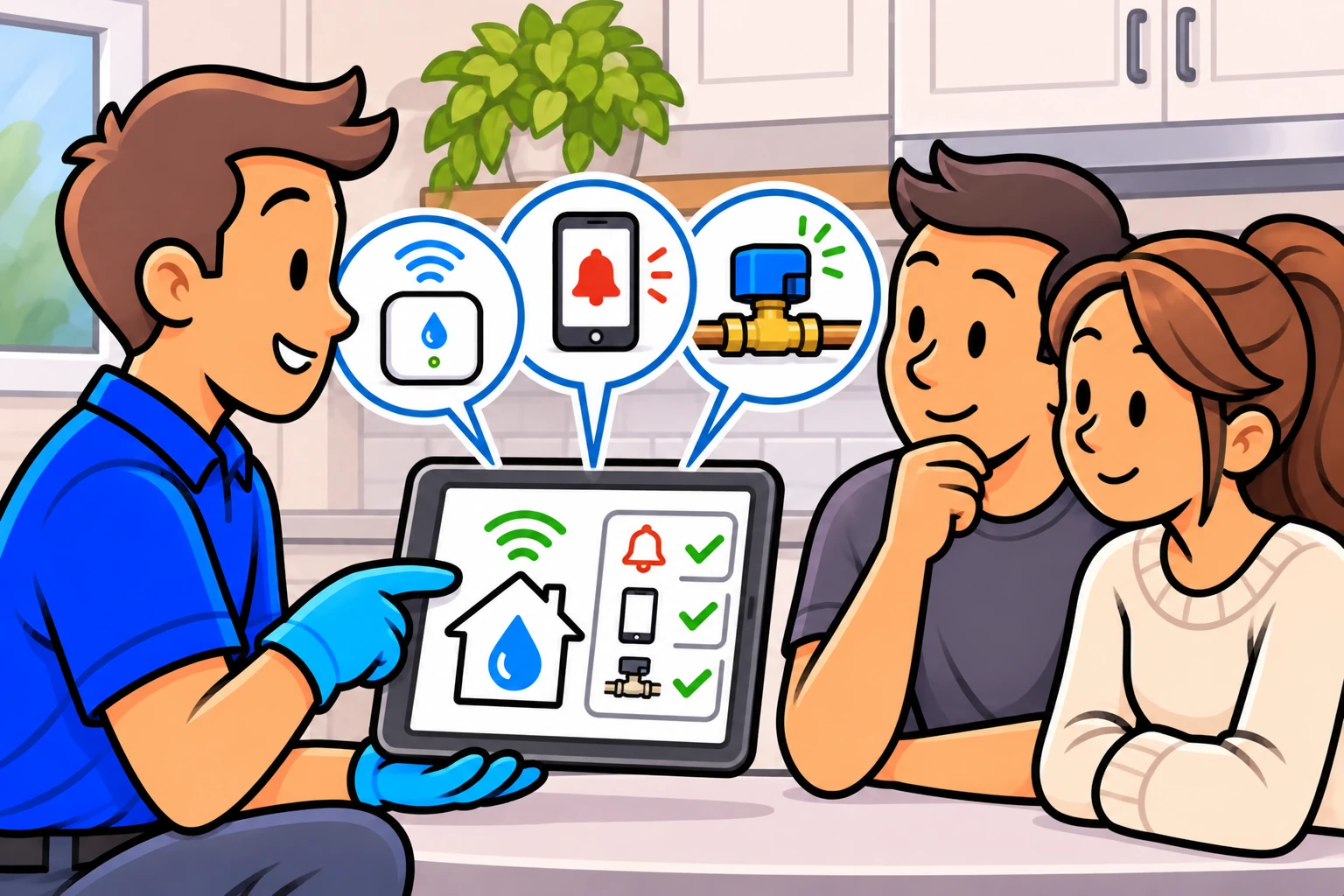
Many households start with sensors at the water heater, washer, dishwasher, and kitchen sink, then decide whether to add a main-line shutoff. If everyone is home most days, an audible alarm plus a phone alert may be enough at first.
The house sits empty for part of the winter
The EPA’s guide notes that shutoff capabilities may be helpful for a vacation home that does not have regular occupancy. If you travel, spend winters elsewhere, or are between tenants, an automatic or remote shutoff matters more, because nobody is there to hear an alarm. Pair it with our winter checklist for empty homes.
You rent out the property
Landlords should decide who receives alerts, what a tenant should do when one arrives, and how the valve gets reset. Write those steps down and leave them where the tenant can find them, next to the location of the main shutoff.
You have a shop, barn, or rural place on a well
Outbuildings with water lines and well systems add risk points that a typical in-town home does not have. Talk through the pressure tank, pump location, and any long buried lines before choosing equipment, since what you need to monitor may be spread across several buildings.
Step by Step: From Planning to a System You Can Trust
Step 1: Walk the property and list risk points
Note every water heater, appliance connection, toilet, sink, softener, and pipe in an unheated space. Note past leaks too, since they often repeat.
Step 2: Decide what you want the system to do
Alert only, alert plus shutoff, or a hybrid. Decide who gets alerts: you, a family member, a neighbor, or a property manager.
Step 3: Check power, Wi-Fi, and backup
The WaterSense guide notes that leaks from weather events can come with power outages, so if the device must work during an outage, choose one that is battery-powered or has battery backup. Make sure the device can reach your Wi-Fi from where it is mounted. Winter storms can knock out power, and Ready.gov’s winter weather guide has good general prep advice.
Step 4: Install and record the setup
Main-line shutoff valves are plumbing work and should be installed to the manufacturer’s instructions. Keep a simple note of where each sensor is and how to reset the valve.
Step 5: Test it on a schedule
Test sensors with a damp cloth, confirm the phone alert arrives, and, if you have a shutoff valve, confirm it closes and reopens. Check batteries when you change smoke alarm batteries. The EPA’s meter test also works as a backup check: read the water meter before and after a two-hour period with no water use, and if it changes at all, you probably have a leak.
Need Help Choosing a Leak Prevention System in Greenleaf?
Disaster Cleanup is a veteran-owned restoration company that sells and installs leak prevention systems for Greenleaf, Canyon County, and the rest of the Treasure Valley, and we have been helping local property owners since 2015. Local pros answer our phones live 24/7, and if a leak has already happened, we’re typically on site within 1–2 hours for water damage restoration. Call (208) 999-2353 or schedule a free inspection. You can pay after your insurance claim closes, our work is backed by a 1-year warranty, and se habla español. Idaho contractor registration RCE-67826.
Greenleaf Leak Prevention FAQs
Can a leak prevention system lower my homeowners insurance?
Possibly. The EPA’s WaterSense guide notes that some insurers offer discounts for homes with a leak detection or flow monitoring device installed. Ask your agent what qualifies before you buy, and keep a record of what was installed.
Will a main-line shutoff work if my home is on a private well?
It can, but well systems add a pressure tank and pump to the picture, and some leaks happen before water ever reaches the house. That is why we look at the whole system, not just the indoor plumbing, before suggesting where a valve should go.
What should I do when an alert goes off?
Check the location right away. If water is spreading, close the main shutoff if the system has not already done it, turn off power to any wet electrical area only if it is safe to reach, and start drying. If water has soaked flooring, drywall, or cabinets, call for professional drying so moisture does not linger past the 24 to 48 hour window.
How do I know which product to buy?
The EPA notes that leak detection devices are not eligible for the WaterSense label, but products tested to the ANSI/CAN/IAPMO Z1349 standard have been evaluated for features like alarm response and automatic shutoff. Beyond that, the right choice depends on your plumbing, how often the property is occupied, and who will respond to alerts.
Do you serve properties outside Greenleaf city limits?
Yes. We serve Greenleaf, the farms and rural homes around it, nearby Wilder and Caldwell, and communities across Canyon County. Learn more on our leak prevention systems page.
Leak Prevention Terms to Know
Point-of-use device: A leak sensor or monitor installed at a specific fixture or leak-prone spot, such as under a sink or beside a water heater.
Point-of-entry device: A monitor installed on the main water line or at the meter that tracks water use for the entire building.
Flow monitor: A device that measures how much water is moving through a line and flags continuous or unusual flow that may signal a leak.
Automatic shutoff valve: A motorized valve that closes the water supply to a fixture or the whole home when a leak is detected.
Hybrid system: A setup that links moisture sensors with a main-line shutoff, so water detected in one spot can stop the supply to the whole house.
Condensate line: The small drain line that carries water away from an air conditioner or high-efficiency furnace. Leaks here do not show up on a flow monitor.